Author Archives: The Reluctant Girl Scout

Unknown's avatar

About The Reluctant Girl Scout

Let's be honest: I haven't been a Girl Scout since the Reagan Administration. What I really am is a writer, a teacher, and a muser, who goes places (reluctantly) and loves them a lot (once I get back home).

Walk Like a Zimbabwean

Standard

IMG_0209 2

Since moving to Seattle, I’ve had to rethink walking because we didn’t bring my car with us.  Back home in Indiana, walking is something you do to get from your car to your mailbox. If you are super health conscious, you might go on walks around the neighborhood or at the mall with other “walkers,” but walking is usually a choice and rarely a mode of transportation (and if you are going to do it right, you’ll need special shoes!). Seattle, on the other hand, requires walking. Even if you do have a car, parking is so tedious that you’ll be walking to get to your destination unless you drive to the suburbs where parking spaces abound. This summer when I broke my toe for vain, lazy reasons (pretty shoes and a short cut I shouldn’t have taken), I discovered how important it is to keep feet happy and healthy now that I’m an urban dweller. If you don’t, you’re quickly relegated to shut-in status. That said, a big city like Seattle offers plenty of transportation options (buses! ferries! water taxis! street cars!) to get you where you need to be.

Zimbabwe, though, sheds a whole new light on walking. For the majority of the population this and mini-busses are simply the only way to get from Point A to Point B. There is no choice. No moral superiority about your decision to live car-free or how small your carbon footprint is. You just do it. Z’s family, fortunately, is a car family, so I’ve been able to cover a lot of terrain here, even if it is on the “wrong” side of the road. If they were a walking family, I’d be in the ER because of my uncalloused feet and inability to handle the sun shining on my head for extended periods.

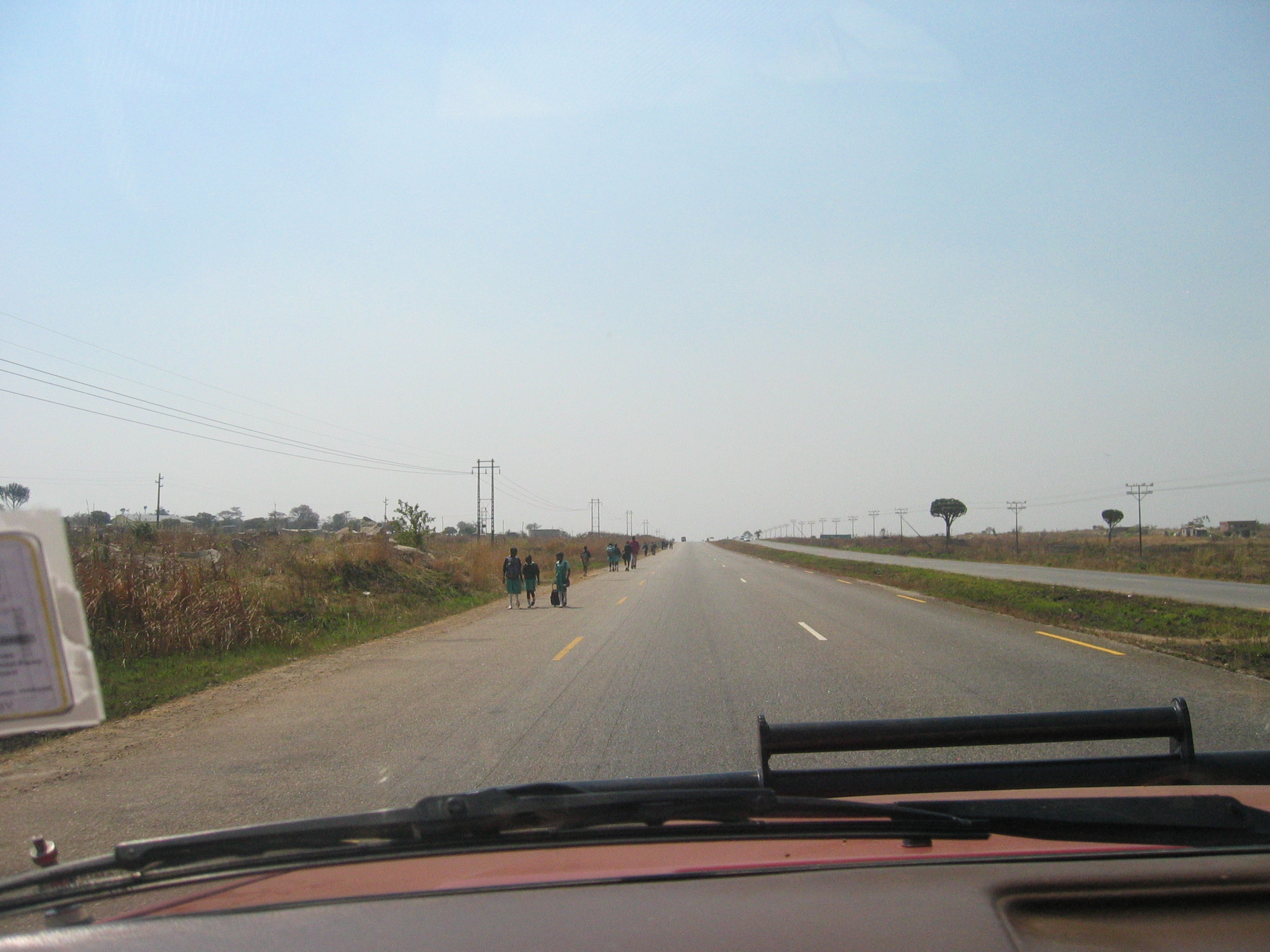
The first time I was on the dual carriageway between Harare and Z-ma’s house, I couldn’t quite figure out who all these people were walking on the dusty sides of the road.  Had a concert or sporting event just let out somewhere? (At home, people walking along a road like this have either had car trouble so you should stop to help, or they are up to no good and so you should hit the gas.) I’d squint my eyes and stare at the people we passed: school kids in uniforms, men in dress pants and shirts, women in skirts with babies strapped to their backs with toweling, devout members of the apostolic sects here that are dressed completely in white that–despite the dust and the hours they spend seated penitently on rocks—seems to stay pristine, small children who look barely able to stand toddle after their mothers, mindful of the traffic that whizzes past them.

And the footwear? Definitely not expensive European engineering like my feet require if I’m to do any serious walking. In many cases, people are barefoot and seem completely oblivious to the pebbles, though I am regularly plagued by them.

So on our last day in his hometown when Z and I find ourselves at home without the truck, we decide to walk down to the shops to pick up a few items to take back to America and to check on the status of the shoes he’s having mended by the cobbler. It’s warm and the tree canopy between his house and where I know the turn off for the shops is looks nonexistent.  Winter has just ended, after all, so things haven’t greened up yet. He says it’s a ten minute walk, but I can tell from looking it’s going to take me a half hour. He suggests I stay home and he’ll run our errands, but despite all the things out there—including mosquitos and stray dogs of dubious temperament—I want the experience of really walking for something I need.

Z may be a native of Zimbabwe, but we both look like two big, pale, sweaty Americans after ten minutes. We both have on our “Life is Good” caps that I bought for our honeymoon at a garage sale, sunglasses, the pastiness that comes with a layer of sunscreen, and athletic shoes. The people we pass are just dressed for whatever the activities of their day require—they don’t have special walking costumes like the ones we’ve fashioned.

It’s a straight shot from Z-ma’s house to the shops, and so we walk and talk. Past Florence Nighten Girl’s School, past the Mimosa Flats that were built for workers at a platinum mine some years ago, past houses that used to belong to the neighbors of Z’s childhood but now belong to strangers, past the houses that are late additions that fill up the space that used to be where Z and his brother caught butterflies.

We talk about how it was then and how it is now, and this is one of the qualities I love about Z most: his ability to be perfectly content in the present moment. Were we walking in my hometown, I would be kvetching the whole time about how it wasn’t like it used to be, that houses had gotten dumpier, that trees had been cut down, that old buildings had been demolished. Basically, I’d be lamenting that it wasn’t still 1955 even though I wasn’t even alive in 1955. But he, who can remember a time when the houses didn’t need huge walled fences topped with razor wire and a time when his country functioned more smoothly, well, he doesn’t complain. He says, “What can you do?”

The only thing that kind of riles him is the amount of litter that lines the road.  In some places, it appears that every empty chip packet and soda bottle in the country has found a final resting place along the street of his youth.

Our first stop at the shops is the cobbler’s little hunk of real estate against the back wall where we hope to collect Z’s teaching shoes. The big question in our minds is not will he be there but will the shoes be ready and wearable. So when we turn the corner expecting to see his little bench with tools and Z’s shoes, gleaming in the sun, we’re a bit surprised to see that a thatched awning with a pool table underneath it is sitting approximately where the cobbler was when we dropped the shoes off. In the few days since the shoes were handed over, an entire structure has cropped up and the cobbler has been displaced.

Z scratches his head. We look around and see no sign of him in any other recess. Hmmm.

We stop at the shop that the family friends own and mention that the cobbler isn’t on his post. Z’s friend says, “Oh, he packs up and goes to the rural area to mend shoes sometimes. He’s usually gone a few days. Maybe he’ll be there tomorrow.” Tomorrow is it. We leave tomorrow. Z may be getting those new shoes I’ve been pushing him towards after all.

We visit briefly and asking after the friend’s mother who is “down south” undergoing some medical tests. She tells us that the results were good, and we rejoice, and then we instantly lament the fact that we won’t be able to see her before we leave. She and her other daughter arrive at the airport around the same time we’ll be departing.  We say goodbye and head off to the grocery to pick up a few items, and start the walk back home.

For the most part, as we walk under that big, hot sun, no one speaks to us. One person nods. Another says hello, but on the whole, we pass people and it is as if we are invisible to them. This is something that has consistently seemed odd to me on this trip. When I first met Z, he told me how friendly Zimbabweans are, and because of this, when we are driving and pass someone on the road (which is often), I lift the fingers of my left hand in that most Midwestern of road waves. Here, no one waves back, and eventually, I’ve not only quit waving, I’ve also quit making eye contact with the people we drive past. It reminds me of the transition I made from small, liberal arts Christian college where you couldn’t walk three paces without someone smiling and saying hello, to a big state school for my graduate program, where I once said hello to someone and nearly scared them to death, so rare was it to be greeted by a stranger. Eventually, I quit attempting friendliness there, and I’ve done the same here, at least with total strangers.

When we are halfway home, a group of school children, still in uniform, sees us and stares. One brave soul says in a small voice, “Good afternoon,” to which we reply, “Good afternoon.” Another little voice and another pipes up until it is a chorus of good afternoons. And then the giggling starts. It effervesces.

I don’t need an explanation for it because it is just a lovely moment shared between strangers. Though when Z gives me one possible interpretation once we are out of earshot, I am surprised.  It’s conceivable, he says, that we are the first white people these children have spoken to. This is something I hadn’t considered: myself as exotic animal, worthy of looking at or speaking to just by nature of being something different.  I’ve never imagined myself as the impetus for a childhood dare: you say something to them! No. You do it! This is something to add to the list of my own new experiences.

By the time we reach the gate, I’m hot. All I can think about is peeling off my walking layers and pouring some water over my head. Frank, the gardener, latches the gate behind us as we greet him and rub Skampy’s ears. Frank looks at me, beads of perspiration on my forehead, and says, “It’s very hot today!” Frank is not breaking a sweat himself, even though he has been outside trimming roses. We take our purchases into the kitchen where Eunice is working. She takes one look at my big red face and makes a tch tch sound. “It’s very hot today!” she says, disapprovingly.

This is the kind of Zimbabwean friendliness that I have come to love here, which is different than the friendliness of strangers. Neither of them is smirking. Neither of them is making me feel like it is my fault that I’m too out of shape from my life of Seattle bus riding and Indiana car riding to walk ¾ of a mile under a sun that is not really blazing at all. Neither of them seems to be condemning me for the soft life I lead. Instead, Eunice and Frank seem almost apologetic that Zimbabwe has made my cheeks so red and my forehead so sweaty.

And also, everyone seems to have genuine concern about the plight of Z’s AWOL shoes.
My Favorite Things: Zimbabwe Edition

Standard

IMG_0286

In no order of importance, here are some images and vignettes of things I love in Z’s homeland. You’ve already had tea with Skampy and met his family and the wildlife, so don’t look for those here, though they are all at the top of the list.

Senior Citizen Express Lines

Much of African culture venerates the elderly, which is probably something Western society could benefit from. One of the manifestations of this is that in Zimbabwe senior citizens can move to the front of the queue. This has been particularly helpful to Z-ma when she has to get a new passport or driver’s license. The lines can snake around the likes of which I’ve only seen at amusement parks when a new, terrifying ride has opened.

Z-ma delights in her ability to slap down her move-to-the-head-of-the-line trump card. Most places recognize and honor this, but sometimes the cashiers at TM are less inclined. Often, the lines there are not that long, and my preference would be to stand in them because I don’t like to cause a fuss. But Z-ma happily announces to the cashier that she should be allowed to move to the front of the line, and if the cashier balks, Z-ma says forcefully, “I am a senior citizen. This is the law of Zimbabwe!” Z-ma is a school teacher. You do not question her authority. She moves to the head of the line and I slink into the background as best I can because I just know people are looking at me thinking, “You aren’t a senior citizen. Why are you allowed to go in front of me.” But honestly, I’m just carrying the TM bags. I swear.

Thingz

Thingz+01

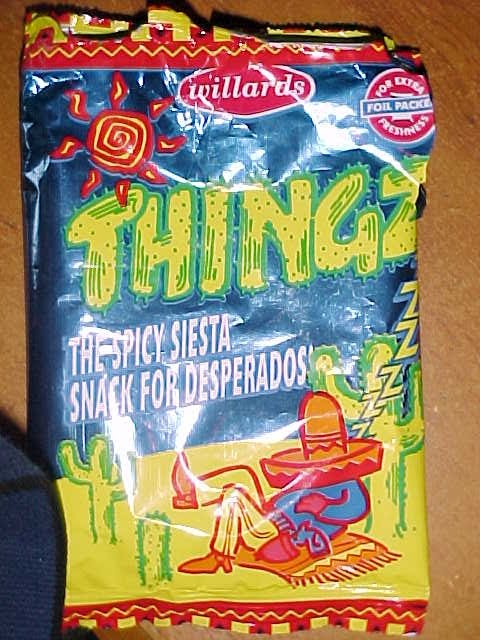
Before I was willing to eat this popular Zimbabwean snack, I asked my sister-in-law what they tasted like. She wrinkled up her brow and said, “I dunno, Beth. Thingz, I guess. They just taste like Thingz.”

It turns out there is a lot not to know about Thingz. For instance, I don’t know what these are other than a crunchy corn snack. I don’t know why a Zimbabwean snack brands itself with someone dressed in a poncho and sombrero with the message  “The Spicy Siesta Snack for Desperadoes.” I don’t know who got the bright idea for guys to sell these in the streets with newspapers and air time, nor do I know who rolls down their car window and buys a bag from a street vendor (though I think the packaging might make them impossible to resist—so blue, so yellow, so shiny!). I don’t know what it is about them that made the bag become magically vacuum sealed on the flight back to America. Most importantly, I don’t know why some American company hasn’t started importing these babies. They’re just that good.

Fruit

IMG_0404

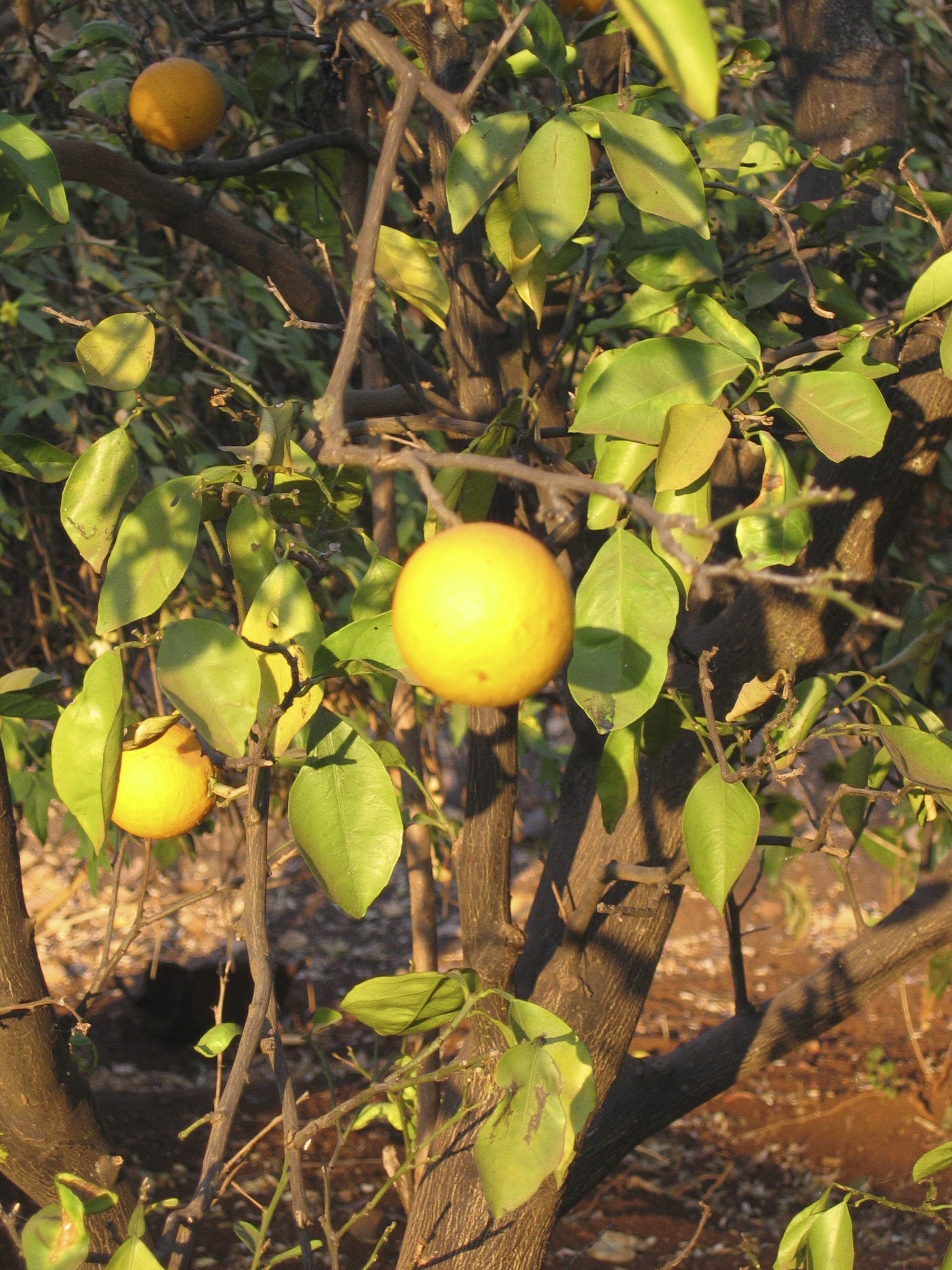
Because of the amazing climate in Zimbabwe (read: too warm for me, but really not as hot as you are probably imagining Africa is), there seems to be a consistent array of fruit growing in Z-ma’s yard. While here, we’ve had mulberries, pawpaw (papaya), and oranges. Soon, there will be bananas and peaches. Later there will be mangoes, and lemons.  And this is to say nothing of the vegetables. Generally speaking, I’m so busy devouring Thingz and Z-ma’s excellent cooking that I forget to eat fruit, but the thought that you can walk out your door and pluck breakfast from a tree all year round is pretty amazing.

No One Cares if I Brush My Hair

Self explanatory.

No One Cares if I Wear Make-up

Self explanatory

Mini-bus Names

Mini-buses (or commuter buses) are a significant mode of transportation. A lot of the people walking that we pass when we drive into Harare are waiting to be picked up by one or have just been dropped off. They look to be built to hold about nine people if strapped in by American safety standards, but in Zimbabwe, the buses are packed full. I get claustrophobic just looking at one as there seems not to be an inch of space. If I imagine being on one, I instantly think of breathing apparatus I’d want with me (a SCUBA tank or at least a bendy straw) to ensure I get my fair share of oxygen. As much as I don’t want to walk very far, I want to ride in one of these even less. Aside from being crowded and the frequency with which they are targeted at roadblocks by the police, the driving is often dubious. These are vehicles on the road from which  you try to keep some in no small part because of the erratic driving.

What I do love about them are the names that are often painted on the sides, making one bus stand out from another. Here is a list of some of my favorites:

  • Shine on Quality Time
  • Character is Destiny
  • Red Carpet
  • God with us is the Best
  • Smile Times
  • Rocket Missile
  • Promised Land
  • Sir George
  • Movement
  • Royal Comfort
  • Hit Them Up
  • Godfather
  • One Drop
  • Jeremiah
  • Never Say Never
  • You Never Know
  • Next Time
  • Expandable
  • God of Mercy
  • Title Contender

Out of all of these, my favorite, though I can’t say why, is “Super Wesley.”

American Money in Zimbabwe

IMG_0207

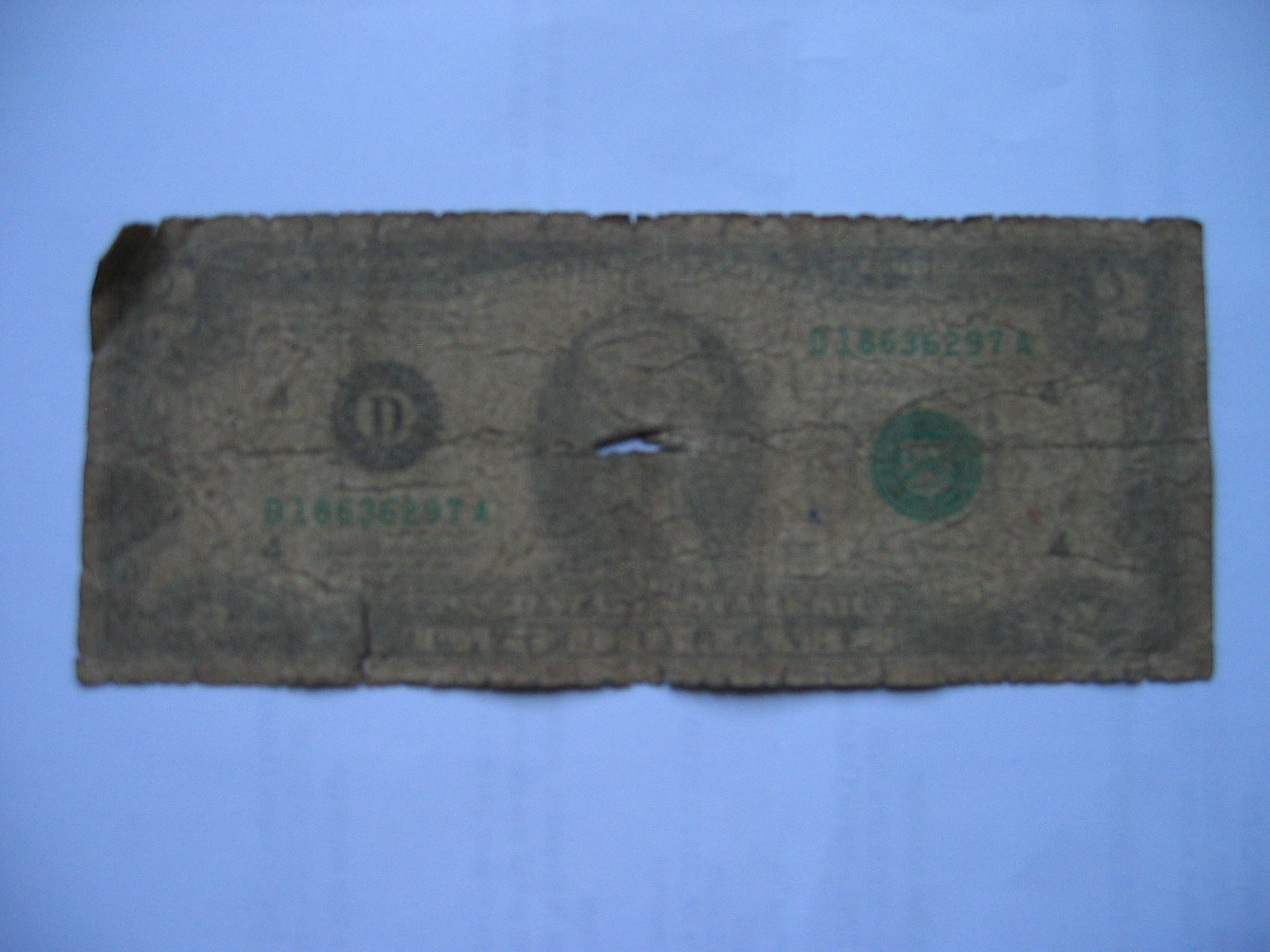
To combat hyperinflation a few years ago, Zimbabwe adopted the U.S. dollar as its currency. (This helped curb the 6.5 sextillion inflation rate that was recorded in late 2008, and made it easier to buy a loaf of bread because Z-ma no longer had to take millions and millions of Zim dollars to the store.) Until this happened, I had no idea that a country could just decide to start using U.S. dollars. I still have no real idea about how it is that Zimbabwe gets U.S. dollars to use, because I thought when U.S. money got too tatty, it was sent to Fort Knox and incinerated. But apparently not because this is the nastiest, limpest, dirtiest, most torn and nearly indecipherable  bunch of bank notes you have ever seen. I defy any of you to take a dollar out of your wallet and try to make it look like this.

40 Cork Road

IMG_0201 2

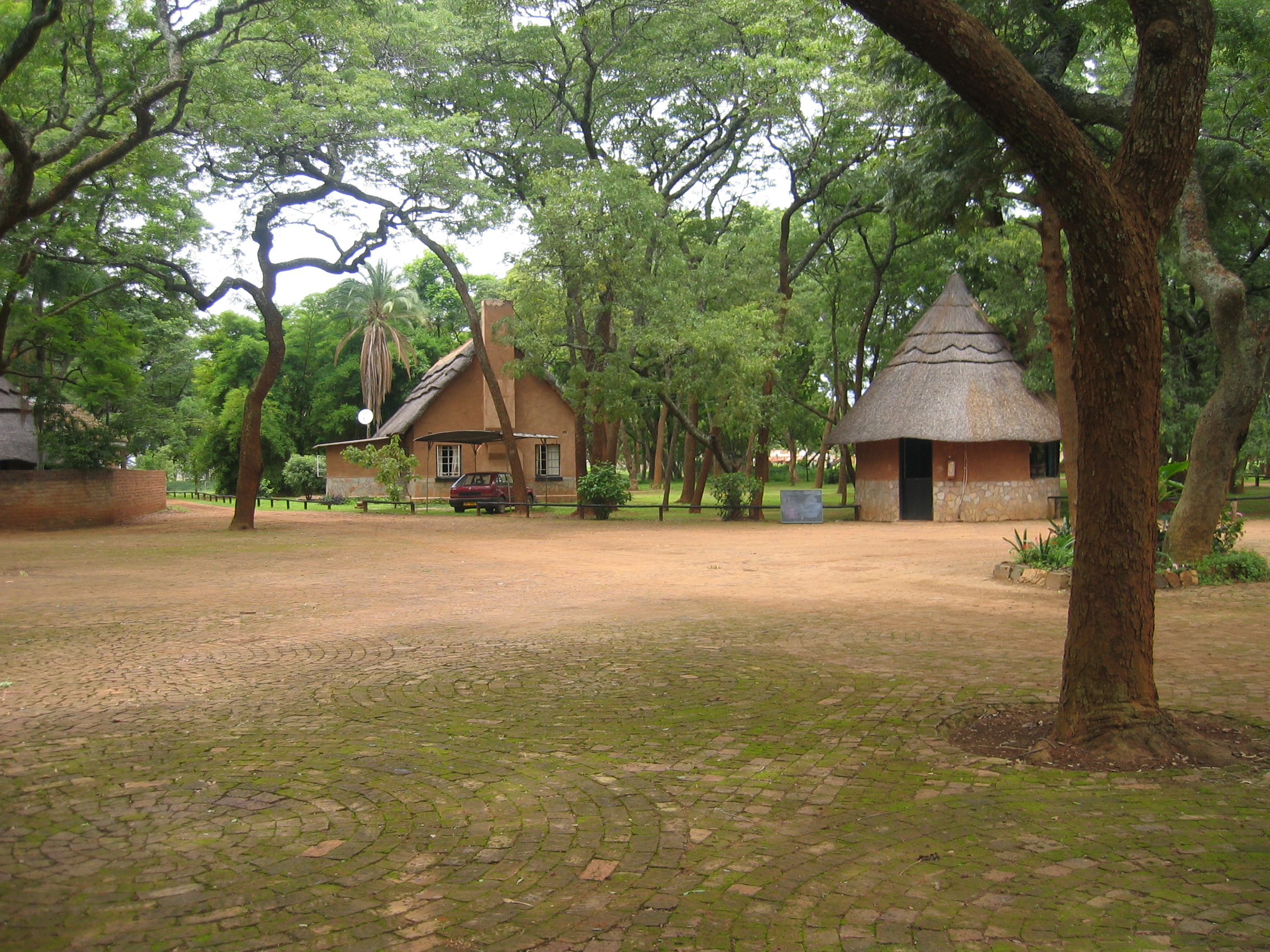
The first time we visited this café, I confess I was in it for the internet connection and could have cared less about the food, the gift shop, or the ambience. As soon as we pulled up, I was surprised to see a man guarding the parking lot in khaki safari outfit complete with pith helmet.  He stands outside the place, watching your vehicle to make sure no one interferes with it, and then he directs you as you reverse onto the road. For this service, you give him a tip of a couple of those tatty US dollars, and it is money well spent.

Inside the terracotta colored walls that keep you unaware of the traffic outside, there is house/gift shop, and a lot of outdoor seating under the trees and on the verandah. The grass is like a thick carpet and all around it they’ve placed objet d’art that you can buy in the gift shop. My favorites this time are a bunch of little metal hedgehogs that appear to be streaming through a tunnel, as if they are in a hurry to get somewhere. There are also metal chickens, butterflies, and song birds nestled amongst the sofas and tables that are scattered on the grass, as if having such furniture outdoors is perfectly normal.

We almost always get baked goods and tea here, all of it delicious, and then I poke around the gift shop and try to justify yet another bag, this one made out of bottle caps. (I can’t. It stays at Cork Road.)

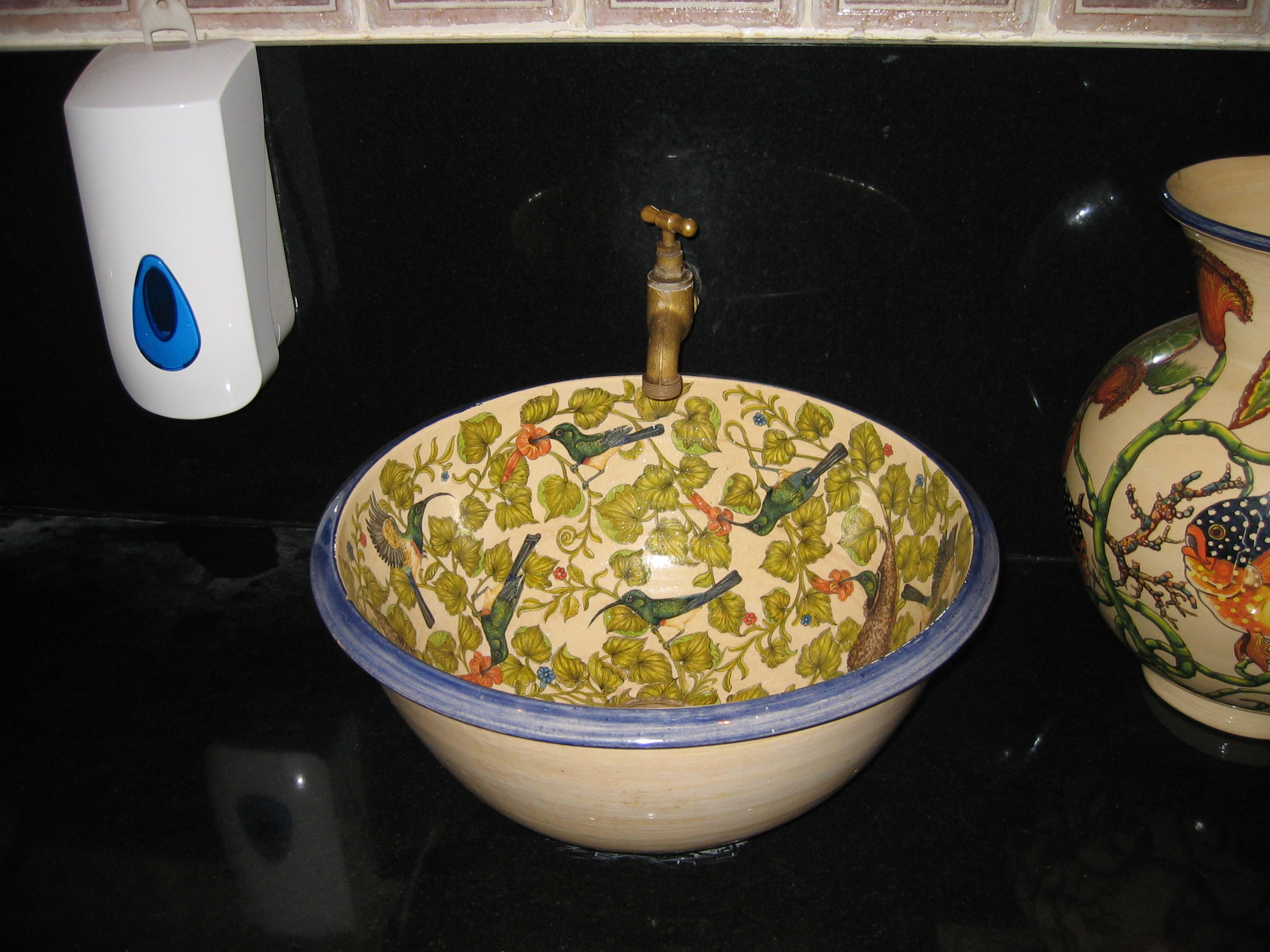
The other thing I love here is the sink in the ladies’ loo. It’s too beautiful to be  there purely for hand washing.

Perhaps what I love most about it is that I’ve been there enough now that I feel like a regular, which is a good way to feel when you are in a land that isn’t your own.

IMG_0201

How People Believe Peaceful Sleep will keep Mosquitoes at Bay

When I mention that I’m being plagued by mosquitoes, more than one person innocently asks if I’ve tried the insect repellent Peaceful Sleep. Not only have I tried it, I apply it regularly. Even so, my ankles and legs are covered with approximately forty bites. From a single night in Z-ma’s lounge without long pants. When I am itching, it annoys me, but when I am not, I appreciate the sincerity of their belief.

School Uniforms

In America, I loathe the idea, but here and in Ireland and England, I’m forced to admit that the kids just look smarter when they’re dressed in uniforms.

The News

The news Z-ma gets is France 24, a sort of French version of BBC news that that is presented in English primarily by Irish newscasters.  While I’m here there is a lot of American saber rattling because of the situation in Syria, and it is interesting to hear the news from a perspective that is ever so slightly more critical of U.S. foreign policy than I would be hearing at home. It’s subtle, but it’s different.

And also, I will never understand centigrade. All the years I spent learning the metric system in elementary school because the U.S. was supposedly going to convert were a waste. Not one piece of info aside from “based on ten” latched onto my brain cells. I have a better memory of the cartoon characters in the textbook that were meant to promote metric learning than of the actual calculations.

I gather thirty is hot, yet when I hear it, I wish I had my fleecy boots.

Making a Plan

IMG_0243 2

Zimbabweans are famous both for using the phrase “make a plan” and for actually doing the plan making. Americans might use some version of this phrase and they are masters of planning parties, planning their finances, and planning escape routes, but this is different. In the US, it’s about the future and how to keep things safe and secure. In Zimbabwe, it’s more about making a plan to deal with something unexpected that has arisen. Z used this phrase for the first time when he proudly told me that he’d made a plan during a particularly bad water shortage to water the parched garden with used bathwater. Z-ma’s house is testament to Zimbabwean plan making: if the electricity goes out, there’s an invertor that relies on a car-like battery that offers enough power for a light and her television. The act of taking a shower involves plan-making so elaborate that Z and I won’t take one until we get the nod from her: the geyser (water heater) has to be turned on so there is plenty of hot water, but then you  have to judge when the city water was most likely to be on so you can cool the scalding water enough to shower. If the water is not on, then you have to consider a bath that has been cooled with fresh water that is kept in buckets lining the walls of the bathroom. Making a plan is essential if you want to survive in Zimbabwe.

The Tortoises

IMG_0259 2

For reasons that include my father and a few misdirected box turtles in the middle of an Indiana road at pertinent times in my life, the turtle is my power animal. It’s not very fierce, but they move thoughtfully, get where they are going, and carry their homes on their back. Because I’m from Indiana and turtles there have feet not fins, I call them all turtles and not tortoises.  (Turtle is just a better, less French word.) Despite having shown Z actual documentation that sometimes turtles have real feet and walk on land, he insists I call them tortoises, which I only do when in Zimbabwe because it seems polite. In addition to a turtle necklace Z gave me when we were courting, I travel with a stuffed turtle named ShellE who has been photographed on most of the trips I’ve taken in the last four years.  (That’s her with the big guy up above. In case it is unclear, ShellE is the one on the left.)

Z-ma has three tortoises in her yard. One is a great big strapping fellow who greeted me last time with this quick parade around his pen, as if he were saluting me. On this visit, he mostly stays in his shell, but I’m not feeling too bitter about this because apparently tortoises aren’t very active in winter. The second tortoise lives with the larger one and is medium sized. It reminds me most of the ones I grew up with. It’s shell is kind of roundy and marbled.

And then there is the latest addition. A tortoise so small that her name had to be Tiny. For Tiny, multiple plans have been made to ensure her survival. Her pen is closest to the house and has a cover over it so no bird of prey will swoop down and grab her. At night, Eunice brings her into the house in a covered box that is placed where the dirty dishes used to go. The dirty dishes quit going there when, one morning, Tiny was covered in ants that had been attracted by whatever deliciousness was still on the dirty plates.

My favorite tortoise anecdote from my mother-in-law’s, involves the lettuce that she grows there that the tortoises are fed. Z-ma particularly likes rocket, and one day she suggested to Eunice that perhaps the tortoises would like it too. Eunice was dubious, took a bite of the rocket, and spit it out, saying, “No Madam, the tortoises will not like this.” And thus Tiny and her comrades were saved from having to feast on this bitter leaf.

African Thatch

IMG_0282.JPG

It’s different than Irish thatch and different than English thatch. I love them all.

Koeksister

It looks a bit rude, but you say it “cook sister” and it is a twisted, syrupy pastry that Z-ma makes for Z whenever he comes home and which he graciously shares with me. If I were a better wife, I’d learn how to make them but instead I’ll take him to Krispy Kreme and we’ll try to satisfy our longing with an original yeast donut. (It’s not the same.)

Visiting with Friends

Friends anywhere are special and life is unreliable for everyone, but there is something about the tenuous nature of life in Zimbabwe that makes friendships seem more precious. Almost none of Z’s friends from his youth are still in country, and many of Z-ma’s friends and family have either left the country or have moved from her small town into the city. When we spend time with Z-ma’s friends, it seems almost holy. First, I must confess that part of my love of these friends is that they treat Z and me like rock stars. Because they know how important time with family is, they are happy that we are here with Z-ma for three weeks. But beyond feeling like we are HRH William and Kate on tour, these women are fun. They might be talking about whether or not they’ve had Zesa or their most recent fine for some made-up traffic violation, but they are lovely, funny and kind. Because I’m an introvert, I find myself shocked by how drawn to them I am, and I’m uncertain why I feel attached to people I’ve barely known and who are so different than I am. One of the few disappointments of this trip is that one of the key players has been away having those medical tests, and so we’ve missed our chance to really visit with her.

Walled Gardens

IMG_0253

Z tells me that the Zimbabwe of his youth did not require the high grass or cement walls around a yard, topped with razor wire or bits of angry, broken glass. Intruders were rare. I assume that the walls went up during the war that waged during his childhood, but he assures me it wasn’t until much later. I find this very difficult to fathom because, though the walls can make life here seem isolated, there is a peace and privacy behind these high walls that you don’t find in many American yards. Z’s brother and family live in Harare and I was surprised by how quiet it was, how safe I felt sitting outside (with my feet soaking in a bucket of water), looking at the gorgeous flowers and plants. The outdoor spaces here are as much a part of the home as are the indoor rooms.

My Father-in-Law’s Roses

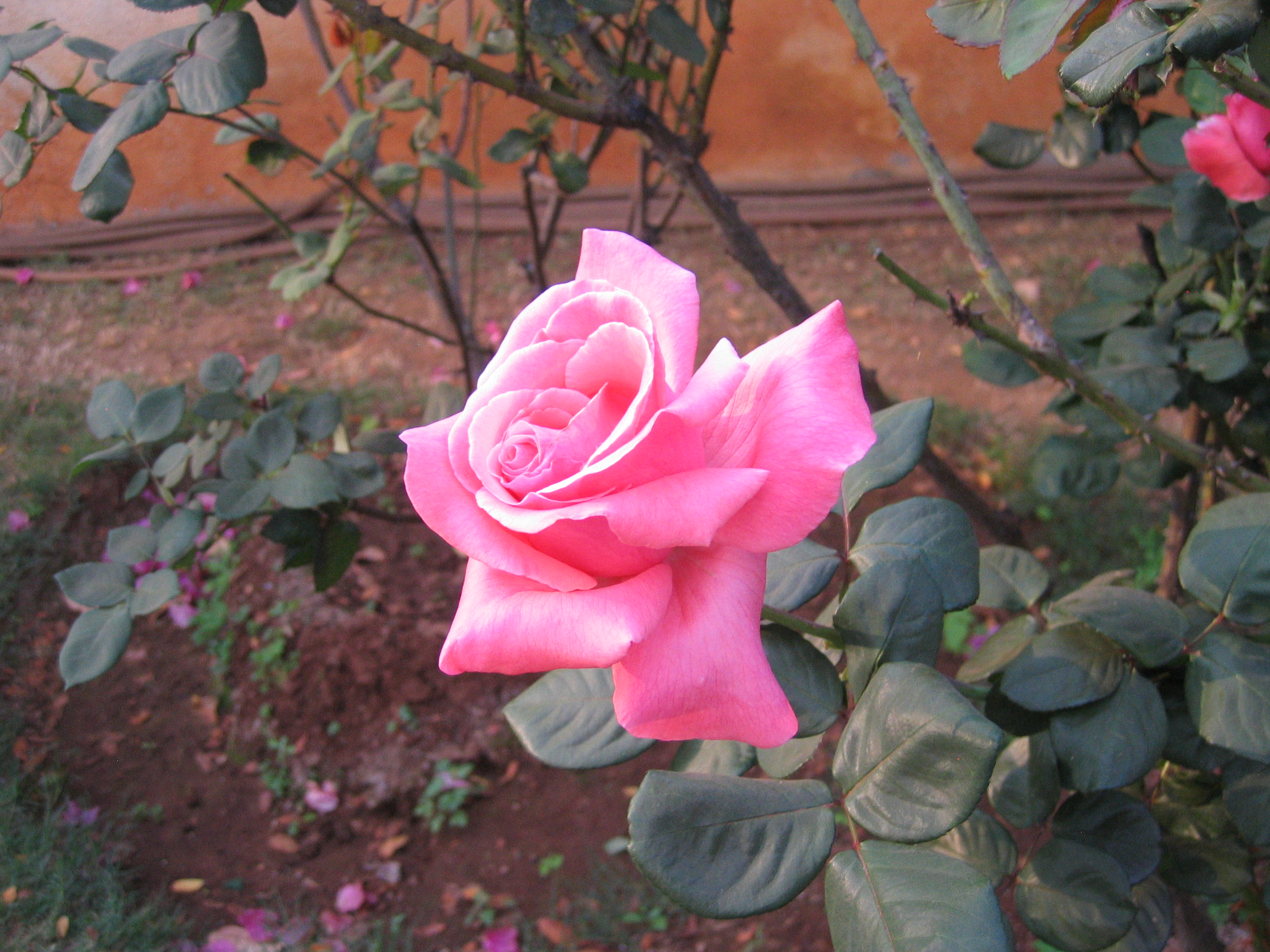
One of these roses magically appears in my bedroom on a regular basis. I like to think Z-dad and I would have had something to talk about since I’m from a town that was once the world’s largest supplier of roses. Unlike so many roses these days that are scentless, these smell wonderful.

IMG_0233

The Writing Desk Z-Ma Created for Me

I had no idea what to expect from something called an in-law when I got married. Based on TV shows, nothing much good. Instead, I got a woman who sneaks roses into my room, who doesn’t make me feel judged for my tedious, picky eating, and who surprised me with this writing space–Z’s old table covered with one of his beloved aunt’s table cloths.  Blue is my favorite color. Note the tortoises in the upper right corner. First there was one and then the other two arrived. “They’re a little family,” she said. Indeed.

IMG_0270

I could compile a list of things that are my least favorite, crocodiles being at the top of the list, followed shortly by other reptiles and insects and power outages, but the truth is, even my least favorite things give me a new perspective, and it’s good to have my cage rattled.

Pardon me. Z and I have to go make a plan about our last few days in Zimbabwe.

IMG_0244 

The Seen and the Unseen

Standard

IMG_0204

When we head to Lake Chivero, a national park outside of Harare that has been a favorite spot of Z’s family for decades, I have high hopes of seeing a rhino, despite the fact that none showed themselves when we visited on my first trip two and a half years ago. Then, it was the height of summer and everything was green and overgrown, so I left without “rhinoceros” ticked off my list but was sure I’d see one if we returned sometime in winter when the landscape is more barren, like it is now.

Rhinos look a lot more like rocks than you might imagine. I think I’ve spotted about fifteen within the first ten minutes of our bumpy game drive into the heart of the park. I haven’t. What I see is only a few big roundy, rhino-shaped rocks. So much for my new prescription sunglasses.

When you grow up in a land where Holsteins are easily spotted as they stand in pasture against the razor edge of a skyline, it’s a shock to realize how animals in their natural habitats blend in so seamlessly. You’d think, for instance, that a zebra would be the easiest creature to see because of its black and white stripes, or a giraffe because of its long neck, but it turns out the patterns and shapes their coats and bodies make are better camouflage than Harry Potter’s Invisibility Cloak. On the last trip, I had trouble seeing the animals at first. On this trip, I see them everywhere, only most of the time there is nothing there. At one point, I am even convinced I’ve seen one of Z and Z-ma’s beloved rock rabbits (Google it—they are more meerkat/tiny elephant than rabbit), even though they haven’t been in the park for years.

Fortunately, a giraffe has the good grace to stand in the middle of the road in plain sight, and this gets the game-sighting party started.

IMG_0211

Before long, we’ve seen about twelve giraffe, several zebra including a baby that was suckling, and a variety of buck.  (I’m never excited about buck since there are approximately two deer to every one resident of Indiana, but Z’s family gets as excited about “lesser” animals as they do the Big Five, and their lack of favoritism is a quality I love about them). And then a rock moves. And the rock has a horn. And another rock with a horn. And another.

IMG_0217

When I was a kid, I had an alphabet pop-up book, which I now realize wouldn’t have been so engaging without the animals of Africa to illustrate the different letters. I was never a fan of the “R” because a rhinoceros popped out of the center of the book aggressively, its horn pointed right at me. Last time we were here, I must have had this image in my head, because while we were picnic-ing, I saw a rhino headed straight towards us, only to realize after my heart had amped up to 800 beats per minute that it was a game warden on a bicycle with a gun slung over his shoulder. (This is why I have new prescription sunglasses.)

While I am happy to see these rhinos (a different type has recently gone extinct because of poaching, and given the stupidity and greed of some humans, I realize how lucky I am to witness these in their natural habitat), I’d be lying if I told you I am disappointed that mostly we see the backsides of them, lumbering away from us through the tall, dry grass.

Before we leave today, we will also have added a couple of anxious looking warthogs to our list, as well as a bush pig, which I’m assured are usually hard to see. The warthogs are one of my favorites. Their tails remind me of the teasel weed that my mother used to have stuffed into a pitcher for decorative purposes, and that’s what I see first before I realize an animal is attached. We look at each other for a moment, this particular warthog and I, and then it goes skittering into the bush. We see it running parallel to the car as we drive, like it’s hoping to keep tabs on us and won’t feel safe until we’re nothing but a cloud of dust.

But before we see the warthog, we make our way to Bushman’s Point, our picnic destination. We are disappointed to see other people already there, so we situate ourselves in a less perfect picnic spot next to a thatched information kiosk highlighting the animals that are in the park and could, if they want, interrupt our lunch. Z has regaled me with tales of his niece’s birthday party here when she was little and how a monkey snatched her baby brother’s bottle. I’m keenly aware that there is no security fence between us and the animals we’ve seen on the drive, and I won’t even let myself think about how you can’t really create a snake-free zone so near a lake.

Z suggests that I join him on the wall of the kiosk instead of sitting on the ground. It would be a good vantage from which to eat my cheese sandwich, except for the part where I am incapable of hurling myself onto the wall, nor am I able to climb up and on to it. It seems like it should be such an easy thing to do, but it is high and I am not athletic. (I instantly feel the failure of every elementary school gym class when the teacher would decide it was “pole” day and we needed to try to climb this slick, wooden pole that hung from the ceiling of the gymnasium to demonstrate our worth. Mostly it was an exercise in mortification because I could never get myself any higher than wherever I first placed my hands, meanwhile classmates were shinnying up to the rafters, at which point I would try to make myself feel better with the knowledge that I usually scored higher on math and spelling tests than the best pole climbers. And then I’d worry that one of my classmates would fall.)

Finally, I flopped myself onto the tarp with a sigh, and then the flies came. They couldn’t have had less interest in Z or Z-ma, but they were trying to fly up my nose and into my mouth. I flapped my hat at them, furiously, and realized how I looked like a caricature of an American tourist in Africa, fussing about a few pesky flies. In my defense, they were so annoying and persistent, and I was relatively certain that just before trying to crawl into my mouth they’d probably been sitting on the giant rhino poo we’d seen on the road. If we weren’t on a sort of pilgrimage, I would hop in the truck, rolled up the windows, and demand that we drive away from the rigors of high kiosk walls and overly extroverted flies.

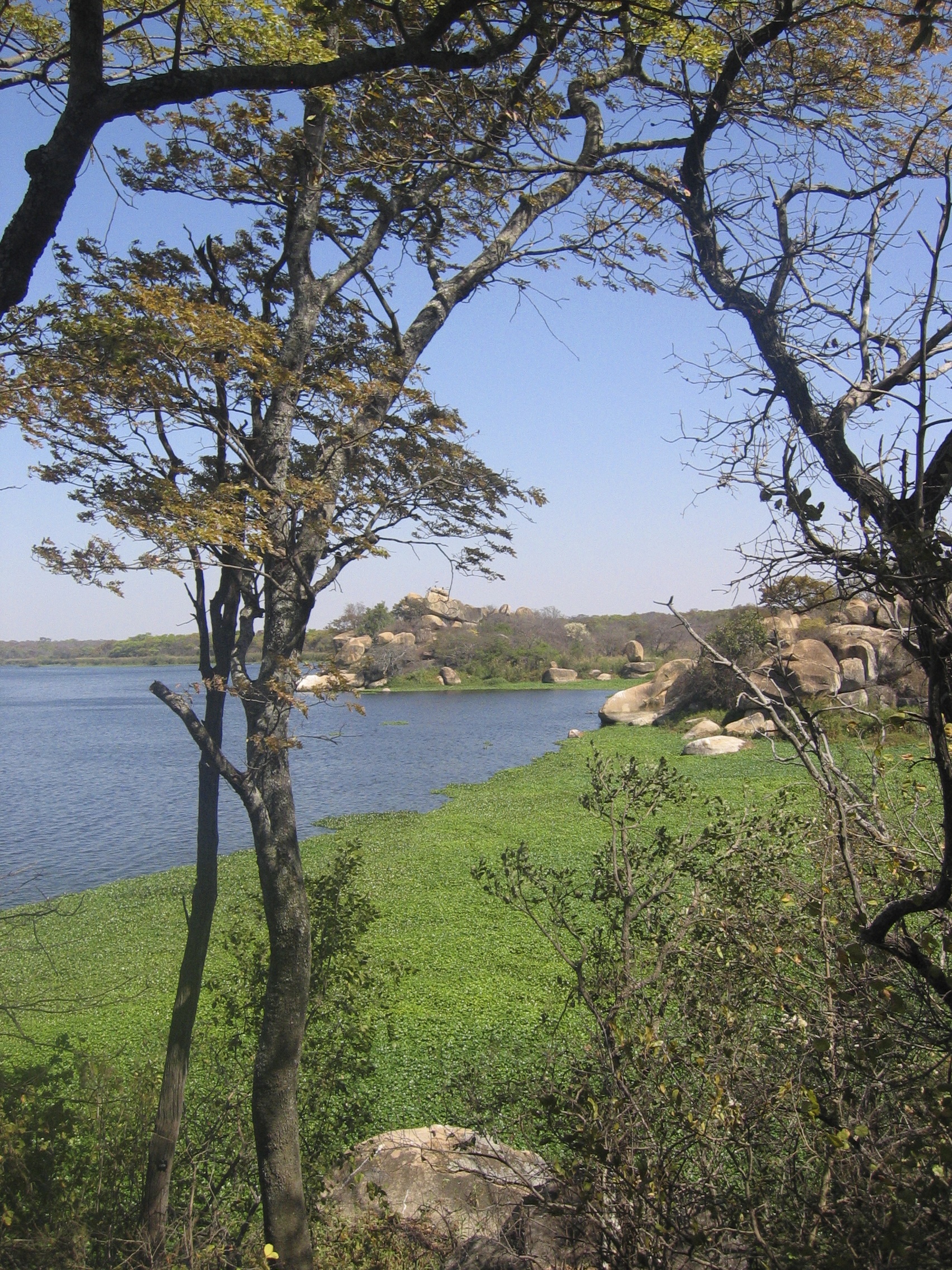
The truth is, though, I love this spot for a lot of reasons and so don’t want to leave. It’s a beautiful. Huge rocks balance on each other in impossible contortions, there’s a lovely tree canopy, and the lake is in the background. While the rest of the park looks dry and brown at the moment, the area around the lake is verdant. When you see water in Zimbabwe—especially in the dry season like now—it feels kind of holy. This place especially so because of the San (or bushman) paintings on some of the rocks near the water, and because Z’s father’s ashes were scattered on the lake fifteen years ago, three years before I met Z. His family has made regular trips here  to celebrate his life, which to my mind is a lot less depressing than going to a cemetery because the place is alive.

The walk to the water is rocky and worn. Chipped stone steps and pathways leave me lumbering like a bear, and huffing and puffing like an asthmatic, which I wouldn’t feel so bad about if Z-ma, who has almost three decades on me, weren’t navigating the path better than I am. We stop when we are almost at the water and Z tosses some rose petals on the wind near a tree where his aunt’s ashes were scattered a few years ago. Z-ma says hello to her younger sister, using a pet name, and we move on.

We stop next at the San paintings in a recess in the rocks. They’re behind a fence, but close enough that I could touch them if wanted to. When I see the reddish pigment on the canvas of the rock, I have a lot of questions about who they were and the meaning of life and what I would have done if I’d been born a hunter-gatherer, since I can’t handle the insects, rough terrain, lack of indoor plumbing, or, let’s face it, lack of indoors period. Looking at the paintings, I feel the way I did when I first saw Stonehenge or Poulnabrone dolmen in Ireland, which is to say, I can’t take it in in any sort of satisfactory way.  It is too huge a thing to contemplate.

IMG_0301

Finally, we move on to the cement jetty, where Z and Z-ma cast their petals onto the water, and I stand back, wondering what the appropriate way is to mourn or offer homage to a man I’ve never known.  Though I don’t feel it here, when I am back at Z-ma’s, I’m very aware of Z-dad’s absence and what I’ve missed out on by nature of having come to the family too late to meet him.  At the house, I look at his rose bushes, the structures that used to encompass an aviary, the now irretrievably empty pool where two proud-looking lions used to spit streams of water. At night when we watch the one channel of TV that Z-ma manages to get, Z sits in his dad’s old chair, and I can imagine his father sitting there, even though my vision of him is only a guess, based on what I’ve seen in photos and what I’ve sussed out by watching Z and his brother: how they speak, the way they hold themselves, their strong senses of self.

It’s another mystery I can’t solve, and so after a few moments, I get distracted by lizards, sunning themselves on the rocks.

IMG_0242 (1)

Open for Business

Standard

Z likes to keep his clothes and shoes until they wear out. I don’t mean, until they have a spot on them or a little pull in the material under the arm and end up in the Goodwill bag. He brings a whole new meaning to threadbare. Right now his favorite shirt in the whole world—after these three weeks of Eunice’s vigorous hand washing—will be lucky if the collar is still attached. It’s just a mass of strings at this point. When we first got together, he was sleeping in a holey T-shirt that was more hole than shirt.

I tell you this so you will understand how overjoyed I was that Z decided he was willing to take his main pair of “teaching shoes” to the cobbler while we are in Zimbabwe. He is already a man of few shoes, and his two other options involve a pair of off-white veldskoens (sort of like southern African Hushpuppies) that don’t agree with the Seattle weather and a pair of black lace-ups that I suspect he has had since college and that he has taken both Gorilla Glue and a Magic Marker to, and to which he always declares, “They’re fine!” when I suggest that perhaps it is time to retire them. Let’s just say that I knew it was true love–and a good case of dimples–that kept me from judging Z by his shoes when I first met him. I’m not a complete shoe snob, but I’ve judged other men for less than globs of glue and a toe box that has clearly been colored in with marker.  These shoes he reluctantly agreed to take to the cobbler are my favorite ones because they are the least tatty, and so I was pleased that they might be saved from some of his own cobbling handiwork.

When I’m in my hometown, I invent reasons to go to the Greek cobbler who has been in business since the dawn of time. His shop smells of polish and leather and always seems like a place where life happens. He’s friendly and studies a shoe carefully before agreeing to fix it, so I get a certain jolt of pride when he declares that a shoe I’ve brought in is well made and worth saving. I once made a tiny hole in a pair of slippers bigger so I’d feel justified in taking slippers to him, and once there, I beamed with pride when he complimented their German construction and said it would be a shame to throw them out because of such a small tear.  So I was looking forward to seeing the Zimbabwean version of Mr. Marinakes, seeing if his shop smelled the same, if the energy was similar. Not to mention, I can only imagine how busy a cobbler in Zimbabwe might be given how much people walk there (though a lot of the walking is barefoot, which probably does cut into the shoe-repair trade).

So day before yesterday, Z put his shoes In a plastic bag, and we drove to “the shops” in his hometown, which kind of looks like a American strip mall in shape only, but which ultimately seems random. As in, I’m not convinced that during the three weeks I was there some of the businesses didn’t change over night.  I’ve noticed in Zimbabwe that things often seem more temporary than what I am used to. What there is at the shops is a big TM supermarket, a smaller grocery run by friends of Z’s family (who have a cat with kittens mousing inside, which seems genius and cozy and makes them way better than the chain store by default), a bank, a post office, a fruit and veg stall, a medical testing center and copy shop (where Z got a million copies for about $8 for some research he is doing, and where, I feel certain, the women who work there might be running a detective agency on the side), and a mattress store. It reminds me a little of the Fisher Price village I had as a kid in that exactly what you need is there, but not much of anything else. On my first trip to Zimbabwe, the shops were decorated for Christmas—it was a single strand of colored bulbs and half of the bulbs were burned out or broken.

Also, the moment you park your car, someone—often a young man in a red vest—appears at your car window and tries to sell you airtime for your cell phone. At the bigger shops in Harare, the airtime salesman compete with people wandering around trying to sell produce, despite the fact that you are either growing some in your own garden or you just bought some at TM. But in Z’s hometown, it’s all about airtime. Z-ma seems to be a favorite of the airtime salemsen. They call her gogo (granny), and at the nearby petrol station, one guy yells Gogo, Gogo as soon as he sees her coming, and he has huge smile on his face, which kind of makes us want to buy more airtime than we need.

Also, in the parking lot, there is a man in a truck with a big wire cage who is selling chickens.

As we parked the car, I was looking around for the cobbler’s shop, to no avail.

Z confidently walked along a wall and then behind a wall, and then around a little half wall. And there, at the back of the shops where I was expecting to see, I don’t know, trash dumpsters, sat a man with a sort of card table and a few tools. On the ground beside him were maybe six shoes, some singles, some pairs. That’s it. No walls, no roof, no rows of unclaimed shoes, no excess leather or shoelaces, not even an “open” or “closed” sign. Just a guy with a table, a few tools, and apparently, if Z-ma is to be believed, some talent.

Z’s cobbler looked at the shoe in question and listened as Z explained that he only needed to have the rubber sole glued back on. The cobbler shook his head and demonstrated how he’d stitch it up so it would be stronger, and suggested that the other shoe should be stitched too since it would probably come unglued at some point. We weren’t sure what the timeframe was for Zimbabwean cobbling and we knew we had a plane to catch in less than a week, but we were assured that the shoes could be ready later in the afternoon.

Z told the man that he wouldn’t be back that afternoon but would pick them up in a couple of days. I’m anxious to see this guy’s handiwork to see how it compares to Mr. Marinakes’s. The cost: $3, which is way cheaper than the new pair of shoes I’ve been hounding Z to buy for the last six months.  I fear this is only going to strengthen his view that no piece of clothing or footwear is ever beyond salvageable.

For a week when we drive into Harare to visit the extended family, I’ve been puzzled by the graffiti painted on a bridge in Harare. It says SHOES, and it is only after meeting this cobbler that I realize the word is not the work of some hooligan with a can of spray paint slapping random nouns on concrete in the dark of the night, but is instead the open-for-business sign of the guy sitting next to the bridge with his crate and a few tools.

It is exactly this sort of thing that leaves me astounded here. There is this lack of the concrete that seems to surprise no one here but me. For instance, some of the streets have names, but no one seems to know or use those names. I listen to Z and Z-ma discuss driving routes, and they say things like, “You turn by the big tree” and then we get there to the turning place and there will be a load of trees, though one will be bigger than the others. I hadn’t noticed that it was a “big tree” at all. When I ask what the road is called that goes from Harare to Z’s hometown, he and his mother kind of look at me like it is an insane question. Why does a road need a name? It’s just the road that gets from one place to another. Before I came here, I never understood why, when I asked Z how big his hometown was, he could never give me a ballpark number. Now I understand because I can’t even tell where the town ends and the rural area begins. On our trip to Kariba, we were still in town even though to me it felt as if we were deep in the bush. It annoys but doesn’t rattle them that half the “traffic robots” (stoplights) don’t work. I think in the US, if there were regular stoplight outages, our whole society would break down. We need concrete markers so we know when to stop and when to go.

The best analogy I can come up for this thing I’m having trouble describing is this: in the U.S. it’s like everything has been drawn in a coloring book with bold outside lines, so you know what’s what and where to color and what the picture is and will be when you are done. In Zimbabwe—and maybe it is this way in Africa in general, I can’t say—it’s more like there are no outside lines; there are, instead, vague colors and shapes that form a different sort of tableau than the one I am used to. For instance, you don’t have to have walls to have a business and you don’t have to have a cobbler who has a front door.  These are things I would never have guessed.

Tea with Skampy

Standard

Image

Mac, a Scottish Terrier I love back in the U.S., has been feeling under the weather, so today, I’m introducing you to my other favorite dog in the world, Skampy. I’m convinced he and Mac would be great friends if they didn’t live half a world away from each other. They’ve got some shared terrier genes, and tonight while Skampy was on his nightly patrol of Z-ma’s yard, his voice was the same timbre as Mac’s, and it sounds like it comes from a creature larger and fiercer than someone of his size and regular tail waggings.

One of the first things I had to learn  is that he might look clean but he’s covered with Africa, and one of his goals in life is to make sure that you never leave his company without an orange splodge on your leg. The first time I met him, he leaped up on me and left two paw prints on my shirt.

The second thing I had to learn last time I was here is that he is not an American dog. I’d happily brought him one of those big red rubber Kongs that you put treats inside to keep a curious mind occupied. Because American dogs are bored, what with so few of them having gainful employment, Kongs are great ways to pass time. The Kong confused Zimbabwean Skampy. He licked it but couldn’t figure out how to get the treat out of it even when it was rubbed in bacon grease. Ultimately, the two of us were frustrated by the endeavor.  I assumed this was a failure on his part, that clearly he wasn’t all that bright, but then Z-ma pointed out that Skampy has real work to do and can’t be bothered with such frivolities like trying to get a treat out of some magician’s trick of a dog toy.

Skampy does work hard. All night long. He barks and barks, both to alert people on the other side of Z-ma’s high grass-and-wire fence that he’s around and will eat them alive and to converse with other neighbor dogs.  (My best guess is that they are thinking of unionizing, based on the intensity of the barking.) As my brother-in-law mentioned yesterday, in Zimbabwe, you need a high wall and a guard dog as a first alert against would-be thieves. Though we suspect Skampy would just lick and dance for intruders, it is nice to know he’s out there, making the rounds.

Unfortunately Skampy and the rooster next door seem to have worked out some sort of agreement wherein Skampy doesn’t stop barking until it’s time for the rooster to crow, so there isn’t a lot of silence here when you want to sleep. During the day, he spends a lot of time in his dog house with his forehead pressed to the cool stones beneath it, as if he’s nursing a hangover. One morning I gave him a piece of bacon and he didn’t even have the energy to lift his head and get it from me. He just stuck is tongue out and “caught” the bacon like a frog would a fly.

One of my favorite times of day here is teatime. Around 4 p.m., Z-ma loads up a silver tray with a teapot covered in a red and white tea cozy, a sugar bowl, some milk, a little container with biscuits (human cookies) and a cup of treats (dog biscuits), as well as several pieces of dry bread and a jar of peanut butter, because Dog can not live on Milk Bone alone.  We humans sip tea (Coke for me, because I don’t understand hot drinks in a warm climate) and Skampy eats treats. If he finds the treat particularly enviable, he carries it away from us and eats it at a safe distance from us, wary that we’ll decide to take it back.  Despite this being on the verge of peek mosquito feasting, I love this time of day, watching the light hit the orchids and succulents in the yard in that slanty way that gives things new life. We sip our drinks and talk about nothing important, interrupting each other to tell the dog what a good boy he is for sitting patiently to wait for his next piece of peanut butter bread.

Despite the way my brain tries to categorize stuff and the failure of my words, I’m really not trying to ascertain how one place is superior or inferior to another. I want to understand Z’s Zimbabwe, and at tea, I feel closest to “getting” this different kind of life in this different kind of place. I could decide every day between now and Thanksgiving in Seattle that I’ll have tea at 4 p.m., but it wouldn’t be the same. It isn’t my ritual. Yet when I’m there—despite the Coke I’m drinking—it feels like a practice I wish I could make mine—this delighting in simple pleasures. Unfortunately, I think trying to force it here would just end up seeming wrong—kind of like the little gum-sized squares of turf incense I bought once to try to duplicate the smell of Ireland.

There were a dicey few minutes one day when Skampy seemed to have gotten one of the small dog treats we’d brought him stuck in his mouth, so he walked hurriedly around the yard with a worried expression on his face, mouth propped open unnaturally. Z tried to help, but Skampy assumed Z was after his treat, so ran away. Just as Z-ma was prepared to call the vet to solve the problem, Skampy worked out a solution while hiding in the bunker he’s dug for himself just under the lounge window. He popped out a few minutes later, tail wagging, ready for another treat and none the worse for wear. But most days, there was no tea drama. And then, when the mozzies start buzzing around me—most prized guest at their dinner table—we pack up the tray, pat Skampy on the head, and shut ourselves into the house, locking doors, pulling curtains, and preparing for the evening.

___________________________________________________________________________________

Dog addendum #1): Yesterday, I discovered that Skampy has a sort of McDonald’s drive-thru window. At certain times of the day, he sits in front of the little kitchen window, barks his order, and Z-ma throws out some bit of dry toast or treat. Apparently he also does this if he smells cooking that he finds particularly appealing.

Image

____________________________________________________________________________________

Dog addendum #2): I find it ironic that the first dog of my life was my maternal grandparents’ Rhodesian Ridgeback, Wrinkles. (Zimbabwe used to be Rhodesia, so see, there was always a prominent Zimbabwean in my life. Z just doesn’t have a tail like a whip.) I remember my mother explaining that Wrinkles was a lion hunting dog, and I thought that sounded made up because lions only existed at zoos. Also, while I’m cataloging the misinformation about the breed that I had as a kid, I assumed it was called a Ridgeback because it stood on the back of a hill or ridge in order to leap on top of a lion. I had no idea that these dogs have a line down the middle of their backs that form a sort of ridge. Skampy has a lot of terrier in him, but since he was a rescue, it’s hard to know what’s mixed up in his gene pool. Personally, I think there’s a little Ridgeback despite his overt terrier characteristics because he has this little tuft of fur that runs the length of his spine and isn’t like the rest of his coat. It’s almost like a little backbone toupee made of a bird nest.

_______________________________________________________________________________________

[Dog Addendum #3): Mac the Scottish Terrier is on TOP of the weather now since his test results came back and gave him a clean bill of health. Skampy was definitely the beneficiary of my fears for Mac’s health, as he got extra treats and tum rubs while I tried to send good dog karma Mac’s way.]

Witch Doctors

Standard

Several years ago, Z was home in Zimbabwe when he got sick with a mysterious illness that wreaked havoc for months and no one could figure out what was wrong with him. We were just friends at the time, and I would get email reports from him about what the latest doctor he’d seen thought it might be. The symptoms were frightening and the possible (read: wrong) diagnoses ranged from just stress to that that Stephen Hawking disease. It was a scary time, and one of my frustrations was that I was (also wrongly) picturing him going to witch doctors without the training or knowledge that a good American doctor would have. Even as I thought it, I knew it was ethnocentric, but I couldn’t shake the feeling that if only he were in America, they’d figure out what was ailing him quickly and get him fixed up.

Eventually, after his GP in Zimbabwe had to cry uncle because she was at a loss, and after a host of specialists solved nothing, a very special specialist in South Africa ruled out all sorts of nasty things and then finally hit upon the problem: Back when Z was living in Indiana, a nice Hoosier doctor had prescribed for him a medicine for acid reflux but failed to mention he should take it for no longer than six months. In fact, the doctor kept prescribing it and subsequent doctors prescribed it as well. At the advice of the South African specialist, Z stopped taking the medicine and miraculously, he instantly felt better. I’m particularly fond of this story because the end result was a) a healthy Z and b) a Z who realized we needed to be together. (Win-win for both of us!)

So today we stopped by his GP’s office both to collect a prescription for muti he can’t get in the US (a good one—not one that poisons him) and to deliver a few treats to the doctor and her receptionist. I didn’t know what to expect when we arrived. I’d given up the notion of a witch doctor, but I’d be lying if I said I wasn’t expecting something substandard.

Instead, we pulled the car next to a gorgeous flower garden outside her office/home and two beautiful, barking Ridgebacks. We were greeted by the receptionist who offered hugs all around, seemed genuinely happy to see Z and to meet me, and who then offered us tea. Between patients, the doctor herself popped into the receptionist’s office, shook my hand, chatted about our recent trip to Kariba, asked after my health and what anti-malarials I was on, and then before dashing back to her real patients, hugged me.

I’m really not used to this in America. True, the doctor was a student of Z-ma’s and has taken care of Z’s family for a long time, but even so: tea? a hug? asking how I was “tolerating Zimbabwe”?

The water cooler at the Belltown clinic I go to is never going to seem quite so welcoming or refreshing.

Apple Pie, Chevrolet

Standard

So it’s Labor Day in America and the only way I realize this is that Z is supposed to go pick up his visa at the American embassy but he can’t because it’s closed. I’m imagining all the workers there, many of whom are Zimbabweans, roasting hot dogs and marshmallows in the embassy’s backyard to celebrate the workforce of the United States.

“What We Have Here is a Failure to Communicate.”

Standard

You know that look that fish have, with their mouths kind of gawping and their gills (or “ears” for illustrative purposes) flapping, as if to help them hear? Well, picture me looking like that whenever I’m in Zimbabwe, being spoken to by a Zimbabwean.

One of the great shames of my life is that though I love language, I’ve got no ear for it. I studied French for four years, but I never really got past C’est ne pas une pipe, and I learned that in art class. I’ve avoided problems with language by primarily traveling to English-speaking countries and Italy, where everyone seems to speak English anyhow, and even if they don’t, who cares: Italian is lovely and you can pretend it means all sorts of delicious things even if they’re just asking you to move away from the gelato counter because they’d like to place an order.

Zimbabwe should be no problem for me. Sure, there are three official languages here—English, Shona, and Ndebele—but mostly people speak English. Even so, I’m a disaster at a cash register at the grocery store. The clerk will tell me how much the bill is and then ask if I want Telecel phone credit for change (Zimbabwe is using the US dollar but for some reason didn’t import any coins, so you get change in store credit, air time credit, or sweets that they keep in the jar by the register). This is exactly when I have to look at Z or Z-ma with my gawping fish face and hope that they’ll translate for me.  I am being spoken to in my very own native language, but I just can’t decipher the individual words.

Z teaches intercultural communication and when I’m here, he is regularly gently instructing me, with reminders to stand closer to people in line because it isn’t America and personal distance is much closer here, or with suggestions that I tell the gardener that the new grass fence he put up for our arrival looks nice. I am a born observer, not an interactor. If given the choice between talking to someone I don’t know and hiding behind a drapery to watch them, I’ll pretty much always go with the latter if I think I can get away with it.

Eunice is Z-ma’s domestic worker. She’s lovely, friendly, and has to despair when she sees me coming because I can’t even keep my closet shelf orderly while I’m here.  Frankly, life back in Seattle would be a whole lot more tidy if we could clone Eunice. Every morning, Z whispers to me, “Greet Eunice” or “Tell Eunice ‘good morning’” and I do it because I know it is the right thing to do, but I am horrible at a) thinking up conversation beyond hello and b) understanding what her reply is. This is no failure of hers. Her English is good, but I just can’t decipher the accent. And when Z tried to teach me a few words in Shona to say to her last time we visited, I pretty much stopped with “mangwanani” (good morning) because all the other words blurred together in my mind and on my tongue.

Yesterday, I had an empty Coke bottle and I wasn’t sure what the protocol was for those. Do they return the bottles for deposits? Recycle them? Throw them out? I was alone in the kitchen with Eunice, so I asked her. She said something to me, and I  blinked at her,  cocked my head and said, “Pardon?” She repeated herself, and then took the bottle, did a little bow, and disappeared with it as if I’d given her a gift.

I still have no idea where the Coke bottles go, and my ears are still only as good as gills.

Xanax Safari (Part Seven)

Standard

Dear American readers, here are some things you should know about a road trip in Zimbabwe before you set out:

  • There is not a McDonald’s, truck stop, or rest stop every 25 miles, so you might want to go easy on the liquid intake.
  • Carry your own toilet paper (“loo roll”) because when you do find a place to use, the facilities might look like something from the backside of a U.S. National Park that the rangers haven’t cleaned up or restocked lately.
  • Don’t assume that a clean restroom means there will be running water. I’m still not sure what the protocol is for this situation, but my preference, upon discovering a toilet will not flush after I’ve used it, is to leave as quickly as possible with my head held high and my travel-size hand sanitizer clutched in my hand.
  • Sometimes a baobab tree is as good as it’s going to get. Try to situate yourself away from any oncoming traffic and check the area for wild animals.

This was our first stop on the drive back to Z’s hometown after leaving Kariba:

IMG_0248 2

This is known as “the Big Tree” because it is big and everything around it is small and scrubby and offers no real cover from passing traffic.

I can’t tell you how badly I needed to go, but I crossed my legs and prayed that Makuti and its dodgy but serviceable loos would appear on the horizon sooner than I knew possible, while my braver companions made use of these more natural facilities.

On the list of things we won’t speak of: the amount of loo paper surrounding its base. It’s a popular spot.

Road trips in Zimbabwe are different than they are in the U.S. Though I first read the motto “the journey is the destination” in a book about Africa (Dan Eldon’s illustrated journals, which are not to be missed), it is a road trip motto that I am more comfortable with in an American context, where there is a seemingly endless supply of pecan logs from Stuckey’s, giant balls of twine, and outlet shopping. Here, you climb in the car with a cooler at your feet full of cheese sandwiches and Cokes, and you drive and drive and drive until you get where you are going.

On the drive home, we reversed through the landscape that had haunted me on the way up. Even more of it seemed to have burned up while we’d been enjoying Kariba. Eventually we made it to a place called Lion’s Den. This is the name of an actual town and not a restaurant or a game park, like I thought, though what is there mostly is a good restroom (sorry the water isn’t working), a place to buy good biltong (like beef jerky—a family favorite that I skip because it isn’t “jerky” enough), and a great gravel parking lot for the brother-in-law to change a flat tire he didn’t know he had until he got a hankering for biltong.

On the drive we’d gone through three police roadblocks, where we were waved through in our vehicle, but the brother-in-law was pulled over because there was something irresistible about the fishing boat he was towing. (The purpose of the roadblock has yet to be explained to me in a satisfactory way, but because I was raised during the Cold War with stories of Checkpoint Charlie, my posture always improves when we approach one.) Later, on a nearly deserted road, we passed a policeman with a radar gun. Again, not entirely sure what the purpose of that was, since we were the only car on the road and it wasn’t a road you could go particularly fast on because of potholes, not to mention the rogue cows and goats, who roam about freely.

We drove through Murombedzi, which I was told is a “Growth Point.” I had big expectations. Something that had grown out of control, perhaps, but instead, what I saw was a few shops, a bottle store, a grain depot, ZimPost, some more goats, and a jacaranda tree that was beginning to bloom. It turns out “Growth Points” were really just places in rural areas in the 1980s that got designated as such so rural people wouldn’t have to travel to larger towns for needed services. Interesting.

About an hour from Z’s hometown, the trip was starting to feel unbearably long. I’d lost the ability to ohh and ahhh at balancing rocks (so cool) or the roundy, thatch-roofed huts (exactly how you want places in Africa to look), or even the joy of uncontained livestock leaping in front of your vehicle.  So I suggested we play the alphabet game. You know the one, where you find an “A” on a billboard and then move on to a road sign with a “B” on it. When you get to “Q” you pray for a Quick Lube or a Quality Inn.

It turns out you can’t really play the alphabet game on a rural Zimbabwean road. We made it to “D.”

Perhaps the best thing about a long road trip—aside from the joy of good plumbing—here or there, is that if the journey is long enough, you are so happy to arrive home that you forget how sad you were to leave whatever hunk of paradise you just left.

Xanax Safari (Part Six)

Standard

Yesterday we said goodbye to Tambonette. I was sad to disembark and say farewell to Nhamu and Aleck (who makes the best bacon ever), but I wasn’t disappointed to be heading back to the Wild Heritage lodge. Once there, we weren’t greeted by our own personal elephant or zebra, but there were buffalo lounging around on the flood plane. I wasn’t as enthusiastic as I should have been. Apparently, you don’t see these often, and it wasn’t until later that I realized these were the buffalo with the big curly horns that make them look like cranky English barristers.

The non Americanized Zimbabweans were shrieking that the water in the kidney-shaped pool was too cold and insisted the bathwater-like jacuzzi was perfection. This is the single area where I was able to prove myself on the trip. It was cold, but it wasn’t freezing. Z and I have waded in the ocean off Washington coast, so we know cold. We splashed around in the water, listening to the hippos do their weird snort-gargling in the distance. There was an ominous-looking pool brush floating around the bottom of the pool that gave me a bit of a fright, but on the whole, it was a body of water that didn’t cause hyperventilation.

As we left Wild Heritage, I started to work myself into a pout because it was the only day out of the five in which I hadn’t seen an elephant. Before I could get my lips properly pout-shaped, an elephant moved at the side of the road. We quickly saw three others, flapping their ears and chewing whatever the elephant version of cud is. Further down the road, my newly trained elephant-spotting skills were put to the test and I saw a few more elephants high on a hill. They were waving goodbye with their trunks.

And now, I can say it, I miss Kariba. It was hot and made me cry. I’ve probably got scars from mosquito bites that I’ll carry the rest of my life. My sister-in-law could have been trampled by an elephant. I nearly shat myself when Mistresses was interrupted by something that went crunch in the night.

But it was something special. I’d say it was a trip of a lifetime, but I’m married to Z, so whose to say?

IMG_0234