Category Archives: Memoir

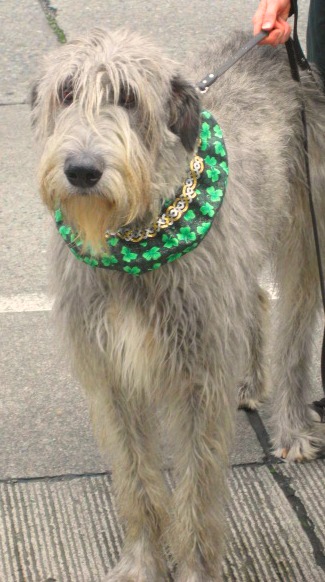
Keep Your Tail Up, America!

Standard

img_6267-1

You remember that one time when America managed to elect a new president who is the equivalent of the reprehensible James Spader character from every John Hughes movie ever made?


Yeah, well. Here we are. John Hughes is dead and there’s no re-writing a happy ending to this one. Duckie is not swooping in at the eleventh hour to save us.


Z and I are in Philadelphia for a conference of his. Tuesday night, we were in Seattle packing for an early morning flight while the votes were being counted.

Greetings from the Philly airport.

Z is an optimist and I am…not, so I was on my end of the sofa sobbing and squirming like someone I loved had just been put on life support by a grim-faced doctor, and Z was still on his end of the sofa shouting, “Come on Pennsylvania! Come on Wisconsin!”


Z had been so sure that Hillary would win that he hadn’t even conceived of an evening where she wouldn’t. He’d come home with a bottle of champagne and big smile on his face, even though the dominos were starting to fall. Because I’m female and I grew up in an era when girls were given their Title IX rights (no matter how capable and qualified they were, it would never be about them–the big game on Friday night was always only ever going to be for the boys), I was less sure.


So I became the realist in the house a full two hours before Z did, which is a rare occasion—Z is always the one winding my big ideas in. The sight of him cheering what was clearly a losing race, at least electorally, made me cry even harder.


One of Z’s more delightful characteristics is how much he loves this country. He’s obsessed with it. He’s ruined perfectly good lazy Sunday mornings in bed because it’s time to Meet the Press. He follows politics. He remembers names. He’s aware of processes I didn’t even know our government had, and he explains them to me regularly because I’m often distracted and can’t remember. Even today at lunch, he had to remind me why we call the press the Fourth Estate. I thought it must have something to do with William Randolph Hearst’s fancy house in California.


I knew the election was going to disappoint him before he did. While my friends were texting me about how they didn’t know what to tell their kids, I was wondering how I was going to explain to Z that America really just wasn’t that into him. In fact, half of America would very much like him and his ilk to leave so it could see other people exclusively: mainly the white people who were born here.


I am trying not to hold it against strangers who don’t know Z and voted the way they did, but I will admit, I am still struggling very hard with the ones who do know him, the ones who purport to delight in him, who made a similar choice. No one owes me or Z or anyone else (gay, female, disabled, minority, immigrant, whathaveyou) their vote, and I’m sure they had their reasons even though I can’t personally understand them.


But by the same token, I’m not feeling like I owe any of them my graciousness right now.


If you are here and suspect I’m some kind of whiny liberal cry baby who is speaking in hyperbole about how stricken I’ve been since Tuesday—an event that felt equal to my first heart break, or eerily reminiscent to how gutted I was when my father died suddenly in 2001, or only 12% better than the afternoon six years ago when I found out I had lymphoma—I assure you, I am not. This is not an issue of the Seahawks losing the Super Bowl. I’m not going to be over this any time soon.


This is grief.


The American story I thought was being written is most definitely NOT being written now, and it is going to take time to reinterpret how to view the country we live in and the people we live with.


Suffice it to say, by midnight neither of us ever wanted to speak to Pennsylvania again, let alone Philadelphia—which had looked so promising on Monday night while Hillary stood near Independence Hall, sounding all gracious, capable and ready. If I’d known that by Wednesday morning I’d be flying over the Dakotas weeping loudly and snottily as I listened to her concession speech, I probably wouldn’t have gotten on the plane at all. It would have felt so much better—still awful, but better—to stay snugly wrapped in my blue state, feeling blue, surrounded by people who were feeling similarly disappointed.
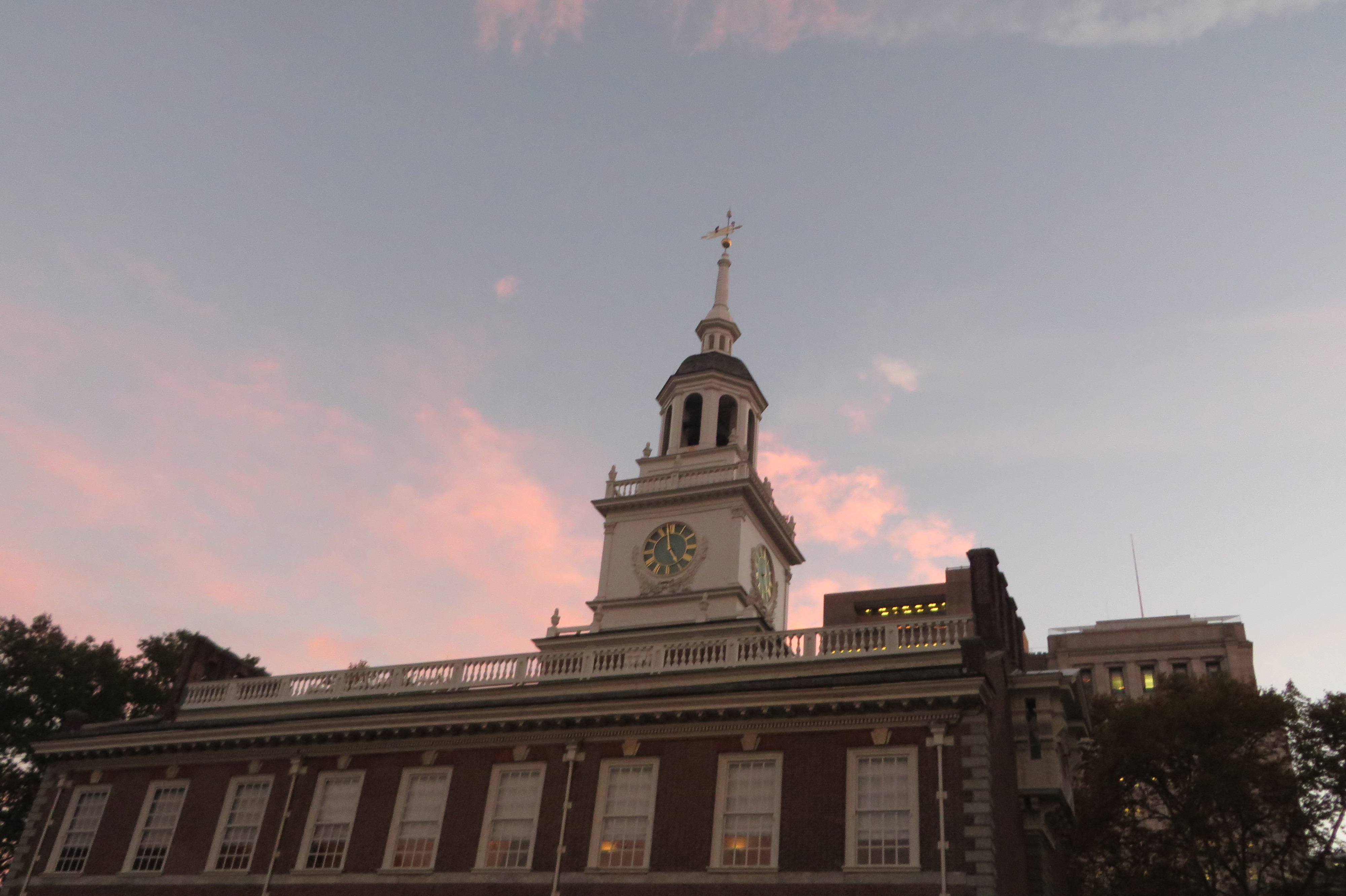
Independence Hall

Independence Hall

Several years ago, I was od-ing on episodes of Cesar Millan’s show about dog training. I had no dog of my own that needed training. I just liked having dogs in my living room, even if they were televised ones.


I’d never train Cesar’s way because I don’t roller blade and I’m not comfortable with how much his dogs have to conform or be manhandled. But there was one episode I loved in which this really unhappy, anxiety-ridden little dog could not find her inner joy, no matter how much better her life was now that she’d been rescued. She was a mess, quivering and downcast. Cesar got the idea that since dogs that are content usually have their tails up, he’d tie her tail into an upright position to see if it would affect her mood. It looked ludicrous and the dog seemed both miserable and mortified now, her tail hoisted up like a furry sail. This will never work, I thought.


But then, the next thing I knew, that little dog was holding her tail up on her own. That tail was wagging, and I swear, she was smiling.


I like a story with a happy ending, especially a dog story, so I told Z about it.


I assumed he’d forgotten about it, and then one day when I was feeling down, as he left for work he said, “Keep your tail up.” It became short hand between us whenever I was in the dumps or was anxiety ridden. Truth be told, I liked the indirectness of it. If he told me outright to “be happy” I’d probably remain miserable for the rest of my life just to remind him that I’m my own boss. But somehow, the notion of keeping my tail up seemed both an endearment from him and a proactive step that I could use to get out of the doldrums: do something.


It doesn’t always work, but sometimes it does.


When I am upset or depressed, or in this week’s case, sad beyond comprehension, I am a proponent of sitting home and feeling my feelings. There is so much feeling I need to do some days that it is like a full time job.


Z, on the other hand, errs on the side of doing.


So yesterday—though I really did not want to because when I woke up in the middle of the night from a perfectly nice dream, the first thing my brain presented me with was a reminder that there was a president-elect and it wasn’t one wearing a white pantsuit—we did Philadelphia. Z started the morning with a conference presentation while I wrote in the lobby. Then we walked: through an alley once frequented by Ben Franklin, past the place where Jefferson penned the Declaration, past Independence Hall, past the Liberty Bell.

Ben Franklin walked here, and so did I.

Ben Franklin walked here, and so did I.

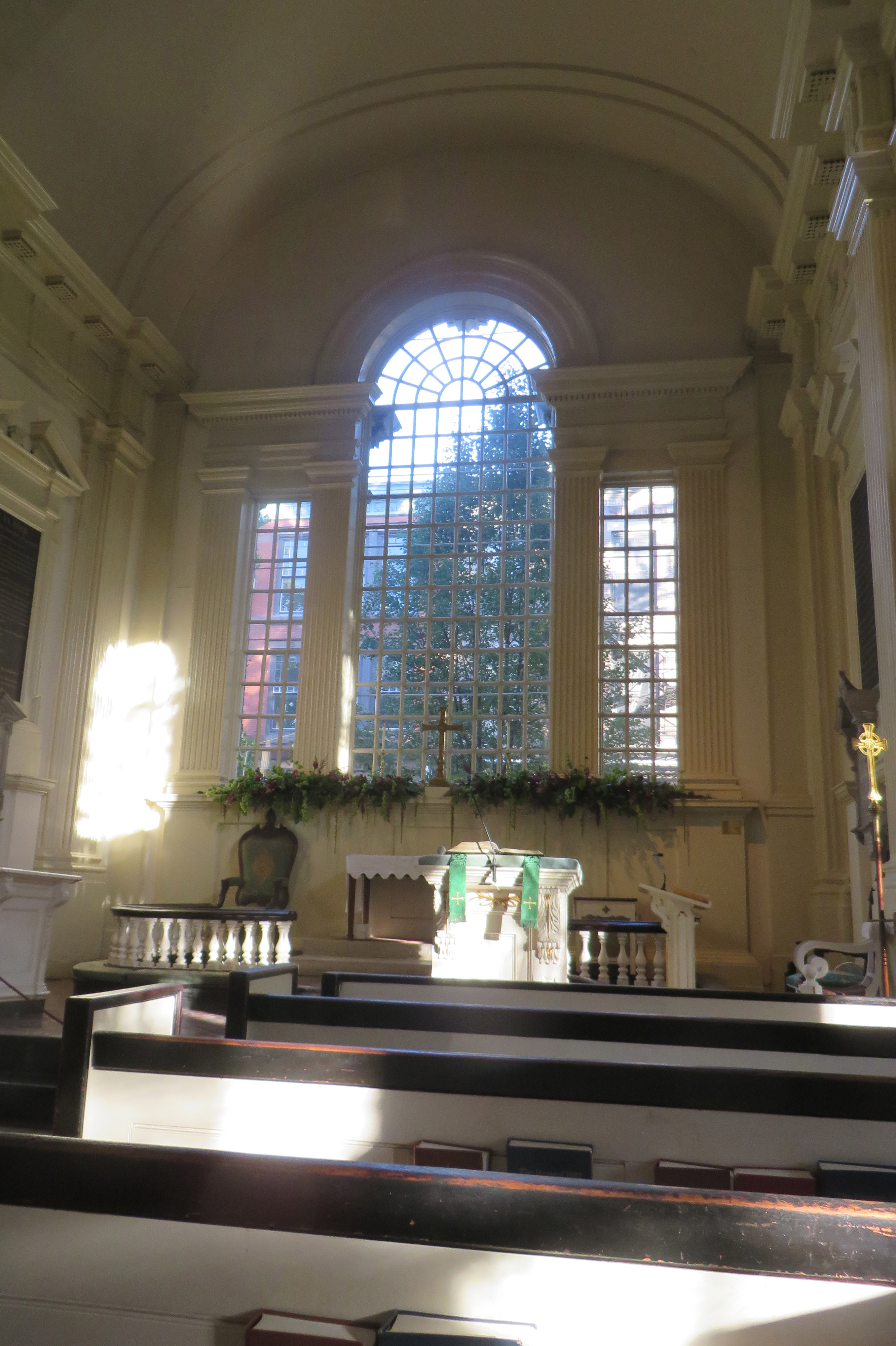
We made our way into Christ Church (“The Nation’s Church” where Revolutionary heroes once worshipped) and took in the simplicity of the sanctuary. We wiggled into a pew like congregants and settled ourselves. Up front, instead of a big altar and stained glass, there is a large window with clear panes of wavy glass that look out into the world, onto the idea of America.

Christ Church, where patriots prayed.

Christ Church, where patriots prayed.

While we sat there, Z did (prayed) and I felt. Mostly, I felt despair and I felt shame that I hadn’t done more to ensure leadership that would protect and cherish those original ideals constructed by the men who had worshipped in this church. (I also felt a certain amount of annoyance because the informal tour guide was talking about a car he had in high school while I was trying to feel all of my disappointed patriotic feelings.)
img_6219

What do you do with your disappointment when there is nothing to actually do? The election is over. There are no do-overs. The 90 million people who chose not to vote who could have turned this ship around if they’d been inclined, stayed home. We have an electoral college, so there’s no declaring the day after that we’d like to abolish it retroactively because its results don’t align with the wishes of the populace sometimes. The night before, Z and I had watched the protests on the news while we ate hotel restaurant soup and I said, “But what do they expect to happen exactly with their chants and signs? It’s over.” Z shrugged.


Back at the church, I wiped my nose on my sleeve and we went in search of Ben Franklin’s grave and Elsfreth’s Alley. When you are in Philadelphia, these are the things you do and we weren’t done doing.

Elsfreth's Alley

Elsfreth’s Alley

Elsfreth’s Alley is a narrow, cobblestoned street with tall, narrow, be-shuttered houses that look exactly how you think all the houses in all of Philadelphia will look. It is the oldest continuously inhabited street in the U.S., and it is not difficult to picture Ben Franklin swooping down it in his cape, wiping some steam off his glasses, maybe whistling or saying something off color or brilliant. One of the houses had a massive Republican elephant flag flapping in the wind and across the street there was a house with Democrat signs plastered in several of the panes. This is what democracy has always looked like, I suppose. Neighbor opposed to the political ideals of neighbor. More is just spent on campaigning now.
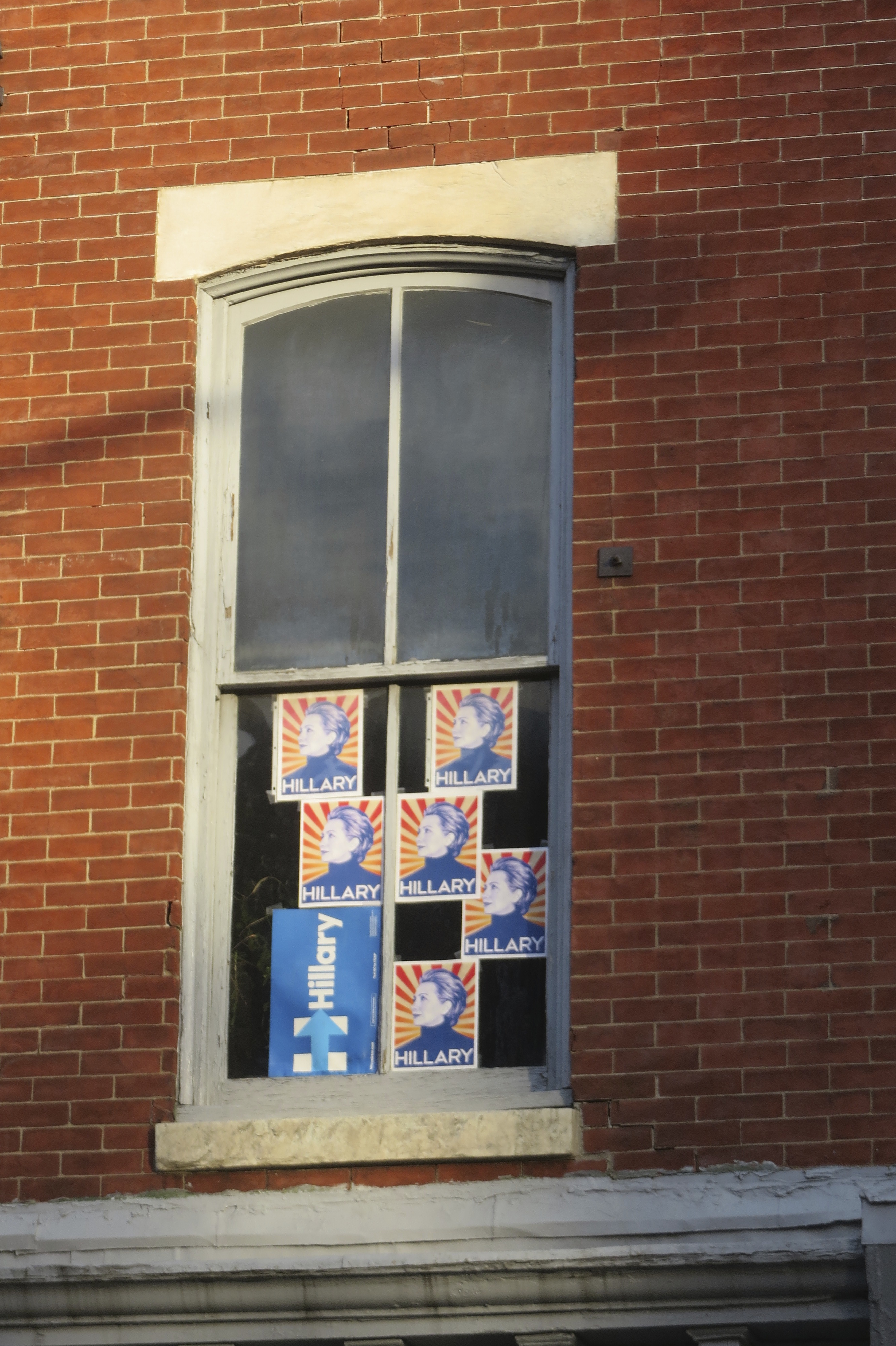
img_6230

The cemetery where Franklin is buried was closed when we got there (though there is a fire station across the street with Ben Franklin wearing a firefighter’s hat, which was worth the walk).

img_6256

I poked my camera through the fence and took a photo of Franklin’s grave, which is not impressive nor is it singled out amongst all the other graves, alerting us to his greatness. It’s just a slab of marble with his name, his wife’s name and no epitaph. It turns out that he, like all the others buried there, was just a citizen.


Like all of us.


Z and I walked up Market Street and rushed in to see the Liberty Bell fifteen minutes before the building closed. I’d had no desire earlier in the day to visit the cracked bell, but we went in on a lark. While I love the metaphor of a bell made in order to “let freedom ring” it has always seemed haunting to me that it is cracked and that attempts to repair that crack made the bell completely unusable. (I’d prefer a metaphor where fixing it gave it a distinct and beautiful ring.) Perhaps if we’d had longer than 15 minutes in the lead-up to the bell’s resting place, one of the helpful placards could have persuaded me that it really is a noble symbol of our country. (Since I missed it, I’ll stick with the Statue of Liberty as my symbol of choice.)

The puffy-eyed face of disappointed democracy.

The puffy-eyed face of disappointed democracy.

One of the placards that I did have time to read was about Oney Judge, Martha Washington’s personal slave, who, upon learning she was to be given as a wedding present to the first lady’s granddaughter, decided she’d rather run away.


Imagine that. Presenting someone with an actual person as a wedding gift.


It’s not that I didn’t know Washington was a slave owner, that Jefferson was a slave owner, and even Ben Franklin—before becoming president of the Pennsylvania Anti- Slavery Society—was a slave owner. I knew, yet somehow, during the course of the day while I was schlepping around the city mourning how far we’d fallen from the mark, I’d failed to remember that those men with their democratic dreams were not perfect themselves. Maybe some of them wouldn’t be as horrified as I’d previously assumed they would be by some of the racist, misogynistic, homophobic, and anti-immigrant statements from the new president-elect. (Let’s be honest—they weren’t that many decades removed from the people whose primary method of testing the likelihood of a woman’s witchcraft was putting her in water until she drowned and then declaring her—or at least her corpse—innocent.)


Of course none of this made me feel better. The reason I can tolerate the ugly side of America’s history has always been my belief that we learn from mistakes and are perpetually becoming better about practicing those truths we supposedly hold to be self-evident.
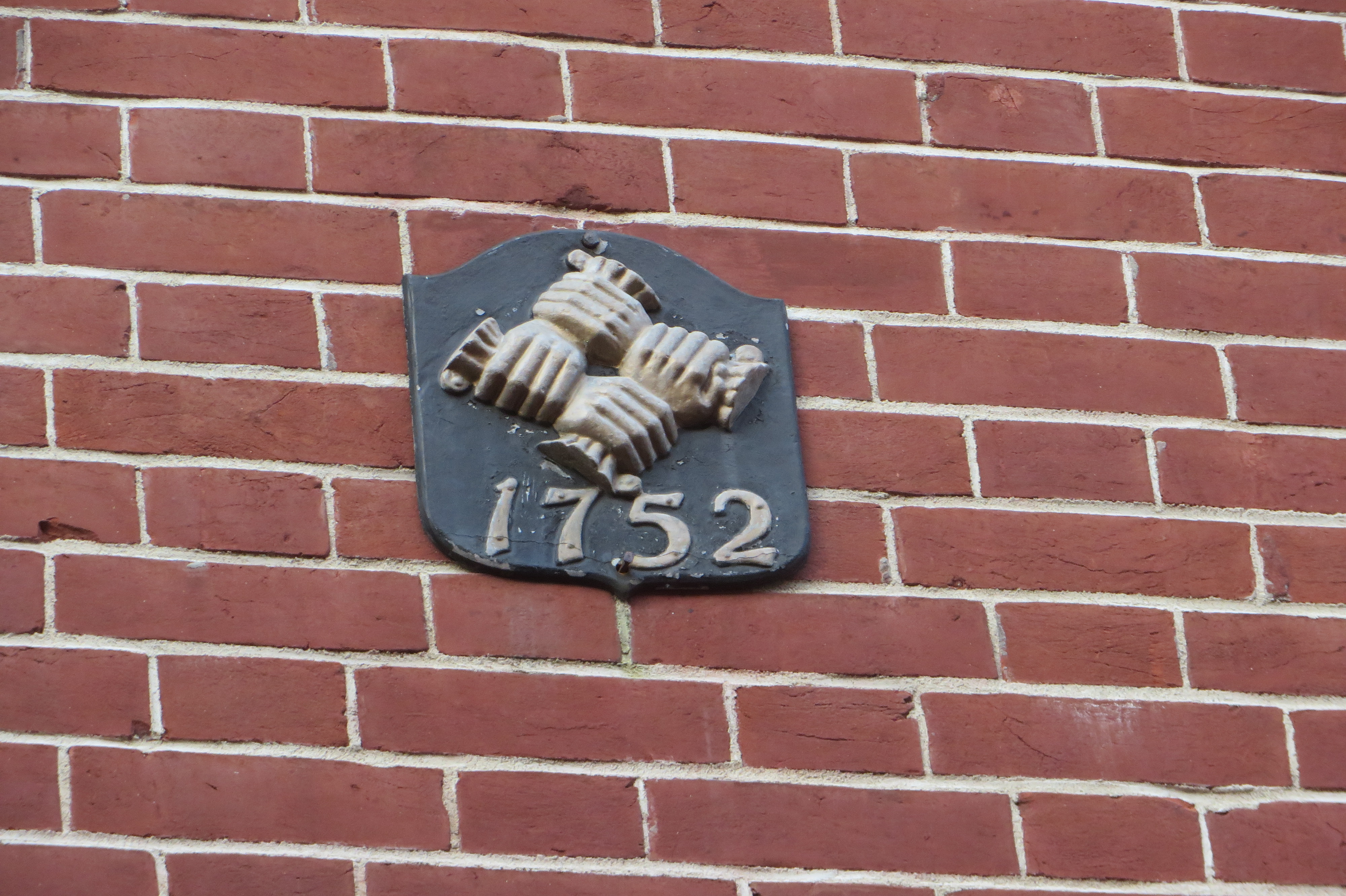
img_6240

Our feet were tired, so we trudged toward the train station so we could head back to our hotel. As we walked up Market towards  City Hall, helicopters were hovering overhead eerily. We kept looking and listening for some indication of distress, but there was nothing.
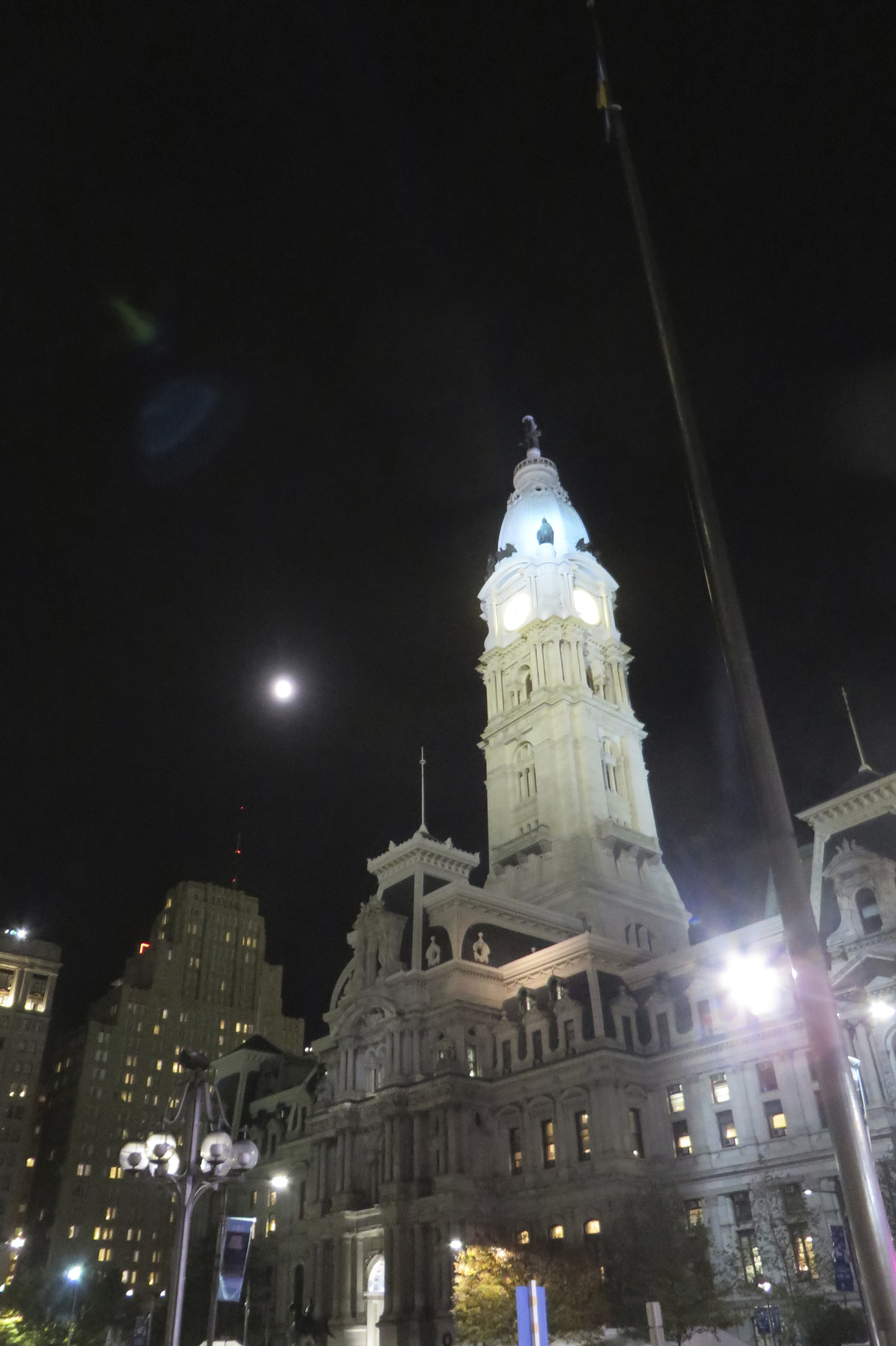
City Hall

City Hall

Because we live two blocks from downtown Seattle, we’ve become well versed in whether a helicopter is there because of an accident, a crime, or a protest. There are a lot of protests in Seattle. Z and I might be with the protestors in spirit—we might lean out our windows and wave them on—but we aren’t joiners. Crowds of any sort make me nervous, and if I hear a helicopter hovering, my response is often to check Twitter to see where the protest is happening and then skitter around to avoid it.


Last night was different. My feet hurt and I was exhausted from our walking history tour, but my step quickened towards the City Building where I was sure we would see something worthy of the helicopters. We got to it and nothing. We looked around. Checked the phone to see if something was going on somewhere nearby, and then we heard a cheer on the other side of the building.


For the first time ever, my initial instinct was not how can I avoid this but instead, how can I get there the quickest? I felt called.

According to the president-elect, these are professional protestors.

According to the president-elect, these are professional protestors.

We dodged the rush hour traffic snarls and found ourselves in a crowd of a thousand or so who were ramping up for a march. The signs were diverse: Black Lives Matter, gay rights, trans rights, abortion rights, and some fairly graphic signs suggesting the new president-elect should come to terms with the notion that women’s bodies are not up for grabs. The unifying theme: you may be the next president, but we will not tolerate your intolerance.


Don't judge me--democracy is at stake. I can't be bothered to brush my hair!

Don’t judge me–democracy is at stake. I can’t be bothered to brush my hair!

It felt good, standing there and claiming my first amendment rights for what felt like the first time. I didn’t have a sign, but I held my (figurative) tail up high and proud. Will it change what the next four years look like? It’s doubtful. But I will tell you this: I have never felt more American.


This is what democracy looks like.


Two Dreams Diverged

Standard

rgspumpkin

Z is hounding me that October is almost over and I haven’t written a single blog this month. Not a word about my two weeks back in Indiana in September, Mom’s three week visit to Seattle, nor a week-long interlude with July, who we haven’t seen since this time last year when we descended on her cozy home in Wales. Nor have I mentioned Z’s birthday this week.

I also haven’t coughed up a sentence about how this is pretty much my favorite time of year from mid-September through my own birthday in January, and how though I generally find Pacific Northwest autumns subpar when compared to Indiana, it’s been stellar out here this year.

Nope, you’ve gotten bupkis from me. I’m beginning to feel guilty at night when I look over and see Z re-reading old blogs of mine, refreshing his browser, as if his wife in an alternate universe—the wife who is more productive, less anxiety-ridden, more inclined to clean and have a regular skincare regime—might have produced a nugget or two for him to read. (I just know that alternate-universe wife of his has a VERY popular blog that has a bajillion followers, just signed a three-book deal, and would not have banished half of his Zimbabwe-inspired art to his office. I also suspect she makes her own pie crusts, uses one of those plastic exercise balls to keep herself Olympically limber, and never takes a bad pic. I hate her.)

Even when I’m not blogging, I email Jane regularly about my joys and concerns of the day. She is the kind of friend who actually listens to me and tries to help me figure out what my really real (read: multi-dimensional/fully sensory/non-grainy) dreams mean, but her hot water heater is busted and I don’t want to bother her right now while she’s bathing with bottles of Aquafina and wet wipes.

So instead, I’m going to tell you about my dream analysis problems. Lucky, lucky you!

img_6118

Last night, I dreamed Sandra Bullock had died and somehow I had gained custody of her son Louis. In the dream, he was just a toddler. In the dream, I didn’t know Sandra Bullock any better than I do in real life, which is to say not at all. I’m not sure how the kid ended up in my arms. I like her as much as everyone else in the world does. A couple of her movies are my favorites, but I’ll probably never watch Speed or Miss Congeniality 2, so I’m not like a Kathy Bates style #1 fan. A few months ago I was happy enough to read a cast-off People about how she loves being a mother to Louis and his new sister, but it’s unclear why her “death” featured in my dream or how I got saddled with her little son.

For the record, I did feel terribly sad that she’d died because she seems like a genuinely decent human, and I was relieved to wake up and realize she’s still out there raising her kids and donating her millions to worthy causes.

Anyhow, I was carrying Dream Louis around the house, wondering what to do. He was upset and I was upset: poor Sandra, poor kid, poor me. Even dream Beth seemed to know she wasn’t equipped for instant motherhood. There is no What to Expect When You Suddenly Become the Guardian of Sandra Bullock’s Toddler for sale on Amazon, so I couldn’t bone up on what to do. I was wiping away his tears and shoving food in his mouth and jiggling him around in a manner meant to be soothing. But also, I was pacing because I knew Child Protective Services was headed to the house and if it seemed like anything about me wasn’t legit, then they’d take this kid away from me. Despite concerns about whether I could rear him appropriately and how his presence was going to alter my daily life, I suspected that I’d be a better mother to him than some arbitrary person. Particularly a person who may or may not love While You Were Sleeping as much as I do. (Seriously, y’all can have your White Christmas and your It’s a Wonderful Life, but if I don’t get to see While You Were Sleeping every December, I feel like a major strand of lights has gone out on the tree.)

In the dream, I was frantic to paint a picture of serene maternity as the authorities pulled up to the house. I wanted to look capable, confident, and like Louis and I already had a unique bond. So I asked Dream Louis what he wanted me to call him— like a special nickname between us—and he said quite clearly in his little toddler voice, “Carrington.”

I’ve never written “WTF” in a blog before because I like to keep things halfway wholesome in the public domain, but surely this is an instance that deserves it.

WTF.

Just as I was thinking, “This kid does NOT look like a Carrington. He’s got to come up with something better,” Z’s alarm went off, so I have no idea how it all turned out. Was I allowed to keep Louis/Carrington? Did I rise to the occasion like Sandra Bullock in Blind Side and make sure my young charge graduated from high school and went on to college? Would there be any money rolling in from the Bullock estate to help me raise this kid or was he going to have to get used to a lower standard of living, maybe eating the off-brand cereal and having a homemade Superman costume instead of a real one this Halloween?

Elements of the dream possibly worth exploring: motherhood, babies, Carrington.

Though there have been points in my life where I hungered to be a mother, this is not one of those times. There are a few small children I’m personally smitten with, but on the whole, I’m quite happy with my child-free life and the easy access I have to my non baby-proofed electrical sockets and cabinets full of poison.

So I don’t think this is about babies and the impending fossilization of my own womb.

In the mid 1990s during my “depressive” stage, I was briefly obsessed with Dora Carrington when the movie about her starring Emma Thompson came out. I read books. Studied her art. Felt cross that she wasn’t quite in the inner sanctum of the Bloomsbury group despite loving Lytton Strachey quite literally to the death. (One of the only times I haven’t liked Virginia Woolf was when I read something in her diary about Carrington that lacked compassion.) Two books about Carrington are sitting on the shelf by my desk here in my studio, but they are in the extra dusty upper reaches and are never taken down.

I suppose I did sort of date a guy in high school who turned out to be gay, but I wouldn’t have killed myself over him a la Carrington and I’ve never worn jodhpurs like her, so I don’t think this dream was about Carrington either.

I’m at a loss. It was all so real. Louis’s breath in my ear was kind of sweet and snotty because he’d been crying so hard and my arm hurt from the weight of him. My subconscious might have given me one of those “real” dreams to help me with something I’ve been struggling with (writing, geography, existential questions), but I’m not Robert Langdon and thus can’t decipher my own personal Da Vinci Code.

Hopefully Jane’s water heater will be fixed soon.

In the category of dreams becoming reality, it’s Z’s and my 10th anniversary of love today. If you’ve read this blog before or come within a mile of me, you already know our story, but it’s my favorite and all roads seem to lead to it eventually. (And why shouldn’t I prefer it to all others?)

Because it’s close to Halloween, I’ll tell you the extra eerie, woooooooo elements I sometimes leave out.

We met in the fall of 2001 when he was new faculty where I was teaching. We were at a faculty party, I saw him, felt the love instantly in a way I previously thought was entirely made up, and drove straight to Leibovitz’s house to say, “I just met the man I’m going to marry.” Over the following weeks, I gave him a battery of personality tests and listened carefully for him to say something that would put me off him forever, making special note that his delicious accent might well make something truly intolerable sound acceptable. He only ever said delightful and funny things though, and when he went home to Zimbabwe for the holidays, he left a message on my voicemail: “I’m just calling to say ‘banana,’” because I’d told him how much I’d miss hearing him say that while he was away. I played it for any friend or relative who would listen: all agreed, his accent was exquisite, and surely he must be flirting back to leave such a message.

This is not the wooooooo part, fyi.

He wasn’t flirting. For the next two years we were together almost every day—after work, having dinner, going to movies, shopping—but I made no headway and was choking on my love. Finally, a few days before he left to go back to Zimbabwe for good, I screwed up my courage and told him how I felt, vowing that I didn’t care where he went, I wanted to be with him.

(Note: I’m hoping this vow is not legally binding because we once stayed at a truly deplorable motel at Plymouth Rock and if he decided to take up residence there, we’d probably have to live apart. It was disgusting and the smell of the moldy carpet is still living somewhere in one of my olfactory receptors.)

He was kind when he said he didn’t feel the same way and that he’d always consider me his friend.

Later that day, I had a spiritual experience that I’m not recounting here because believers will say how could you ever doubt that you’d end up with him eventually after that? and cynics will say your brain simply invented that so you’d be comforted. Suffice it to say, while I had a sort of knowing that Z and I would end up together eventually, I was also full of doubt. Over the years, my brain has concocted a considerable amount of bullshit that did not ever come to fruition, so while I hung on to the possibility that maybe eventually we’d be together, I was pragmatic enough to know I needed to get on with my life in the meantime.

The next day, I dropped Z off at the airport, unsure when or if I’d see him again. I sniffed his neck when I hugged him goodbye and sent him on his way. I cried all the way home, stopped at the reservoir to collect myself and was greeted by a gaggle of goslings, waddling up the hill, which seemed to speak to all sorts of hope.

But none of this is really the weird, other-worldly part.

When he was teenager, he was an extra in a crowded market scene in that Richard Chamberlain-Sharon Stone “masterpiece,” King Solomon’s Mines. We’d watched it one night in his flat, and he pointed out the two very brief shots where he is in the background. He is playing the role of “European riffraff” and when there’s a kerfuffle in market scene involving the stars, the camera pans the crowd and there is Z—brows furrowed—as he looks to see what is going on.

rickkingssolomonsmines

Z and friend, on set but not scowling.

The night he left for good, I went home and moped around the house like you do. I don’t remember exactly what I did, but if the movies are to be believed, I probably cried and ate a carton of ice cream. What I do remember is that I couldn’t get to sleep that night, so I turned on the TV. What was on the exact channel the TV was tuned to? King Solomon’s Mines. Whose face was staring at me a second later, brow furrowed?

Until I’d met him, I’d never seen the movie, and I have never seen it airing on cable since. But there it was, and there he was, peering at me from the big screen, daring me to try to forget about him.

But wait, there’s more. Woooooooo.

Two months later, my brother and I went to Ireland to celebrate his 21st birthday. It seemed a good way for me to distract myself from the terrible ache of life post Z. We saw nearly the whole of the Republic in something like six days and we had a good time. He was several years younger than me and, I could only assume, not that interested in the quality of his big sister’s broken heart. I wasn’t inclined to point out to him that I’d just passed a hamburger joint with Z’s first name in neon just as I was thinking of him, nor did I mention the irony of the rugby poster above our heads in Temple Bar that said “Ireland vs. Zimbabwe” just as we were having a conversation with a couple about rugby. My brain was filled with the photos and stories Z had shared about his own rugby days, but I didn’t say a word. Surely to goodness these were all signs from on high that Z was back in Africa, realizing he loved me.

rgsstevienixwitch

Stevie Nix & I keep our crystal visions to ourselves. Unless one of us decides to blog.

The night of my brother’s actual birthday, he was deep in his cups at the pub and I was tired and didn’t want to bring down the mood, so I left him dancing with a Scandinavian woman and went back to our hotel room where there was little to distract me from my thoughts. There was a tiny TV with bad reception that had sound on only one channel. Sadly, the channel with sound was playing a spooky old black and white movie starring one of those cadaverous actors like Peter Cushing. I was not interested in the plot but the company was nice and distracted me from the idea of Z. As I settled in to lose myself in a mindless scary movie, in his creepiest voice, Peter Cushing said Z’s very obscure and completely rare last name in reference to a developing situation with the occult.

I’ll grant you, the hamburger joint with his first name was just wishful thinking on my part. And the rugby poster with Zimbabwe written on it was probably a coincidence. But Peter Cushing in a movie I would NEVER have watched had there been even one other working channel on an otherwise soundless TV saying Z’s surname that if Googled produces only results for Z and a guy from Sweden?

Imagine some eerie music right here, would you?

If, three years later, Z had not come to his senses, then these would just be unfortunate coincidences, but because he did, I can only see it as messages from the divine or as an unbelievable plot device should I ever turn this into a novel.

All this week I’ve been forcing Z to remember how I arrived in Seattle right before his birthday in 2006, reminding him where we ate meals, where we walked on Alki Beach and badgering him about why he didn’t say right then how he felt. “Shame you slept on that foam egg crate all those nights in your living room and left me by myself in your bed,” I’ll say. And then I’ll pester him about why he let almost all the days of my visit go before he told me his feelings had changed.

Poor, poor Z. When I declared myself in 2003 (after two years of suffering in obsessed silence), IF ONLY he had gotten on board with my plan for his future he would have saved himself all of this future grief, wherein I force him to remember all of that wasted times. Total strangers on the interwebz would not be reading about his hesitancy. My friends who marvel at the quality of our rightness together now would not say to him, “What were you thinking? Why the delay?”

I’m insufferable on this count, and he’s a trooper. He’s put up with the teasing and the ribbing for a decade now. Though please note, he never will say, “You were right, Baby. I was SO wrong.” Instead, he says, “Things happened as they were supposed to.”

Possibly if he said he was wrong I might relent. Or possibly not.

Anyhow, today is the anniversary of the night we went to the Quarter Lounge around the corner from his apartment (and which you can see for yourself in the opening episode of Man in the High Castle—a First Hill claim to fame) and we had too much to drink and we were both being more honest than perhaps we had previously been, and soon enough he said what he said about us needing to be together, and I slammed down my hand on the table and said, “I KNEW I was right!” in a truly insufferable way (and so unlike how Sandra Bullock would respond as a romantic heroine).

This was not a cinematic climax to a love story with ocean waves breaking over rocks in the background as he wrapped me in a passionate embrace. Instead, something like “Play that Funky Music” or “Back in Black” was on the jukebox and I excused myself to the women’s room where I looked in the mirror at my red, bleary face and then did an honest-to-God happy dance with my arms raised in victory. Probably you will never see the story of our love on the big screen because of these details.

I may be incapable of deciphering my dream about Louis Bullock, but this Z dream of mine? The visions? The coincidental placement of rugby posters and hamburger joints? The late night TV programming of both America and Ireland? All those signs pointed to “yes” and that has made all the difference.

img_0980

The Sound of One Hand Complaining

Standard

rgsmutiny

One of my elementary school classmates maintained a certain level of grime on his hands that was masterful. How a kid managed to have hands and forearms that looked like he spent his days elbow-deep in a car engine instead of doing multiplication tables, I never figured out. His sister was squeaky clean, so it seemed like a personal style choice rather than a desperate living situation, though in the school I went to, either was possible.


In 5th grade, our teacher decided that hygiene should be on this kid’s list of accomplishments, and so there was a day when he was sent to the sink to scrub his hands in hot water. When he was done, he looked—for what might have been the first time—at the veins that pulsed beneath his pale skin and he said with alarm, “Mr. Moore! My guts is showin’!”


I don’t really like body talk. In fact, I don’t like thinking about my body’s inner workings at all. Sometimes, I can feel my heart beat and I wish it would stop so I’d be less aware of it, until I realize that a stopped heart would be counter productive to my general enjoyment of life. I’ve gone off entire, delicious meals because a dinner companion chose that moment to describe in detail some wound or ailment.


All this to say, I understand this kid’s alarm at seeing his own visible “guts” or even the idea that he had innards at all. And also to say, excuse me if I don’t go into a lot of detail telling you about how two weeks ago I ended up in the ER across the street with an impassable kidney stone, my first ever overnight hospital stay since my own birth, and two knifeless surgeries, one of which decimated the thing with sound waves. The RN said the stone was the size of a 2-carat diamond, but I imagine it the size of the Death Star and those sound waves as the laser shot from the X-wing fighter that brought Star Wars to a satisfying conclusion.


img_5876

I’m proud to say I walked to the ER instead of wasting precious fossil fuels.

What led me to this sad end to summer besides a genetic predisposition to kidney stones and a Midwestern diet rich in red meat? Here’s an idea.


Like most belief systems, I’m rarely in with both feet. Or if in with both feet, I’m only wading and never let the water rise past my navel. I’m a Christian of the sort that means something to me but would not impress the Pope or Ted Cruz. I’ve read books on Buddhism and tried meditation, but after a few minutes I always determine that thinking my thoughts is infinitely more preferable than thinking nothing at all, so I give up the practice. I have two yoga tapes and took a class once, but the only pose I mastered was corpse.


A couple of decades ago, I started reading Mind Science guru Louise Hay’s books on positive thinking The Power is Within You and You Can Heal Your Life. In general, it agreed with me. It just makes good sense that if you spend your life sitting around kvetching about what you don’t have/can’t do, you aren’t really doing anything that’s going to help alter that reality. It was uncanny to me how if I looked up my ailments on her handy healing chart, the thought-sin I’d committed almost always sounded exactly right. For example, I kept having accidents that required stitches on my feet, and sure enough, on her chart, this indicated a fear of moving forward, which seemed an accurate diagnosis since I was in my 30s and still living with my folks.


But then five months after Z and I got married, I got a diagnosis that could have been potentially devastating, and I felt angry that according to Louise Hay, I had caused this myself with my crappy thought patterns of self-blame and failure to enjoy life. (FYI, the least helpful thing you can ever say to a person who has just gotten a shitty diagnosis is that they probably got it because they ate the wrong food or had the wrong thought. Here’s what you should say: I’m sorry. This sucks. I am here for you. Tell me how you’re feeling, and if you don’t feel like talking, would you like to borrow my dog and scratch its ears? That’s it. There’s no reason to say anything else or try to solve an unsolvable problem.)


So Louise and I parted company. Until two weeks ago, when I looked up kidney stones and read: “Lumps of undissolved anger.” Also because I’d had to delay the Death Star blasting that first week because of a urinary tract infection and had to take high-powered antibiotics that put me off my food for ten days, I looked up UTI too and read: “You are pissed off.” My old friend Louise may be on to something.


Below, please find photographic evidence as to why this kidney stone was my destiny.


Exhibit A: Summer in Seattle


rgsferrysailboatmtn

Yeah, yeah. It’s beautiful. But when it’s 98 degrees out, I don’t care.


Temperature-wise, I’ve had little to complain about this summer. But we did have a heat wave the week before my unfortunate situation, which left me stuck in the house for days. I was unwilling to venture out because of the heat, because I was barely dressed, but mainly, because my hair looked like this:

rgsbethbadhair

That is clean hair there, in case you were thinking it looks like I need a shower. And I’m giving you the “artistic” Warhol filter because at this age, I prefer not sharing photos of myself in which I am not wearing sunglasses. (Another thing to be ticked off about: my disappointing middle aged under-eye area.) My world is soft focus whenever possible.


Aside from the heat, I am bitter that I haven’t been back to Indiana to see Joy, my fabulous friend and hair-do doer, hence the truly deplorable state of my roots. Also, there are at least eight strands of grey in there now and I am NOT happy about that development. NOT HAPPY AT ALL.


Exhibit B: Sky Theft


img_5879

Oh, goody! Another building that looks like all the others where there used to be a view of Queen Anne. Thanks, Skanska.

In case you’ve missed the news reports or the high pitch of my whining, Seattle has been having a building boom . Our neighborhood alone has approximately twelve of these “Notice of Land Use” signs and if the signs aren’t there it means they’ve been taken down and the cranes and bulldozers have moved in. (Note: every sign has been tagged like this, which I like to believe is a subtle form of protest and not simply graffiti artists looking for a canvas.)


rgsproposedlanduse

None of these tags are mine. I swear.

The most recent one to go up is next to the cathedral’s little garden, where St. Francis stands guard over the tomatoes and lettuce. I don’t eat anything in this garden because I don’t really believe in vegetables as a food group, but it’s presence makes me smile when I’m out walking, and now, it’s going to be a high rise a full of chic pods no one who currently lives here will be able to afford. (I’m feeling increasingly like the Gallaghers in Shameless in how much I loathe gentrification, how much I’d like to take a baseball bat to these signs or set a car on fire. But don’t worry. My fear of incarceration is much higher than my desire for a neighborhood garden or an unobstructed view of the sky.)


I have not been able to wear sandals all summer because there is so much construction in Seattle that there is debris everywhere. The three walks I’ve had in flip-flops have resulted in splinters and more of a hobble than a healthy stride, so now I’m clunking around First Hill in matronly shoes with support and sturdy soles.


Also, all of this construction has left our little 1920s apartment building with a mouse infestation, and these are not timid country mice. These are bold and ballsy mice who peer at Z from the kitchen with a “What are you lookin’ at?” expression on their little faces.


It turns out, I prefer my mice in the artwork of Beatrix Potter, wearing trousers and sipping tea.


Which brings me to:


Exhibit C: Neighborhood Art


img_5815

I guess it gets cold at night?

One of the delights on First Hill is the Frye Art Museum. There are a lot of reasons I like it—though I don’t go often enough—including the fact that it is only three blocks from our apartment. Also,  I get overwhelmed in standard-sized art museums but this one is bite-size, thus perfect for my attention span. Also: FREE. Also, the first time I went there they had an R. Crumb exhibit and I find his cartoons hard to look away from though I don’t necessarily want to hang Mr. Natural on my wall.


The Frye is on a tree-lined block and adjacent to another cathedral-filled and tree-lined block that I particularly love because when I’m walking there, I can imagine First Hill before its soul was snuffed out by buildings and sprawling hospital complexes. I can imagine fancy families leaving their fancy houses (now almost all replaced by big apartment buildings) and strolling to mass, enjoying the view of Elliott Bay with Bainbridge Island in the distance (now blocked by skyscrapers unless you stand in the middle of the street and look quickly before the #12 bus hoots at you).


So four weeks ago when we were on our walk, Z and I sauntered past this construction site behind the Frye, I was livid: another 20-story buildling, more people in the neighborhood, probably some trees taken down, more grit in my shoes.

img_5820

I can hardly wait to see what this will be.


Oh, how I growled. And then I saw this:


img_5817


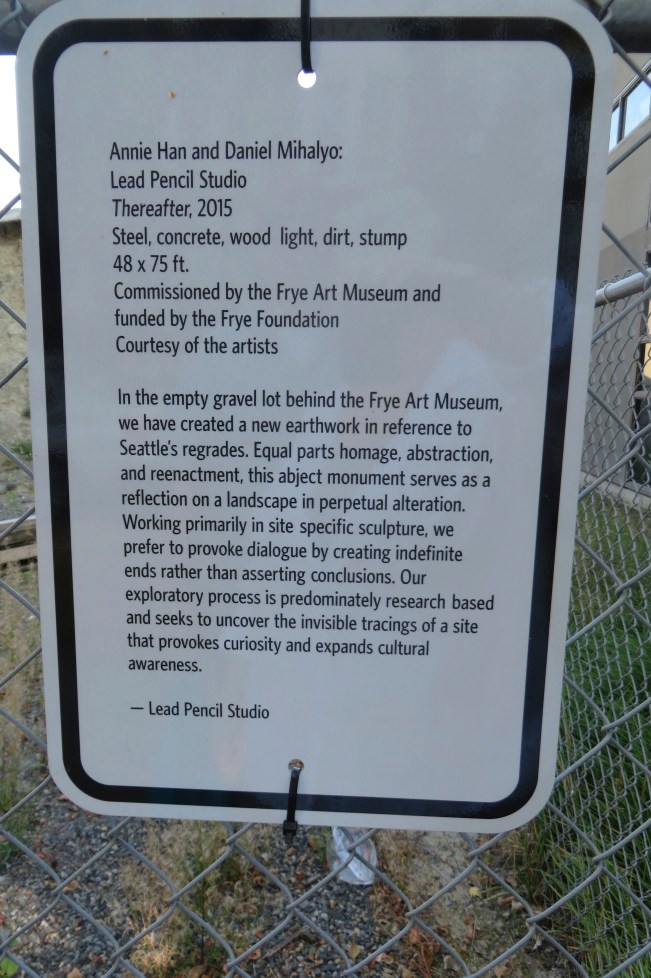
That’s right, folks. This here pile of dirt with the security light and the crumbled hunk of asphalt is actually genuine, bonafide art.


To recap…


Art:


img_5824


Not art:

img_5867

See the difference? Me neither. As if the city isn’t going through an ugly enough growing phase, please, by all means, use your art to make it even uglier. This is like giving your gawky eleven-year old an extra big pair of horned-rimmed glasses and suggesting a diet that will increase the acne he already has and then maybe, for added fun, a hairstyle from 1952 and a pocket protector.


And now, I find I must return to my recurring beef, also related to neighborhood hideousness:


Exhibit D: The Seattle Parks Departmet


rgsfirsthillpark

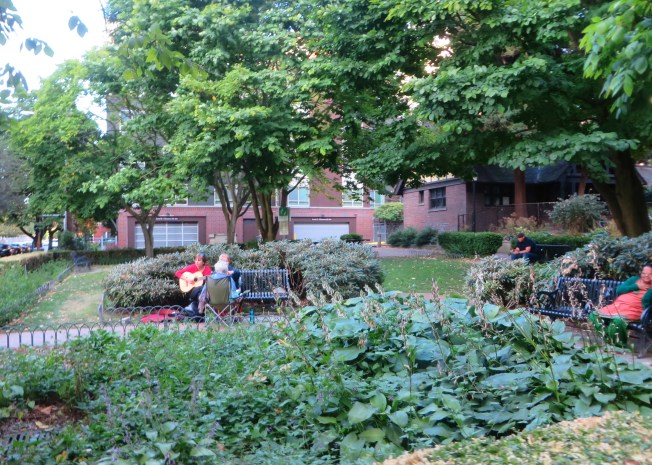
First Hill Park, an oasis in the concrete.

Seattle has some gorgeous parks that put the best parks in other cities to shame. It also has some innovative parks, like nearby Freeway Park, that literally put a lid on a little section of I-5. It is very shady, walled by cascading fountains that drown out the sounds of the interstate and of the city (and your screams), and a thick carpet of grass, which we don’t see much of here in the heart of the city.


For me, cathedrals and parks in a busy city serve the same purpose: they are a respite from the busyness and ugliness of urban life where a person can get in touch with with the divine, whether natural or theological. They are quiet havens where a person—particularly an introverted one—can recharge and prepare for more time spent in the overcrowded, concrete jungle. They are spaces that are open to all, regardless of race or social class or mental stability.


The only reason I slightly prefer a park to a beautiful old cathedral is because dogs are allowed in parks, though I do miss the smell of incense.


So, to be clear: Beth loves parks. Also, Beth watched all the seasons of Parks & Rec, so understands what the Leslie Knopes of this world are up against in terms of budgetary constraints, public safety, and community involvement.


img_5845

The only thing this color makes me want to do is go swimming.

That established, the Parks Department sometimes makes dubious choices, like the previosly blogged about Parks to Pavement project (which, I’d like to note, grammatically, should be called “Pavement to Parks”), wherein perfectly good parking spaces (pavement) are stolen, painted a hideous shade of turquoise, and some folding-chairs-in-bondage are set up (“park”). They are not shady. They are not peaceful. You are basically sitting in traffic, praying to God that the plastic poles they’ve screwed into the ground will keep you safe from the cars whizzing by. My “favorite” is the one on our street that is a mere five feet from the lush and peaceful Freeway Park. You know, a real park and not a parking space. A parking space we can no longer use the ten times a year we rent a car.


This summer, signs went up in the real park, the little neighborhood First Hill Park (above), that it was going to be renovated. The park sits next to one of the few remaining old mansions that used to flourish on First Hill in the 19th century, and when you walk past it, it feels old world. It also gives you the notion that the Stimson-Green Mansion has an actual yard. There are trees. There are stately black benches and lights. It’s pleasant to look at.


img_5837

Stimson-Green Mansion, a pleasant reminder that First Hill used to be beautiful.

That said, it’s a bit problematic in that because of Seattle’s large homeless population, it is often inhabited by people who have made it their home for the day or the night. Which stinks. It stinks for them that this is how they have to live and it stinks because there’s no way anybody else is going to send their kids there to play. Nor are Z and I going to pack a picnic and set up camp amongst the needles and trash for an afternoon and greedily gobble ham sandwiches next to people who maybe haven’t eaten today. So we just walk past it and admire the beauty and eat our ham sandwiches in the privacy of our own home.


Except now there have been meetings and the Parks Department is trying to figure out how to make the park more vibrant and usable. (Read: how do we entice non homeless, non IV drug users into our green space, thus making it less pleasant for the people currently using it?) There have been several meetings and reports, and what’s going to happen is something like this:

rgspingpong


That’s right. In what used to be a gorgeous, green, London-esque park, there is going to be a ping pong table. Or a shuffleboard court. Or some children’s play equipment. Some of the green will get dug up so some seating for movie nights and concerts can be put in place. Probably flowers and bushes will be ripped up. (There is talk of a dog water fountain, and I wouldn’t mind seeing that.) So, sigh. Good bye beautiful little park I like to walk past. I wish we were channeling our monies and energy into solving homelessness instead of just putting a ping pong table over the top of it.


Exhibit E: No Smoking

img_1387

Our building has gone no-smoking. Z and I are both non-smokers. He’s asthmatic and I’m legitimately allergic to cigarette smoke, so this should be a good thing for us. Our apartment gets smokey because we’re next to the front stoop where people like to congregate on Saturday nights and light up, and the hallway often smells like a Grateful Dead concert since pot was legalized here a couple of years ago. So we aren’t particularly sad about the building’s new smoke-free policy, though, because we are children of smokers,  we both do have a lot of sympathy for those who just want to get their nicotine fix but have to dance around the city trying to find a spot where they can do it that isn’t 25 feet too close to a door or open-air restaurant. Ever since the hospital across the street made it’s campus smoke-free, we’ve felt equal parts sympathetic to the folks in scrubs loitering outside our door and annoyed that the hospital cares about the health of their patients and staff but not so much about the health of their neighbors who can’t have their windows open in 90 degree heat.


Anyhow, we thought the building’s new smoking ban might be a boon, but instead, it’s just wrecked our coping mechanisms. Some people are breaking the rules (smoke in the hallways and on the stoop) and others are trying to follow the letter of the law by standing 25 feet from the front door which is right under our open front windows. (And this is to say nothing of the commuters who congregate in front of the building for three hours at night waiting on the express bus, smoking the cigs they’ve been banned from having all day and talking loudly on their cell phones.) So, we’re currently in a lose-lose scenario because our old plan of closed back windows and open front ones no longer works. Basically, to keep our apartment in our non-smoking building smoke free, we’ve got to shut all the windows and pant in front of the fan.


I guess we could go to the park and play ping pong to get some fresh air.


Exhibit F: Facebook

rgsfacebook

Facebook has taken great joy in reminding me what I was doing a year ago. Z and I have been having a quiet, working summer at home with the smoke and mice instead of a jetsetting summer visiting the countries we love. It hasn’t been a bad summer, but it hasn’t been as glorious as a week in London, a week in Wales, and two weeks in my beloved Ireland. Yet every day, there is Facebook, with an update of all the good times we could be having if only someone would invent a time machine and take us back to Galway or Aberystwyth.


But really, if you want to know why I got a kidney stone bigger than my engagement ring logged in my innards, here is the reason:


Exhibit G: Millenial Rejection


img_5869

Please, feel free. Pick the meat right off my bones.

Nobody likes rejection. I’m not special in this regard. But earlier in the summer I read a call for a residency for writing and teaching that I really wanted. It was a long shot. I don’t have a huge publication list behind my name, but I knew I could give them what they wanted for their student-writers who need feedback. I’m beginning to see that as much as I believe I was meant to heave a keyboard beneath my fingers or a pen in my my hand, I also was meant to work with people on their own writing: to help them find their voice, patch the holes in a plot, say something more authentic or more beautiful than they’ve already said. I’m good at it. I am not a particularly confident person, but I know this is one thing I do well. And when I’m working on someone else’s writing, that’s all that matters. I’m not trying to figure out how to get them out of my office so I can get back to my own writing. I’m not trying to figure out how I can use their ideas for my own gain. I’m just 100% committed to whatever it is that they are committed to. (Even if some of their crappy sentences make me groan internally.) When I’m teaching or mentoring, I feel exactly the way I do after Thanksgiving dinner: completely sated. Only I don’t need larger pants.


When the rejection came, I was disappointed. I might even have cried, not because I didn’t get my way or didn’t “win,” but because I really really wanted to be in the position of pouring over someone else’s writing and helping them shape it again. As I said in my last post, I’m beginning to realize how much I miss my students, and this seemed like a way to stop that missing.


Then I re-read the form rejection letter, and I got angry because it was badly written. There were grammatical errors, but what bothered me more was the careless way it had been written with no thought to word choice or intent. It sounded like it was written by someone who didn’t  read instead of by someone who purports to love writing. And then when I did further investigation and saw a photo of the group who had likely made the decisions, I felt angry that they all looked about twenty-three. Of course twenty-three- year-olds can make good choices. (I like to think the anaesthesiologist I had last week who appeared to be about twenty-five was capable of accurate and lightening-quick decisions anyhow.) In this case, however, seeing all those judge-y, line-less faces, all I could think was what in the hell do you know about what good writing and good teaching is?


I raged for a day and then I did the reasonable thing and put some plans into action so I can get what I want (re: writing and teaching), and then just while I was about to feel satisfied with my quick recovery rate from disappointment and anger, I threw up. Between waves of pain, Z and I trekked up the hill and across the street to the ER to find out what Louise Hay could have told me if I’d just looked at her book: You have a kidney stone because you’ve spent the summer pissed off, and you were so pissed off, you created a kidney stone too big to pass.


Now that my figurative guts are showin’, everything seems brighter and more pleasant. The weather cooled and it’s possible to imagine a few months with the windows shut, blocking out smoke. Z reports from his solo walk today that the dirt-pile artwork was carted away. Based on Facebook’s over-zealous announcements, we’re nearing the end of last year’s happy memories. I’m a few days away from a trip to Indiana where I will see people I love and miss AND have my hair cut and my roots (and those eight strands of grey) covered.


I’m writing. I’m editing. I’m not throwing up.


I’m alive.


img_1379

Get-well flowers from Leibowitz coupled with painkillers and Z’s ministrations made it all tolerable.

A Horse with No Name

Standard

Ponygirl

Today, I came into my writing studio, cracked open my laptop and flexed my fingers, ready to roll. Yesterday, in my notebook, I’d jotted down a genius idea at the bottom of a list of things I’m thankful for and I was sure that genius idea was going to make the words flow at record speed. I scrolled down the list anxious to be reminded of what had inspired me and made me feel so confident. Those words:


Horses aren’t arbitrary.


Well, that was disappointing. I thought it was something better than that. Something that maybe actually made sense.


I am not a horsey person. I read one horse book when my adolescent friends were six books deep in that series about the wild horses of Chincoteague. I inherited a ceramic horse collection from someone who had outgrown it, but I never went through a horse phase like a lot of girls do, unless you count my beloved rocking horse, Charger, who betrayed me by getting too small to ride.


I’ve ridden exactly one non-plastic horse, a pony really, and I did not feel like we were of one mind. I did not feel whatever it is that horse people feel. The view was nice and I wished I had one, but that was largely about transportation because I was six and a horse could take me anywhere I wanted to go.


What a horse could not do, however, was make itself comfortable in a one-bedroom upstairs apartment.


I’m in awe of people who ride horses regularly the way I’m in awe of people who ski. It looks like fun at some level, but skis and horses have always struck me as situations you only think you have control over, and so I’ve given both a miss. Life is precarious enough in my mind without me putting my body on something that could gallop me over a cliff or skid me into a pine tree.


For these reasons, I don’t think of horses as metaphors when I’m writing because they mostly just aren’t in my consciousness. They’re lovely and powerful and I like the way they smell when I have occasion to smell them once every five years when I find myself in the horse barn at the Great Darke County Fair. But I’m more of a dog and cow person. Maybe a monkey person if I’ve had caffeine.

Not a horse. (Also, not my dog.)

Not a horse. (Also, not my dog.)

My first cousin once removed would ride her horse from her parents’ farmhouse down to my great-grandmother’s when I was a kid, and it seemed to me, the equivalent of Glinda the Good Witch of the North arriving in her giant Oz bubble. It was the stuff of fairy tales—much more magical than my boy cousins driving up the gravel road in a motorized child-sized car (also amazing, but incomparable). We played hide and seek once and none of us could find Carol because she was hiding in the barn with her horse. Perhaps it was shadowy enough to keep her hidden in that old barn that leaned so far to the south that it had to be propped up with a pole (we were warned repeatedly not to go into it and repeatedly we went in anyway), but I think it was something else. Carol and her horse were like one entity. We could not find Carol because there was just one creature in that barn and it was “horse.”


Around the same time, a friend of a friend told me the sad story of having to say goodbye to her horse. (She was moving or the horse had to move, the specifics I have forgotten, though—because she was a rare creature like I was in the early 1970s, which is to say a child of divorce—I blamed her loss of horse on her parents’ failed marriage). Her horse was long gone when I met her, yet she spoke of how on the last day with it, she sat in the saddle wearing some special riding hat, maybe covered in flowers, and her friends stood around her and sang. Her longing for the horse was still palpable. It’s been decades since this vicarious heartbreak, but still, I imagine her there, sitting on a horse I never met, weeping because her other half was taken from her.


Leibovitz recently did a photo shoot with her beautiful 16-year-old daughter in a beautiful, ethereal dress on a beautiful chestnut horse. Though it pained me to see Baby Leibovitz looking all grown up, it pleased me more to see her—at this age, as she’s just figuring herself out—on one of the horses she’s loved since she was a  tiny girl and she was looking very much herself.


Also, I just watched a Martin Clunes documentary on heavy horses (watched largely because I like Martin Clunes and not because of the horses), so I can only assume this “genius” phrase of mine was inspired by these two recent equine-related occurrences—a photo of a favorite kid and a documentary narrated by “Doc Martin”—but goodness knows what I thought I’d do with Horses aren’t arbitrary when I wrote it down. It doesn’t really inspire the Great American Novel. And clearly “blog about horses” isn’t even possible since right now I’ve said all I have to say about horses and we haven’t moseyed down the trail towards anything close to a point.


Okay. Here’s a point.


I’m stuck. My non blog-writing has been refusing to shape itself into anything resembling coherence. I sit (sometimes) at my gorgeous desk with my city view surrounded by all of my helpful books about writing and other books full of writing that inspires me, and yet I am stuck.


Also, there is a perpetual reel of conversation in my head (maybe you’ve noticed) of how I miss home and the city makes me nuts, but then when I consider leaving the Pacific Northwest, I feel unhappy too. Leave this weather and Puget Sound and the mostly snow capped mountains? Why would someone want to do that? I’m zinging between wildly happy (Z inspired, largely, though I’ve read some good books, written chunks of things that please me, and just discovered that Mom has the doctor’s thumbs-up for a visit to us) and angry and/or weepy. (Last week I yelled at a total stranger who was walking like a sloth while reading her phone, serpentining along the sidewalk in such a way that no one could get around her. Her obliviousness enraged me and made me feel trapped, so I growled as I finally stormed past her, “Either walk or read your damn phone!” Z just laughed at me. The woman passed us further up the street, still seemingly oblivious, but her phone had been tucked away. I am not a yeller at strangers unless I’m in my car with the windows rolled up tightly. Yelling is not the Midwestern way! The city is turning me into an animal!)


I spend too much time looking backward instead of forward even though if you asked me (you’re asking, right?) I would tell you that this moment right now and the moments surrounding it are absolutely the happiest period of my life.


Also, fall is approaching. I’m three years out of teaching. While I don’t miss lecturing, obsessive faculty meetings, or some administrators who will remain perpetually in my Little Book of Hate, I miss my students. God I miss them. I miss talking to them about their writing and how to make it sing. I miss watching them take some truly deplorable crap and sculpt it into something beautiful. I miss them popping into my office to talk about their ideas or ask for advice. I miss hearing their thoughts about some piece of literature, telling them mine, and all of us seeing the text in a new way. I miss recognizing people in some other major during  first year comp and knowing they were meant to be in my classes, and then later having the satisfaction of them stopping by my office to say they’re thinking of switching majors to English. And later still, seeing them in their last semester, finishing up a creative writing portfolio or an Honors Thesis that exceeds both of our expectations. I even miss having those dreaded conversations during advising sessions about the uselessness/utility of an English degree.


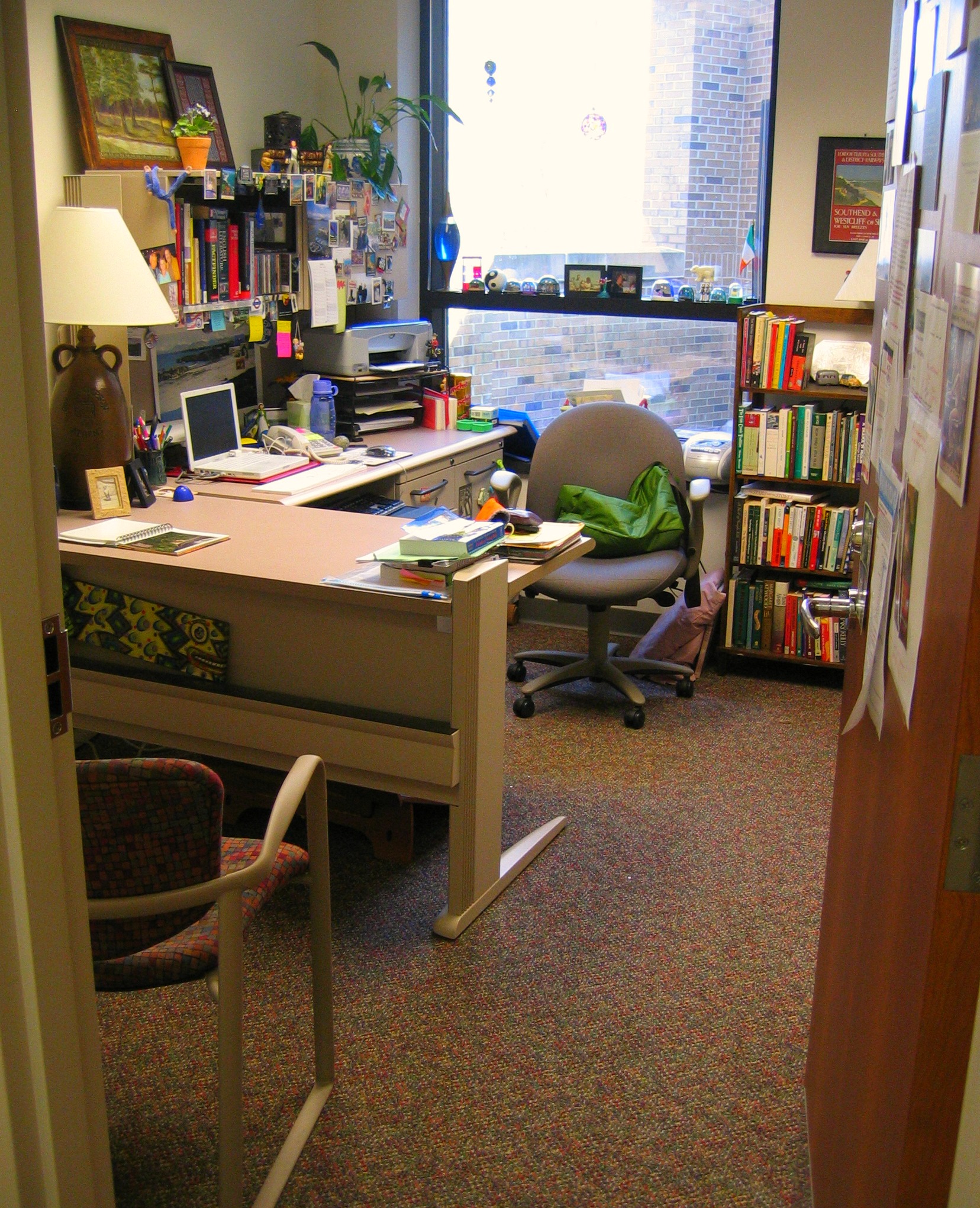
My first and favorite office.

My first and favorite office.

In short, I don’t really know who or what I am these days. It might be a midlife crisis. Or it could just be something I ate.I’ve always been better at knowing what I’m not than I have been at knowing what I am.


Things I know I am not:

  • inclined to work with numbers, in sales, or with bodily fluids
  • an extrovert, an athlete, or a savant
  • a lover of noise, reptiles, or clowns
  • likely to eat vegetables, follow trends, or brush my hair on the regular


So that’s where I’m starting.


It occurs to me that the reason I’ve remembered these horsey stories for forty years is not because I particularly wanted a horse myself, nor is it because I wanted to be like my idol mystery-solver/horseback riding heroine, Trixie Belden. I don’t even want to climb upon a horse for a photo op (largely because I’m unsure that horses really want to be climbed upon in the first place).


No. The reason I can still see my cousin on her horse or imagine the friend of a friend weeping on a horse I never met is because I quite liked the idea of being a horse girl.


Horse girls always know exactly what and who they are. Their heads are full of horses and there is no dissuading them or convincing them that an Irish Wolfhound is nearly as big and just as good. They love their horses so much they don’t mind mucking out a barn, swatting horse flies, or doing those 800 things you have to do to keep a horse happy and healthy (things I used to know when I was reading Trixie Belden). There’s no question there. They want to be on the back of a horse, or standing next to a horse with curry comb, or in a house that is adjacent to a barn in which a horse resides.


Even now, when I run into my cousin at Meijer or see a Facebook post from that friend of my friend, the first thing I think: horse girl. And the second thing I think: I wish I knew myself as well as you always have.


Horses aren’t arbitrary.

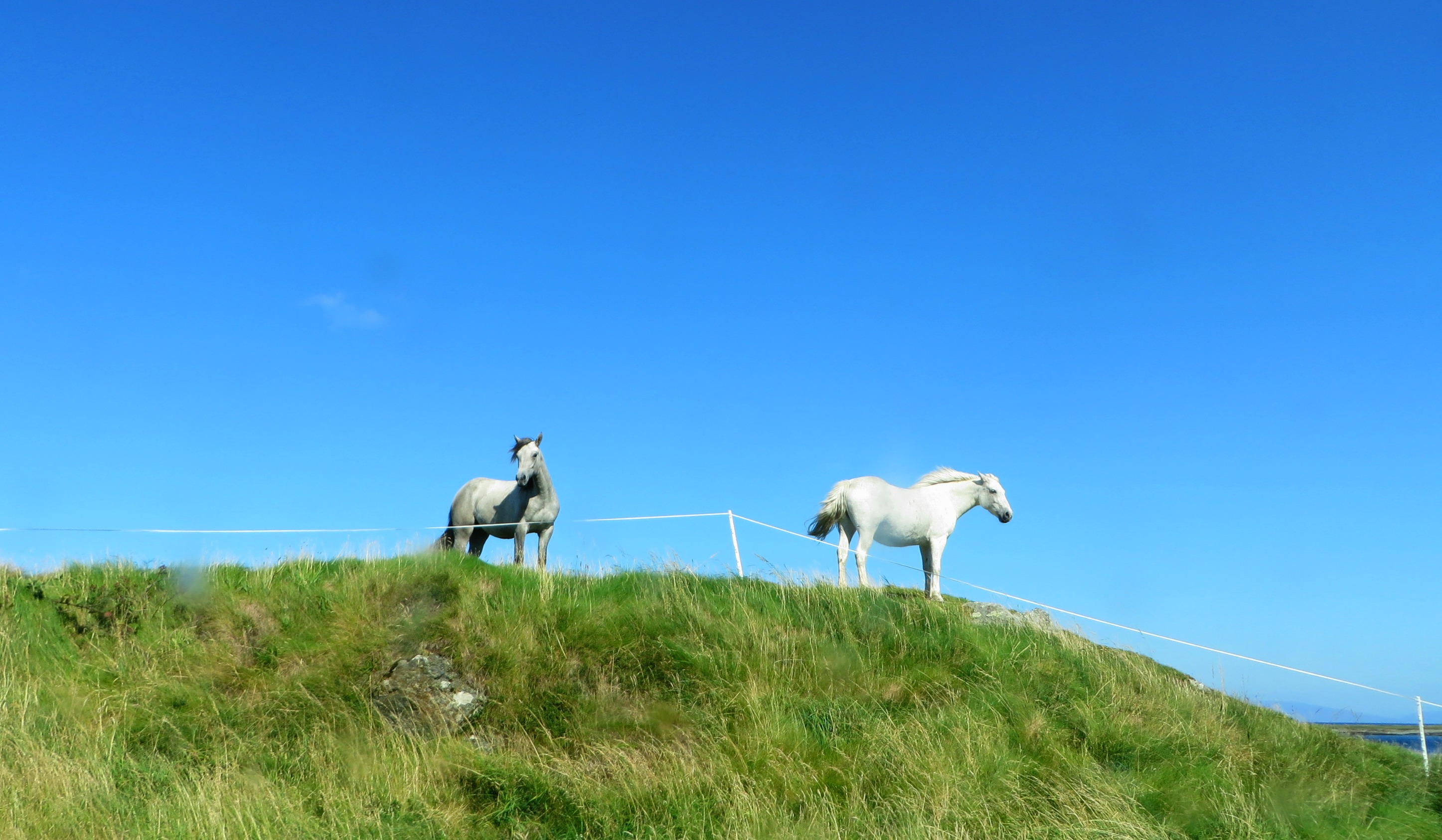
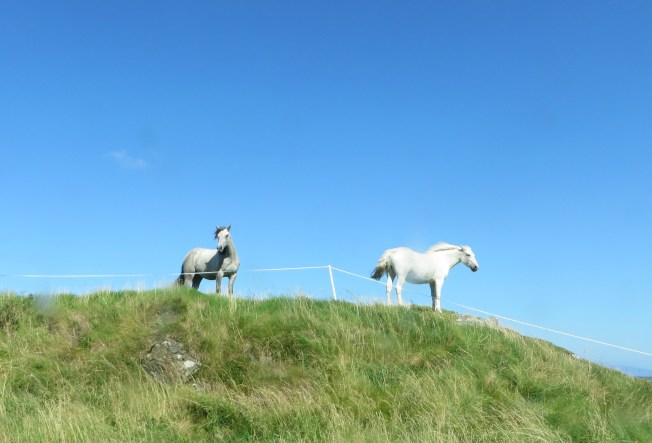
Connemara Ponies, Renvyle, Ireland

Connemara Ponies, Renvyle, Ireland


Of Minutiae and Lack of Momentum

Standard


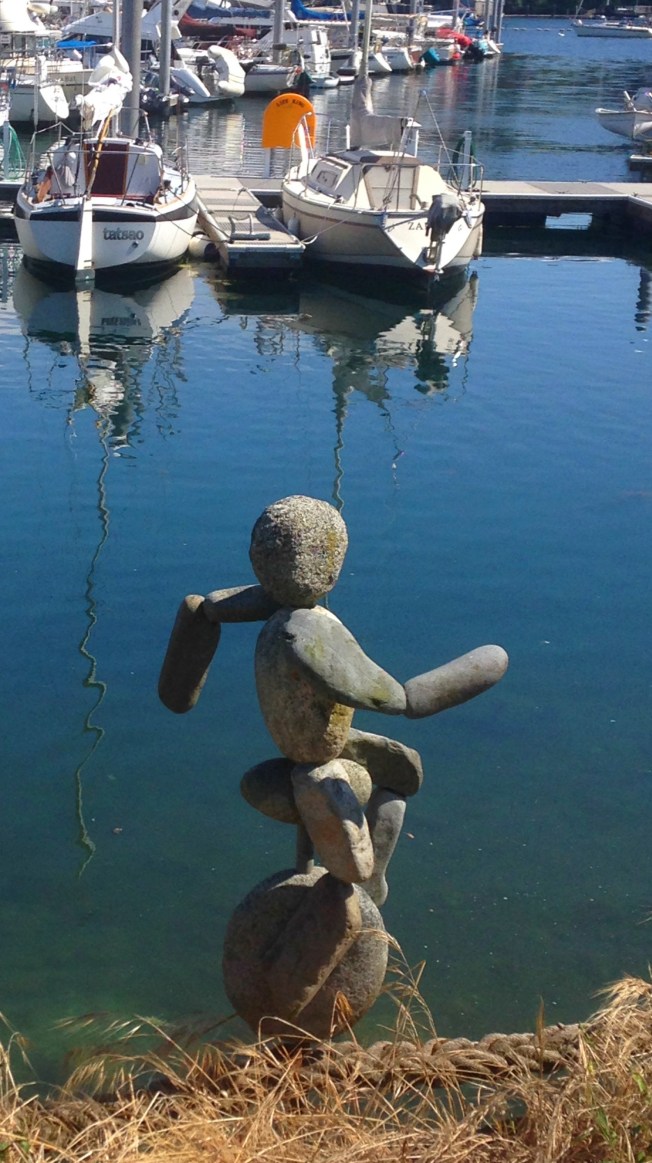
RGSrockunicycle

Ethan Currier’s rock art, Bainbridge Island, WA


I’ve been waiting for a day when the news isn’t so horrendous that I can blog about frivolous things without feeling superficial, but it’s becoming apparent that I could be waiting a very long time for that day to dawn. In the interest of not letting the terrorists, racists, misogynists and general practitioner haters “win,” I’m just going to write. Just going to go right on as if in the midst of the world ending it’s perfectly reasonable to be talking about things like houseguests and having to pretend the trolley system in Seattle is a viable means of transportation and how my friend Jane nearly ruined my life by forcing me to read The 12-Week Year. Forgive me.


Aside from all that ails the world, here is my list of beefs today:


  • It’s supposed to be in the 80s next week and you know how much I hate heat.
  • Hudge invited us to an outdoor movie tomorrow night, which sounded like fun, except I pretty much can’t be outside in the evening anymore unless I go in full-on beekeeper garb to ward off mosquitos; I am the sad combination of delicious and allergic.
  • The high-rise across the street from us is putting in new windows. Did you know that installing new windows requires a buzz saw at 8 a.m.? Me neither. Also, at the rate of two-windows-per-day, it’s going to be a loud, peace-less summer here on First Hill.
  • The election. The mean memes. The idiots.
  • People on Twitter are shouting that little Prince George should be sent to jail because in his just-released 3rd birthday photos, he appears to be feeding his dog Lupo some ice cream. He’s 3. His parents aren’t idiots. I’m guessing if it was intentional, then it’s probably a vet-approved iced doggie treat, but even if it wasn’t and Lupo licked that lump of ice cream, dogs eat truly terrible and disgusting things on a daily basis. The likely result will be either nothing or a single puddle of dog crap that someone (who is not the Duke or Duchess) will have to clean up. This is NOT animal cruelty. (What do people get from this online righteous indignation? I imagine them walking around all puffed up and proud of themselves after posting their “wisdom” but they’re really just self-satisfied idiots who can’t read a situation. Kind of like the warriors who “liberate” dogs trapped in cars even though the dog in question is not in distress—because it’s November—and the owner has been gone all of two minutes.)
  • A mouse is trying to move into our apartment.
  • Why DID Seattle try to sell us on the perfection of above-the-traffic monorail travel at the 1963 World’s Fair but then choose in the 2000s to cast their lot not with the monorail—a futuristic and therefore superior mode of travel that shows up in virtually every sci-fi movie ever made—but instead with a nod to yesteryear and a streetcar that holds fewer people than a bus and is stuck in the same rush hour traffic that all the cars and city busses are in, except on a track so it can’t even navigate obstacles? Mind the gap.
  • Someone washed and dried what appears to have been the innards of a hamster cage in the communal machines in our basement and didn’t bother to clean out the woodchips, animal fur, and chocolate chips. (I’m pretending they are chocolate chips. Please don’t tell me they aren’t chocolate chips.)


IMG_0636

Graffiti encouragement, Seattle


Jane, who is one of my oldest friends from college, suggested that I should read Brian P. Moran’s The 12-Week Year, and it is exhausting me. The principle behind it is good: most of us put off goals and projects until the 11th hour, so instead of giving yourself a long time to get something done, give yourself a short time and impress your friends and neighbors with how much you have accomplished.


In theory, it agrees with me. I am a procrastinator by nature and almost anything I’ve ever accomplished in my life—from a master’s thesis to stacks of student papers graded—happened in that magical eleventh hour when suddenly my thoughts, my energy, and my ability to solve problems would somehow work together to get me across the finish line just before the due date arrived.


In practice, I’m having to make out goals and lists of tasks, and then do those tasks to accomplish the goals, and then assess my progress on the tasks and the goals both daily and weekly. It is seriously cutting into my relaxing time. I’ve never been particularly good at anything close to a long-range plan, which explains in large part why I forgot to have children and have never really achieved the perfect capsule wardrobe.


The fatal flaw in my embracing of the 12-week year, however, was my idea that Z might like it too since he isn’t teaching this summer.


Z is much more task oriented than I am. He gravitates toward routine and is a creature of habit. The salad days of our summer are now over because of my stupid suggestion. No longer do we stay up until 3 and sleep until noon. No longer do we lounge on the couch watching episodes of “The New Girl” we’ve already seen twice. No longer do I have graham crackers and beef jerky for breakfast, because he’s got me on an oatmeal and banana system to help with the 12-week goal of “better health.” Do you know how much less fun this breakfast is than Pop-tarts or a bowl of Lucky Charms? (If he were writing this, he would tell you that the oatmeal has to be nuked so I’m basically eating an oatmeal cookie and we’re sharing the banana. Also, he would want you to know that I am very dramatic.)


After the banana, when I’m just starting one of my eight-page emails to Jane or a witty Facebook update, he ushers me next door to the writing studio, where he sits down and instantly goes to work.


Mac used to have to scratch his bed for five minutes and then turn in circles three times before settling down to sleep, and I’m similar with writing. Only I’ll spend about an hour putzing around online or reorganizing my paper clips and Post-it pads. Often, I have to re-read something I’ve already written years ago and consider its merits and failures, or read something someone else has written to get in the right frame of mind. And then I have to sit and think about what I want to write.


I could spend DAYS doing this. It is hard, hard work, the trying to write, and the results are inconsistent. Sometimes, while I’m trying, I actually do write something. But sometimes, at 6 o’clock, Z will slam shut his laptop and say, “I’m done” and he’s accomplished 15 things and I’ve still only written two sentences. Correction: two sentences I hate. Maybe I’ve also doodled a picture of Virginia Woolf in my notebook if it’s a really good day. He’ll ask me what I’ve done with my time, and I have absolutely no idea. No. Idea. I sat down. I started thinking my thoughts and now it’s 6 p.m.


Until we started this program, Z had no idea how much time slips through my fingers. He’d come home from work, ask what I’d done all day, I’d say, “I wrote” and because I had no goals written down where he could see whether they had a check next to them or not, he was none the wiser. Possibly he was suspicious since in the three years since I quit teaching and started working for myself he has never come home from work and had me place an entire manuscript into his hands. But now, for sure, he knows he is married to the least productive person in Christendom.


Last week I was reading a novel in which two women accidentally killed a man (he wasn’t very nice, so it was no great loss) and they had to clean up the mess and hide his body before the lady of the house returned home. It was set in the 1920s, so there was no Roomba or Dyson sweeper, no Lysol wipes, and I can only assume neither of them were doing Crossfit, so the heavy lifting had to be hell. Yet somehow, through sheer determination and hard work, they moved his carcass out of the parlor and into the alley, cleaned up all evidence of scuffle and bloodshed, and hopped into bed pretending to be asleep when Madame returned an hour later.


As I was reading it, I did not think what a tragedy it was. Nor did I feel fearful about what would happen when the cops discovered the body. I didn’t even worry about the bits of bloody apron that got buried in the ash pile, just waiting to be discovered. Instead, all I could think was, I must never kill anyone because I wouldn’t have the energy to clean up the mess.


A good life lesson, perhaps, but probably not what the author was going for.


And since I’m confessing all of my sins of laziness and haphazard lifestyle choices, let me add that last night I got an email from the Seattle Public Library requesting volunteers for homework help with school-age kids who are speaking English as a second language. As soon as I saw it, I realized that I probably ought to volunteer because I don’t do much of anything for the local community except complain to the parks department when they make bad projected plans for existing green space or steal parking spaces, paint them blue, and pretend it’s a park.


rgsparklet

Ridiculous “park” five feet from real park with trees and water fountains.

So it is with great shame that I confess to you now how relieved I was to discover at the bottom of the email that the closest library within walking distance was not participating in the program. It was like the most glorious snow day radio announcement of the 1970s and ‘80s liberating me from a day of school: all the free time I thought I was going to lose was suddenly mine again!


Other joys this week: aside from recommending books that are quality-of-life-ruiners, Jane and her family flew cross country and came to my noisy, congested, but sometimes glorious city for a few days. In another life, I should have been a tour guide. I love offering people suggestions about what to do, leaving helpful maps on the coffee table, having some candy bars in a dish waiting for them. I love introducing my people to new places.


IMG_1219

Space Needle, Seattle

Mostly though, I just loved having them here. I may be six years deep into this Seattle experiment, but it feels so good to have people around who know me in the context of my natural habitat, where there is no need to explain myself, apologize for my Midwestern-sized butt or Midwestern values or the way I say “pen” and “pin” so they sound like the exact same word.


I don’t have to work so hard to hold back my essential self, in other words.


It felt good to talk to them. To see their offspring growing and thriving. To take them on the Bainbridge ferry and stand on the bow of the upper deck and look down at a woman with dreadlocks holding her pet duck up so it could enjoy the sea spray. To have mutual friends from college over for a dinner that was nicely cooked and presented by the Great and Talented Z, so the whole lot of us could sit around reminiscing about life when it seemed less violent and ugly. It was violent and ugly then too, but we were young enough to believe that with Bono’s three chords and the truth and our own starry-eyed optimism, things were going to get better.


Some things did get better. When I went to college, Apartheid was still a thing. LGBT students on our campus had to keep themselves closeted or could be kicked out and they certainly had little hope of having rights equal to their straight classmates once leaving campus either. AIDS was still a death sentence instead of a chronic condition. When we graduated—we women of Anderson University—we’d be making 65 cents to the dollar that our male classmates were making, and now we’re up another thirteen cents (though we’re spending most of that on waxing). If people are being harassed by anyone because of the color of their skin, gender, the uniform they wear, their accent, etc., we’ve often got access to video coverage, shining a light on injustice and sent out over the internet while it happens. We’ve had our first black president and our first female presidential nominee.


We’ve seen the surface of Mars.


It’s easier (and sadder) to look back at all the things we were too naïve to know then: that the Challenger wouldn’t be the worst televised national tragedy in our lifetime, that terrorism would become real to us, that we’d get mired in a 15+ year war that shifts geography but shows no signs of stopping, that something as magical as the internet would highlight some of our ugliest human tendencies.


We didn’t even know what a Kardashian was or that they’d be trying to weasel their way into our homes on a daily basis.


IMG_5794

A girl and her duck.

When asked if the glass is half full or half empty, I’m inclined to recognize that what you have in your hand there is half a glass of something to drink, which is better than nothing but not quite as good as full-to-the-brim. But with the company of Z and good friends, my glass was full this week, even with buzz saws across the street, hamster cage dumpings in the washing machine, and the realization that I’m too lazy and discombobulated to clean up a crime scene.


Peace be upon us.


RGSthesound

Puget Sound


Politics and Religion

Standard
photo 5

Whitewater United Methodist Church (Photo courtesy of Val Jennings)


Midwesterners often live by the adage that you should never talk about politics or religion. If we don’t live by it, we’ve heard it enough and have probably kicked ourselves at least once for bringing either topic up in “mixed company” only to have the conversation fall flat or get heated in un-enjoyable ways. Were I a better arguer, then maybe I’d love the challenge of heated debate or see such discourse as entertaining, educational or satisfying.


But I’m not.


I don’t enjoy strife. Z once got in an argument with a peace protestor by Westlake Center, and I skedaddled half a block away from him so I could avoid hearing whatever words he shared with the tired-looking woman with the “Give peace a chance” sign scribbled on cardboard. I’m not sure what I was afraid of: Z is not rude OR hawkish, but he does like clarity and finds idealistic platitudes useless and so wanted to know what giving peace a chance looked like to her in regard to the quagmire the Middle East had become. Still, I didn’t want to hear their words even if it was a pleasant exchange.


Were it not unseemly for an adult person to put her fingers in her ears and sing “la la la la” whenever there is a disagreement, I would do it.


At home in Indiana, I basically know the rules. I can have a religious or political discussion with a good friend who I already know basically believes what I believe. I know that with my extended family or friends who have differing beliefs, we can ignore uncomfortable topics (the best choice, really) or, if we are feeling brave, each say one conflicting thing politely to the other before we start talking about something innocuous like pie. The objective of these exchanges is that everyone knows there is no ill-will even if someone’s belief system is faulty. The closest I ever got to a political argument was when my uncle, the farmer, sputtered about how difficult the EPA was making his life re: what weed killer he could use on his crops, as if somehow my first-ever vote in the presidential election of 1992 a few months before had caused his headache. Of course even this wasn’t an argument. My uncle said his piece and I said, “Hmmm. I hadn’t considered that,” and then the subject got changed, though neither of our minds did.


But this political cycle is like the beast from the Book of Revelation, thrashing around, wreaking havoc where previously there were harmonious relationships. Usually, during the primary season, people who are not on the podium are relatively civil to each other as they try to figure out who would best lead their party of preference. They say things like, I don’t know, I kind of like the look of _______. Have you listened to him? and they save the ugliness for the second half of the year when they want to tear the opposition from limb to limb. But with the help of social media and everyone’s lack of tolerance and increased righteous indignation, this has been the some of the most stress-inducing six months of 2016 (and I’m  including the parts of the year where beloved pop icons died of drug overdoses, terrorists killed people trying to have a good time/do a hard day’s work, and my mother had a stem-cell transplant). One political party has almost completely imploded and the other has turned against itself like one of the more grizzly battle scenes from Game of Thrones.


Most of these battles are being fought in the media or on social media. Certainly, my own shouting fits and blood pressure spikes have only come from Facebook feeds and comments sections and not from any “real” interactions with humans. I don’t want to suggest that before Facebook was a regular part of our lives that we were a polite and genteel culture, but surely we’ve gotten ruder, haven’t we? And more full of ourselves? More certain that we are right and if we say something over and over enough times, everyone else will eventually be forced to agree with us because our logic and our words are so superior? Also, I’m not sure what convinced us all that our opinions actually matter and must be heard, like we’ll shrivel up and die Wicked Witch of the West style if we don’t speak our minds.


There’s got to be some diagnosis in the DSM-V that explains this lunacy.


A couple of weeks ago while I was talking to Mom on the phone, her call waiting went off and she came back, a bit breathless, and said that the church was on fire and she and my stepdad had to go. I sat around the rest of the afternoon feeling like I was waiting on a health report from someone who’d been rushed to the ER. The church is in the middle of the countryside and I knew the prognosis probably wasn’t good; it takes time for firefighters to do their job when they’re called in from the small neighboring towns and villages miles away. Later that night when she reported that the church was still standing but charred on the inside nearly beyond recognition and likely a lost cause, and later still when the photos rolled in, I cried. It felt like a family member had died.


I haven’t been in that little white church for probably two decades, and I haven’t attended services there since I was 19, but I always imagined it would be available to me. It is the oldest Methodist church in Indiana, nestled on the outskirts of a teeny village in the country, started at the time of circuit riders. It’s the church my mother and I started attending right after my maternal grandfather died unexpectedly and we were trying to find our way in the world without our patriarch. The church we started attending just before she and my stepdad started dating. It’s the church my great-grandmother went to and the church my great-great-grandparents attended. One particularly hot Sunday morning when I was bored during a sermon, I looked out the opened stained-glass window at the field behind the church and I could imagine the generations before me sitting there, so much hotter in their long dresses and suits, staring out the same window, their horses tied up outside, shuffling feet and nickering.


For me, the church was a source of great love and great conflict. Any church for me is that way, really, but this is the church where I came of age and where I first felt those tugs in opposing directions. I longed to belong, but never fully did. I was a divorced kid in a congregation that mostly wasn’t. I was an introvert in a congregation that, it seemed to me, preferred people not too timid to stand up and perform some service. I was living in the city and everyone else was from the country. I played the piano briefly when we lost our much more accomplished accompanist, but I wasn’t really a musician, so even that didn’t feel like the right fit. Plus, I’d spent more Sundays in mass with my father’s family than in a Protestant church until that time, so while I liked the deviations from the script that the Methodist minister took for dramatic effect or because he felt spiritually led to do so, I missed the comfort of the ceremony, beauty, and sameness offered at the Catholic Church.


There was an awful lot of politics in the church. People who thought they ran things. Other people who did a lot of the daily maintenance that kept the church running but got none (and asked for none) of the credit and had none of the say. People who had strong opinions about what the youth of the church should or shouldn’t be doing. People who had opinions if you skipped church to go to a Cincinnati Reds game. People who assumed that because you went there you must believe exactly how they believed and vote exactly how they voted. I’d feel crabby some Sundays, but then as the service came to a close we’d all stand to sing the doxology, say our goodbyes, and before getting into our cars and heading home, a sort of peace would descend that felt an awful lot like belonging. Like maybe despite the differences, we were all on the same team. And we were. If someone was in crisis, there were the prayers, the casseroles, the quiet concern.


In retrospect, I suspect I was just an emerging feminist trying to figure out what exactly my place was in an institution—or, at least, certainly a little country church—that liked it best when a person fit into a role. Though no one expressly told me my role was to be a good girl until I was a wife and mother or that I shouldn’t be overly interested in the leaders of the Women’s Movement or worldly concerns, it seemed to me that that was the track I was supposed to be on: one that didn’t ask too many questions, shake too many boats, or rattle any cages. So what to do with the secret knowledge that I spent as many Sundays in the sanctuary thinking lewd thoughts as I did concentrating on God? What to do when I felt cantankerous when someone made a request of me about performing some activity (lighting candles, speaking on behalf of the youth group in front of all those people, babysitting in the nursery) that I didn’t want to do? As a female, shouldn’t I be compliant and happily subservient? What to do with the realization that while I wanted to be one kind of person (a good, church-going, rule-following woman who read mostly Christian books and listened mostly to Christian music and shied away from anything too earthly), I also wanted to be myself (someone who devoured all texts, dipped toes into a variety of musical genres, and maybe rubbed up next to a boy I might not marry).


I never did make peace with that quandary, but eventually, my desire not to feel controlled outweighed my desire to conform.


I’m not sure what my little country church has to do with the 2016 election except on Facebook I read today that I can’t be a Christian if I vote for a Clinton and I also hear regularly in Seattle and online that if I were really a humanitarian—and surely that’s what Jesus was—then I would have chosen Sanders and not a “criminal” as my candidate. My “favorite” criticism this year has been the implication that by voting for a woman, I’m clearly making my choice based solely on our shared gender and have not relied on logic. As if I’m too feather-brained to realize I shouldn’t vote for someone for whom I hadn’t done some research and weighed the options.


All of that external judgment shares the same quadrant of my brain as my earlier internal conflicts in church. To be good? To be unapologetically myself? It isn’t lost on me that I’m still just as conflicted about being “good” and getting approval now as I was then, but also just as determined to be true to my own beliefs. The best example of this conflict hashing itself out is my choice this election season to wear a tiny, dime-sized button with a vivid pop-art picture of Clinton’s face that I pin on my purse and can cover up with my hand if I know the person viewing it will get too riled up. I’m not proud of this compromise, but it’s a good Midwestern coping mechanism as deeply ingrained as my need to be viewed as good and my desire to be an independent entity.


When I was home this winter, my stepdad would return from Sunday services, and I’d want to hear the news. The church, which was ten times larger when I went there, had dwindled down to a congregation smaller than ten and there’d been talk of closing. When I imagined it in February, I didn’t picture a tiny congregation of which my seventy-year-old stepdad was the youngest member. When I imagine it today, I don’t picture its now-charred remains. Instead, I imagine it when I was 16: people in every pew, friends of mine lighting the candles up front and our plans for the evening’s youth group activity being written about on the week’s program, my step-grandfather leading the singing as my step-grandmother plays the organ or piano, a message I’m half listening to while staring out the window or trying to catch the eye of a guy I have a crush on, maybe communion, an offering, another prayer, the smell of thousands of earlier church services, the doxology that ended it all so well (and that maybe we should be singing to each other now until after November to remember we’re all on the same human team): God be with you ‘til we meet again/by His counsels guide uphold you/With His sheep securely fold you/God be with you ‘til we meet again.


photo 5 copy

(Photo courtesy of Val Jennings)


Hoosier Ecclesiastes

Standard

rgsbottle

For the last ten weeks, I’ve been in Indiana, sleeping in the bedroom of my girlhood home while my mother recuperated from a stem cell transplant. It’s a pretty scary and significant medical ordeal if you are unfamiliar with it, but she was in good hands at IU Health in Indianapolis. The day my stepfather and I brought her home with her brand new immune system I felt like I got a teensy inkling of how nerve-wracking it must be to bring a baby home from the hospital for the first time. Everything seemed like a danger. I got on Facebook and threatened to taze anyone who stopped  to see her or even thought about breathing their germy breaths on her. I fielded all calls because she didn’t have the energy to answer. (A bath would require a two-hour nap afterward, so there was no bonus energy for entertaining even her favorite people.) I stayed away from everyone myself—even perfectly healthy friends—because I was afraid I’d catch some bug  and give it to Mom.


I did my best to assure her that she’d feel like herself again eventually—as the doctors had promised—even though I had absolutely no idea what I was talking about and Mom clearly knew it. Also, the Domestic Arts are not really in my skill set. I rubbed all knobs and switches with antibacterial wipes as if I were sprinkling the house with holy water. I had to try to figure out what food would taste good to her, and then felt like a failure (but also slightly relieved because it required no cooking) that the main thing that she could tolerate was Cherry Garcia. There was the ER trip after she broke out in hives for no good reason and the ensuing fear that she was rejecting a platelet transfusion. There was the frustration of her not acting quite like herself—no interest in TV, in conversation, in reading—and worrying that my “real” mother would never come back. There was the night my step-dad ended up in the ER and then the hospital for a few days and I felt torn between which parental unit I should be with—there’s the true curse of the Only Child…there’s only the one of you to go around.


Then there was the date of my return ticket to Seattle at the end of three weeks and my sense of impending failure: what sort of daughter leaves her mother to answer her own phone, fend off visitors, and go to a germy grocery to buy her own Cherry Garcia? I’ve never completely come to terms with the normal guilt I feel from moving to the other side of the country, but now? Ugh. At night when when I was alone in the bedroom of my teens, I’d feel cranky with myself that when Z and I got engaged eight years ago I didn’t at any point think that I could say, “Yes, of course, I’ll marry you, but I’m not leaving Indiana. We’ll buy a house with more square footage than any apartment we could ever afford in Seattle and we’ll learn about things like caulking and lawn mowers together and I’ll teach you to hate Daylight Savings Time, appreciate Mellencamp lyrically,  and to be more tolerant of the 14-haired mustaches so popular here on  Hoosier youth.” But I didn’t say any of those things then, hence the post-transplant-impending-flight-back-to-Seattle frustration.


Fortunately, Z is always clever, thoughtful, and clairvoyant about my feelings. He called one night to say he thought I should stay in Indiana awhile longer and since his sabbatical would be starting soon, he’d join me for a few weeks in Indiana. (Right now we will not discuss the state of my feminism—weak, apparently—and how I needed him to make this decision instead of me making it for myself. I’ll save that for some later blog post when I’m feeling more self-fulfilled and we can all just laugh at silly, silly Beth and her inability to name the thing she wants. Ha ha ha. But let me tell you, there were tears.)


Z arrived and went with me on my regular trips to restock ice cream and we all watched reruns of “King of Queens” every night. Mom started to laugh more and to want to eat things not made by Ben and Jerry’s. After she got the okay from her oncologist, we’d go out for dinner and I quit looking at her as if she were a toddler about to put a bobby pin in a light socket. Z and I took a road trip to Minnesota to see a friend get married. I texted Mom photos of every state line we crossed, interesting roadside attractions, a church where Laura Ingalls Wilder attended, landscape photos so she and I could try to scientifically determine if the flatness of Iowa was equal-to-or-greater-than the flatness of northern Indiana. She seemed interested in the world. When we got back a week later, there was a massive stack of books next to the sofa; she’d read every one of them while Z and I were away. Suddenly, when we’d enter the room, she’d be peering into a book through the $1 bright green reading glasses we stuck, as a lark, in her Easter basket.


I don’t know how you parents do it—not crowing about every achievement your child has made—because I was telling complete strangers, “Mom is reading again!” while they looked at me with confusion. Seeing her stack of recently read books is one of the sweetest sights ever. She was back. I won’t say it made it easy to leave her a week later, but it definitely made it easier.


It was a weird trip home. One of those strange moments in time where great joys (a mother on the road to recovery, the announcement of a cousin’s new baby, good health news from Zimbabwe about Z-ma who had been living under a potentially very dark medical cloud, another family friend whose post-cancer surgery scan was all clear, young people counting down the days until their driver’s licenses/ graduations/weddings) bump up against terrible sadness. There was a lot of drama and loss in the local community while I was home, and it was not lost on me that while I got to leave on the happy note of a mother who was nearly herself again , some of my cousins were called in to be with their own mother who is critically ill.


It was two-and-a-half months full of all the things that make being human glorious and terrible.


So now I’m three days back in Seattle, and I’m suffering my usual culture shock. Monday morning I was lying in my old Indiana bed, looking out the window at the long shadows of the trees in the backyard that were stretching west towards a cornfield, listening to birdsong, and feeling amused by a cheeky cardinal who desperately wants in my parents’ house and hangs on the screen, peering in, flapping his wings. This morning in Seattle, I woke to the bus out front that idles there during rush hour, waiting to dump off a host of workers at the neighboring hospitals. Outside my screen, there’s been one domestic altercation, one woman weeping because something unfortunate happened to her backpack, and at least five sirens. And let me not forget the early morning leaf blowers because at some point cleaning the street and sidewalk with a near noiseless broom became passé and you apparently aren’t really cleaning anything if you don’t have a leafblower strapped to your back causing a racket before the more artistic types among the citizenry are ready to get out of bed (ahem). Since I’ve moved here, there’s never not the sound of traffic, dogs, humans. There’s never not something unfortunate in the street to step over: trash, dog crap, or someone passed out in a doorway. If a bird were tweeting here or pecking at the window, I’d never hear it.


This is not to say I hate the city. In a week or two, I might like it again. No doubt the next time I leave it, I’ll feel a little blue about being parted from its company.


But today is not that day, and the news that Prince just died—thus sealing the door on the vault of my youth forever—isn’t helping. Other people who knew the intricacies of His Purple Majesty’s guitar licks and the nuances of his lyrics will be writing about him for the next weeks with passion, but I was never more than a middling-level fan who knew his major hits, his full name, can quote a line or two from Purple Rain, believed his Super Bowl halftime show to be the best in memory, and who still feels happy if one of his songs comes on the radio. But I don’t deserve to say much about him because I haven’t put the time in. I never went to a concert. Never read an unofficial biography. Never really “got” his movies. Didn’t follow his Princetograms. I’m glad that his music was playing as part of the soundtrack of my life, and I’m glad that when I hear one of his less-played, more raunchy songs, I still get the devilish thrill I did when I was a teenager as I sing along, that I’m still waiting for my mother to say, “Beth Lynn!”


And I’m glad that I never go to a wedding without mentally finishing the officiant’s “Dearly beloved…” with Prince’s “we are gathered here today to get through this thing called life.”

An electric word, life.

photo


The Ill-Planned Grand Tour Part IX: The Final Chapter

Standard
RGSRenvyleSunrise

Renvyle sunrise

One of the advantages of being married to a Communication professor is that Z is a great communicator himself and an excellent interpreter and facilitator of other people’s communication. He’s not exactly psychic, but it’s close. I’ve never figured out exactly what he sees in my face or hears in my tone when I say, “Sure, we can have lunch at Jimmy Johns” but he seems to know by some bat of an eye or lower decibel to my voice that I’d rather eat almost anything than to eat one more Turkey Slim #4. We don’t argue. We never have to worry about going to bed mad because we aren’t ever mad at each other. (Hopefully, by writing this, I’m not jinxing us.) Our biggest sin against each other is the occasional loud sigh or growl when, say, I have to push in drawers he’s left open, or, say, when I insist I’m ready to go and then he has to wait another ten minutes while I look for my phone, my billfold, my shoes, my hat, my gloves, no-not-these-gloves-the-other-gloves before I’ll walk out the door. Home for us is peaceful and supportive (if not messy, with all the open drawers and cast-off gloves), and I feel lucky that we work like this.


Plus, it turns out if you aren’t hollering at each other all the time, it frees us up to talk about other things, like books or politics or current events or, a subject we spend a lot of time on that we like to call “what do you want for dinner? I don’t care. what do you want for dinner?”


RGSKylemoreGrotto

Grotto, Kylemore Abbey

When we started planning our Grand Tour last spring, it was fun and easy. One of us would toss up an idea and the other would say, “Sure! Why not!” And then it was time to plan Ireland. Suddenly he was looking at photos of cottages on HomeAway and getting figures for twelve-day stays, though he’d never been in Ireland and I had been there seven times. He wasn’t picking up on my “non-verbals” or maybe he was ignoring them. For weeks, he kept looking at one cottage in particular that was too close to Galway for my liking. (If I’m going to be close to Galway then I want to be IN Galway, not Galway adjacent, even if the cottage itself was adorable.) I felt frustrated that he wasn’t just handing the Irish reigns over to me since I was the expert and simultaneously like a spoiled only-child for wanting it exactly how I wanted it. As I remember it, there was no actual growling at each other, but I’d feel my eye twitch whenever he’d start poking around online looking for lodging and I knew he was about to turn my idea of our magical trip to Ireland into a lengthy stay in a holiday home that we could just as easily have had in the Pacific Northwest.


Finally, because he’s clever with the communicating, we talked about it, and because he’s reasonable, I didn’t have to purse my lips or go silent, as is my inclination. He compromised on the length we would stay in a cottage and where we would stay, and I struck the Dingle Peninsula, County Clare, and the Aran Islands off of my “must do” list. There was a certain reasonable-ness to his request that we spend more time in one place and not be constantly on the go that I had to agree with. Plus, if the cottage was a dud, I’d be out nothing myself having been to all of the places before and he wouldn’t know what he was missing anyhow.


RGSAshleighFalls

Ashleigh Falls, Connemara

As we leave Inishbofin for the last leg of this grand tour, I’m indifferent. Sea for Miles, the house we’ve rented in Renvyle, looks lovely in the photos and I’m sure we’ll have a nice time there, but it is Z’s dream of what he wants to do, not my dream of what I want him to do. Instead of the cottage, I have my sights set on the last Irish hurrah, our two nights with my cousin Mary and family, and a party across the road at my cousin Gerry’s. Sea for Miles will be fine, but I’m not getting my hopes up: HomeAway photos can be taken at deceptive angles with beauty-enhancing filters, and sometimes you find yourself in a cracker box that smells of someone else’s life.


RGSKylemore

Kylemore Abbey

We load up the Galway Hooker, which was unmolested by man or donkey in our absence, and head north. Because I have a very Midwestern sense of space, I once again imagine we’ll be in the car for hours, but in about twenty minutes we’ve arrived at Tully Cross, which is our turn-off for the cottage. It’s too early to check in, so I suggest we drive further down the road to see Kylemore Abbey, a beautiful Benedictine Abbey that was originally a private stately home, built in the 1870s at the foot of Dúchruach Mountain, a spot where legend has it that the folk hero giants Fionn mac Cumhaill and Cú Chulainn once fought, tossing stones at each other.


RGSKylemoreChurch

Kylemore Abbey church

I’ve been to Kylemore Abbey multiple times and though I love the way it looks from afar, the throngs of tourists lumbering out of tour busses always puts me off. Plus I go into full-on Irish Republican mode and get indignant about the Big Houses of Ireland oppressing the people yadda yadda yadda, as if it is still the early 1900s and I’m a scullery maid whose boyfriend is about to die fighting the long arm of colonialism. On this visit with Z though, it is so early in the morning that the tour buses haven’t rolled in yet. A mist hangs down from the mountains, and it feels as if we have the whole place to ourselves.

RGSKylemoreChurchInterior

Kylemore Abbey church interior

Since my last visit, the house is no longer a girls’ school and is in a bit of a transitional phase, but it has never looked lovelier. Because we aren’t being pushed and rushed by tourists on a schedule, I get to read all of the signs in the big house, admire the treasures therein, meander around the Victorian garden that is being restored to its original splendor, and saunter up the path to the miniature Gothic cathedral that the original owner had built when his wife died suddenly from malaria.

RGSKylemoreShamrocks

Shamrock stonework inside the church

From the literature we’re handed with our tickets, I learn how much Mitchell Henry loved his wife, how much they loved their tenants, how much their guests loved visiting this splendid house, and later in its history after the Benedictine nuns turned it into a school, how much the girls who were students loved their time there. For the first time in 15 years’ worth of visits, the Abbey seems like a warm, happy place instead of a Brontë-esque misery.


RGSKylemoreVictorianGardens

Kylemore Abbey Victorian Garden and Head Gardener’s House

After lunch and a gift shop stop, we wend our way back towards Tully Cross, through Tully itself, and along the coast as we look for Sea for Miles. The mountain range, called the Twelve Bens and Connemara National Park are in the background, and though we don’t see it, I know that Inishbofin is just around the bend in the road. When we spy the two-story castle ruin—again said to have been one of the pirate queen Grace O’Malley’s–we know we’re near our destination. Sea for Miles is not so much a cottage as a house, and it is fabulous. The owner built it as her own home but is currently teaching in Abu Dhabi while family members and a tenant in a small space where the garage would be watch after the property. It’s clear that the house is well-loved and cared for, as are the guests who stay there.

RGSREALSeaforMiles

Our home away from home


As soon as we walk in and see the three bedrooms, the gorgeous views, and the fresh hydrangeas that have been cut just for us, we feel disappointed that we didn’t invite someone to come along with us and share the bounty. Big picture windows in the living room and dining room look out at the Atlantic as it crashes against the coast. We can see neighboring Connemara ponies, the mountains in the distance, and later, when the sun starts to set, it hits the chapel at the top of Croagh Patrick, the mountain in County Mayo where pilgrims climb—sometimes barefoot—if they can work their way around the throngs of health nuts who race up and down the dangerous mountain using it as their personal training ground.


RGSRenvyleKitchen

A kitchen big enough for us to live in.

The owner’s mother comes over to greet us and we stand in the kitchen chatting, less about the workings of the house and more about the family and the weather and the beauty. She seems so nice and the view is so lovely that I feel badly that her daughter, Debbie, is living in Abu Dhabi instead of in her own house, though lucky for us that she is. Her mother gives me the sad news that Mrs. Murray on Inishbofin has died and reports that she saw the helicopter hovering over the island to either pick her up or to return her body, she’s not sure which. Though I’m sad for Mrs. Murray’s passing, I’m glad I am hearing the news when it is fresh and while I am in Ireland instead of reading about it three years from now online.


RGSConnemaraPonies

Our neighbors, the Connemara ponies

Even though the house is lovely, I’m still not quite ready to concede that Z’s plan is a winner. I wonder if we’ll get bored over the next few days, sitting out here in the back of beyond. I gather up a stack of books from Debbie’s shelves and scan them. I jot some notes down for a blog. Z (ever hopeful that I’ll turn into the productive writer I sold myself as when he married me) sets up the ironing born at desk height in front of the living room window so I’ll have a place to write with a view. I like the idea of writing there daily and maybe doing a watercolor sketch, but I also feel as if I should be soaking in the views for later instead of sticking my nose into my computer. It’s a regular struggle with me. I write a blog, I paint a picture, I read half a book about Nell McCafferty, but mostly, when we are in the house, I stare out the window and think about what a lucky place this would be to live.


We unpack our bags and then walk down to the beach, hop on rocks and listen to the waves. We walk around Grace O’Malley’s tower and wonder at the 16th century engineering. The thickness of the walls is considerable, and we can just make out where the stairs would have been. I try to imagine the landscape Grace would have been seeing from her tower before there was the smattering of houses and barns, though it’s likely her eye was always trained on the sea.

RGSRenvylecat

Living room view and neighbor.


While we’re in Renvyle, we drive through Connemara, visit Killary Harbor—a fjord where there is some controversial salmon farming taking place, we have picnics on the beach, and go on little errands into Tully Cross to buy groceries and stamps. On one of these trips, the post mistress asks where we’re staying and because I can’t remember Debbie’s name or the name of the house, I tell her I can’t remember but the owner is teaching in Abu Dhabi. “Oh, that’ll be Debbie’s place. Isn’t the view there lovely!” I’ve no idea why my heart quickens at this level of familiarity—that at home would no doubt make be feel completely spied upon and invaded, someone knowing my whereabouts or that my house is sitting empty while I’m on the other side of the world—but here it feels charming, and I love the connection, love that for these few days I have a (tenuous) connection to this place.


RGSKillaryHarbor

Killary Harbor

In the evenings, Z cooks dinner and I clean up, realizing how much less cranky I am about my job when there is a dishwasher, a view, and the kitchen in question isn’t the size of half a postage stamp. We watch the sun until it sets and then turn on the TV, watch the news, some non-American TV, talk about the day.

On this trip, the Syrian refugee crisis that is on both the UK and Irish news every night is often a topic of discussion. While we’d been in London, the situation seemed particularly dire to me because the city already felt too crowded, yet the numbers of people pressing themselves against the safer borders of Western Europe had grown to critical mass. Over the course of the trip, we’ve spent a lot of time discussing the crisis, the impact it might have on Europe, and as I watch the disproportionate number of males to females headed west, I also worry about the women, when so many of the refugees appear to be mail. Plus, because Z and I have been dealing legally with the extensive hoops one must leap through to become a permanent resident in the U.S., my feelings about those who arrive in the country without following regular channels are complex and conflicted. When we turn the news off to watch Stephen Frye host the celebrity quiz show QI every night, it is a relief, but the day’s footage of refugees angry or terrified about their plight, still plays in my mind. It seems ludicrous that we can be enjoying our holiday when other people are so miserable.


RGSConnemaranearKillaryHarbor

Near Killary Harbor

While Z and I are in this part of the world, I determine that he needs to see Doolough Pass. As we drive there, Z has to keep his eye firmly on the twisty road that hugs the water and is more likely to produce oncoming traffic in the form of sheep than car.

RGSConnemaraTraffic

Rush hour on the open road.

Though it is a sunny day as we make our way through the valley, there is something ominous about the way the rocky hills around us hug the water. It is a picturesque piece of the country but it feels desolate even as the sunlight plays off the mountains and water. Doolough, which means “black lake,” feels haunted. The first time I visited in 2001, I felt the sadness even before I knew about one of the more tragic Famine stories that happened here in 1849. Aside from the haunting, it is also magnetic. I have yet to make a trip to Connemara wherein I don’t feel an urge to make a pilgrimage to this spot.


RGSDooloughTree

Doolough

The Famine itself—caused by both a blight on the potato crop (the staple meal of 90% of the Irish in this region) and by bad, colonial politics—left an estimated million Irish people dead and another million as emigrants. Because the powers that be didn’t want to hand out food relief to the undeserving, they required those who had less than a quarter acre of land on which to feed themselves, to come to Louisburgh for “inspection” to determine their suitability for assistance. However, when the already starving and tattered group got to Louisburgh, the men who were supposed to evaluate their need, had gone to Delphi Lodge, 12 miles to the south. The miserable crowd was instructed to get themselves to Delphi by the next morning. On the grueling walk there, people died along the road. It was cold, rainy, and the river was at flood level. When they did arrive in Delphi, they had to wait outside while those in charge finished their lunch before the relief would be distributed. Only the relief was not distributed and the group of people—in some estimates, over 400 men, women, and children—were sent back to Louisburgh with no promise of food, clothing, or aid of any kind. On the walk back, the storm kicked up and many of these people died—blown from cliffs, drowned in the lake, or they simply dropped from starvation. The number who died on this pointless journey varies wildly from 20 to 400, but regardless of the number, it had to have been a harrowing sight. Those who died were buried without ceremony in unmarked graves where they fell.


There are two markers here now to commemorate this tragedy, one of which has a quote from Gandhi: “How can men feel themselves honoured by the humiliation of their fellow beings?” Z and I stand at the other, plainer marker and take in the view, which is beautiful, but too horrible to enjoy. He says he feels a melancholy sensation here, but admits he isn’t sure if it’s because I’ve told him the story or if it’s something in the air. I wish I’d kept my mouth shut and just brought him here to see if he picked up on it, my own Zimbabwean ghost detector. I stand looking at the water and think about those huddled masses of people, making their way not once but twice through this valley, and I feel some shame that I can so easily churn up emotion for people whose suffering ended over a century and a half ago, but when we turn on the TV and I see the refugees, I allow myself to think pragmatically instead of compassionately. Though I want to say, “Yes, but these people who were so badly treated all those years ago were my people” I can’t come up with a good argument as to why they seem any more “mine” than people who are on the planet at this same moment as me, pushed out of their homeland by politics and hatred.

RGSDooloughMonument

It’s a relief to leave Doolough and its sadness, as we head back towards our temporary home in Renvyle. We stop at the grocery and fill the cart with more food than we have days left in Ireland to eat it. I’m mad for the Tayto crisps.


The next morning, I wake early and watch the sun come up, casting the mountains in silhouette for a time. I wonder what it would be like to wake every morning with a view like this instead of 9th Avenue and the sirens and yapping neighbor dogs and people hollering on the uneven sidewalk in front of our building. I’m overcome with a sense of friendly envy of the poets Ted and Annie Deppe, who taught my MFA summer residency in Ireland six years earlier and who have arranged their lives so they are able to live in Ireland full-time. I don’t know them well or where they are living in Ireland, but I’m compelled to send Annie a message on Facebook telling her that I’m looking out at the Atlantic in Connemara and feeling jealous of her life. Within minutes, I get a message back saying that she’s just looked at the photos I posted the day before and she’s sure that Z and I are staying not far from where she and Ted have been living. We agree to meet that evening for a drink. Ireland delivers more of it’s magic.


RGSviewfromseaformiles

View from Sea for Miles

Z and I spend our last full day in Renvyle hiking the least vigorous of the trails at the nearby Connemara National Park. On the way, we meet a cow that is rare and one of the oldest Celtic breeds in Ireland. It looks surprising like. . . a cow.

RGSConnemaraCow

Irish Moiled Cow and friend

We look at wildflowers and heather. I complain about steep inclines while Z waits patiently for me to catch my breath. I huff and puff and glower at the younger, fitter folks who are zipping past us to trek the steeper incline. When we reach the summit of our particular trail, it feels like all of Ireland is stretched out in front of us. I’m reminded of the cover of my old copy of The Fellowship of the Ring, as we look down on the patchwork quilt of fields and hills and sea. It is beautiful and hard to imagine there is any strife here or anywhere else.


IMG_5102

View from Connemara National Park

That evening, we sip pints with the Deppes at Paddy Coyne’s pub in Tully, and talk about their life in Ireland, my alma mater, writing, and Hugo Hamilton’s novel about Nuala O’Faolain (which I become obsessed with getting in the remaining few days in Ireland, sure I’ll never find a copy in the U.S.). Ted is a fellow Hoosier and both he and Annie went to Earlham, so we also talk of “home.” It’s a delightful evening. I love being in this pub with people I actually know instead of as an outside observer whose soul purpose is to watch the locals in action. It feels as if we nearly belong right where we are.


Later, while Z and I start packing up at Sea for Miles, it’s hard to remember that  I  thought our time in Renvyle would be a waste, that I was just humoring Z. I love Kerry, the Dingle Peninsula, the lunar-landscape of the Burren, and rocky isolation of the Aran Islands, but now I’m glad I didn’t try to force my own itinerary in lieu of this respite. We both agree that Renvyle—and if available, Sea for Miles—will be on our “must do” list on future trips to Ireland.

(I can’t tell you what it does to me to hear Z refer to our future trips to Ireland!)


RGSrainyroad

Rainy road to Westport

The next morning we leave Renvyle and make the long, soggy drive to my cousins in Caherlistrane by way of a lunch stop in Westport. I remember Westport as a picturesque little town built around a meandering creek with a be-flowered stone bridge that I’ve always wanted to return to, but when we get there, it is raining so hard that even Seattleites are put off. We spend a leisurely lunch in a pub writing postcards, that later, I will leave on a shelf in a bookstore, so excited am I to see the Hugo Hamilton novel. (The postcards have, as yet, not been sent by a well-meaning passerby who finds them. But we’re still holding out hope. If you didn’t get a postcard from us, this is why!) We try walking around Westport, but it is a miserable day and I just want to be home, though I’m not sure what I mean by that word: with my cousins? back in Renvyle? on Inishbofin? at Petra House with Frank and Joan? Across the Irish Seat at July’s cozy digs? At the hotel in Kensington? We’ve been gone nearly a month, so the likeliest answer is Seattle, but as on all of my other trips to Ireland, the thought of leaving makes me sad. I will never be a person who travels exotically (I don’t think Zimbabwe counts if you are married to a Zimbabwean), but when I do travel, I’m always focused on the “what’s next” instead of the “how soon can we head back?”


The remaining two days zip by in a flash. The family entertains us, feeds us, plies us with drink, and makes us feel like royalty. It is good to see everyone again, including my grandfather’s first cousin, Kathleen, and her husband, Tom, who first hosted me all those years ago when their grandchildren—now adults—were introducing me to cows and the delights of Crunchie candy bars. The last baby, born not long before my arrival on that first solo trip all those years ago, has her 16th birthday party our last night here, and I am amazed at how quickly time has passed.


More drink is taken.


RGSAshfordCastle

Ashford Castle–I’m _sure_ I can prove this is the family estate.

The day before we leave, Mary drives us to Ashford Castle—a gorgeous Anglo-Norman turreted creation—and we walk the grounds, see the falcons  from the falconry school, walk the various gardens, look out across Lough Corrib, and speculate as to whether the Burkes in my family tree (and Mary’s) are related to the de Burgos (which over time become Burke) who built and lived in the caste for a few hundred years beginning in the 13th century.

RGSgothicwindow

Lough Corrib, Ashford Castle wall

My brain begins building a case that relies on this key piece of evidence as to why I’ve always felt a tiara is my God-given right. Now Ashford is considered the premiere castle in Ireland and has hosted various Hollywood royalty as well as Prince Edward and Princess Grace. The majority of its guests now are Americans (rich ones) and the majority of those are from California. We are not rich and therefore are not allowed inside—stone dogs guard the door. We pay for the privilege of walking on the grounds–where parts of John Wayne’s The Quiet Man were filmed– and it truly is a beautiful piece of real estate.


RGSCastledog

Beware of dog

I’m more interested, however, in the real estate where my cousins both live because their grandfather was my great-grandmother’s older brother who farmed that land, and Grandma Bridget and her brother grew up there, as did their father. I love looking out across the fields, at the old stone walls, at the flowers and imagining that this is what Grandma Bridget saw, speculating about how difficult it must have been to leave when she knew it would be nearly impossible to come back from America with any regularity. I always wonder at her decision to emigrate: did she feel like it was a choice or a necessity? Was she afraid, with only a black-thorn walking stick to protect her on that trip across the Atlantic? She wasn’t a refugee—most of her siblings and the aunt with whom she would live were waiting on the other side—but for me, making that sort of choice to put that much distance between myself and home before there were trans-Atlantic flights would have been a misery.


Kathleen hands me a stack of letters that her sister Patricia—whom I met once before she died and who was the family historian—saved. They are from the American cousins and their children. Some of the letters are written by cousins I know, others are those I’ve only heard of who died before I was born. One is from my grandfather and I get tears in my eyes when I see his elegant, familiar penmanship. (In the letter, he offers information about his children and grandchildren, and I smile wryly as I see the only description next to my name: “single.”) Most of the letters from America spend an inordinate amount of time talking about the weather, which seems a shame, until it dawns on me that what the writer is really trying to do is keep open that line of communication “back home.” Kathleen once told me—when speaking of her husband whose numerous siblings all emigrated—“You lived and died by the post. It was a lifeline to family.”


RGSCaherlistraneview

The Great Grandmotherland, near Caherlistrane

And then it’s time for us to leave. Z’s first trip to Ireland is winding down. Mary and John drive us to Shannon where we say our goodbyes and then spend the night in a personality-free airport hotel before our early morning flight back to London, and from there, we’ll fly back to Seattle. Our whole grand tour is about to unwind itself and soon we’ll be lugging our ever-multiplying baggage up First Hill. I’m like a mad woman in the airport gift shop, trying to stuff the last little bits of Ireland into my already bulging carry-on and coat pockets, greedy to hang on to what has been, with no question, the best trip of my life.


My favorite of the letters that Kathleen shared with me the day before is from Sister Mary Baptiste, my grandpa’s first cousin, whose name was always spoken with reverence because of her vocation. In her careful penmanship, she describes in detail the changes that have come with Vatican II and how now she and her fellow nuns can drive cars because they no longer have the big, vision-shielding wings on their habits. There is joy in her description of the freedom that has been afforded her, and I imagine, joy at the promise of the open road.


The Ill-Planned Grand Tour Part VIII: Connemara, A Castle, and Cromwell’s Barracks

Standard
rgsconnemaraposter

A better person would have taken a non-reflective photo for you.

There’s an old travel poster hanging above our bed back in Seattle that says Connemara “Ireland This Year”, and since we got married, it has been a daily reminder that this wild and wide-open hunk of Ireland has been on our to-do list. Kerry’s landscape might be green and lovely, and the lush mountains and charming villages dotting the countryside of Wicklow might make it a big tourist destination, but Connemara haunts my dreams.


It is moody in places and feels desolate in others, I often don’t know if I’m looking at rocks or sheep, but it stirs my soul and calls to me every couple of years. Once I’m out there, I don’t even necessarily know what to do with myself, but I’m happy to be looking at bog cotton and the barren mountains and little thatched cottages that look like something from a dream of Ireland instead of the real thing. As Z guides the Galway Hooker along the narrow road, he says, “It’s a lot browner than I imagined,” and I’m so in love with where I am, that I don’t feel like I have to apologize that there are fewer of Johnny Cash’s forty shades of green here than in other parts of the country.

rgsconnemara cottage

Connemara and a few of Johnny’s 40 shades.

A decade ago, I spent a week at a castle with a group of writers with ties to Aspen Words. We were at Kinnitty Castle in the Midlands and though it was lovely there and I had one of the most enriching writing experiences of my life—studying under novelist/memoirst Hugo Hamilton and spending a day and evening with novelist Colum McCann—I felt let down not to be in Connemara. When I arrived at the castle, which had been in existence in one form or another since the 13th century, I felt off my game. It was not in the Ireland that I was most familiar with, and the others in the group were all older than me and richer than me. We had in our midst, amongst others, a couple on the Fortune 400 list and a countess. The first night, alone in my four-post bed, staring out the Gothic window, I was near tears and ready to head home because I felt so out of place. But then my cousin Mary called me to see when I’d be coming “home” to County Galway, and suddenly, I felt not so alone and more than a little spoiled that I would let myself get into this low state when I was staying in a castle in very princess-y accommodations. Never mind I didn’t have a second home (or even a first one) and hadn’t been a major donor to a presidential campaign.


That week at Kinnitty was grand. Hugo Hamilton’s writing workshops changed the way I led my own, I realized that despite the size of their stock portfolios the people in this group really were just people, and I made a few friends. The owner of the castle chatted with us one night in the dungeon pub about the various ghosts in residence, and he seemed a little too pleased that a ghost hunting show had come to the castle to film paranormal activity. Later though, talking to two different members of the wait staff, the tales of haunting seemed more legitimate. One server said she refused to go in the banquet hall alone and reported that someone down in the Dungeon Pub had seen a hooded monk there. It felt like the perfect setting for a murder mystery like Ten Little Indians, where one by one, various guests are picked off.


IMG_0251

Kinnitty Castle, 2005

With Kinnitty as my only Irish castle experience, I’m not sure what to prepare myself for when Z and I pull off the N59 in Clifden looking for Abbeyglen Castle Hotel where we’ll be spending the night. As we wind our way up the drive and spill into an overflow parking lot, the buildling is impressive enough there on the hillside overlooking the little town and the estuary that eventually spills into the Atlantic. It’s more Victorian than I’d imagined, and with its helipad and tennis courts it seems more like a stately home. It’s too early to check-in, but when we enter the lobby it’s clear that it is more 19th century than actual archers-in-the-turrets castle like we were clambering around in Wales. Though it is much bigger, it gives me a sense of Fawlty Towers at first glance, perhaps because there is a parrot near the reception desk that says, “Goodbye” whenever guests walk past.


IMG_4557

Abbeyglen Castle Hotel, complete with throne to greet you and a piece of our luggage.


Mary has recommended the castle restaurant for our evening meal where, it seems, you eat what is being served for the night instead of ordering from a menu. I am a picky eater with the palate of a four-year-old and the delicate stomach of an octogenarian, so after we walk back into town to kill time, we phone the front desk multiple times to see what will be on the evening’s menu so we’ll know if we need to make alternate plans. Every time we call, we’re told to call back later because the chef hasn’t decided yet what he’s serving. On the last call, the receptionist says brightly, “Whatever it is, I’m sure it will be lovely. It always is!” We decide that a better plan for us might be to have an in-room picnic, so we walk to the nearest Clifden Gas-n-Sip and piece together the makings of a meal, and then head back to check in. Later, when we finally get the final word on the menu, it was the correct choice (for me anyhow–I am not a duck confit kind of person).


rgsabbeyglengrounds

Abbeyglen Castle grounds looking towards Clifden

Our room is massive with a canopy bed, a fireplace, wing-back chairs, and a bathroom that our living room in Seattle would easily fit into, complete with a claw-foot tub where I spend an hour soaking and pretending my lady-in-waiting will be ushering me into a velvet robe when I get out.

rgsabbeyglenbed2015

The bed I’ve been looking for my entire life.

We watch rugby in our room, sitting in the worn wingback chairs by the fireplace, our feet propped on the single bed that randomly juts into the sitting area, and nosh on our meal. Z says, “This place is an interesting combination of ‘posh’ and ‘worn’, isn’t it?” It is. But I feel strangely pleased by this combination and by our dining choices. It is comfortable, and I don’t feel haunted or homesick at all. Also, there is supposedly a tie in our family lineage to Eleanor of Aquitane, so that canopy bed is feeling like my divine right even if we are in Ireland instead of England or France.


rgsabbeyglenroom2015

Abbeyglen Castle room with bonus single bed.

What does make me homesick, however, is the lack of room wi-fi. After dinner, we head to the lobby to check our mail. Though I know it is “ugly American” behavior, I feel indignant that I should be staying in castle where the website boasts fine amenities, but then I have to sit in the lobby with all the other guests glued to their screens. I grumble. It feels like an airport, as if we’re killing time on Facebook before our planes take off to their disparate destinations. That said, I am wearing my glorious green cape, which makes it feel slightly more glamorous than the all Internet Call Shops I used to have to frequent on my Irish trips.


11949551_10155997339230156_354896854962877761_n

My kingdom for a hotspot.

We leave early the next morning for the teeny town of Cleggan and the ferry that will take us to Inisbofin, an island hanging off the western coast and a favorite spot of mine since I went there ages ago with another group of writers and poets Mickey Gorman and Gerry Donovan. Because we’re so early and the ferry doesn’t leave for a couple of hours, we wander into a pub next to the field where we’ve been directed to park, ask if they mind if we sit with our luggage, which still seems too huge despite John and Mary having reduced our load by half. We sip early-morning-appropriate beverages, eat crisps—the only food on offer at this time, write postcards, and wander outdoors to introduce ourselves to the neighbor donkey. While I sit there, I think about my fantasy of living in a small village and how idyllic it would be, but then simultaneously realize how much I’d feel like I was in a goldfish bowl with everybody down the pub knowing your business. There’s no pleasing me.


rgscleggandonkey2015

Cleggan welcoming committee.

Finally, we roll our bags down to the dock to catch the ferry. A decade ago when my mother and I made this same trip, we stood at the back of the small boat like a pair of lunatics, getting soaked from the waves that splashed us, and cackling with glee as the boat heaved and ho’d through the icy Atlantic. I’ve been telling Z that the ride will be rough, but when we arrive at the dock, the boat is much larger than last time and it turns out we’ve had rougher rides on the sedate Washington State Ferry System than we will on this one.

rgsShellEonferry2015

ShellE, regular stowaway on all my journeys, enjoys the Inishbofin ferry.

We opt to sit out front and look at the mountains, the craggy cliff faces, and eventually as we nose our way into the island’s harbor, Cromwell’s barracks from the 16th century, where supposedly Grace O’Malley, the pirate queen, once lived. (Grace O’Malley seems to have lived a great many places in the west of Ireland!)


rgscromwellianbarracks2015

I prefer thinking of this as Grace O’Malley’s castle instead of Cromwell’s barracks, but suspect there is more historical accuracy in the latter.


On my other two trips here, I’ve stayed at the Doonmore Hotel, high up on the hill, partly because it was the only hotel on the island. On one of the rainy, gloomy days Mom and I were there, the power was cut while repairs were made to the cable that brings the electricity to the island, a relatively recent development: the island wasn’t electrified until the 1980s. So Mom and I poked our noses into the hotel lounge to see if it was a place where we could pass some time, and as luck would have it, the owner, Mrs. Murray, was there. She ushered us in, commanded someone to bring a pot of tea and biscuits, and we settled in for the rest of the afternoon, getting to know her and learning about the island hotel life. It was one of those delightfully happy accidents that happens to me only in Ireland. Because of this fond memory, I can’t say what made me book our room at the newer, closer-to-the-docks, Inishbofin House Hotel, but I did. Nearly as soon as we arrive there, who do I spy but my cousin Brendan (Catherine’s brother), who has been working at the hotel for the summer. Another happy accident I wouldn’t have had the benefit of if I’d been true to the Doonmore.


rgsbofinheather2015

Inishbofin, heather and sheep/rocks.


Our room has a view of the harbor, and it’s glorious out. Possibly the most beautiful day I’ve ever seen on all of my visits, and therefore I cannot explain what compels me to leave my camera back at the hotel when we venture out. I have no photographic evidence of how sunlight hits every surface in a perfect, magical way, and scenery looks like it was fabricated by a Hollywood prop department. But it’s true. Everything sparkles and shines.


rgsbofinbay2015

Inishbofin, view from our room.

I grew up with access to the country—spent summers frolicking in the cow pasture at my grandparents’ farm, played with kittens in the hay mow at my aunt’s farm—but until I am on Inishbofin, it is a quality of freedom that I forget ever having had. (Possibly, because there are no parental units here warning us off of a particular walk or activity, it is actually more free than those childhood rambles.) If you asked me what there is to do on the island, I would be honest and tell you the truth as I see it: absolutely nothing. And it is glorious.

rgsbofinflowers2015

Inishbofin

There are cars on the island, but they aren’t really a worry and the drivers seem to know that tourists will be gawping in the middle of the road. (Plus, Irish drivers are at least 80% more careful and polite than in the US, even on the mainland.)

rgsbofinroad2015

The narrow roads of Inishbofin.

So we walk. We talk to cows. We watch sheep scuttling across a distant hillside as a dog nips at their heals. We stop at an old cemetery and marvel at the Celtic cross gravestones marking the resting places of centuries of island dead. When we get to the water I’m shocked by how the best descriptor for its color is sapphire. It’s windy and too cold to comfortably wade, so we find shelter next to a tall rock, eat a packet of crisps, and try to soak up all the beauty. We’re on island time and the ocean air relaxes us better than any drug could. We eat supper in the hotel restaurant and sleep well.


rgsbofinbabydoll

On the island, we sleep like babies, but fortunately not like this one, found lashed to a post on one of our rambles.

The next day I’m determined to see the seal colony on the other side of the island. On the last two trips here it has been a failed goal due to weather or lethargy, so Z and I pack our lunch, grab the map that has little on it other than three trails we can take. I pick the one with “seal colony” written along the far coast and we start walking. On the way, we pass the public school, where the children have painted murals depicting the history of Inishbofin, including the 1927 Cleggan fishing disaster that is mentioned in all of the island literature because it was so devastating, the island getting electricity, and a mysterious panel from the 1960s called “The Cocoa Years” that leaves me hankering for a café and an explanation, neither of which is forthcoming.

rgsbofincocoayears

The Cocoa Years predated the Electricity Years. Which would you pick?

The ground on our walk is uneven, rocky most places and then surprisingly spongy when we reach the bog—from which turf is cut to heat island homes. There in dark peat someone has spelled out with small rocks, “Aisling, will you marry me?” and someone, one hopes not Aisling, has spelled out beneath it a rocky “NO.”


rgsbofinbogproposal

Maybe next time DON’T propose in the bog?

We reach the seal colony, and there they are, waiting on us, bobbing up in greeting. I peer west and pretend to see America. We settle down on a rock, ready to tuck into our picnic when the midges start biting. We move. They follow. We move again. There’s no getting away from them unless we keep moving, so we have a walking picnic instead, munching and traipsing across the hillside. It’s not part of my magical dream and we’ve walked about six miles so I had been looking forward to sitting down for a while, but I can, on occasion, still tap into my inner Girl Scout and adapt to changes of plan.
 

rgsatlanticview

Amerikay is out there somewhere.

The place is covered in sheep and thus, sheep crap, but it is my idea of heaven. We run into very few people, so the walk is desolate (other than the sheep). I spin in circles with my arms outstretched, Julie Andrews style, and sing the first few bars of “The Hills are Alive” and Z just shakes his head.

rgsbofinhills2015

Steep hill, sheep crap, midges–yet I couldn’t be happier here.

I love being out here with no place to be, no one pushing us along to the next tourist site, no sense that I should be dong something better with my time. In the front of my journal, I have written “You are here; this is now.” It’s meant to remind me not to live in the future or the past, but I daily fail to live up to this goal and distract myself from the present with some memory or plan. Even if we are at a beach somewhere lovely, I often find that I’m troubled because I feel if I close my eyes for a nap or pick up a book to read, that I am somehow not fully taking in the moment. But on this day, hiking around these sheepy hills? This day, I reach my goal.


rgsbofinwalk2015

Inishbofin.


As we walk along the edge of the island, we can see the derelict buildings on Inishark in the distance, an island that is no longer inhabited. We hear the water crash against the rocks below us. A colony of big rabbits has threatened to take over the island, and I’m happy to see so many of them only because I’m not an islander and don’t have to deal with the havoc they are wreaking.

rgsbofinbunny2015

A Bofin Bunny.

As we make our way back towards civilization, we pass the Doonmore and I say hello to it and think good thoughts about Mrs. Murray. By the time we make our way back to the hotel, we’ve hiked twelve miles and we’re both in need of Advil, but this day will be one of my favorite memories of this entire trip. In the evening, a traditional céilidh band is playing, and I nudge Z away from the room and towards the music for what to me is the cherry on the top of a perfect day.


rgsbofincottagehorse

Inishbofin cottage

Before we arrived, I assumed I could comfortably make this my last trip to Inishbofin in lieu of future trips to other islands I’ve never investigated, but after today, I’m not sure I’ll ever be done with this outpost. And what I don’t know yet but learn the next day when we leave the island is that Mrs. Murray has just died and as we are sailing back to the mainland tomorrow, her body will be returning to the island one last time. This is no “happy” accident, but even so, I feel weirdly lucky to have been on Inishbofin, thinking of that afternoon tea with her eleven years ago, when her own island story was ending. It’s a melancholy thing, but it warms me.

rgsbofinsheeponhill