Category Archives: Midwest

On Grail Quests and My Hometown

Standard
Mittrione's Italian Market

Mittrione’s Italian Market


What I’m noticing on this trip back to Indiana is the astonishing number of buzzards. They scope out their dinner options, catch currents and circle over cornfields, often in clusters of three. It’s eerie. When I was a kid, I might occasionally see a lone vulture feasting on some road kill, but now the sheer number of these things is otherworldly, as if they are trying to tell us something. Abandon all hope ye who enter here.


As I drive through this town of my youth, I think about the recent spate of shootings and burglaries and drug busts, the derelict properties, the businesses that have closed. My outlook on this trip is grim, though I have no real reason for it other than summer is coming and heat always makes me think the world is about to end. May has not always been the kindest month to me, but I haven’t been obsessing about the diagnoses, the deaths, the goodbyes, or last summer’s broken toe, so that’s no answer either.


The buzzards circle and I see one more thing that doesn’t look the way it did in 1978, and my eye twitches.


These particular creatures are reminding me a little too much of the second half of Excalibur when King Arthur is wasting away, his kingdom crumbling around him, because he’s just found out that Lancelot and Guinevere have betrayed him, and the external landscape matches his mood: grapes wither on the vine, pastures turn brown, and the corpses of knights who have failed at the grail quest line the roads of mythic England. This is my least favorite part of the movie (and that is saying a lot considering the rape, incest, sorcery, grisly battle scenes, and truly horrible Irish accents with the exception of Liam Neeson’s). More than once, I have hit the fast forward button to skip these depressing scenes in order to get to the part where Perceval discovers that the grail is not a thing after all, but is, instead, an idea: the king and the land are one. He rides through the countryside, a sort of Medieval Paul Revere, shouting his discovery, Arthur gets the message, perks up, and, and voilà, the crops start growing and everything greens up. (If you like your stories to end on a happy note, I recommend that you quit watching as soon as the land begins to blossom.)


I don’t like looking at my hometown with this lens.


I’ve been living in Seattle for four years come August, and because I’m gone for four or five months at a time, when I come back, I notice subtle differences and I have strong, internal reactions to these changes. It can be anything from a closed business, bulldozed 19th century mansion, or a stoplight that is now set permanently on blink. I have this irrational sense that Richmond should have written and asked my permission before proceeding with the alterations.


I also bristle at changes that my people make themselves. I will never get used to Leibovitz’s kitchen remodel. It’s lovely, but I miss the now-dated, fruity wallpaper border that I watched her hang one night before her daughters were born—daughters who refuse to remain in footy pajamas and are, instead, teenagers now, one of whom will insist on driving.


Two days ago Mom and I were at the post office mailing a package and she addressed a box with the city on a single line and the state on another, and I found myself spluttering, an action that heretofore I’d only seen in comic strips and had no idea I was capable of. This is the woman who taught me how to address things properly, and now, suddenly, she’s putting Indiana on it’s own line, like she’s unilaterally decided it is its a country. I demanded that she tell me why she’d done this, and she gave me a brief history of the different ways packages have been officially addressed in the course of her lifetime, but no real explanation as to why she’s made this change. She said something like, “This is how I’ve always done it,” and I was shaking my head because I know it is not how she’s “always” done it. I pursed my lips in disapproval. I didn’t mean to, but I could feel them pursing and once they start pursing, I can’t stop them. Mom has always been a rule follower and now suddenly she’s going against USPS addressing guidelines to put her own flourish on packages? All the way out to the car I had to give myself a talking to about how I need to be more malleable, that I can’t expect things to stay exactly as they were when I left in 2010. Businesses close. Traffic patterns change. Mom is a free agent and can address a package as creatively as she wants and as long as that zip code is on there, chances are the package will get delivered.


Clearly the problem is not with Richmond or my people, but instead, a problem with my perspective. Sure, the crime and the economy, but there are good things happening here too. If nothing else (and there is plenty “else”), Richmond should win major awards for the awesome historical murals that dot the downtown and illustrate its glorious past and contributions to American culture. It’s much more colorful than it was in my youth. The roads are uncongested. People spend a lot more time and energy on lawn care here than they do in the Pacific Northwest, so there is plenty of lovely. People are friendly. Nobody questions my food choices here and insists I must eat quinoa instead of mashed potatoes. Nobody forces me to hear all the reasons I should do a little hiking on the side of a live volcano in Indiana. (In fact, “lack of live volcanoes” should be put on the tourist brochures as a selling point for this place.) Richmond has changed, yes, but it is just like other towns–and people–around the country trying to find its place in world.


If Arthur had adapted more graciously instead of moping when the loyalty of those closest to him shifted, Camelot would have stayed paradise. If I’d adapt to the notion that nothing is static, I wouldn’t have to write frantic blog posts about how my own sense of history is disappearing before my eyes or how my people have gone right on living their lives in my absence.


When Jane’s husband graduated from our alma mater our junior year, he said mournfully, “I want them to laminate this place after I’m gone.” At the time, I thought he was joking, but now, I think maybe that’s all any of us want, including King Arthur: lamination of all the places and people we love, exactly when we loved them most.


For me, I’d choose the period of time before the buzzards were circling Wayne County so frequently.

Flashback Friday: The Cheerleader and the Bookworm

Standard

Sunday, May 21, 2006


Once a month when the bill is due, I go to the gym. I can’t say it does much for muscle tone or weight loss, but I am dedicated even though I don’t see results. Once a month. Like clock work. I go to the gym at 10:00. This is the perfect time to go because the only people who are there are usually older people who have either had strokes and are rehabilitating or older people who are healthy and trying to ward off the strokes. Nobody is there who looks like they’ll be on the next series of Real World in other words. There is no spandex or neon. The older people don’t really work the machines right. They do things in a lopsided fashion. I say this not to make fun of them but to point out that in order for me to feel good about the hour I sometimes spend in a gym requires me to be surrounded by people bent over with osteoporosis and propping themselves up with canes. I am not what you would call a natural.

When I was in high school, I was one of those girls who always had her nose stuck in a book and who was always the last one in from the mile run around the track in gym class. Because there were no books involved with gym, I considered it a waste of my time. I didn’t particularly like my body (though I would certainly like to have access to that version of myself again) and so tended towards maximum coverage in oversized Amy Grant sweatshirts and army jackets. Gay men loved me. Boys who read The Lord of the Rings found me a worthy enough companion.

On the other end of the mind/body spectrum was a girl, let’s call her Trixie, who wore her parachute pants so tight that little was left to the imagination. She was spoiled and cute with a horrible reputation though I was never clear if it was warranted or created by jealous girls and hopeful boys. She was just someone in general math and English classes whose wardrobe and body were enviable, who had gone out with a lot of different guys, and who had a contagious laugh. Also, she was a cheerleader.

Yesterday when I got the gym, there on the steppy-uppy machine I haven’t the stamina to use, was not one of the geriatric regulars, but Trixie, chewing gum, reading a celebrity gossip magazine, and talking to a trainer. She saw me and greeted me warmly, as she always does though we were never friends, and we talked about school and old acquaintances and life. She was sheepish because the last time I saw her was at a restaurant where her eleven-year-old son announced across the aisle separating us that she’d been married and divorced twice and that he and his brother had different fathers. This announcement caused her to clam up and me to eat the rest of my deep friend dinner in uncomfortable silence.

At the gym, we were able to laugh this off. Obviously, this is her domain. She effortlessly talked to me as she climbed an invisible K-2 while I huffed and puffed on the 0% incline of the treadmill. She told me how good her boys are—how they are so much better than she was. She said she wished I had a kid that would spill MY secrets to her in restaurants, and it struck me how sad it is that we humans go through our lives worrying about what other people think of us. Trixie thinks I sit in judgment of her because she’s been married twice, didn’t go to college, and knew how to have a good time. Meanwhile, I think Trixie is judging the size of my treadmilling backside, judging me for my lack of mate or children, and poverty of fashionable workout clothes.

Why do we torture ourselves this way? I allowed myself about 120 seconds of masochism (Why don’t I go to the gym more so I too can speak without huffing and puffing? Why don’t I wear something more attractive than my relaxi pants and “Guinness is Good for You” T-shirt?) and then forced myself to focus on her and what she is: a thing of beauty. Not just because she is firm or tan or has long blond hair or looks ten years younger than I do, but because she still cracks her gum and giggles and tells you she likes your shoes instead of mentioning how you look fatter or older or more single than you did in 1985.

As we were getting ready to leave, the trainer she had been talking to earlier was rubbing a kink out of her back. In six years of semi-irregular gym attendance, no trainer has bothered to smile at me let alone rub a kink out of any of my muscles, but here was Trixie, getting a post-workout backrub and telling the trainer that she thought perhaps she was so tense because she hadn’t had sex for so long.

Gum crack. Gigggle.

A Good Girl’s Praise of Courtney Love

Standard

rgsseagullstickerwords

A couple of weeks ago I spent an entire morning trying to compose a perfect post celebrating the 20th Anniversary of Hole’s album, Live Through This. My attempt was an epic failure in that every line I wrote made me sound either angry or clueless. I’d write a line. Read it twice. Stare out the window. Imagine someone reading it and thinking less of me. Delete it.


It was not easy going.


Nor could I determine to whom I was writing since I already knew how I felt and since Courtney Love detractors would lob all the regular criticisms (ranging from her craziness to her talentless-ness to her a bad mothering skills) regardless of what I typed out, and since my own mother—my most loyal reader aside from Z—was likely to say, “Courtney who?” what would the point be of writing a praise hymn to a two-decades old grunge anthem anyway?


I gave up and wrote my friend Jane an email instead. Forget the anniversary. Enough people online had mentioned it in passing that it’s not like Courtney herself was waiting for me to post.


Z, who hates grunge and doesn’t understand how this album could have ever been the soundtrack to my life, was particularly puzzled by why the last several days Courtney Love was wailing on the stereo whenever he’d get home from work, why I kept grousing under my breath all week that the “real” anniversary we should be commemorating instead of the 20th anniversary of Love’s husband’s suicide is the release of this album, or why I seemed kind of angry at the world for no real reason.


We are a “pop” couple. Though I spent years despising bubble gum music, he has shown me in our four years of marriage the pleasure of listening to music that doesn’t make me sad or angry: music that literally goes in one ear and out the other and in the process might make my body move a little more rhythmically. Before Z, there was mostly angry feminist music, Irish rebellion music, a little punk, some classic rock throwbacks, Van Morrison (for the love), and for a period of time, a lot of Nanci Griffith that left me in tears every morning as I’d drive through Indiana cornfields on my way to work because the storytelling was so sad and true. Before Z, I liked to feel affected by whatever I listened to. But then Z arrived on the scene and he runs about 50 degrees happier and 42 degrees less complicated than me, and after I banished his country music to his office, we found happy, common ground in the land of Gwen, Gaga, Fergie, Katy Perry, and whoever else Pandora dished up for us on related channels.


But pop didn’t cut it while I was having my Courtney Love epiphany. I spent way too much time listening to interviews with Love, reading reviews of the album, and remembering 1994 and how I would drive down the road screaming the lyrics to “Gutless” or “Violet” at full volume, full of some weird rage that didn’t really fit the circumstances of my life: I wasn’t a heroin addict, I didn’t have a suicidal spouse or a baby people didn’t think I was fit to raise, I had a newly minted master’s degree in fiction writing, good friends, and good health. (Plus, I had just discovered the internet, roughly five minutes before many other women had, and so I was experiencing what I like to call my “Belle of the Ball” era, which was a glorious though short period when men were falling in love with my words and no one was expecting any nude photos because modems just weren’t that fast yet. It was the Golden Age for a smart girl who was good with language.) What was there for me to rail against? But the rage then was real, and even last week when I was trying to piece together all of these retroactive feelings, I was, at the very least, cranky as I tried to name what those twelve tracks had meant to me all those years ago.


The week before, I’d gone to hear an Important Writer talk about structure in creative nonfiction. We were there, stuffed onto tiny plastic chairs in a dark, crowded room, waiting to hear this man’s brilliance. The room was full of his devotees who were all a-twitter and he announced that he was about to read an essay that he’d written for us the night before while sitting in the café at Elliott Bay Books drinking wine. Maybe if I hadn’t paid $10 for the privilege of hearing him talk at length on a topic he’d only bothered to start thinking about the night before while drinking, or maybe if his devotees weren’t cooing quite so loudly, this wouldn’t have annoyed me, but he did and they were. I felt distanced from him. He didn’t help matters much by referencing multiple male authors and only two females, thus reminding me that my own writing will never count quite as much as a man’s, though I’m not sure why since it’s hands that usually do the writing, not genitalia.


During the course of the two hours, I simultaneously loathed him, loathed his devotees—all wearing some variation of a writer uniform (including one or more of the following items: black, pilled sweaters, pencils as hair props, giant glasses, ironic T-shirts so obscure only a select group of people could possibly understand, and boots)— and loathed myself for not being more talented, fabulous, and appropriately attired.


Despite the fact that the Important Writer did not know me, I was certain he would judge me harshly or, worse yet, ignore me entirely, and so I spent much of my time there feeling angry. And while I was feeling angry at him, I started feeling angry some more at any male artist or critic who dares to criticize a female one. Not because female writers and actors and painters are above criticism, but because so many of them do it in this dismissive way against which it is impossible to argue and which seems to be relegated only to females. (More enraging yet, the male artist or critic who doesn’t notice female artists at all. In an email during this week of angst, Jane reminded me that in college one of our male instructors started a lit course announcing that we wouldn’t be reading any female writers because history had yet to produce any worth studying. Maybe I’ve been carrying that annoyance around since I was 19.)


At the Important Writer’s presentation, I suddenly realized that a few years ago when I was applying to MFA programs, I had applied to his program and one other, which was less well-regarded than his. Based on some voice memory, it occurred to me that it was the Important Writer himself who had phoned me at my office to tell me the happy news that I’d been accepted. There was pleasure in his voice, as if he had just handed me the keys to some kingdom of which he was already a resident. I thanked him but told him I’d decided to go with a slightly less well-regarded, definitely less well-known program, and he momentarily lost all power of communication. Clearly no one had ever rejected his offer of a place at the table with him and his cooing devotees. He spluttered and finally managed to get out a, “Well. Okay then.”


Since making that decision almost six years ago, I’ve second-guessed myself countless times. The program I chose was largely nurturing, and though there were plenty of male mentors there—from many of whom I learned much—there was a decided “feminine energy” at this school. Since my graduation, I’ve wondered about my choices. Did I skip “the best” because I didn’t believe in myself? Was I afraid I couldn’t handle something more cutthroat, more “masculine”? Had I sabotaged my career simply because I’d wanted the opportunity to spend a residency in Ireland? Did I purposely avoid what might have been a “harder” program? What was wrong with me that I’d make such an impetuous decision based on nothing more than intuition with no basis at all in logic?


Aside from hearing the Important Writer, it was a week in which I was doing a lot of self-questioning for a variety of reasons including how good of a host and friend I am to how good of a wife I am in any given week (I get full marks for love and devotion on the Z front, but I think you know my record on the Domestic Arts and general productivity). There was a lot going on in my head in terms of whether or not I was good enough at any of the things that I generally believe are my better qualities.


Good. Things get twisted up in my head around that word because “good” was always my thing. It’s what I was. I was a good child, a good student, a good girl, a good friend, a good writer, a good teacher, a good listener. The problem with being the kind of good I was (and the kind of good I still struggle with daily) is that it was—is— always contingent upon someone else’s opinion of me and the quality of that goodness. They are the ones who are the deciders about whether I’ve hit the mark, those strangers and teachers and critics and loved ones and friends. And while I value the opinions of some of these people, I don’t ever want their view of me to matter more than my view of myself.


When I left the auditorium last week after hearing the Important Writer, my step was lighter than it had been going in. For one, he hadn’t rejected me five years ago—I had rejected him. But more importantly, it was clear after having listened to him that I would not have thrived in his environment or under his tutelage. I would have spent two and a half years feeling angry and either stupid or shunned as I tried to meet some goal of his or his idea of what it means to be a good writer, a literary writer. My intuition hadn’t failed me. I’d done exactly what I wanted when I made the decision about which program was best for me and ignored various voices of reason (none of which were in my own head). I was fine and finally the second-guessing could stop.


There are advantages to being good (the lack of track marks, legal battles, and bad celebrity tweets to name a few), and probably attempting goodness is so tightly coiled around my Midwestern DNA that I couldn’t change now if I wanted to. Yet, when I hear 1994 Courtney Love screeching and misbehaving and not giving two shits about whether other people think she is a good person—a good girl—a part of me still remembers that unfettered satisfaction of wailing along side her voice, breaking the speed limit (slightly) as I careened down country roads in my Dodge Omni, and imagined myself as the sort of woman who knew what she wanted and took it without waiting for someone else to hand it to her with a gold star for good behavior affixed to it. A small part of me still aspires to that kind of honesty, ugly and unattractive as it might be at times, standing there in its too-short baby doll dress and smeared make-up, looking less pretty than people would like, making no apologies for wanting to be the girl (good or bad) with the most cake.


Flashback Friday: It Feels Good to be a Gangsta (An Easter Post of Sorts)

Standard

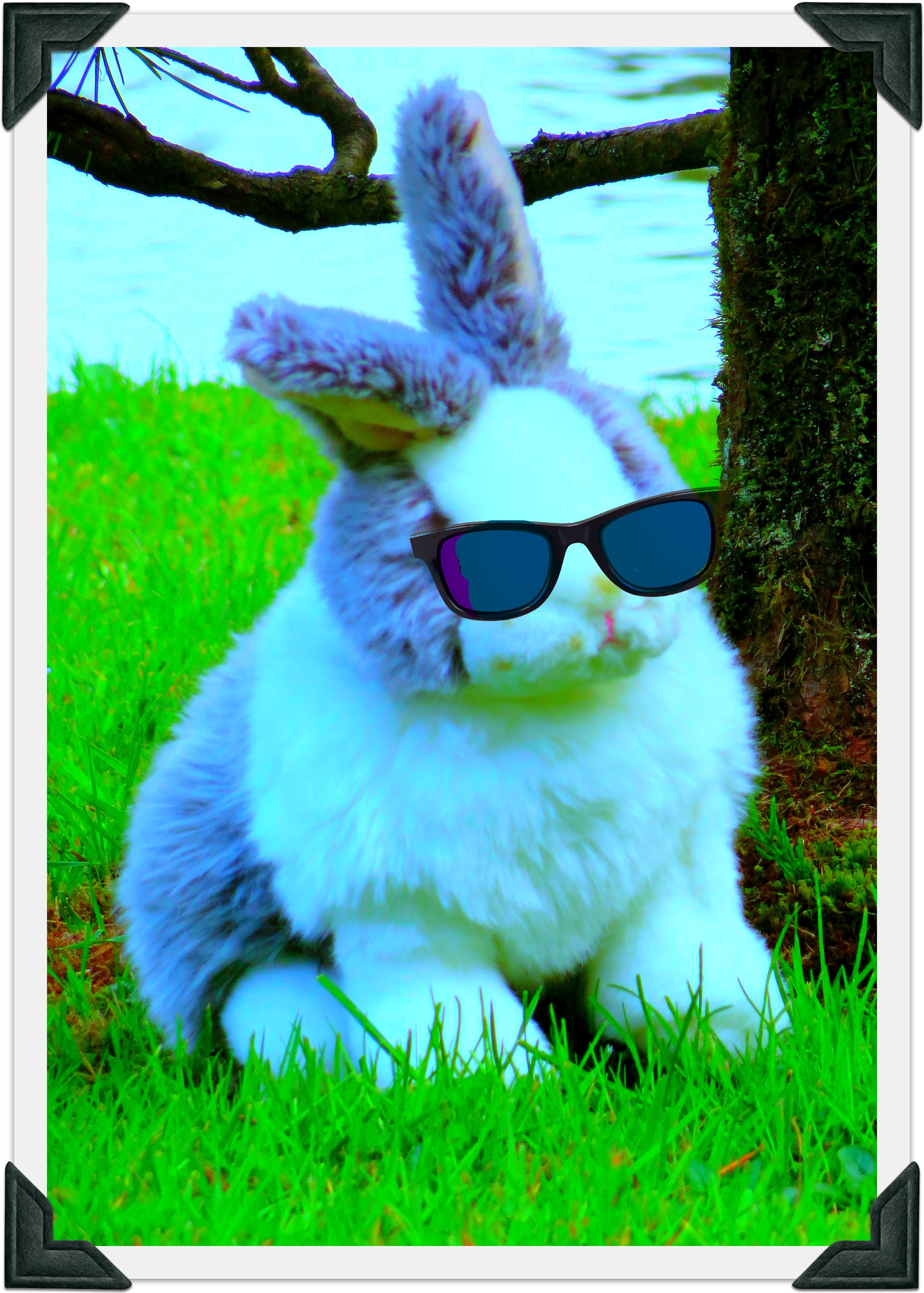
rgsgangstabunny


Sunday, April 16, 2006
Easter was always hard for me as a child. I’d been taught that I should be pleased about the news of the risen Christ, but what I really cared about was the basket of goodies. Eternal salvation sounded like a good thing, but with Brach’s jellybeans and Marshmallow Peeps right in front of me, it was difficult to see that the less immediate thing was the important bit. I always hoped by devouring one white chocolate cross on a yearly basis, I was participating in a sort of sweet holiday communion that would guarantee a Get Out of Hell Free card later. I never liked white chocolate but ate it out of sense of religious obligation. Just in case.

I say this in the past tense, but even though I know an angioplasty and diabetes are going to be in my future if I don’t cut out the Peeps and other sugary, fat-laden goodness, I have a hard time wrapping my mind around future when the present is so delicious. I’m not a stupid person, but somehow I’ve never gotten how heavily buttered potatoes in front of me now are going to equal too-snug jeans and shortness of breath later. I keep thinking medical science has to have it wrong–that one day they’ll realize Coke cleans out your arteries, that a thick layer of subcutaneous fat around a knee is actually _protecting_ the joint, not putting its owner on the short track to knee replacement surgery.

Last week I saw “Office Space” for the tenth time and somehow the Geto Boys song “Damn It Feels Good to Be a Gangsta” got stuck in my head. All week. I don’t like Rap, I don’t like those lyrics, but if you could have heard inside my head, that’s what would have been there. On campus on Wednesday as I drove past the one-day-only talking speed limit/radar detector sign and it told me I was four miles over the ridiculous 25 mph limit and said “SLOW DOWN!!” as if I were driving 75 thru a school zone, I curled my lip, shot an imaginary gun at the sign, and thought, “Damn it feels good to be a gangsta.”

Of course part of my cockiness stemmed from my having just seen the campus police SUV parked at McDonald’s.

Today, aside from being Easter, was my maternal grandmother’s 85th birthday. There’s no real story, but I thought I’d make note. She hasn’t felt good for my entire life and now has trouble getting out of chairs and down steps and her redneck neighbors plague her with late night ATV rides, but hey, 85 is one better than 84, and genetically speaking, I’m happy to have had a couple of grandparents who made it to that age even if there is gout affliction and high blood pressure pills. However, I’m hoping I won’t be as thrilled with “Deal or No Deal” as she is. Somehow that just seems like something that would be playing on the televisions that must line the walls of Purgatory. [Grandma died four and a half years after this post was written, but I still think of this as her time of year even though whenever you’d wish her happy birthday she’d give you a “pshaw” face and say, “It’s just another day.”]

While we were eating Easter/Birthday dinner, a family member was revisiting his romantic past. It was a story about a girl who once beat him up for kissing someone else. A girl whose family was likely Midwest mafioso. Then we talked about other people we know who seem to work beneath the radar of the law, who make bank deposits like Carmella Soprano’s $9,999 so it doesn’t get reported to the government, who drive big, expensive black cars, who always pay cash, and who live behind huge iron gates, but if you ask them how they make their living they’ll say they’re on disability or that they sell Hot Wheels on eBay.

Just simple folk, trying to get by.

I don’t know why this intrigues me so much. Despite my four miles over the speed limit last week, I’m the kind of person who would admit to a crime I didn’t commit just because I feel guilty about almost everything. The fact that I use non-rechargeable batteries or don’t recycle peanut butter jars because they are too hard to wash causes me moments of self-loathing. I can still feel my face turn red when I remember being lightly reprimanded by a teacher as a child. I also worry over much that when I make a judgment about someone or something, that perhaps I don’t have all the data. It’s the reason I don’t believe in the Death Penalty–400 eye witnesses could see a man shoot a convenience store clerk point blank and I’d always wonder if maybe it wasn’t the defendant’s doppelganger. I feel guilty. I question. I fret. I would be a jury foreman’s worst nightmare.

Which brings me to another family member acquired through marriage. I don’t have anything against this woman in particular. This afternoon though she and my mother were talking about trouble in the Middle East. It was a non-religious conversation, but this woman said, “Well, it’s all predicted in the Bible that this stuff will happen. The End is coming.” And then, without missing a beat, she said, “Ohhh. Are those Clark’s shoes you have on? Those are so cute.”

My life would be so much easier if I didn’t have to think so hard about stuff. Your reading it would be a lot easier too. No pondering the mysteries of the criminal mind, candy, religion, justice, my own psyche and trying to find meaning in everything. Instead, it would be one stream of consciousness thought after another: “400 dead today in train wreck. Cottonelle on sale at K-mart. Cute shoes!”  It’s another kind of gangster life…where you just live your own life and don’t think too much about it…or anything else. It must feel good. I’ll never know.

Flashback Friday: New Ways to Be Judgmental

Standard

Thursday, April 20, 2006

Today I was an interviewer for the mock interviews that are held in the Education Department. I’m not sure why I do this every semester but I suspect it has something to do with the director of the program being the mother of children I babysat for for my first babysitting job. Though we’re colleagues now, she’ll always be the grown-up and despite six years of therapy, I will always be the child who wants to please grown-ups. I’ll watch “Dukes of Hazzard” and “The Incredible Hulk” with your children; I’ll be a mock interviewer for your students. Just give me a hoop to jump thru and the promise of a pat on the head, and I’m there.

I dropped my own Ed major after six weeks in my first Education class as an undergrad. The terminology bored me and the prof talked too slowly. I had no interest in wasting precious moments learning things I didn’t care about when, instead, I could be reading Thomas Hardy and Sylvia Plath. I had no real vision of what a non-education English major career might be, but saying goodbye to terms like “differentiation” and “rubric” was worth every time after I announced the major change that I had to hear my father say, “What? Are you going to be a professional college student?”

I have often wondered if perhaps I wasn’t a bit hasty in dropping the Ed major, but today proved that I made the right choice. A fourth of the time I had no idea what my partner-interviewer or the interviewees were talking about. Learning Mandarin would be easier. Sometimes I feel annoyed by the terms because a perfectly good word like “artifact” which _should_ conjure images of the pyramid that has just been discovered in Bosnia-Herzegovina instead means, essentially, “photos of 4th grade art projects and math worksheets.”

Also, the director kept referring to items on a the question sheet that were “bolded.” I hate when un-poetic words get made up. Made-up poetic words I like. Today, a student shared with me her word for the desire of girls and young women to make real their Disney fairy tale fantasies. She calls it “princessing.” Now that is a good made-up word. She is now getting a divorce and is thus, one assumes, in the final throes of being de-princessed.

There are other reasons I don’t like participating in the mock interviews. Like I hate fake stuff. Like I hate “rating” people. Like sometimes it is difficult for me to stay focused if I’m not interested in something. So for instance, on the comment sheet I filled out after each interview, instead of commenting on their presentations and examples, I found myself wanting to write helpful tidbits like, “Honey, you are over-plucking your eyebrows. It makes you look hard” or “Your hair is overprocessed–pick a color and stick with it.” This is information that I think they need–and having just watched five back-to-back episodes of “What Not to Wear” I feel qualified to give it–but in the interest of professionalism, I restrained myself and responded instead to the next bolded question.

Possibly it is a good thing I don’t have children because the other thing I realized is that I am now so old that these soon-to-be teachers seem much too young to be teaching. If I were a mother I’d have to quit my job so I could home school. On the positive side, in my home school, there would be no differentiation or rubric talk. To my credit, I would limit the princessing.

To reward myself for all of my hard interviewing work, I spent a half hour on iTunes planning the music I would download after my next pay day. While there, I discovered Celebrity Playlists and a whole new way to be judgmental. I surfed through the playlists of various celebs to see who listens to what and their comments about why X is the best song ever. My assumption, initially, was that I’d learn what music is cool in Hollywood. Instead, I lost respect for people I’d previously never had an opinion about. For instance, what would possess Kevin Bacon and Kyra Sedgwick to post together and tell us their favorite sex song. I’ve always thought they were a cool couple, but somehow their need to post together annoyed me. Ditto Courtney Cox and David Arquette. (Who’s watching Coco while they’re playing around on the internet, telling us what a good road trip song “Free Bird” is?) I had high hopes for Bill Mahr but he disappointed me. What’s worse, the people I admired who had playlists I would make myself? Well, suddenly they seemed less cool. Shouldn’t they like things beyond the scope of what I (a mere mortal) have access to? To misquote Groucho Marx, I don’t want to be a memeber of a club that will let me play my own music.

I liked Nicole Kidman’s. I can’t say why exactly. It might just be a need to support her in these dark days following the birth of her children’s half-sibling/alien, but I appreciated that she had some Lenny Kravitz on her list and wasn’t pretending he never existed for her. I also liked that Elvis Costello had himself on his own list. Because you know all the musicians were wanting to do that. They were DYING to do it. But it takes a guy in horn-rimmed glasses to pull it off with any kind of panache.

Perhaps in the next six years my shrink and I can work on me becoming the kind of person who would put her music (if she made music) on her own playlist.

A Different Kind of Buzz

Standard
Bee Costume, 1978

Bee Costume, 1978


Today we celebrate, or perhaps, bow our heads and offer praise unto the heavens, because this morning we (and yes, that is the royal “we”) got the glorious news that Voldemortress, the woman who helped us decide to leave teaching in order to write, is moving away from our hometown and moving her well-dressed, scheming self to greener pastures at a different university where she will no doubt topple kingdoms in her plan for world domination. No longer will we have the annoying moments of bumping into her when our hair is un-brushed. Nor will we have to worry about being put in a position of needing to weigh our Christian values against our desire for vengeance should she find herself in need of roadside assistance (as we were in December and about which you can read  here: “Christmas with a Carpetbagger”).

Initially, we were not amused. In fact, initially, we were upset on two counts: 1) the obvious, in which our world was rocked for no real reason and now what little reason there was is gone 2) we realized a better description would not have been Voldemortress but instead Voldemort and Cersei Lannister’s soul-sucking love child, and we have denied our readers this image until today. Sorry.

We quickly skipped past all other stages of grief and moved on to revenge fantasies, which involved sending fruit baskets to her new colleagues with a note explaining how best to protect themselves from her Dark Arts. From there, inexplicably, it was Lorde’s song “Royals” playing on a loop in our head for an hour—like an anthem—and this gave us great joy because, hello, we are the protagonists of the song (even if we are thirty years older than Lorde). It is true: We will never be royals, and everyone who knows us knows that we’re fine with this.

And now, we plan to explain to Z that tonight there will be celebratory cupcakes at Cupcake Royale.  Because the queen is dead.

Long live Queen Bee.

Where Beauty Goes to Die

Standard
Ugliness.

Ugliness.


Where I grew up on the edge of Old Richmond (before the neighborhood had “Old” attached to it or fresh coats of paint slapped on the brick cottages and Italianate two-stories to make it seem like an enchanting destination), there were century-old houses in various states of disrepair depending upon the age of the residents and whether they rented or owned, and attached to these houses were long narrow-ish backyards. The yards often had some sort of fencing to delineate one from another, or, in some cases, just forsythia bushes or shrubbery. Our yard had a high wooden fence with alternating boards that made it nearly impossible to look out, though you could press your eye to one of the slats for a narrow peek at the alley that sat behind the yard.


I wasn’t allowed to run wild, so my primary exposure to the alley were these peeks, or watching Mom carry our trash out once a week as I stood on a chair and looked out the kitchen window because I wasn’t wild about her being out of my sight. On maybe two occasions I crossed the alley into the backyard belonging to some neighbor kids who had an elaborate swing set, but because I was an introverted kid, I never really understood the thrill of playing with my peers and preferred instead my books or lurking on the edges of adult conversations, taking notes for future reference of things that really mattered. Plus, Mom never seemed too happy about me taking those few steps across the alley from the safety of our yard to the unknown dangers in the yard of the Joneses. (And there were neighboring dangers.)


So the alley mostly remained a mystery.


As a kid, I didn’t quite understand that the backs of the houses were connected to the fronts of the houses on the next block, so the kids that were growing up on South 8th, to me, were from a whole different neighborhood than I was on South 7th, simply because their houses faced a different avenue. If I started thinking about how our across-the-street neighbors, who seemed much closer than our across-the-alley neighbors, had a whole different set of alley neighbors than I did—people completely unknown to me—well, it was probably as close as a six year can get to tripping on acid. I didn’t need to travel to France; the world seemed vast as it stretched past the borders of our second-story apartment.


It wasn’t until I was much older and had friends who started moving into subdivisions with gorgeously manicured lawns whose ambience was wrecked by the presence of utility boxes or garbage cans out front that I realized what purpose an alley had served and the glorious city planning of yesteryear, creating a warren of pathways in which all the ugliness of human habitation could be hidden. Why would such a wonderful plan be abandoned? Now, unless you live in one of these neighborhoods from the 19th or early 20th century, everyone knows what you got for Christmas when you haul your overflowing Rubbermaid rolling garbage down your drive on December 26th (and they are judging you for using non-recyclable gift wrap).


Then I moved to Seattle, and because our apartment building is perched on a hill, it often makes more sense to enter the building from the alley, so I’ve grown more familiar with it. Because we share it with a hotel that has a restaurant we can’t afford in it, we sometimes open the back door only to find we have to squeeze past a produce truck to get where we’re going. On cold days, one down-and-out guy might be seen warming himself by the hotel vent, his hood up and cinched tight around his face to keep out the rain. We might say hi to each other. One day, I gave him a donut. But usually the inhabitants of the alley are hotel employees, standing around on their breaks, talking animatedly, maybe smoking a cigarette or texting, looking a little sad that they have to go back in for the remainder of their shift.


Until recently, we had a building manager for whom we had some real fondness even though she was odd. She once banged on our window at one in the morning because she’d locked herself out after chasing a surly character down the street who was loitering too near the building. Her apartment in our building was at the back, overlooking the alley. I read some reviews online that talked about how insane she was, hollering out her windows at people rummaging through the dumpsters, chasing people away. While I never witnessed it first hand, it didn’t sound like behavior outside her wheelhouse.


I hadn’t connected these online rumors with the nearly pristine nature of the alley back then, but the first three and a half years I lived here, walking through our alley was little different than walking on the street in front of our building. Though I wouldn’t choose to use it at night alone—mainly because I wouldn’t want to be surprised by someone who was taking shelter from the rain in the covered space where our trash bin resides—I had no opinions about the alley. It was just the quickest route up the hill.


Then, mysteriously, our building manager got replaced by someone younger and more polished. She has a college degree and a poodle and very classic fashion sense. Suddenly, our building has lots of “welcome neighbor” signs dotted around the common areas, though if you bump into her, she either blinks at you like she isn’t even sure you are a tenant or she turns her head to avoid conversation entirely. Her first sin against us was charging us a late fee for underpaying our rent for three months even though she’d never told us our rent had gone up. (It was the holiday and our powers of intuition weren’t up to snuff.) Even so, I’ve been trying to remain neutral about her until more data can be collected. She’s young, I keep telling myself. She’s just learning the job. And then she ignores us when she passes us on the street and I purse my lips.


Other than the new hallway art and area rug and the random monthly newsletters we get with generic health and shopping tips, the only real change I’ve seen since she arrived is the quality of the alley. I can’t imagine “police alley of all misbehavior” was anywhere on her job description and she doesn’t look the sort to chase down any unseemly types wreaking havoc there (nor does her poodle, for that matter), but now at least half the time I leave the apartment I’m greeted with someone standing in the trash, hip deep, digging for treasure. At first I thought it was one of the many homeless people and I chastised myself for feeling annoyed by this. But then I noticed the shoes on one who was hanging over the edge of the bin looked a little too hip. The Levis a little too fresh. These were just dumpster divers. On the one hand, I want to applaud them for finding uses for something someone else has declared useless, but on the other, I want them not to be there, scaring the bejeezus out of me as they pop out of the dumpster like some kind of hipster jack-in-the-box. More importantly, I want them to be tidy about their diving, so plastic bags and bits of cardboard and wrappers aren’t blowing up and down the alley like tumbleweeds.


I have no idea how the old building manager did it, but before her departure, we rarely saw mattresses or old arm chairs losing their stuffing waiting for a trash pick-up that will never come. Now? Our alley has become the place where beauty goes to die. It looks like a used furniture store lining our building and the building across from ours. Often, I think up reasons not to go out the back door, not because I’m “scared” of the alley, but because it’s just too hideous to look at.


Last week, I posted the above photo on Facebook and an old co-worker of Z’s commented: “I think we share an alley, Beth!” It turns out, he’s in the apartment building twenty steps up the hill from us, next to the hotel. Three-quarters of the time I feel insular and a little isolated in this city of over 600,000, but when I saw his comment, I felt like I was back on South 7th.


Maybe we should have a block party out there this summer and get to know our neighbors. There’d be plenty of (discarded) seating.


Flashback Friday: Biopic

Standard

[Like all writers across America, I’ve been working on my application for an Amtrak Writing Residency, and the week before I was recovering from a writing conference. What this means for you, is back-to-back flashbacks. I’m getting back on the writing horse this coming week. Promise.]


Sunday, April 02, 2006

Last night I watched Walk the Line, and it occurred to me that the main reason Johnny & June Carter Cash had time to write songs, make up prison identities,  get high, divorce their spouses, fall in love with each other and play to an audience is because to supplement their creative inclinations they did NOT have to grade 85 papers four times a semester. They didn’t have students stopping by their offices telling them stories so sad (and unfortunately true) that they then had to shut the door and have a cry once the student left.

They didn’t have to go to faculty meetings.

I fear I’ve just opened up a portal in the universe wherein my job will be sucked because it sounds as if I’m ungrateful and I don’t like it. [Oh, 2006 Beth, you have no idea what havoc you just wreaked!] Before that happens, let me say I DO like it. I really do. I’d prefer a book on the bestseller list so successful that I could buy Neverland Ranch, but barring that, my job is the best way to supplement a creative lifestyle. Of course no one is going to make a biopic of my life. Even Joaquin and Reese are now entitled to their very own E! True Hollywood Story episodes, but the life of a writing lecturer is never going to make the big or small screen.

When I have three stacks of papers to grade, it seems insurmountable. It’s as if I’ve never graded before & I can’t imagine how I’ll ever slog through them. I think of all the things I need to do like organize my files or weed my books or put my photos in decorative boxes. I eat food I’m not hungry for. I get bitchy and want to smack a lot of different people who probably don’t deserve it.

Like for instance, people who aren’t concise when they speak. People who, before they will ever give you the first line of their story so you can decide how interested you are in it, will spend five minutes trying to figure out if it (whatever ‘it’ is) happened on Monday or Tuesday. People who talk slow and pause between words. People who talk about their neighbors that I’ve never met. People who think how much head lettuce costs at Kroger is a valid topic of conversation. None of these things is worthy of my wrath, but when I have stacks of papers to grade and minimal time to spend on my own thoughts, I don’t want the air crowded up with stuff that doesn’t matter. Just–please in the name of all that is holy–cut to the chase. You missed class because your tire went flat? Tell me that. One sentence. Thank you for sharing–now please step away from my office door. In the time it takes me to listen to the average why-my-paper-is-late excuse, I could have written a companion piece to “Burning Ring of Fire.”

Other reasons I’m crabby today: my dearly beloved purple iMac died. I haven’t had a technician look at it to perform last rites, but I know a death rattle when I hear it. This one, for instance, sounds like the fan purring but the hard drive not engaging. And no magical Mac chime to let me know all is well in the universe. I use it only for email and playing Snood while listening on the phone to people who commit one of the conversational sins in the above paragraph, but I love it. It’s so grapey. So roundy. Has been there with me thru the good and bad.

I’m trying not to think about all the files that are on it that aren’t backed up that I have likely lost. This is no one’s fault but my own and it disappoints me that when I learned this lesson seven years ago it didn’t stick.

When a computer dies, it’s like a place got sucked up into heaven that you can no longer visit. My mother has my old Mac Performa–it is, essentially, the one I bought in grad school in 1994 with a few minor modifications. Sometimes I turn it on and have memories wash over me of life from that time. (A much slower time.) Papers written. Emails shared with the two people I knew who actually HAD email. Wallpapers that decorated my life. Strange men talked to before a lot of women had clawed their way online, which made me a hotter commodity than I have ever been at any other time in my life. It’s like revisiting a playground from a school you used to attend. Not that I have first-hand experience with this–the playground of my youth is now a parking lot.

No movies are going to be made about this kind of loss either.

Flashback Friday: Everybody Else is Doing It So Why Don’t We

Standard

[What you might not know if you aren’t from Indiana is that Hoosiers have very strong opinions about Daylight Savings Time. Until 2006, we didn’t participate, but then we accidentally elected ourselves a governor who put that at the top of his to-do list. Some of us still haven’t adjusted.]

1 April 2006

I’m a Hoosier. A lot of us don’t really understand complex theories like fractal geometry and Daylight Savings. With the exception of a dark year in the ’70s, we’ve avoided participating in DST, but then Election 2004 happened and somehow we ended up with a governor who decided the most pressing issue for Indiana was to get us aligned with 47 of the 50 states. One argument he used was that Indiana looked ‘backwards’ not to be on DST when most of the country & a lot of the world does it. Never mind most of us learned from our mothers that just because “everybody” was doing things like jumping off bridges it didn’t mean we should too. But by all means. If Rhode Island is using DST, then sign us up, otherwise we might not get to sit at the popular kids’ table tomorrow in the cafeteria.

There are people who think it is a great idea, mainly because we live on the Ohio border and so for once in our lives, we won’t have to do math just to watch television or make a flight. But then there are people like me who just can’t see the sense of upsetting the internal clocks of humans, livestock and microwave ovens so the governor can work in an extra game of golf.

When I was a kid, my dad and his wife lived across the state line in the land of DST. Because he had me every other weekend, I was at their house when the ritual of pushing the clock hands forward on a Saturday night took place. Because they lived in a city instead of a town, a house instead of an apartment, and were Catholic instead of Protestant, I tended to see DST as yet another difference between us. At the time I somehow thought they were more progressive than we were, pushing that little wrought iron clock hand forward once a year. Maybe the governor is a child of divorce too. Maybe he was just trying to prove something to a Buckeye father. Who knows.

Tonight while re-setting my clocks, I was talking on the phone to my cousin G. She also lives in Indiana and so changed her clocks with me, while we groused about how dumb we think it is and how we can’t believe next year DST will start even earlier at the President’s direction (why not just set the clocks ahead an hour and leave ’em that way permanently with no switch back? If 8 months of DST is a good idea, why not go for 12!). Anyhow, five minutes after we got all of our clocks reset, G. says in a shocked voice, “My God! We’ve been talking for almost 2 hours!” She’d already completely forgotten she’d lost an hour. So obviously it really isn’t that big of a deal. What IS a big deal is this: i cannot figure out how to spend my extra hour of daylight tomorrow. I’m considering lawn tennis.


Snow Memory

Standard


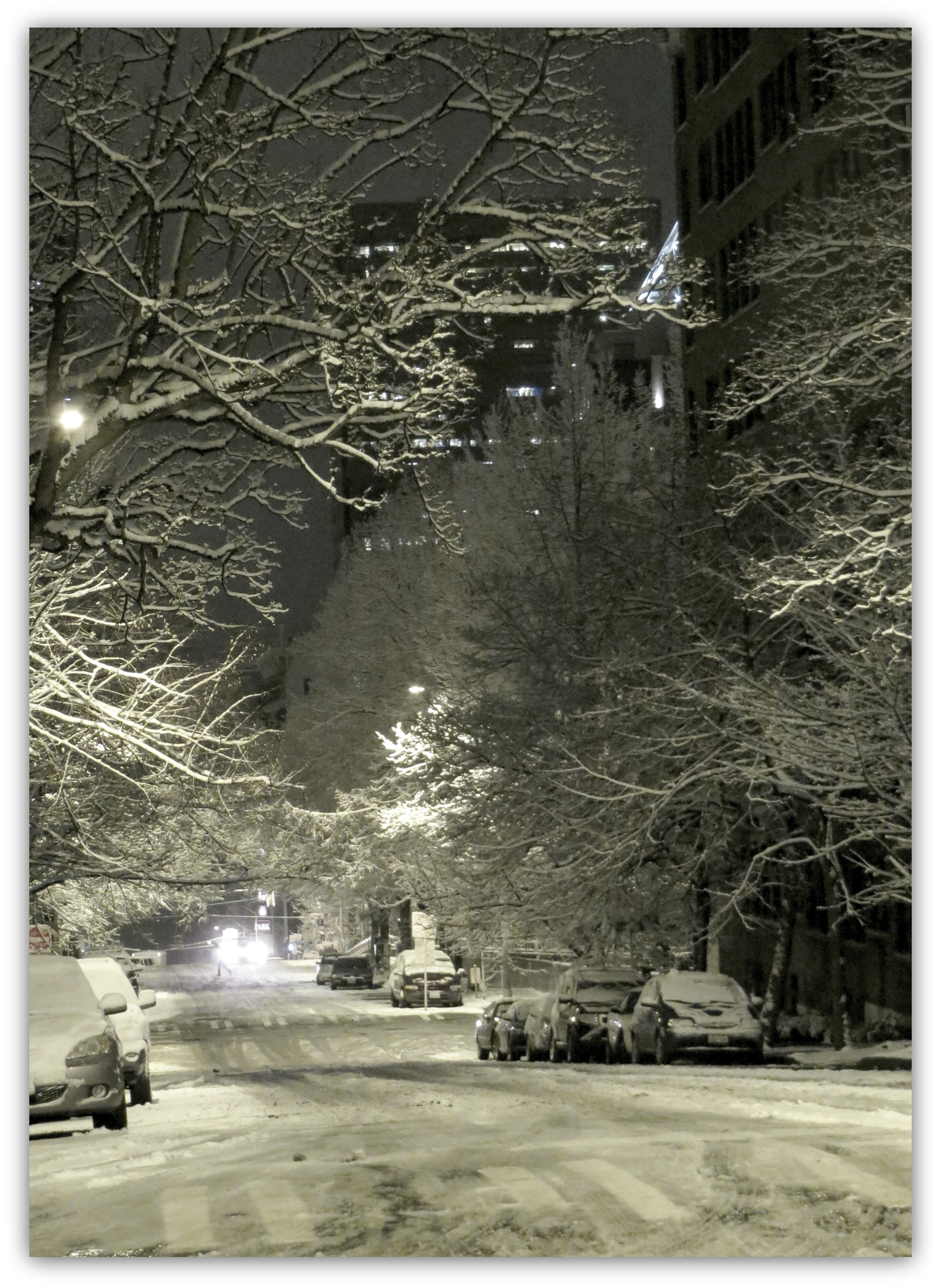
Seattle Snow on Spring

Seattle Snow on Spring

I realize some of you won’t appreciate this post, because you are stuck there in the dark heart of the Polar Vortex. But think of us here—a girl who misses her Midwestern snow and believes every winter should look like the holiday issue of the L.L. Bean catalog and a boy raised in a country deprived of snow completely—now stuck in a city that has on offer only rain. Wet, cold, wintry rain.  Look deep in your heart. Don’t you want more for them?


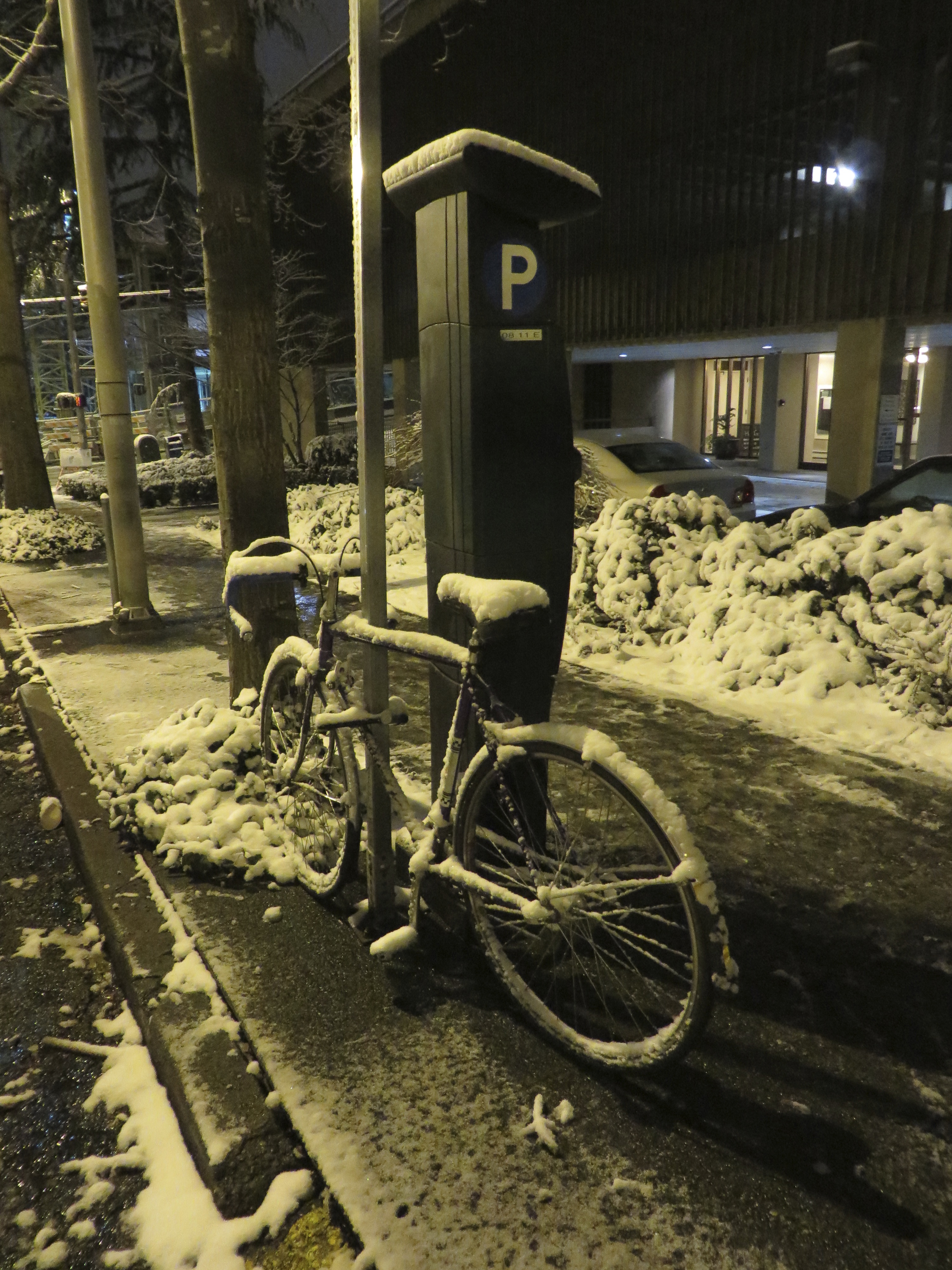
Saturday night the cars driving by sounded extra slushy, so we peeled back the curtains and what did we see but one of those wet, lovely, tree-clinging snows.  Even though I knew it was fleeting, for a whole night, I was able to pretend it was really and truly winter. We pushed open the curtains, turned off the lights, and watched the snow come down. To make it truly spectacular, I should have turned on our DVD fireplace.

rgssnowsteps

Z likes to argue that I don’t really love winter and that I am only happy if the temperature is somewhere between 58 and 64 outside and 68 inside. I complain about heat, rain, sun, wind, and anything else that gets hurled at me. Maybe he is right and I’m the Goldilocks of weather, but some of my best, clearest memories are of snow in a city at night. They aren’t “event” memories—nothing happens in these memories—instead, they are more memories of ambience: walking with my two mittened hands in the hand of a parent when I’m too young to even have memories; walking amidst the Victorian houses and tree-lined streets of Richmond’s north end from the apartment Mom and I were living in to the cozy apartment of our good friend; sitting on a hay bale singing Christmas carols with my cousins at my grandparents’ farm; my little college campus transformed into a 1980s snow globe as we moved from dorms to classes to cafeteria, cocooned in snow; more than one knee-deep, frigid snow in Chicago, where I first discovered how even a big city can seem small and quiet (and clean) late at night with snow falling; a birthday in Freeport, Maine, where I actually got to see that perfect L.L. Bean catalog cover in real life but also sadly dropped my camera in a snow drift trying to capture it; last March, a midnight walk from Chickpea’s apartment in Brookline to the hotel where Z and I were staying and where I was the only person on the street and the whole city felt like mine.


My favorite, though, was the surprise Seattle snow the first few months Z and I were together and the block walk from the Quarter Lounge to his apartment, and we were both electric with love for each other and the snow felt like some kind of magical fairy dust that had appeared just for us.


So those are the reasons why at 1:30 a.m. on Saturday, I decided I needed to take my congested nose out into the cold to walk around and snap some photos. Z spent several years in Minnesota, so romanticizes snow a lot less than I do, but even so, he eventually came outside to humor me.


The city was quiet and we passed very few people and one perturbed looking dog. By the next morning, the snow was gone, almost as if it had never happened.


Tomorrow, we leave for California where Z will be presenting at a conference, so all memory of winter will disappear as quickly as a Seattle snowfall.


IMG_0813