Tag Archives: Apartment living

No Elderly Ladies Were Harmed in the Writing of this Post

Standard

I dreamed the other night that one of my manuscripts had been turned into a blockbuster movie, and I went to the premiere but was so late I could only get seating in the back row where the big, movable seats were malfunctioning. As soon as the opening title rolled, my chair shifted violently to the side and I couldn’t see the screen. I could only hear the movie and comments and coughs of the audience as I stared at the dark wall and ceiling, shadows from the movie flickering in the periphery.

On the plus side, it seemed to be a success based on dream-comments, and the news that Mattel was putting out dolls based on the characters (probably all versions of me). That last bit was only because Z and I recently saw Barbie, though by now it is surely a truth universally acknowledged that until there are Barbies, Funko Pop figurines, T-shirts, and Happy Meal prizes based on your characters, you haven’t really succeeded.
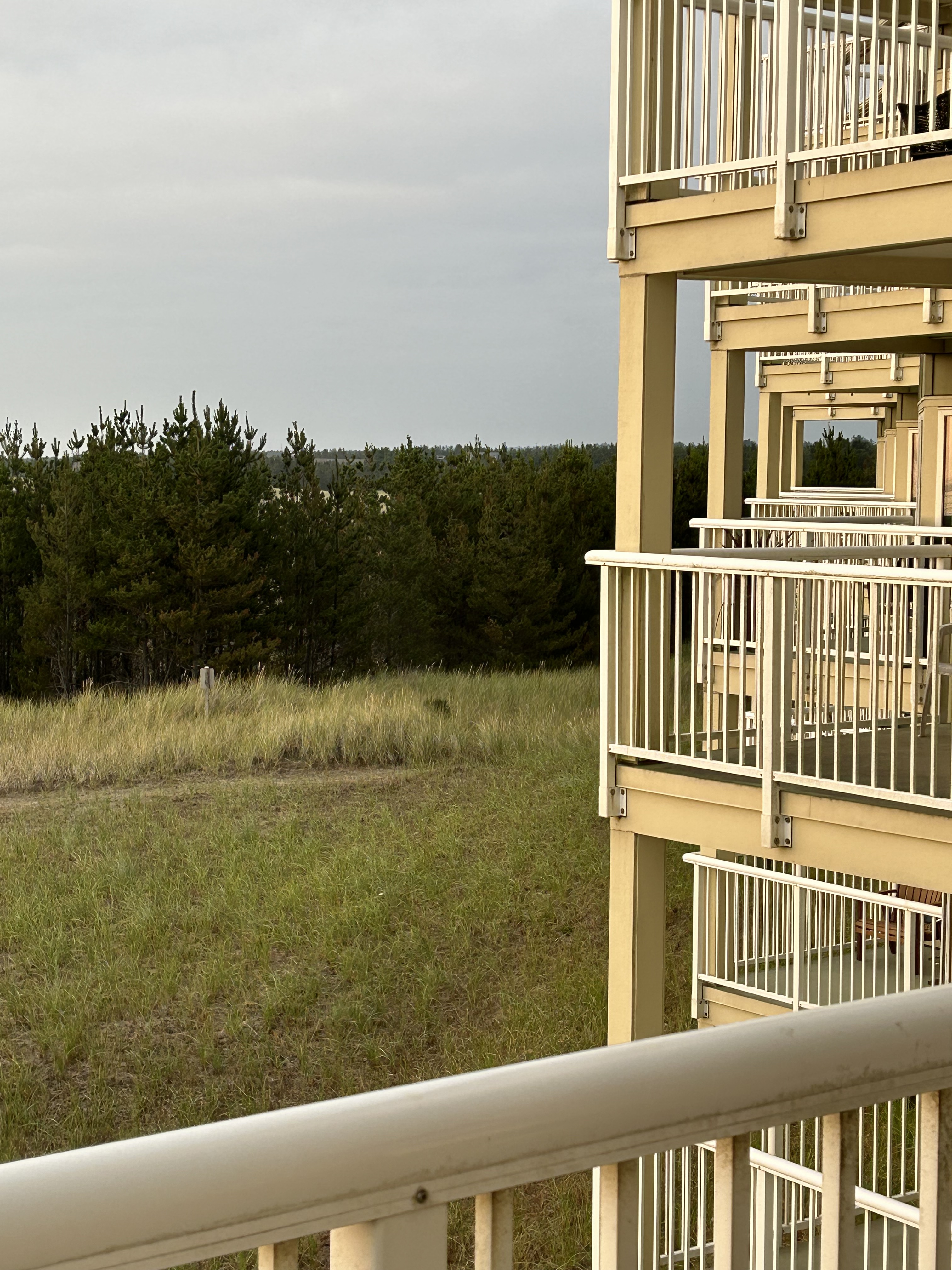
Pretend there are kites in the distance. They were there most of the time we were in residence.

Z and I went on a short trip to Long Beach, Washington, with Hudge. It’s the first we’ve been to the seaside since the Pandemic. We stayed in a condo right on the beach and spent our non-beach time listening to the waves, watching a family of deer who showed up daily under our balcony looking up expectantly at us like Romeo in the Capulets’ courtyard. Walking the wrack line to the south, we dodged jellyfish and piles of seaweed and some brown foam that made me wonder if mermaids had gastrointestinal disorders. And in the distance, we could see Cape Disappointment—a high cliff with a lighthouse perched atop it to alert boats that this hunk of ocean where the Columbia wends its way into the sea can be hazardous.

Hudge and I do a mean puzzle together when not taking in the view.

Isn’t that name the best? Cape Disappointment. It was given this name in 1788 by British trader and naval commander, John Meares, who was looking for the mouth of the Columbia River based on an earlier description from a Spanish explorer. He thought he’d failed when he landed on the cape and didn’t recognize the estuary. Well, I should rephrase that. He didn’t think he had failed; he assumed that the Spaniard had shared faulty information. Why blame yourself when there’s someone else at whom you can direct your frustration?
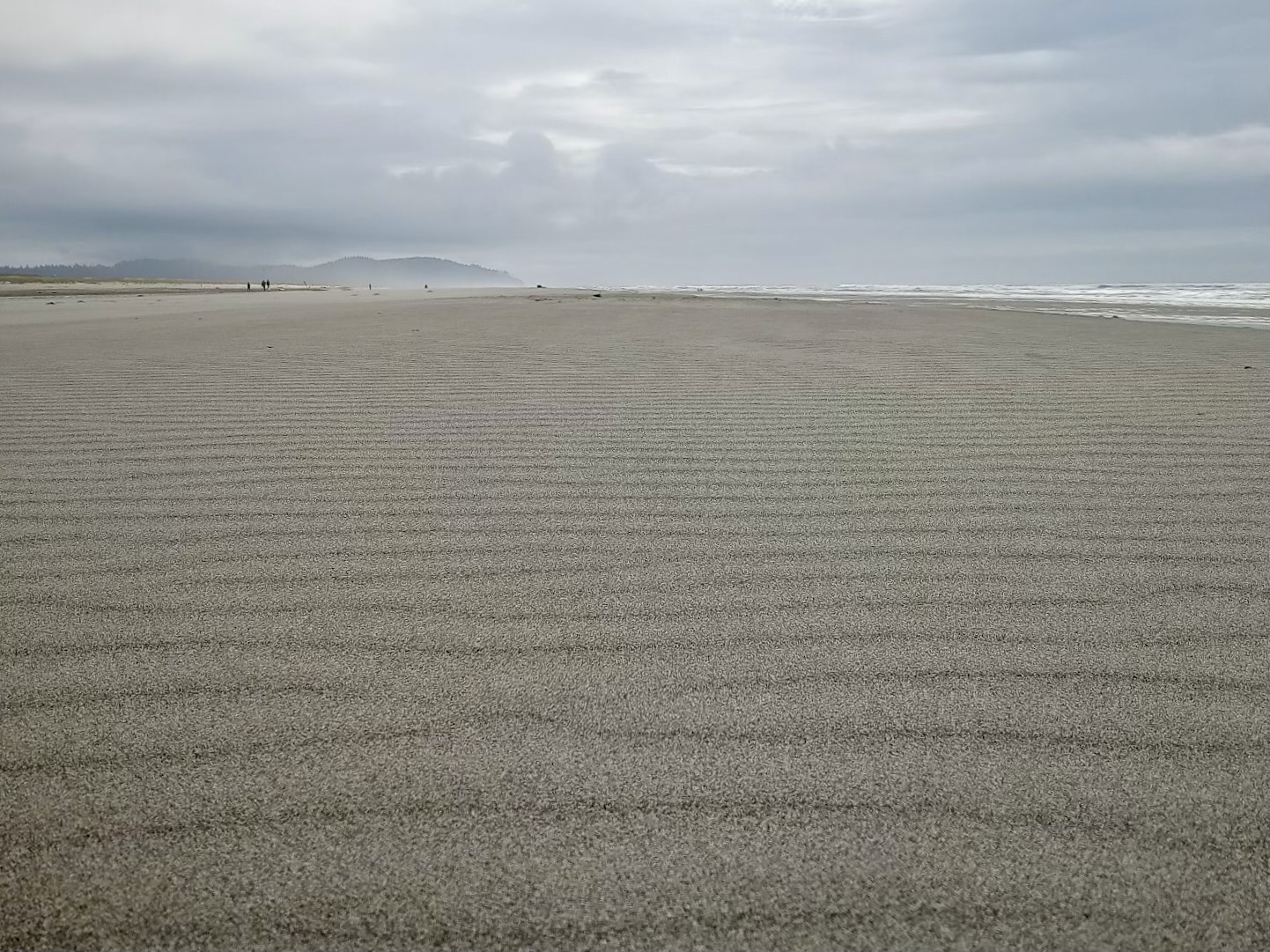
Long Beach, WA–Cape Disappointment in the distance, not disappointing.

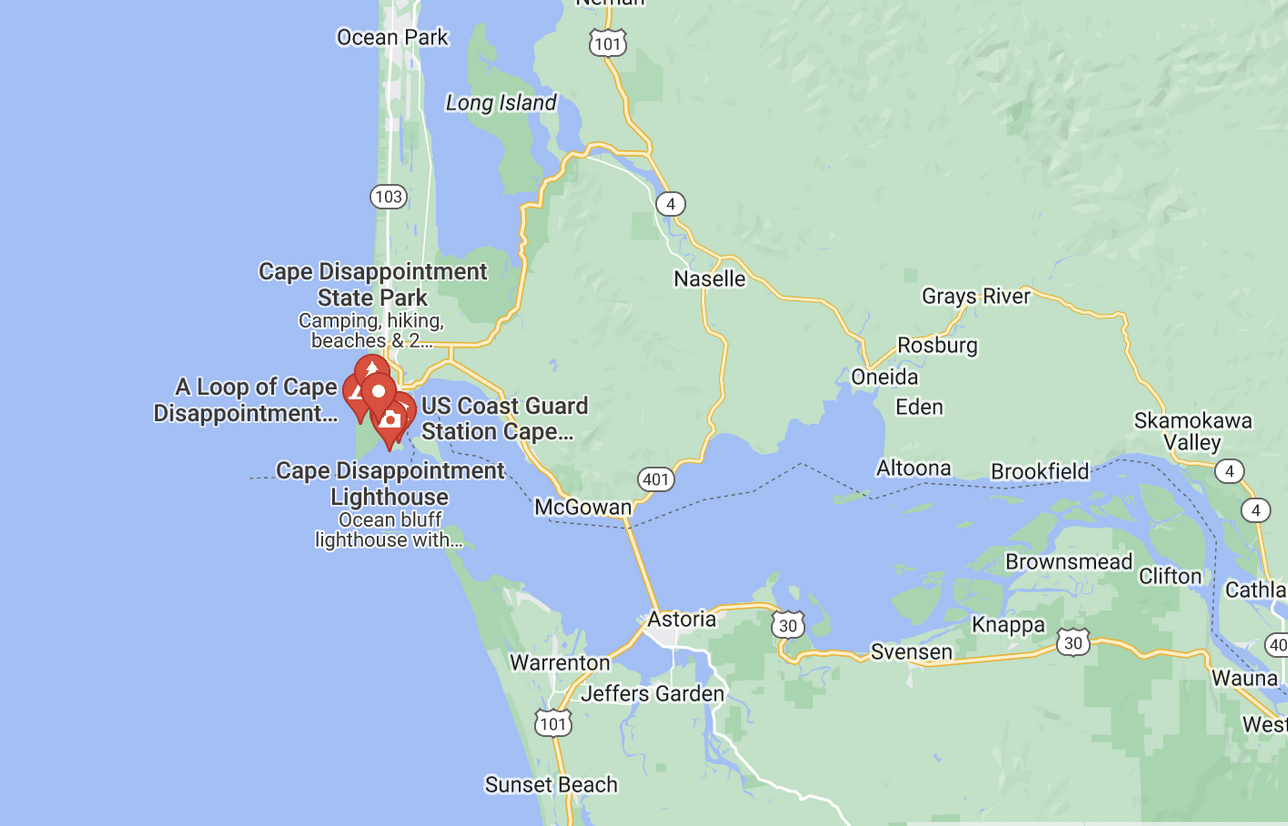
You can kind of see from the map below how Meares might not have recognized a river when he saw it. There’s no neon sign with El Columbia está aquí pointing to it.
Usually when I’m at the beach—or on any vacation—I spend a fair amount of time berating myself for not doing it better. For not walking further or reading under an umbrella picturesquely or drawing something in my sketchbook. At whatever place we stay, I imagine missing something in the tiny little downtown and think maybe I should be poking in the shops there or eating local cuisine, but if we do venture out, it seems like a waste. Who wants to shop when you’ve “bought” a view for the weekend?

Like Prince’s mother, on a beach vacation, I’m never satisfied, though instead of blaming a Spaniard or Z, I assume the problem is with myself.

Wherefore art thou and thy apple slices, Juliet?

This trip, however, I allowed for no self-flagellating. I read a lot. (Circe by Madeline Miller—so good.) I listened to the waves and I read some more and didn’t apologize or worry that I was missing something on a walk or at the kite competition that was happening up the beach or that I wasn’t sucking the marrow from the condo we rented because I didn’t flip through the notebook of suggested activities or all the slick coffee table books about sea glass and the Washington coast. My laptop remained in its case. I posted no pictures on social media. I worried about nothing, not even when my mother reminded me that all of the poisonous water from the Fukushima reactor had been released into the Pacific. I picked up one stray Croc someone had left behind and got it out of the water’s path so no creature would choke on it, but I otherwise chose not to worry for four days about all the ways I’ve screwed the planet personally (all those bags of minute rice and plastic candy bar wrappers; all that gasoline and sucking up of groundwater). Instead, I enjoyed the food Z and Hudge cooked and didn’t once worry that I’m a failure as a woman—as a human—because I’ve no interest in the kitchen. I just was.

Reader, it was one of the most relaxing vacations I’ve had no matter how short, not because of what I did or didn’t do, but because I just got out of my own head for 86 hours. I’d like to spend the rest of the year trying this experiment in my regular life. Making decisions. Saying what I want. Doing what I want without consulting my to-do list and feeling guilty about the things I’m not doing or did do but shouldn’t have. (Tubs of Ben & Jerry’s non-dairy Phish Food, anyone?)

What brings me here today, however, is that when Hudge mentioned my blog and Z said I hadn’t posted in over a year, I was shocked. I’ve started entries and written even more in my head, and it hasn’t seemed that long to me. So here I am, cap in hand, not out of guilt but because I have. . . missed doing it.

I have been writing regularly, it just hasn’t been a blog and most of it hasn’t yet been polished for human consumption. Still teaching writing, reading other people’s writing, critiquing writing, and, when there is time left over, reading for pleasure. Also, I got a new iPhone that came with few months of Apple+ for free, so there has been some bingeing of shows like Ted Lasso, Silo, Trying, and Encounter. And for mindless viewing, we’ve been watching (re-watching in my case) lots of Grey’s Anatomy so we can see the Seattle Z moved to in 2006 vs. the Seattle that exists now. Very different skyline. Very different vibe. Mostly, we’re pleased with the Seattle shout outs and how they use familiar-looking Native American art in the hospital. The only thing TV and movies never get right is the rain. Always it’s torrential. Always it’s with lightening and thunder. It’s meteorological Shonda Drama.
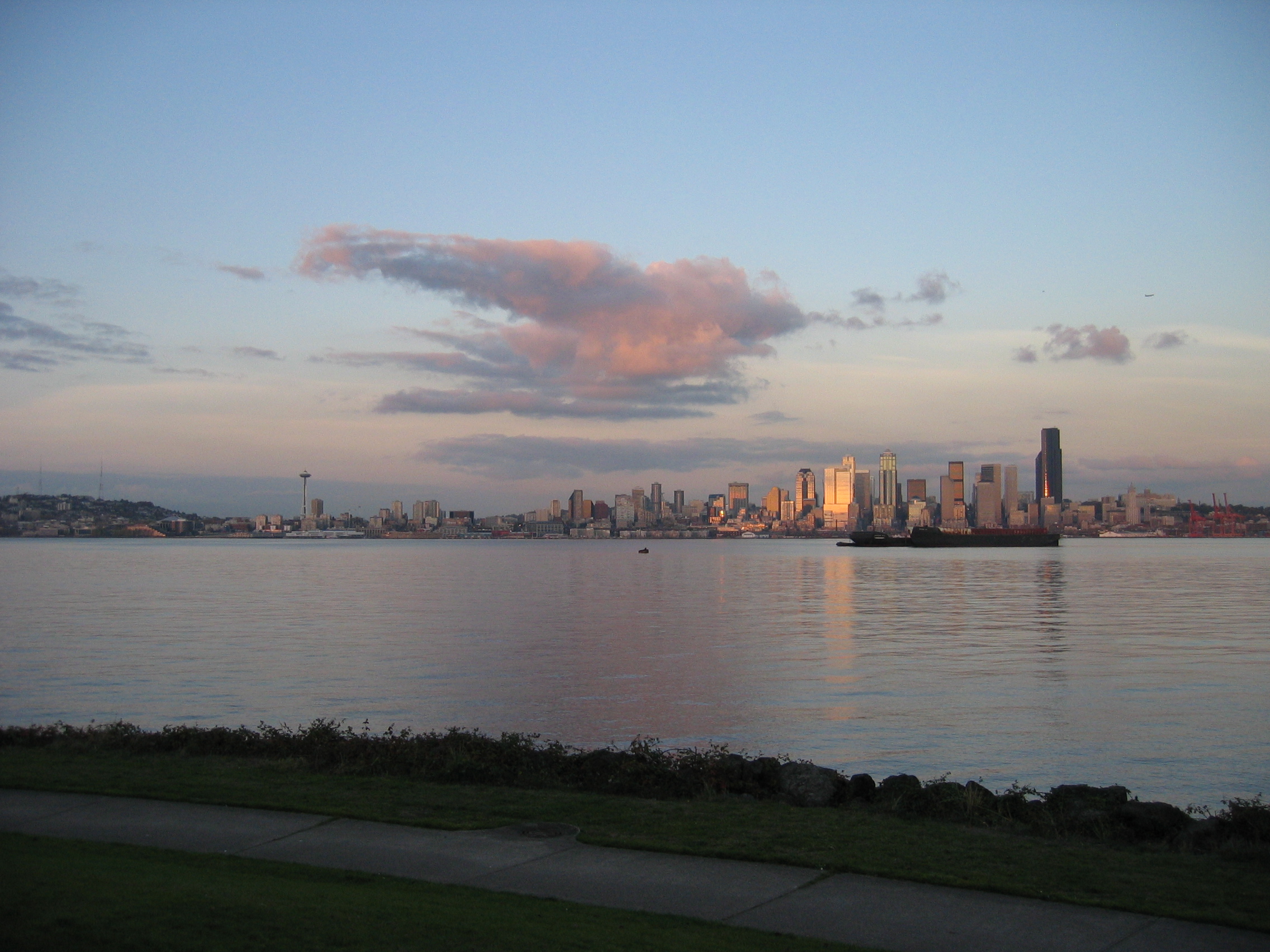
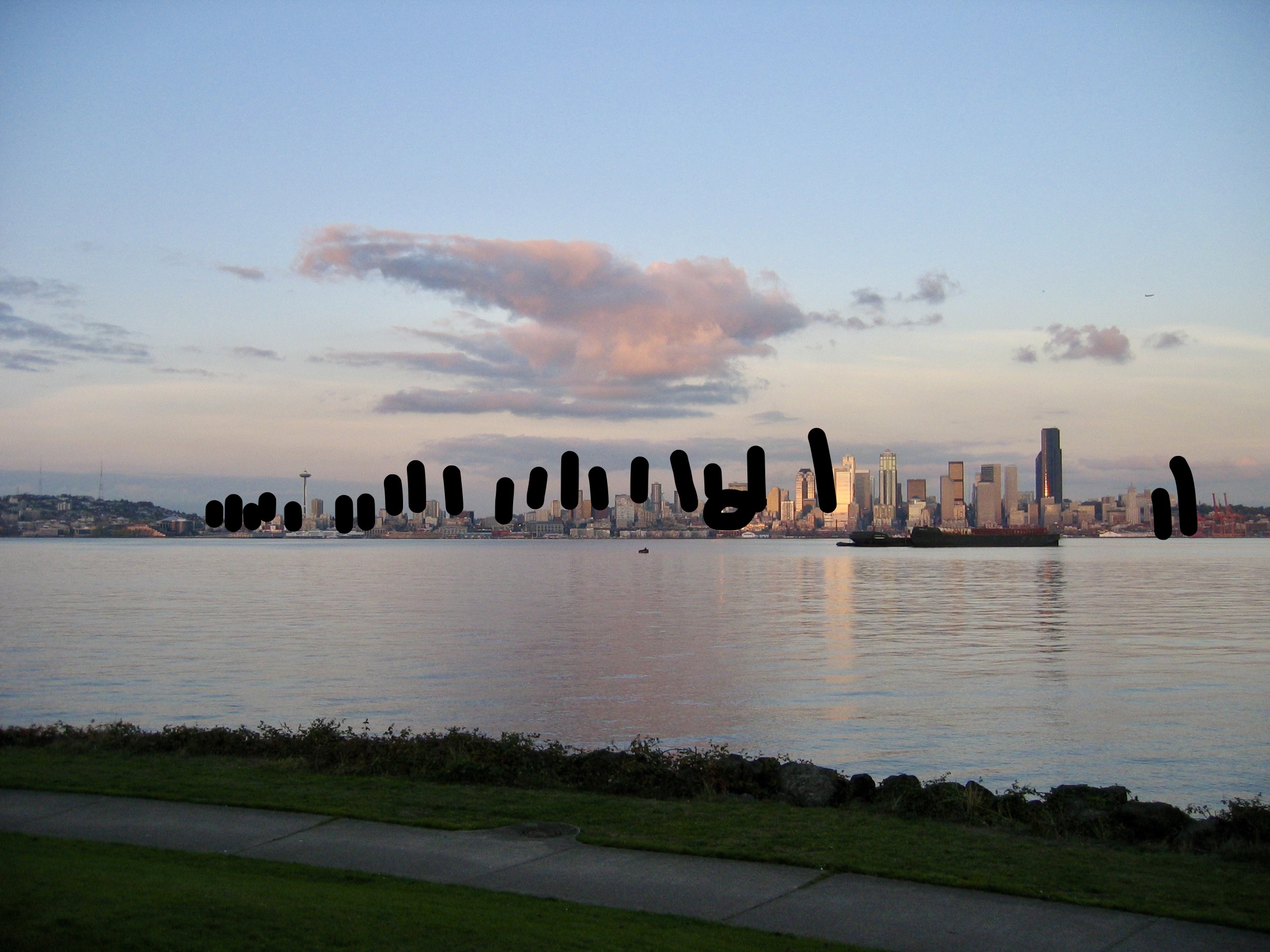
Seattle skyline circa 2007–around the time when Shonda Rhimes introduced Seattle to TV viewing America.
Seattle Skyline 2023–Artist Rendering.

I have a Post-it on my computer that says “Past disappearing with smoke.” Anybody know what that was for? Pretty sure I had something to say about it, but now, I don’t know what it was. Maybe it had something to do with the Canadian fires this summer, but it might also have had something to do with my failed attempt to use sealing wax on a letter to my college roommate and it ending in a failure of flame and smoke and nearly burned up correspondence..

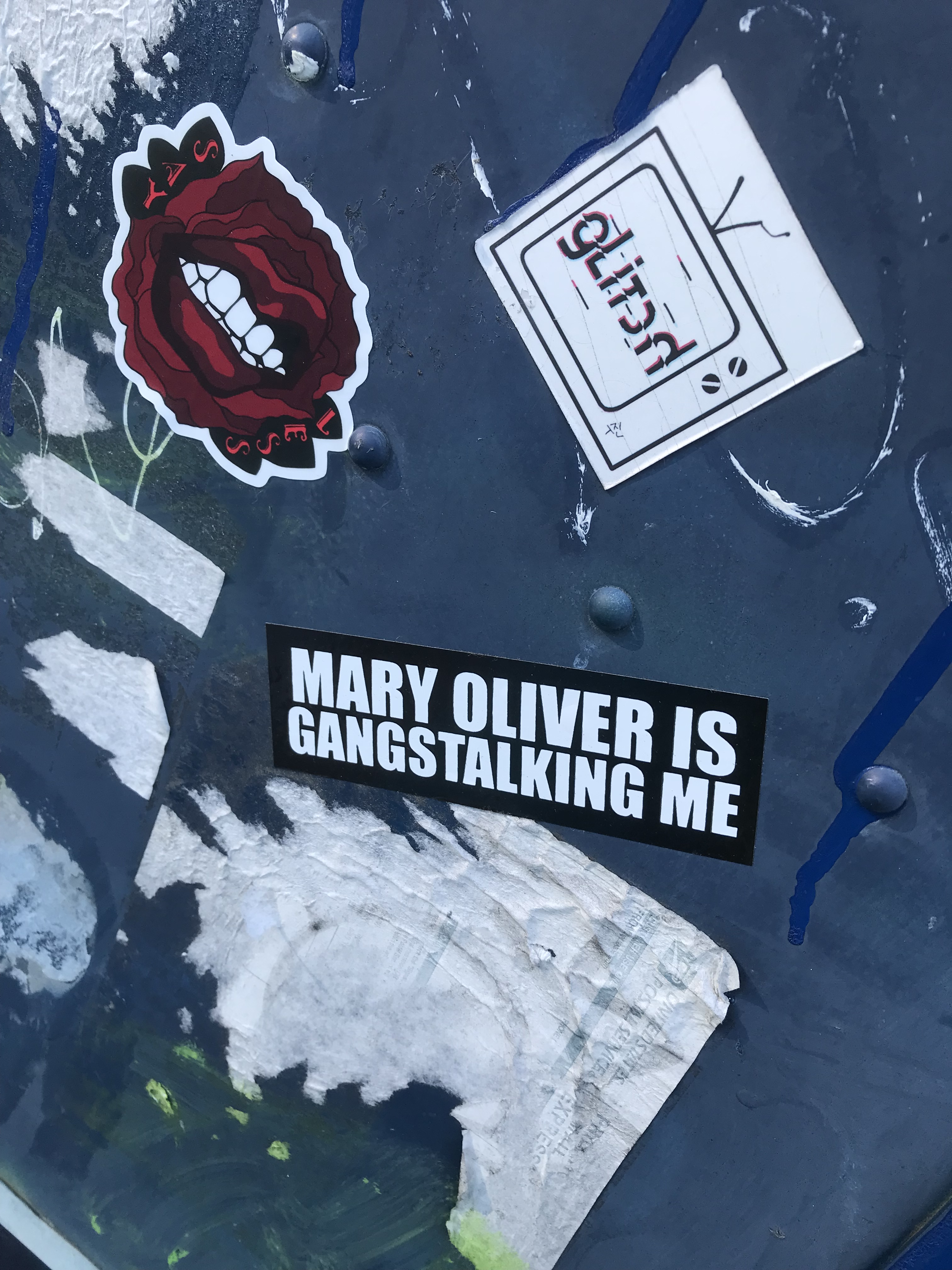
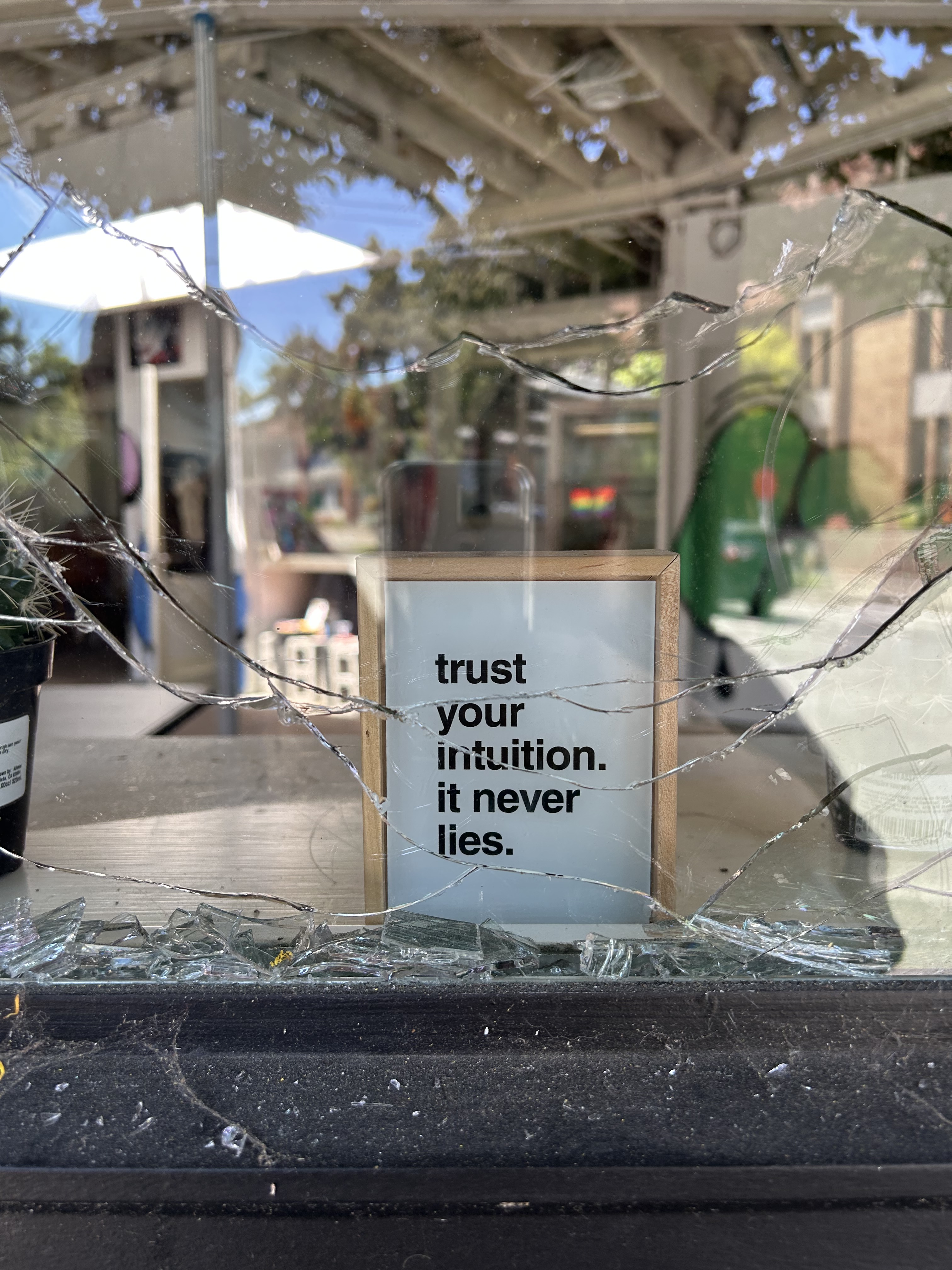
My two favorite stickers I’ve seen on the light poles and mailboxes of First Hill recently:
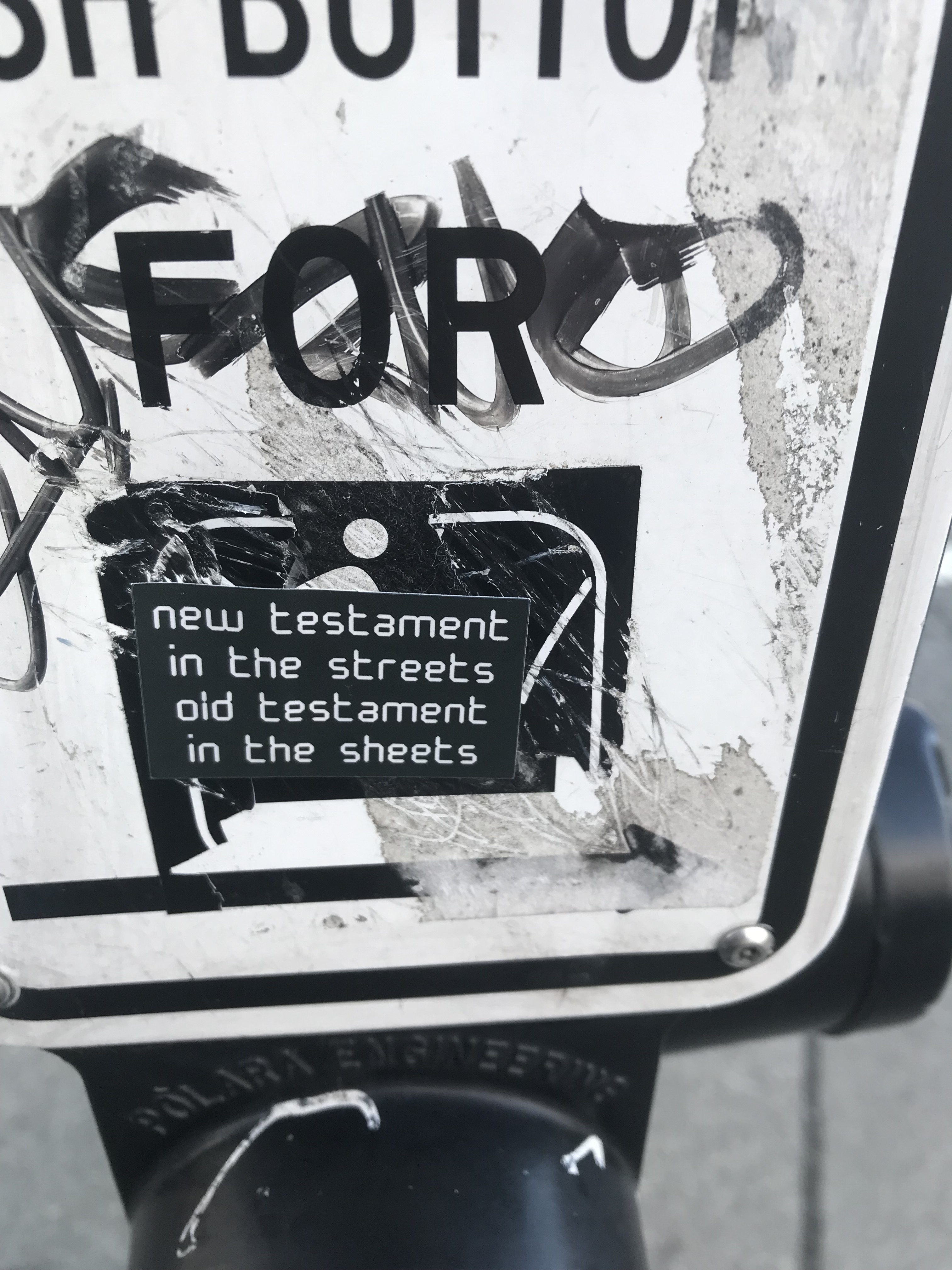
I think I prefer the Mary Oliver one. I feel this way on days when the words aren’t coming. But I’ve enjoyed reflecting on the Old and New Testament versions of the former.

Do with those nuggets of wisdom what you will.

Yesterday, Z and I were walking down Madison which has been in a constant state of various degrees of construction for the last four years as they modernize utilities and get ready for the 2024 launch of Rapid Ride bus stops here on First Hill. On any given day, we leave Oh La La and find our road blocked or a snakelike arrangement of barricades on sidewalks we were able to walk down the evening before. On this walk, we looked across the street and saw an elderly woman who’d gotten herself on the wrong side of the barricades and so was headed into the rubble of the ripped up road. Her only option was to go all the way back up the block and get on the right side of the barriers or walk into traffic.

Though I have sold myself to you as a Girl Scout, albeit a reluctant one, what I really am is an observer. I watched this lady creak along towards the rubble with some curiosity. She stopped and looked around, and my reaction was not to offer assistance but instead to stare at her, as if she were a squirrel trying to decide where to bury her nuts. What would she do when she got to the most extreme part of the torn up street? Would she turn around? Would she curse? Would she tip over?

Z, however, IS a Boy Scout. He marched right over to her, moved one of the traffic cones and ushered her from the busy street to the sidewalk and made sure she knew which way to head to get to her destination. Earlier in the summer we’d passed an older (than us) woman who looked weak and was trying to navigate the steps to her condo with a shopping bag. So Z gave her his arm and carried her bag up the steps and asked if she was okay. He’s always doing things like that and has the kind of presence that offers a certain authority: you should do what he is suggesting—take his arm, let him carry your bags, follow his lead.

Meanwhile, I’m standing on the corner with my head cocked as if I’m watching something unfold on TikTok instead of offering a helping hand. I’d berate myself, but it’s against my new policy so I’m putting it in the category of “interesting things I’ve recently discovered about myself.” If you have an accident in front of me, there’s a good chance it will take me minutes before I realize I should offer you a Band-Aid or call 911. (For the record, I am really good at intuiting when someone is lost and needs directions or offering up a Tide Stick if you stain your shirt.) But by golly, I will write about it later.

I’ve always been an observer, but it did get worse when I moved in with Z at our first apartment at The Paul Revere. Another great name, though what Paul Revere has to do with Seattle or one-bedroom rentals that were built in 1923 is anyone’s guess. It felt like it was our duty to be alert to imminent attacks by the British, but in our decade there, I didn’t have to light any lanterns or ride a horse to let neighbors know to grab their muskets.

We had a bank of windows across the front section of the building and often when I was supposed to be writing, I’d be staring down on the activity below on the street. The traffic squabbles and squealing reunions and the confused people tring to understand the complicated parking rules in front of our building, failing, and being towed were daily. It’s much harder to be an on-the-street reporter at Oh La La because we’re eight stories above the goings on.

The Paul Revere was full of quirk. A 1923 building with blooming camellias on either side of the steps that set off the “fresco” of Paul Revere on the brickwork. Inside, we had glass doorknobs and an old etched mirror, and a single teensy closet meant for clothes, linens, shoes, and anything else the modern flapper might need. It forced me to consider how much baggage modern Americans carry with them now. Because of its close proximity to the hospitals here on “Pill Hill,” I always imagined that those earliest residents were probably nurses or interns who wanted to live near work. Some from the country who must have enjoyed the excitement of an up and coming city.

It was hard to picture our lives post Paul Revere because we’d been so happy there, but the glamor Oh La La’s views and amenities made us quickly forget our first home. Or remember unkindly how much we hated doing laundry in the basement, doing dishes by hand in the teensy kitchen, and hauling garbage to a dumpster in the alley that we had to lock up as if we were depositing treasures outside. Also the exhaust from the bus that idled out front. The unhoused guy who slept in our hallway once. The person who sold drugs on the third floor and who kept the intercom right outside our bedroom window buzzing all hours of the night. The handyman who raised mice that escaped and contributed to the building’s rodent problem.

A lot can happen in a decade in a city.

The building has been empty since everyone was paid to hustle out in the middle of the Pandemic because it was structurally unsound and wouldn’t have survived the Big One —no joke. We pass it now with some nostalgia. Initially, there were lights on and it seemed work was being done to repair it. We had hopes they wouldn’t tear it down, but then it got increasingly downtrodden with a broken window here, graffiti there. Eventually the management company took down its sign as if it wanted to dissociate itself with such a squalid looking place. Squatters moved in. Over the summer, there were two fires that started there, whether intentionally or accidentally is unclear. The second fire was large, burned a hole through the roof, and we can now see that not only is the roof gone but also the back wall. There’s a security fence around it and the sidewalk is closed. It’s unlikely we’d have moved back if they’d fixed it up, but still, it’s the end of an era, or, several eras for the building itself.
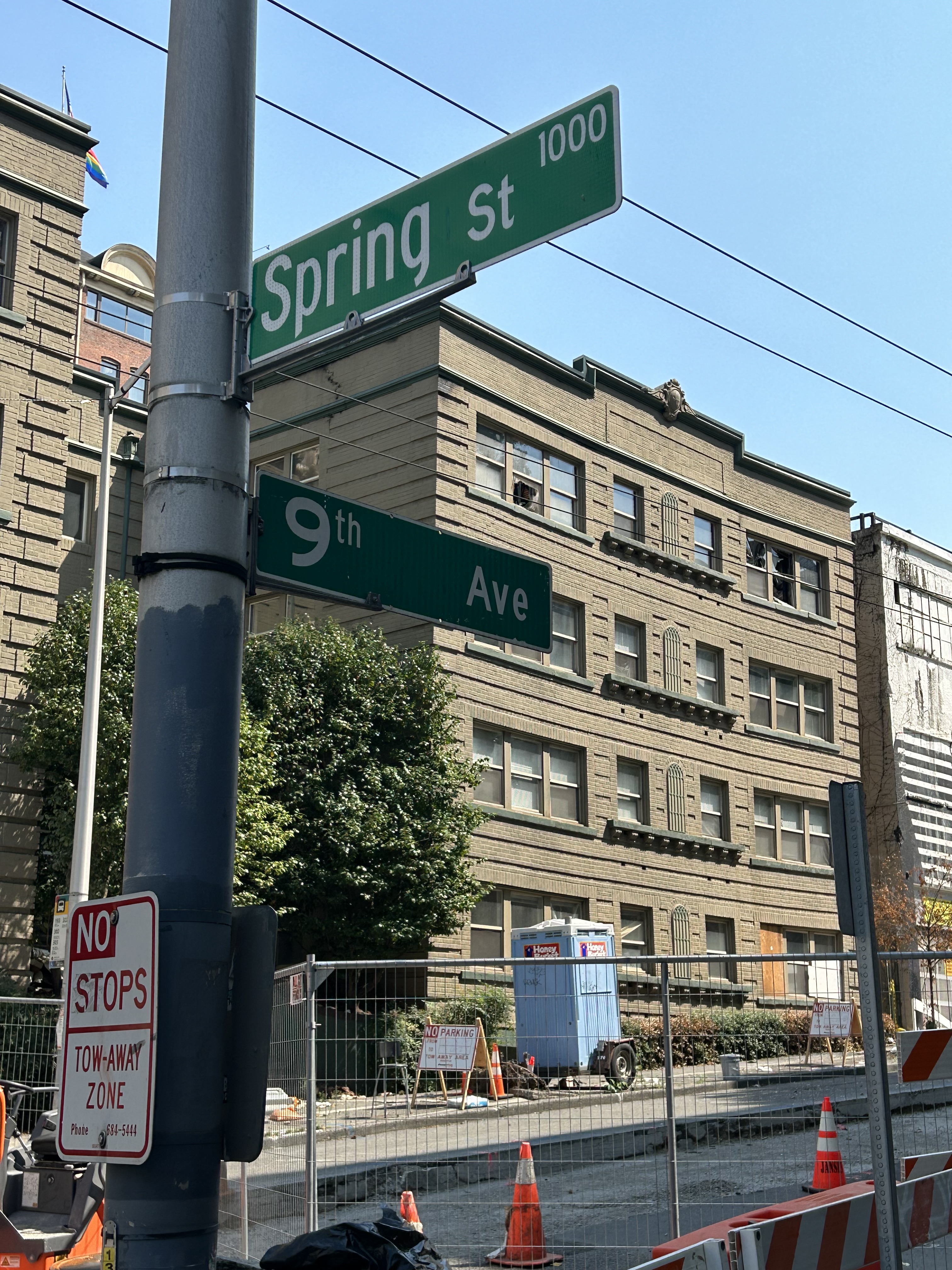
We would NOT have been thrilled with a Honey Bucket right under our living room window.

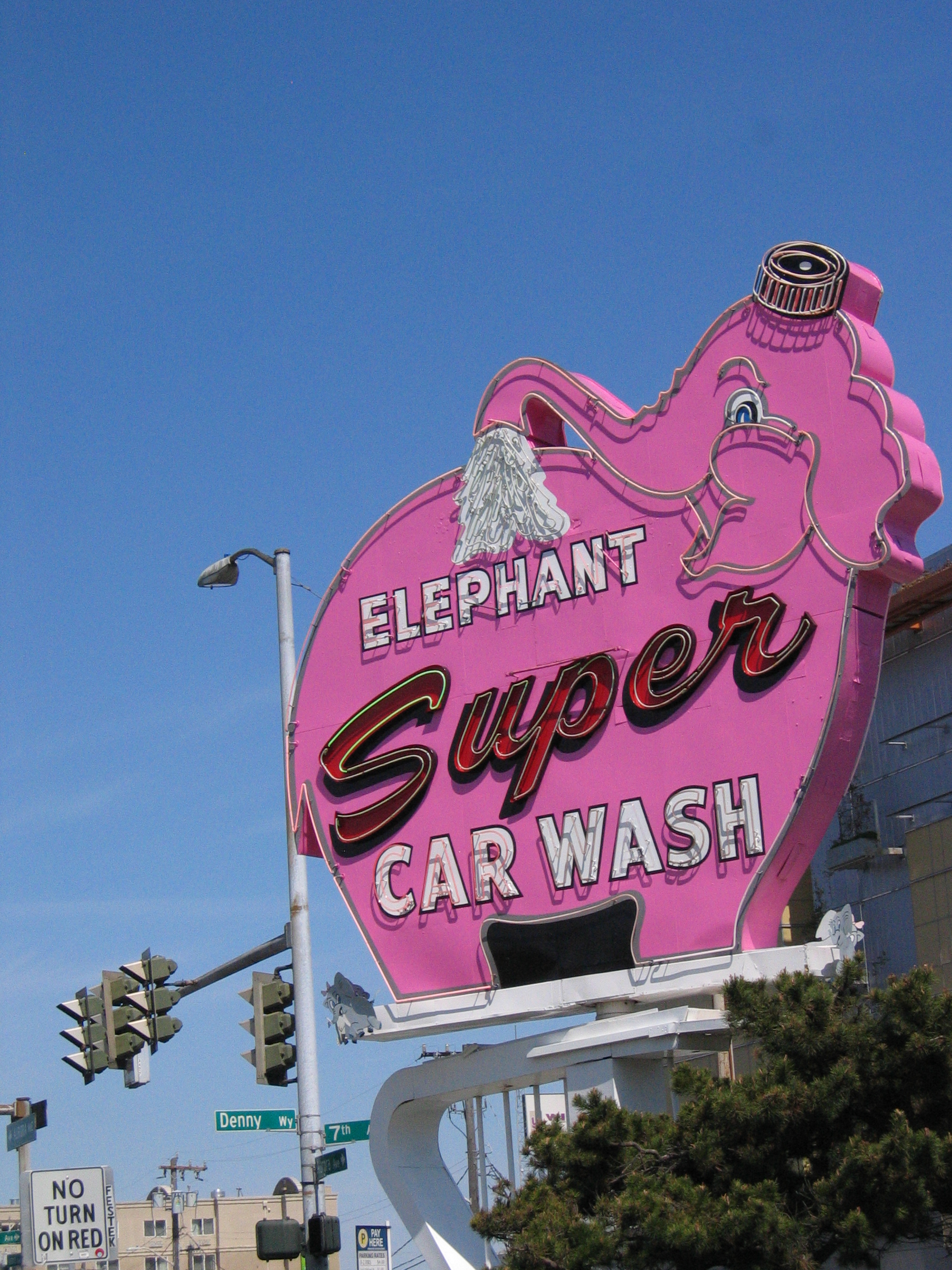
The big lesson city life seems to want to teach me is that nothing is permanent. There’s no point getting attached to the way a certain building looks or the foliage of a particular tree because next week there might be a removal sign and six months after that a security fence and a bulldozer. Things change quickly. After all, it wasn’t that long ago that there was a pink elephant car wash sign over an actual car wash instead of as an artifact of yesteryear and where Oh La La sits there was a decades-old McDonald’s that might have sold those Happy Meals with my dream movie prizes inside. But they are gone and now there are other things that will seem like quintessential Seattle to whoever arrives today.

All this to say, it’s good that I had that beachside epiphany this month so I can finally make peace with our revolving door city and neighborhood. I’ve decided to make John Mellencamp’s “Your Life is Now” the theme song of the rest of the year. Let’s see where I end up. (And if I ever remember to ask the old ladies if they need help across the street or if I decide definitively that it’s my job just to observe them like a social scientist.) Tune in next time to find out.
On History and Mystery

Standard

IMG_2805

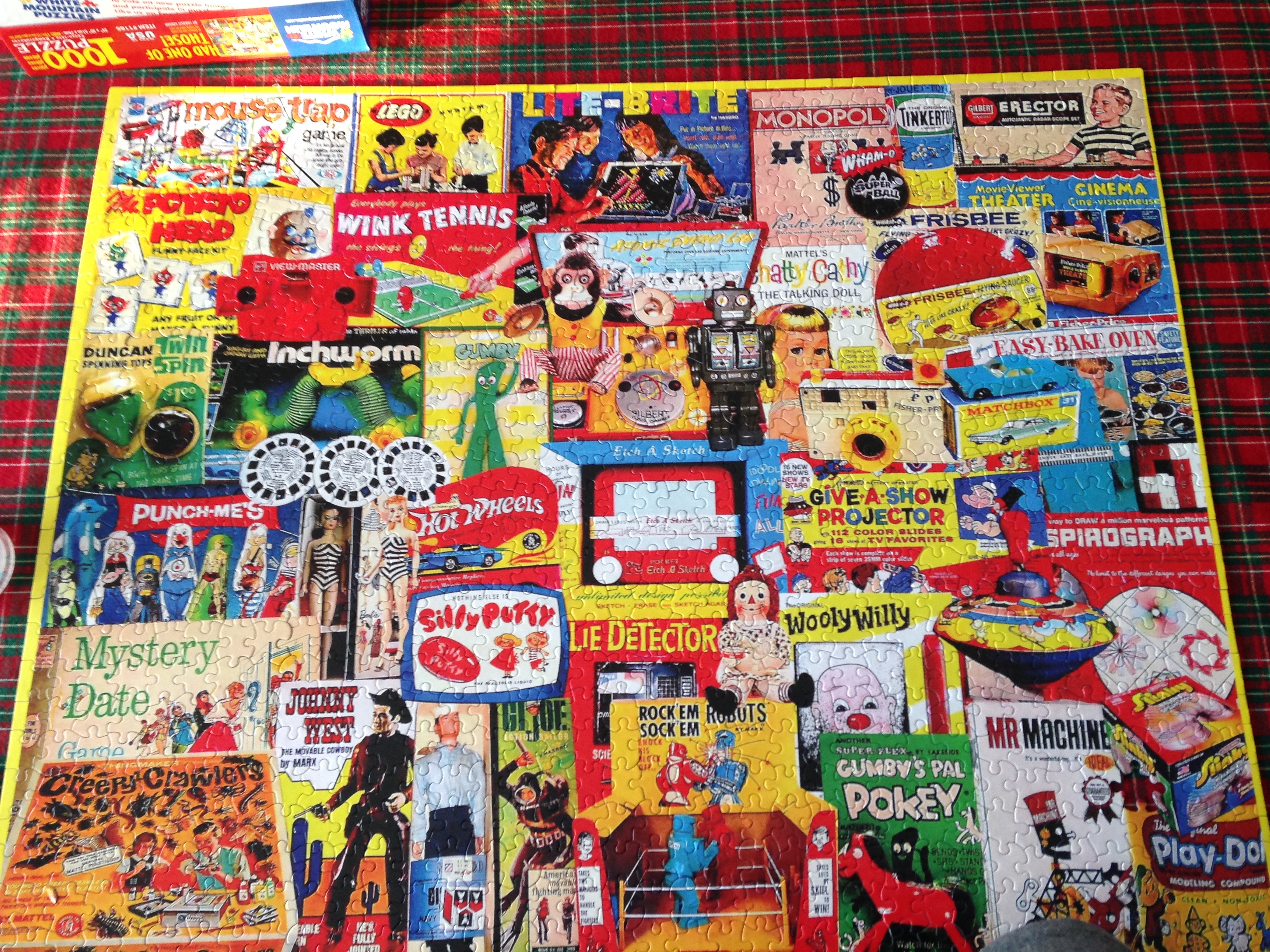
Do you see the missing piece?


This weekend, I should have been doing one or more of the following:


  • fixing up the writing studio post earthquake proofing
  • creating a syllabus for my next class
  • writing lesson plans for my next class
  • working on a website to sell my wares to the wider world
  • writing this blog
  • cleaning in general
  • cleaning specifically:
    • birthday confetti off the carpet from the first part of the month
    • cobwebs I keep discovering on the ceiling
    • a fan that is more dust than blade at this point
    • the bottom of the kitchen trashcan (Z and I keep hoping “our man” will do it, but it turns out, we haven’t hired a man and thus it’s down to us and we’re each hoping the other will cave first)
  • putting industrial strength patches on the thighs of my favorite jeans
  • figuring out where to get rid of the books I’ve weeded
  • actually getting rid of the books I’ve weeded once I’ve decided
  • preparing for a presentation at a conference in three weeks that Z talked me into and at which I must appear to be knowledgeable and quick-witted though I am feeling neither of these things
  • using the new Panda Planner that has promised to change my life


What I’ve actually been doing:


  • genealogy


Probably I should be apologetic about why I am doing this since I have no children with whom to share this ancestral knowledge, but the truth is, I don’t care. I don’t care if my niece and nephew are interested. I don’t care if my cousins are. I see Z’s eyes glaze over when I tell him about some new relative I never knew I had who was a Quaker or a Puritan or a dentist, but I don’t care if it bores him—I tell him anyway.


I’m doing it because I’m curious and because history fascinates me, in particular, personal histories that overlap larger, human history. There are good stories there and I like a good story. So every night I open up Ancestry.com and introduce myself to some new person who contributed to the cocktail that is me. God bless them every one.

IMG_7523

A set of my great-great grandparents, their brood, and one awesome tricycle.

While the men’s histories are the easiest to access—them being regularly afforded their own names and the bulk of the attention in Quaker meeting minutes and newspaper accounts—what thrills me most is imagining the women’s stories and what might have been happening between the very few official mentions they get. A long space between children often means some grief, for instance. There’s all sorts of speculation I do about the teenagers who marry older men, the women who audaciously manage to work their maiden names into a first name for one of their children. If I happen upon a photo, I try to peer into the eyes to see if there’s any evident happiness or misery, and if the photo is of a tombstone, I’m curious to see if it is simple or grand, and if she warranted any sort of adjectives: beloved wife, devoted mother, etc.


This weekend I discovered that my paternal grandfather’s grandmother, Ellen, emigrated from Ireland in 1849. I’m familiar enough with the stories of my great grandmother Bridget who sailed away from Ireland as a teenager near the end of the 19th century with a blackthorn walking stick in her hand that now belongs to me. I know she married a man much older than she was who had a young son of his own. I know her middle son gave up a future in the priesthood when her husband died so he could earn money to help support her and his baby brother, my grandfather. I’ve met her nieces and nephew in Ireland, skulked around the farm where she was raised and that her great nephew now farms, stayed overnight with her niece and great niece, and stood over the graves of her parents and grandparents. So Ireland was no surprise.

RGSCaherlistraneview

The Great Grandmotherland, near Caherlistrane, County Galway

But 1849? As soon as I saw that year on the screen, I said a very non-blasphemous Jesus under my breath and my eyes filled up and threatened to spill over the dam. You didn’t come to America from Ireland in 1849 because you wanted a change of scenery or were ambitious. You came because of the Famine.


I checked to see if there were children older than my great grandfather and discovered there were two: one born in New York, where they must have landed and tried to earn money enough to head west, and another, before that, born in transit on the Atlantic.


Jesus again.


Can you imagine? Your first child born in the hull of an overcrowded famine ship, not entirely sure what would be waiting on you when you arrived, except of course, that it wouldn’t be family—or anyone else—with open arms?


There’s the added knowledge that while she was pregnant for my great grandfather in West Virginia, her husband did the unfathomable and died at a young age, so there she is, a woman in coal-mining country with two pre-schoolers and a newborn to raise on her own.


So she did what you did if you were a woman in those straits and she married almost immediately. No time for a lengthy mourning before looking for a new spouse. No time for a long courtship to make sure the fellow is kind or clever. No chance for pre-marital counseling to make sure you have compatible dispositions. There are mouths to feed and your whole adult life you’ve been running from the Hunger.


No wonder I get panicky when there’s no peanut butter or Lucky Charms in the cabinets. No wonder I’ve had a passive-aggressive relationship with food my whole life (it being passive and me being aggressive). That hunger stuff has to get written on a person’s DNA at some point.

IMG_2822

It’s not _really_ Irish, but it is the perfect breakfast food.

So anyhow, that’s where my head is at and may explain why none of the above items on my ticking-off list have been ticked off. It might also explain why this afternoon while I was attempting to re-assemble the writing studio from earthquake-proofing-shambles and listening to The Drovers—an old Chicago Celtic rock band—I heard the opening stanzas to “Kilkelly, Ireland” and before it was all over I was having a loud, snorty cry as I re-hung pictures and stacked books.


To be clear, I’ve been listening to The Drovers since I first heard them on the Blink soundtrack in 1993, I’ve seen them in concert in Grant Park on a warm Chicago evening, and I’ve never, NEVER, heard them sing this or any other piece that is so maudlin. Their music is sometimes haunting, but mostly it makes you want to spin around like a dervish, maybe stick it to The Man. So I was blindsided when I heard those opening stanzas. It’s a song I intentionally took off of my Irish playlists because uncontrollable sobbing is not an activity I enjoy.


Have you ever heard it? I defy you to listen to it and not have some feelings. “Danny Boy” might make the masses tear up, but those are cheap emotions compared to the ones this song elicits. Supposedly, it is based on a set of actual letters from a father in Ireland to his son who has emigrated around the time of the Famine (the years are a little off, and this bothers me, but once the music swells, I allow for a little poetic license) and it spans several decades. For me, the tears start when the father begins his letter explaining that he’s had Pat McNamara “write these words down.” (As if the longing for loved ones you’ll likely never see again isn’t enough, I’ve the added weep-material of illiteracy.) By the time it works it’s way round to the immigrant’s brother writing the final lines to his brother that the father has died with a “He called for you in the end/Oh, why don’t you think about coming to visit/We’d all love to see you again” I’m a mess. It’s like the old-timey Irish version of “Cat’s in the Cradle.”


Please note, a decade ago I once purposely traveled from Waterford to Kilkelly specifically so I could feel the feelz of this song, only to realize when I arrived that I was not actually in Kilkelly but in Kilkenny, which is, it turns out, a whole different place. Instead of walking around mournfully and reflecting on my (then only imagined) Famine-affected relatives, I spent part of the afternoon in a Radley of London shop trying to justify an expensive leather bag with a Scottie dog logo. (I did not win that justification and am still sans a Radley handbag, fyi.)


Aside from the stories and extra fierce musically induced weeping because of those stories, the thing I like about this genealogy business is how much it’s like doing a puzzle. It’s the kind of detective work I was born to do because at no point is anyone going to hold me at knifepoint and tell me to quit snooping or else. (Though things did look a little dodgy at the Seattle Public Library yesterday when I was on my way to the genealogy department, so I s’pose it could happen.) It’s amazing the things you can find with a little poking around: a break with the church, a scandalous marriage, an illegitimate child. Sometimes, I’m guilty of assuming that anyone that predated me and my immediate family were just sitting around in long dresses and wearing stovepipe hats and working the land and reading their Bibles, but it turns out they were living real lives and making some desperate (and sometimes dubious) choices.


I’d have made a terrible historian though because I get caught up in my flights of fancy. I’ve hit a brick wall with Ellen and can’t find where she was born, who her parents were, and she’s starting to morph into Nicole Kidman in Far and Away, a high born woman who falls in love with a poor country yoke (and Scientologist) and makes her way to America, for good or for ill. She’s become amazing in my mind. Fierce, feisty, kind and generous. But for all I know, she was none of those things. She might have been a stern, humorless mother and who could blame her? She might have always been nagging her second husband to wear his hat and scarf to keep himself well, and who could blame her?

Screen Shot 2018-01-31 at 7.58.36 PM

Great Great Grandmother Ellen

Since January, I’ve been solving a lot of little puzzles. First, I’ve done actual jigsaw puzzles as I like the satisfaction I feel in those five minutes after I’ve completed one and before I realize what a complete waste of time it is since the picture is right there on the box and I didn’t need to actually put it together to see it. But the mystery to be solved here is how is it that the last two puzzles I’ve done have been missing a single piece? They were both new. Where did the rogue piece go? Was it never put in because there’s some malcontent at the puzzle factory who gets joy out of the notion of wrecking some obsessive’s sense of self-satisfaction? Has someone (read: Z, not me) dropped a piece and it’s bounced into a crevice in our crooked apartment? Am I sleepwalking and hiding a single piece to sabotage myself?


Other early 2018 Mysteries of the City:


  • Who is the man who coughs until he throws up EVERY DAY right outside our apartment?
  • How is it that I felt warmer in 8 degree temperatures in Indiana than I do in 42 degree temperatures now that I’m back in Seattle? (The cold out here gets right into your bones.)
  • How is it that despite having weeded almost 100 titles, it has been an impossible feat to get my books back onto their rightful shelves. They’ve reproduced like rabbits and somehow the Irish authors that used to fit neatly into one of 36 tidy IKEA cubes have breached their confines and now require an additional two cubes. Clearly, I need to build a border wall.

IMG_2884

Look at those Irish books, trying to sneak onto other shelves without proper documentation!

  • On a similar note, how is it possible that our south wall was moved in a foot because of the earthquake proofing and suddenly the furniture doesn’t seem to fit now? A foot is nothing really. If you were in one of those trash-compacting rooms in spy movies (or the original Star Wars) and the wall moved in a foot, you wouldn’t really even notice yet that you were in danger of being squished. And yet, what the writing studio looks like now is an implausibility of Wildebeests in one of those “bad” zoos with too-small enclosures. It’s all chair legs and coffee tables and bookcases overlapping each other and it hurts my eyes and heart.
  • If the Parks Department has to paint permanent suggestions on the park suggestion board about what activities people like to do there because the chalk option meant a lot of rude comments and a few dubious artist’s renderings, shouldn’t you just maybe forego the suggestion board and have a mural instead?

IMG_2879

Note: there are no actual roses in this park.

  • Why do drivers in Seattle—a city made of hills comparable only to San Francisco’s—insist on riding other people’s bumpers?

IMG_2856

If my car were in Seattle, it would be sporting this.

  • Do city officials really think they are tricking us when they make real estate developers “save” historical properties and this is how they do it: a shell of old bricks encasing the lower two floors of a boxy steel and glass monstrosity? We aren’t fools.

IMG_2865

Historic preservation Seattle style.

  • Does the new Seattle soda tax of almost 2 cents an ounce (which doesn’t sound like much until you buy a case of Coke) mean that the city really DOES want us to move away? Z is not happy and is now considering the merits of life in Indiana where no government officials pretend to care that much about your health.

20180128_170549

Not pictured: Z, weeping

  • Why do I think every year that a new planning system—no matter how intuitive and inspiring—is going to make me a better person? It hasn’t yet, but hope springs eternal, I guess. When I told Z that I was getting a Panda Planner he laughed out loud. He knows that by March—despite my best laid plans—I won’t be able to find it because it will be hiding in the recesses of a bag I quit carrying in February. (The joke may be on him this year, however, because I brought the bright “cyan” for an extra $4 and it might be more difficult to lose.)

IMG_2910

Precious.

Periodically, Jane and I have discussions about who’s more introverted. This isn’t really a contest because being Most Introverted does not come with a crown or prize money. Despite the likelihood that Jane IS more introverted than I am, she will keep getting herself embroiled in book clubs and social groups that make me feel twitchy when I imagine signing up for something similar. All those people you don’t know, asking boring things like “what do you do for a living?” and “have you read All the Light We Cannot See yet?” (as if not reading it is not an option). But then when I do something like invite near-strangers to stay with us for a week, it’s hard not to argue that I am perhaps slightly less introverted than Jane.


Last week I read an article in Irish Central about an Irish woman living in America who has started an immigration awareness campaign of creating buttons for people to wear that say things like “I am an immigrant” and “I’m the daughter of an immigrant.” I liked the idea of this—a sort of political performance art that makes folks recognize that more of the people they pass on the street have connections to immigrants than they realize. So I found her on Facebook to see how I might get one of these buttons for myself since I’ve a real live immigrant sleeping in my bed, and I promptly discovered she lives in Seattle. We messaged back and forth and made tentative plans to get together for drinks because I love Ireland and she and her husband are fond of Zimbabweans.


I had to admit to Jane that this is a real conundrum of my life: that I supposedly love being alone and value quiet, chat-free expanses of time so I can live in my own head without interruption, but then I talk to a new person and realize my solitary life behind the walls of my imagination is not enough. Maybe I’m an introverted extrovert. Or vice versa. I need other people—people dissimilar to me sometimes—to make life richer, more intriguing, more thought provoking. It’s one of those things that makes me glad I’m in this city on the edge of a country that—despite everything—still recognizes that it’s richer because of its diversity, not in spite of it.


God bless us every one.

IMG_2909

FYI: Immigrant Awareness on Facebook can hook you up with your very own button