Category Archives: Love

Flashback Friday: The Rules of Engagement

Standard

Monday, October 16, 2006

[It’s worth noting that when this entry was written my life was about to change in a big, surprising Zimbabwean way in less than ten days. Tune in next Friday for more in the saga of Z and Beth’s Love: The Early Years.]

I’ve been thinking about the rules of attracting a mate lately. You know the ones. Some are probably holdovers from the days of courtly love. I’m talking about the ones no one really teaches us, but we can quote them more quickly and accurately than we can the First Amendment or the Ten Commandments. (Pick your politics.) They are:

1) Love comes when you least expect it.
2) Absence makes the heart grow fonder.
3) You must love yourself before love will find you.
4) Why buy the cow when you can get the milk for free?

There are variations of the above but all fit comfortably in one of the four above groups. For instance, if you’ve read enough self-help books or watched movies like Runaway Bride, you’ll recognize a combination of one and three. That is, you might love someone, but until you quit being devoted to your idea of love of them and learn to make hideous lampshade art on your own like Julia Roberts almost always does in whatever movie she is in, you will not find true love. A variation of four that I prefer because I am mildly lactose intolerant is that you must withhold your love if you expect the object of your affection to return your warm feelings.

I’ve followed most of these rules, off and on, with some regularity, and I can’t say that any of them work. For me. That’s fine. Single is okay, so don’t think this is a blog of self-pity. It is not. For instance, I had a flash last night of all the horrible décor I’d be forced to live with if some of my former loves had come to a point of cohabitation: dogs playing poker, posters of Johnny Cash, farm implements as art, eagle blankets as window treatments….

It annoys me when people explain their newly found love by relying on these platitudes, usually because they are not true. You cannot believe anyone who says they weren’t looking for or expecting love. They were. Okay. They were. We all are. If you are between the ages of 12 and dead and you spend more than 15 minutes a day watching television or listening to non-talk radio, then you are expecting at some time to be “surprised” by love. If you weren’t expecting to be surprised by love, you wouldn’t have the good underwear and you would never shave your legs. Don’t kid yourself and don’t try to kid me. You might not have been expecting it today between 12:00 and 12:15, but you were expecting it eventually.

What annoys me even more than this, though, is when someone willingly breaks one of these rules and finds true love in spite of the rule breakage. For instance, I know a woman who loved a man who did not love her back, even though they had a steamy sex life. By all accounting with Price Waterhouse, this relationship was doomed, she was being used, he would never respect her, and thus she would never win his love, no matter what acrobatics were involved. It’s the cautionary tale every young girl hears from her mother or Sunday school teacher. Yet after a year of this FREE and FLAGRANT milk giving, the guy realized he loved her and couldn’t live without her. They are now married and have matching tattoos celebrating their love.

When you have been a rule follower your whole life, this is one of the jaggedest little pills to have to swallow: rule breakers win; rule breakers do not necessarily go straight to hell. (Though this is a young marriage, and so the verdict is still out on that one. Hell has many manifestations.)
What is the MOST annoying, however, is when someone willfully breaks the rules but presents her story of love as if she were adhering to the above. Recently, my mother befriended the wife of the first boy I loved, grades K thru 3. He was cute, smart, skilled at kickball, and was regularly awarded the title of “Good Citizen.” His wife (an excellent and good person by all accounts) tells the story of how she was not interested in dating anyone and told the friends who set her up with him that she wasn’t. She told him she wasn’t interested in him repeatedly on that first non-date, and three days later she moved in with him and they’ve been blissfully happy ever since. She followed those rules of courtly love and rejected him multiple times, but still, she went on the non-date. Still, she answered the phone after the non-date when he was calling to tell her he wanted to see her again. And when, later that same night, he drove through the country looking for her house so he could kiss her soundly and show her that there was something between them, she told him where to find her driveway.

So, at cocktail parties, she can tell people that she wasn’t looking for love and in fact discouraged love, but even so, she gave it directions.

My luck with absence making the heart grow fonder has been no better. It can make the heart grow fonder, but only in people who weren’t into you enough in the first place to realize they should stay put. Them joining the military and then realizing they really miss you is not really a testament to how lovable you are so much as it is a testament to how miserable it is in a desert. Or Duluth. People have had good, long marriages based on this absent, fond heart mythology, so perhaps I should not judge it so harshly. But I do, primarily because I am the kind of person who feels that the separation by just a two- mile stretch of road is too great. I do not need to go to Duluth to realize I am in love.

Also, statistically speaking, what absence does is make people unfaithful. They’re lonely, Van Morrison gets played on the jukebox, and they bump up against another lonely some body.

Am I too cynical? Bitter? Frustrated? A case could be built for any of these. But I don’t think so. I’m just wondering, that’s all. How is it that other people know when to follow the rules, when to break them, when to break them but pretend they didn’t? How is that whatever I do seems like exactly the wrong thing to do, but then if I switch to the exact opposite tactic, it immediately seems like the inferior one?

These are rhetorical questions, you understand. I’m beginning to suspect the truth is that no one knows anything, and the platitudes we rely on and untruths we tell are simply needed because it is an unbearable thought that our lives and loves are a crapshoot, that it is, at it’s very basest level, just an issue of timing: who was available at 12:15 on a Monday afternoon.

No, this version is even less satisfying than the lies. I find myself once again in the precarious position of needing to quote Fleetwood Mac: Tell me lies, tell me sweet little lies.



St. Paul Snapshots

Standard
St. Paul Cathedral

St. Paul Cathedral

When I am in Seattle, the Midwest exists in my mind as a singular place where everyone has a shared sense of values, habits, conversational tics, and driving styles, and where the landscape is a sea of rolling hills and horizon dotted with cows and corn. There are specific things about Richmond, Indiana, that I miss, but often enough, what I miss is that less specific country called the Midwest.


So when Z and I visit Minnesota, where he spent the first twelve years of his American life going to college and grad school, I am often surprised by how foreign it feels to me because I am expecting it to be Indiana. Last week we flew into the Twin Cities in order to attend the wedding reception of one of Z’s college roommates, and though in the first couple of hours I was bouncing around at all the things that were magically familiar (the landscape! the manners! stores that sell plus-size underpants!), before long, I started noticing the differences. Only I couldn’t quite name them; I only knew that I was not yet fully home.


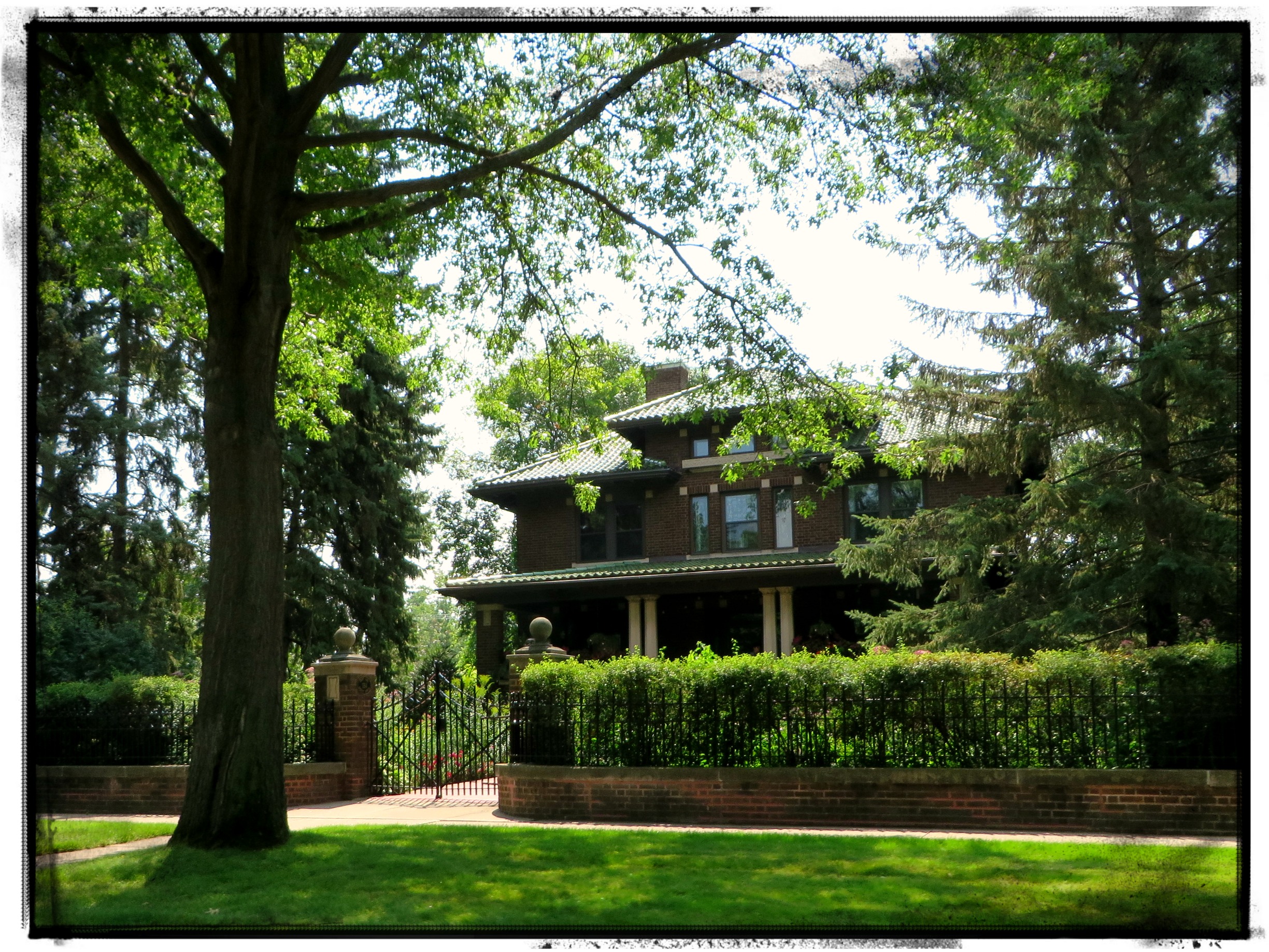
The houses there—things that appear to have been designed by students of Frank Lloyd Wright–line tree-filled boulevards on Summit Avenue and other similar routes and are different than the brick Federals and turreted Victorian and mid-century ranch houses that fill my hometown. The grocery chains are different. People seem more mannered but also a little more distant (in a polite way) than at home. A phrase like “You betcha!” takes me aback when I first hear it because I realize it isn’t just a quirk of the characters in Fargo. The accents are almost the exact opposite of the southern twang and drawn out syllables that let’s me know I’ve ventured into my particular county in East Central Indiana, where the inhabitants often have connections to Appalachia.


House on Summit Avenue

House on Summit Avenue

And frankly, every time I’m in the Twin Cities, I’m completely shocked to re-discover that the Mississippi River is not just a southern entity.


Another thing that surprises me is the realization that Z has rich memories from his time in St. Paul and though I’ve heard the stories multiple times and met many of the players, those memories—no matter how diligent I am in imagining them—will never be mine.


The best cure for this ailment of mine is usually to make new memories, so we got to it. We visited with old friends at favorite haunts (no trip to St. Paul is complete without breakfast at the St. Clair Broiler), walked around his old campus to see the changes there (campus bookstore moved off campus—do not approve even if it is next to Garrison Keillor’s bookstore!), drove an hour to the little town where the wedding reception was (we got lost and there was some verbal abuse directed at Siri) and enjoyed an evening of nuptial revelry before heading back to the cities.


For this trip to St. Paul, Z’s old friend McGregor hosted us at her new, adorable house, which we found much cozier than the hotel we usually Priceline when we are in the cities. She has a lush garden because she was born with “green fingers” as Z-ma calls it, and were I not mosquito averse, we would have spent more time in it. It was charming and cozy and I say this as a person who generally does not notice things like gardens because I prefer being indoors.

Path into McGregor's Garden

Path into McGregor’s Garden

We played Scrabble and chatted and some of us (ahem) were coveting her hardwood floors and woodwork. She and Z caught up on the people they have in common and again, I felt those little jealous fingers tickling me under the chin. It’s ridiculous really. I have good friends. We have had good times. But somehow, his history seems 3-D in Surround Sound and mine is more like a Viewmaster reel. He lived in an apartment once with plumbing problems so severe that one had hold an umbrella while using the toilet. I never had an apartment with quirky facilities!


Z's former leaky apartment.

Z’s former leaky apartment.


One place we visit every time we go to St. Paul is this lovely shop called Irish on Grand. If you love Ireland and miss Ireland like I do, then going to a shop like this and talking to the proprietor makes you feel almost like you are there. I don’t need any more Irish sweaters, pottery, jewelry, or other Celtic doo-dads, but I feel better just knowing if I have a sudden urge, I can get them there. When we stop in for a visit, we always buy whatever Tayto Crisps (best potato chips ever: my favorite, Smoky Bacon) they have available and then get either a book or a new CD. Once, I loved a band I’d discovered there so much that I accidentally bought the same CD on the next visit. On this trip, I opted not to buy any music just to be safe.


Irish on Grand--excellent shop for Eire-ophiles!

Irish on Grand–excellent shop for Eire-ophiles!

As luck would have it, we happened to be in time for the Minnesota Irish Fair on Harriet Island. It’s reportedly the biggest free Irish festival in the U.S., and so we boarded a shuttle marked Galway and made the short trek to the festival, which was just getting under way.

Minnesota Irish Fair 2014

Minnesota Irish Fair 2014

We were a bit too early to see the revelry that looked bound to happen later in the weekend when Gaelic Storm and The Water Bhoys performed, but it was still a good time. I got to pet two hot-looking Irish Wolfhounds in the Celtic Canine tent. Between roasted corn and drinks, we also managed to see some Irish step-dancing, though admittedly, instead of focusing on the performances, I spent more time lamenting that the costumes had gotten so garish (sequins! neon knotwork!) and the wigs had grown more ridiculous in the decade and a half  since Riverdance hit America  and the Irish dancing resurgence began.

Nicki Minaj should wear this--not an adorable 10 year old celebrating her Celtic heritage.

Nicki Minaj should wear this–not an adorable 10 year old celebrating her Celtic heritage.

At one point, I had to keep redirecting myself to watch the footwork instead of the wig of the dancer in front of me who had yet to perform. Despite the visual assault, the dancing was remarkable.

Irish dancer "hair"--so springy! so lifelike!

Irish dancer “hair”–so springy! so lifelike!

Irish dancing always chokes me up, and I don’t know why. I’ll be clapping and having a good time, and then all the sudden there is a tightness in my throat and I start sniffing so the tears won’t spill over. It must be genetic.


Minnesota Irish Fair 2014

Minnesota Irish Fair 2014

On the last day in the Twin Cities, we sat in McGregor’s backyard amongst the flowers and vegetables watching Z go through a tub of his things that McGregor has been storing for a decade or so. She and I were keen for Z to whittle down the items he had in storage, but then when push came to shove, as he threw things away, we’d exclaim, “But you don’t want to get rid of those!” even if “those” was just a pair of old rugby socks. He just shook his head at us. As he chucked letters and menus from awards dinners into the trash, I rescued the best so he’d have a semi-accurate historical record of his past. He has two more tubs to go through on our next trip. Maybe by then, McGregor and I will be willing to let him let go of more memories.


And thus begins our summer sojourn back to the Heartland.


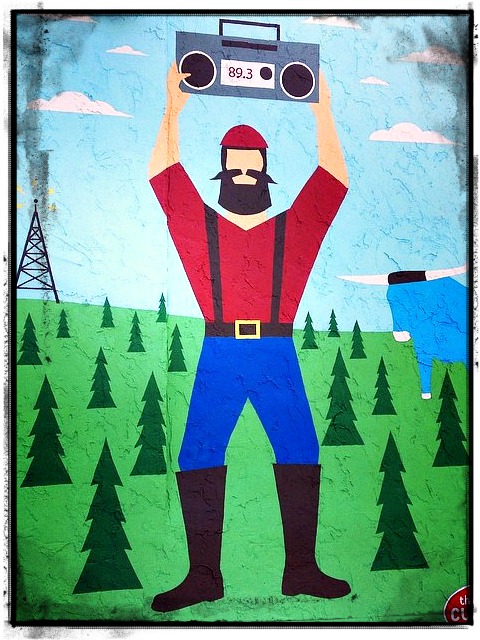
Paul Bunyan; Cusack style.

Paul Bunyan; Cusack style.


Snapshots of a Summer

Standard
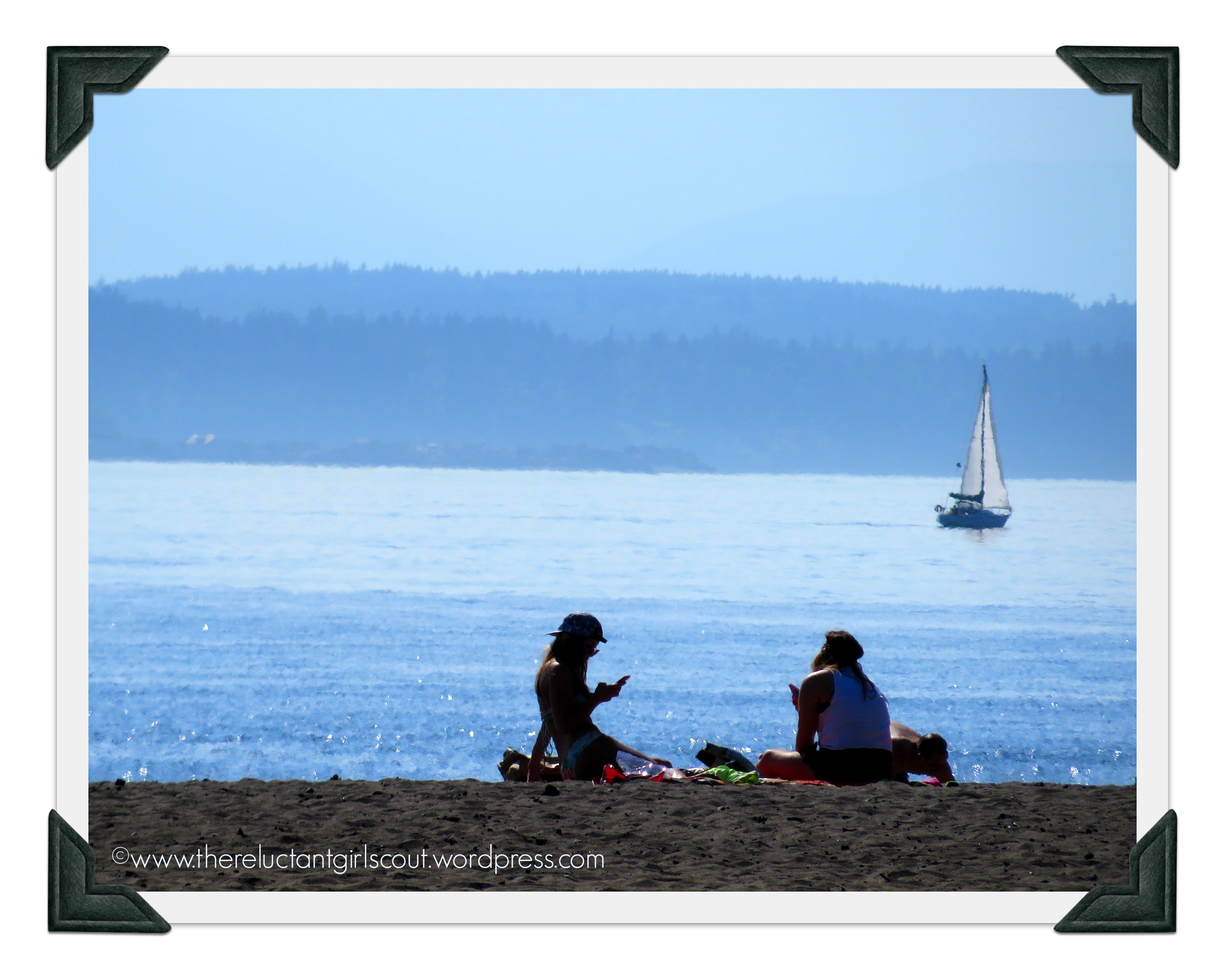
Alki Point, West Seattle. A beloved escape.

Alki Point, West Seattle. A beloved escape.


It’s been a summer of little rain here in Seattle. Many summers are like this and are the reason why you can’t swing a cat without hitting a fair-weather tourist between Memorial Day and Labor Day. Yesterday, we escorted another batch of much anticipated visiting cousins to Pike Market—a place we know to avoid during tourist season—and I’ve never seen it so crowded. At one point, the foot traffic was at a total standstill because there was such a bottleneck by the booth selling lavender sachets. Once people started moving again, if you dared stop to look at any of the other handmade wares, you were in danger of being trampled. We are a family of introverts, so I think all of us were thrilled when we finally pushed our way through and burst into the open. We stood in the park across from the market under the two totem poles breathing deeply and then taking tourist-style photos, because that’s what you do in Seattle on a beautiful day. (And even in the chaos of the market, my cousin did score a bag of morel mushrooms that she was clutching to her chest like Golum because she comes from a dry, mushroom-less place.)


I don’t know who is running the rest of the country because everyone seems to be here. Two weeks ago, Z and I rented a car and decided to take our favorite drive down Lake Washington Boulevard, only to discover we couldn’t because President Obama was in one of the fancy houses there on the shore of the lake, doing a little fundraising. The place was on lock down with lots of barriers and a strong police presence. Before moving to Seattle, I can’t say I ever had an opportunity to glance at the POTUS limousine, and now at least twice a year, if I stand on the right corner at the right time, I can flash a peace sign (or a thumbs up if he’s had a hard week) at the Commander in Chief.


So I spend a lot of time in summer marking off the days until the strangers who have descended here go home and the still-crowded city becomes more habitable. But then suddenly—because the cousins were arriving, because I knew I’d be going home to Indiana soon, because the temperature and the sunlight were just right—I fell completely and utterly in love with the city. It’s a fleeting love because I am a fickle woman; I know that. I care deeply for Seattle, yet it will never be my soul mate, like a Chicago or a Galway. But I’ve had a couple of perfect weeks where I’ve spent more time delighting in summer in the city than I meant to. And because you hear me whine too much  about this city I  have fond feelings for, I thought you deserved to see a few random delights.

A local gardener attempts to make the place more colorful.

A local gardener attempts to make the place more colorful.


This woman had the brightest, yellowest hair I’ve ever seen and she was working on a little corner garden near the grocery where Z and I walk a couple of times a week. When you live in a neighborhood of apartment buildings, seeing this sort of suburban domestic scene with urban flair is a joy.


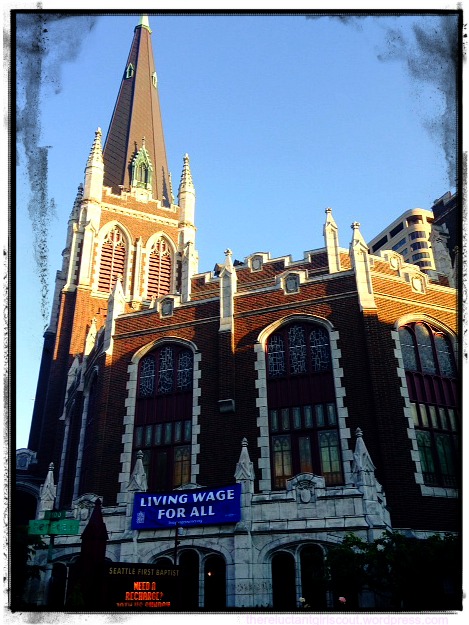
Seattle First Baptist Church

Seattle First Baptist Church

This church spire in our neighborhood always makes me happy. It’s especially beautiful at night. One of the things I love about it is that it makes me feel a certain level of humility/shame because for the first two years we lived here, when we walked past it, I would sneer at it as I made assumptions about what the people inside believed. I was once terrified (and, let’s face it, oppressed, because I was a girl) in a church of this same denomination as a child. But it turns out I was the one being judgmental because this church was the first in the city to marry same-sex couples free of charge when it became legal in Washington to do so. Before that, they hung out rainbow banners about acceptance, insisting that all were welcome. Currently, they have a banner out demanding a living wage for everyone. It is a church committed to social justice, and therefore, a church that makes me feel hope. So whenever we walk past it, it’s a little poke at me to remember to remove the plank from my own eye before I go kvetching about the splinter in someone else’s.


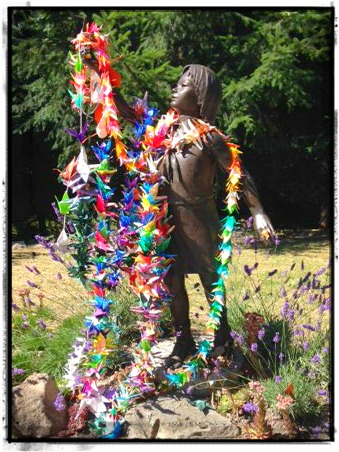
Peace Child Statue, Seattle

Peace Child Statue, Seattle

This statue entitled Peace Child draped with paper cranes stands overlooking Portage Bay where it spills into Lake Union. We drive this route a lot and I’ve never seen it, but because we were on foot one day, (and I was growling about our lack of car) we caught a glimpse and stopped to see her. I love surprises like this.


University Bridge

University Bridge

On the same walk, Z and I had to stand and wait for the University Bridge to go up to allow a sailboat to pass through into Portage Bay. We stood on the bridge and looked out at all the activity on the water, and it was hard not to feel lucky to live in a place where bridges aren’t static and water abounds.


Deck, Eastlake Bar & Grill, East Lake Union

Deck, Eastlake Bar & Grill, East Lake Union

After our walk, we ate at Eastlake Bar & Grill, which has, arguably, one of the best outdoor decks of any place in the city. The views of Lake Union are excellent both from the deck and inside the restaurant and the food and atmosphere is good too. When G was here in June, we ended up eating here three times because, well, look at it!


Market Pig

Market Pig

When Z first moved here, there had been one of those competitions—like there are in a lot of cities with different animal shapes—called Pigs on Parade to kick off the centennial celebration of Pike Market. (Rachel the Pig, a big metal piggy bank sits outside of the market and is oft photographed.) So my first days in the city were punctuated with different colorful and clever pigs. (I particularly liked the chocolate one in front of the Chocolate Box.) While the cousins were here, I saw this one still hanging out on a roof near the Market and it made me feel all warm inside, remembering the early days here with Z.


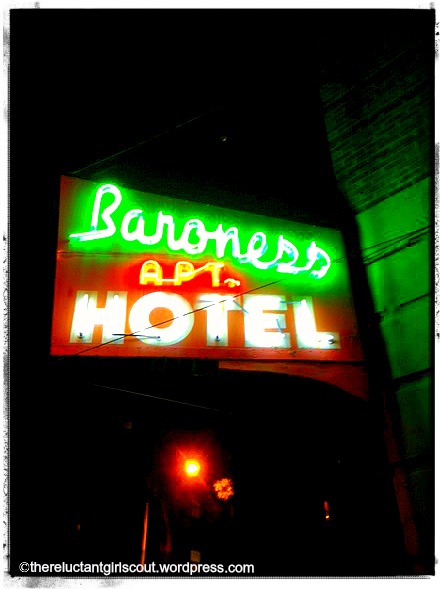
Baroness, Best Neon Sign in All of Seattle

Baroness, Best Neon Sign in All of Seattle


This is my favorite neon sign in all of Seattle. There are many in my second place list, but this one is on top and is up the hill from where I live so I see it regularly. It’s a little residential hotel across from a hospital. I appreciate that the hotel hasn’t felt compelled to install a more subdued, tasteful sign.


Photo 452 of the Space Needle

Photo 452 of the Space Needle


When friends of mine who’d been living in New York City moved back to Indiana, one of their last purchases (if I remember the story rightly) as they bugged out of the city that had just been traumatized, was a little replica of the Statue of Liberty that took up residence on the mantel of their new house in Indianapolis. I loved seeing it—that integration of their old life and their new one. A sort of symbol of the few years they’d lived in an iconic place during a (sadly) historical moment. If Z and I ever leave Seattle, I think a statue of the Space Needle—probably one constructed of Legos—will decorate our life wherever we land. Seeing it—even on days when I’m homesick—never doesn’t make me happy. Is it an overpriced tourist icon unworthy of my affection? I don’t care. I love the history and aesthetics of it, including the weird, steampunk-ish elevators that look like they belong on a completely different structure. I love this weird human drive to build a huge, elevated viewing platform (see Tower, Eiffel) to celebrate a spectacle like a World’s Fair, and I love that we live in a city that has such a place on its landscape.


For me, it isn’t about going up the Space Needle to look out, it’s about seeing it when the skyline comes into view as we drive up I-5 from the airport after a few weeks away, or when we’re taking the ferry back home or when we’re driving back into town from a trip north. There it is, looking all optimistic and otherworldly and a little…delicate, marking “X” on the map of our life.


Capitol Hill in the rain

Capitol Hill in the rain


And finally, after many weeks of sun, there was a torrential, Midwestern-style rainstorm. Z and I worked at his campus and stopped periodically to look fondly at the blurry outlines of cars and houses, and teasing ourselves with the promise of damper, less crowded days. When we trudged home past our favorite bits of the neighborhood, it didn’t occur to us to complain.

Ah, Those Summer Nights: Flashdance Edition

Standard
Flashdance.

Flashdance.


To help combat the recent heat wave, Z and I chose to stay in our shady, brick apartment building, wearing as few clothes as possible and watching the movies of our youth while eating popsicles. Like you do. The idea came about last week when we randomly started singing songs from Grease and then we discovered it was streaming on Netflix. From that, we quickly moved to the other music/dance movies that shaped our respective youths: Grease II, Footloose, Dirty Dancing, and, finally, last night, Flashdance.


All I have to do is hear those opening bars of “Grease,” and I’m transported back to a adolescent summer when I got my first issue of ‘Teen magazine and thought I’d die if I didn’t get a pair of denim Dr. Scholl’s sandals and one of those aluminum foil mats upon which a person was meant to rotisserate herself until she was deeply tan and thus desirable. I was certain that ownership of those two things would magically transform me into an adult. By the end of the summer, I had the sandals, but my mother, thankfully, could see (as could anyone else who knew me) that my pasty Irish-American skin should spend peak tanning hours under an umbrella. Re-watching the movie this past week brought back many memories, including a mental list I kept of all the sexual innuendos that I didn’t yet know the meaning of, sensed were significant, and of which I hoped to have a legitimate definition before I went to junior high. (This was before urbandictionary.com, back when if you weren’t brave enough to ask some older family member or friend, you had to wait to find out why everyone was making that “oh my goodness!” face when “Greased Lightnin’” played.) The experience of watching all four of these movies was like opening up some scrapbook I forgot I’d kept, chock full of reminders of the way life used to be and all the ways I hoped life would turn out.


It was fun to share with Z something that had been significant to both of us back in the day, living on our separate continents, when we were imagining very different futures for ourselves. (I can’t speak for Z’s, but the future I imagined involved me actually being the pastel-sweater-wearing good-girl version of Olivia Newton-John). I sometimes lament that Z and I didn’t know each other in our youth, and I admit there is part of me that wonders if we’d met when we were 10 or 16 or even 20 if I still would have thought, “That’s the one for me!” or if I would have been unable to see his utter rightness simply because he was not a John Cusack, holding a boom box over his head and wearing me down with his love.


Dirty Dancing held up as well—better, really—than Grease. There are only two cringe-worthy lines in that film: the oft-used Nobody puts Baby in a corner, and the equally bad (and even more poorly delivered), Go back to your playpen, Baby. This is, however, perhaps the first time I’ve ever wondered why the writers thought it was a good idea to name the heroine Baby in the first place. Metaphorically, it’s just too obvious to be good, and literally, it’s just too…well, seriously, do you know anybody named Baby? On all other fronts, the movie still works, and no matter how many times I watch it, damned if I don’t cry when Baby is in the gazebo with her father telling him she’s sorry she disappointed him, but he’s disappointed her too.


For marital happiness, the least said about Grease II the better.


Footloose surprised me. A million years ago when I saw it for the first time, all of my girlfriends were going nuts for Kevin Bacon and his spikey hair and skinny tie, but I was too busy obsessing about the ridiculous premise to notice how nice he looked in his Sedgefield jeans. A college campus might outlaw dancing (I went to one of those), but a whole town? And why did it seem so Southern and some of the actors went in and out of southern accents, when those were clearly the Rocky Mountains in the distance? And were they seriously expecting us to believe that Kevin Bacon’s use of quotes from the Bible was anything but self-serving? It didn’t take a theology scholar to recognize a fallacy of false equivalence. I’d been to prom; that dancing had nothing to do with worship.


On this viewing, however, even with the extreme no-dancing-no-rock-music town ordinance still in place, the setting and the people felt real and familiar. That little church there in ArkanIowalarado felt a lot like the ones I grew up in, trying to figure out who I was while it seemed plenty of people who didn’t really know me were happy to tell me who I should be. In the scenes where the fire-and-brimstone John Lithgow is preaching, you can feel the misery of a humid Sunday service, when you wish the minister would maybe get to his point more quickly so you could escape to a place with a breeze. On this viewing, Kevin Bacon’s biblical argument didn’t seem quite as weak. John Lithgow seems more sympathetic regarding his reasons for wanting to ban music and dance (and he gains big points for compassionately stopping a book burning). Also, nobody was perfect looking like they would be in a movie now. Their teeth weren’t impossibly white and impossibly straight. They spoke like real people. They looked a little uncomfortable, and not at all like a bunch of teens who would be posting photos of themselves all over the interwebs. (Not that there’s anything wrong with that.) It surprised me how much Footloose felt like a real portrayal of what it was like to be a teenager in the 1980s, give or take a little gymnastical dance routine in the local feed mill.


And finally, there is Flashdance.


Oh, Flashdance, you break my heart. Weren’t you once good? Didn’t you have better dialogue? Didn’t you make more sense? Weren’t you plausible?


I saw Flashdance with my high school boyfriend, his little brother, and a friend of mine. I was enraptured the 95 minutes it was on the screen and felt like I was the only person in the movie theater. Alex, the heroine, a Pittsburgh “flashdancer” with the dream of being a ballerina is no Sandy from Grease. She is 18 and supports herself welding by day and dancing by night (though she isn’t a stripper—let’s be clear about that!). She lives in a warehouse with her pitbull and she seems not to care what anyone thinks of her. She is feisty. The night she sees her older boyfriend with another woman, she doesn’t go home and eat ice cream and weep passively and sing Hopelessly Devoted to You. No. She gets on her bike, peddles to his house in a tony neighborhood, and throws a rock through his window. But the real story is that with a little prodding by an ancient European fairy godmother figure and her string-pulling older boyfriend, she screws up her courage and tries out for the Pittsburgh ballet, which is her secret dream.


Watching Flashdance then, I knew the message of the movie—to be brave and go after your dreams—was one of the truest things I’d ever seen. When it was over, I was breathless (and anxious to get home to start ripping up sweatshirts and incorporating legwarmers more fully into my wardrobe, so I too could look like Alex while I painted and wrote). I said something to the boyfriend with awe in my voice about how good the movie was, and he said, “Eh. It was okay.” His movie tastes ran more along the lines of Conan the Barbarian and Caddyshack. I felt deflated. How could he not know this was possibly one of the best movies of all time? Were his broody silences not artistically driven after all? Were we ill matched?


It was very disappointing.


Yet here I was, thirty years later, sitting with the far more compatible and fabulous Z on our sofa and feeling very briefly annoyed with him for insinuating that Flashdance wasn’t a good movie. I think of him as a more enlightened creature, and so his lack of reverence for the film kind of hurt my heart. I felt wounded that he wasn’t even giving the movie a chance.


But then I started listening to the dialogue and making a list of all the implausibilities, starting with the existence of a club where women danced–with their clothes on–for men who were clearly not patrons of the arts. And yeah, maybe an 18-year-old woman could become a welder, but would anyone have hired her in the Rust Belt when jobs were scarce? I don’t think so. And also, remind me why none of us knew in 1983 that a body double was used to do all the dancing? The only thing I was in awe of this time during the dance scenes was that the body double’s curly wig did not come flying off.


Maybe Flashdance wasn’t a good a movie after all.


More disturbing to me than the possibility that the movie was not great (nor even good) was the realization that the message of the movie—one that I believed in fervently— was mixed. It purported to be about believing in yourself and your dreams, yet two of the three people who do just that (Richie leaves his fry cook job to move to LA to be a comedian and Jeanie enters an ice skating competition) fail miserably (Richie comes back to Pittsburgh after being booed out of LA and Jeanie falls during the competition and subsequently ends up working in a real strip bar until Alex drags her out). Plus, Alex already is a dancer—trying out for the ballet isn’t that far outside of her wheelhouse. So what exactly was the message of Flashdance? Go after your dreams only if you are the protagonist? Go after your dreams if you have a rich older boyfriend who has connections? There are magical powers in a ripped up sweatshirt, which will subsequently make your ludicrous dreams attainable? By the time it was over, I hadn’t a clue.


The moral of my story? There isn’t one. I’m just glad some of those teen fantasies of mine didn’t come true, otherwise I might have missed this perfect weekend of heat wave survival with Z. If the mercury rises again, I suspect there is a John Hughes marathon in our future.


P.S. This is not Jennifer Beals

P.S. This is not Jennifer Beals


On Cousins and Only Children

Standard
Not me and G, Puget Sound, 2014

Not me and G, Puget Sound, 2014


The cure for what has been ailing me (homesickness, friendship distress, caffeine withdrawal, and general malaise) came this past week in the form of a seven- day visit from my cousin G. If you don’t have a cousin like her, then I give you permission to go berate your aunts and uncles right this minute for not producing one for you. Such a person really should be an unalienable right mentioned in the U.S. Declaration of Independence.


What did we do all week? I don’t remember. We walked by the water a lot, including a lovely long wade (or “paddle” as Z calls it) in Puget Sound. We went to bookstores and yarn stores and ate things we shouldn’t. We spent an afternoon on Hudge’s houseboat. Saturday night we went to the Seattle International Film Festival’s showing of the South African film Leading Lady, and had the added bonus of “Billy” from Ally McBeal sitting in the same row as us. (Other than taking some blurry photos, we acted nonchalant with this brush with B-list fame.)


But mostly, we just talked. Yesterday I woke up and realized she wasn’t still in residence, and I felt decidedly ho-hum about life in her absence. It was good to have a paisano in the house.


Though I acquired two half-brothers as a young adult (and am now reaping the benefits of aunthood), I was an only child for the whole of my childhood. I was not one of those lonely, pitiful characters in literature like Jane Eyre who has no family, but instead grew up a few miles from my cousins on my mother’s side, which meant weekends and summers in the country with them, avoiding cow pats as we played in the fields, demanding one of the endless Eskimo Pies my grandmother kept in the freezer, rubbing my allergy-inclined face onto the fur of barn kittens, and riding a garden tractor/go-cart/Radio Flyer train around the barnyard while dressed in our best parade finery (which mostly involved fancy hats and Nerf balls stuck under our shirts, Dolly Parton style). From these cousins, I learned a little of the positive side of what it might be like to have siblings (the camaraderie! the similar family experience! the Eskimo Pies!) with only a hint of the dark side (the arguments! parentally-forced sharing! the hair pulling!) Often now that I’m in Seattle and feeling a longing for home, it isn’t lost on me that I’m not missing home so much as I’m missing 1974 in a tire swing at my grandparents’ house, waiting on the cousins to arrive and the fun to begin.


G was not one of these cousins. Since my parents divorced when I was young and since all of my cousins on Dad’s side lived in different parts of Indiana, I often felt less connected. I went through a period of time when I wasn’t even sure if I belonged anymore, like somehow those cousins with their intact families were more legitimate than I was.


Once a year or so, we’d all get together and it would take awhile for me to feel satisfactorily reacquainted with them. Because I was the baby girl, I was often in awe of my older cousins, studying how they dressed, what they did, what they read and listened to, and then attempted to incorporate it all into my life. From these paternal cousins, I developed an affection for horror movies (for a time), miniature golf, Shakespeare and John Irving novels, and, randomly, the Carpenters and the Beach Boys even though we were really too young for this to be “our” music. I loved these cousins, but they were more like exotic, affectionate strangers than the closer, more sibling-like connection I had with my cousins back home in Wayne County.


I can’t pinpoint when the magic happened on my dad’s side of the family. It was after we were all out of college but before the family funerals started adding up. For me, it was as if a switch was flipped and suddenly I realized how much I genuinely liked these cousins. We didn’t grow up together. Our lives had evolved differently. And yet, we were somehow connected. I’m convinced that if I’d never met them and then bumped into them at a cocktail party, I would have gravitated to all of them intuitively. They’re smart, well read, wickedly funny and somehow. . . familiar.


G’s familiarity is still a source of wonder to me. Six years separate us and our life experiences have been very different, yet we get each other. One of us might say, “I think I’m weird because I …” and before the sentence can be finished, the other is nodding her head and admitting to doing or thinking the same thing. Maybe it’s because we’re both Capricorns or share a bunch of similar letters on the Myers-Briggs Temperament Indicator. Maybe it’s just genetics. I don’t know. All I do know, is the day of my father’s funeral when I was sitting on the front “immediate family only” pew feeling very alone, I looked behind at G with what must have been a face of misery, and she nodded, knowing intuitively what I needed, and without saying a word, skooched herself out of the crowded row she was in, and came to sit beside me, leaning in and making the whole rotten experience bearable. Who doesn’t feel lucky to have that in her life? Could a sister have offered me more than that?


Right after I met Z, she is the one I took to scope him out and see if I was delusional or if he seemed like he had potential. He was working a bean-bag toss at the university Homecoming carnival and had no idea he was under surveillance. She gave him an enthusiastic thumbs up and kept giving it, years later after everyone else’s enthusiasm for Z was waning, and even mine was beginning to ebb because he was operating on what I would later learn was “African time.” Five years after the bean-bag toss when I was starting to feel mostly done with him, she dragged me out to buy new Z-catching eye shadow and gave me a pep talk about destiny, and a few weeks later, he told me his heart had shifted. (It was awesome drugstore eye shadow—if you have unrequited love, I recommend it.)


So a few years later when Z and I got married, it was only natural that I’d want G, who had been there on the worst day, to be my “best woman” on the best day. She even patiently gave in to my desire that she be gussied up like a Disney princess, along with me, never mind our middle-agedness and how we should have been wearing something more subdued and matronly, like grey pantsuits, instead of sparkle and shine.


When someone tells me they plan to have only one child, I never feel badly for that kid. The only downfall I can remember to my “only” status was the assumption by people that an only child was naturally bratty and spoiled. (It’s worth noting that these people making these claims always had multiple ill-behaved children.) Instead, I loved being just me. Loved the pockets of solitude and being treated like a little adult instead of one of the wildings in Lord of the Flies.


But maybe I can say I loved being an only child simply because I was rich with cousins. A cousin-less life sounds much less enticing to me.


Now if I can just get the other eleven to visit.

A Good Girl’s Praise of Courtney Love

Standard

rgsseagullstickerwords

A couple of weeks ago I spent an entire morning trying to compose a perfect post celebrating the 20th Anniversary of Hole’s album, Live Through This. My attempt was an epic failure in that every line I wrote made me sound either angry or clueless. I’d write a line. Read it twice. Stare out the window. Imagine someone reading it and thinking less of me. Delete it.


It was not easy going.


Nor could I determine to whom I was writing since I already knew how I felt and since Courtney Love detractors would lob all the regular criticisms (ranging from her craziness to her talentless-ness to her a bad mothering skills) regardless of what I typed out, and since my own mother—my most loyal reader aside from Z—was likely to say, “Courtney who?” what would the point be of writing a praise hymn to a two-decades old grunge anthem anyway?


I gave up and wrote my friend Jane an email instead. Forget the anniversary. Enough people online had mentioned it in passing that it’s not like Courtney herself was waiting for me to post.


Z, who hates grunge and doesn’t understand how this album could have ever been the soundtrack to my life, was particularly puzzled by why the last several days Courtney Love was wailing on the stereo whenever he’d get home from work, why I kept grousing under my breath all week that the “real” anniversary we should be commemorating instead of the 20th anniversary of Love’s husband’s suicide is the release of this album, or why I seemed kind of angry at the world for no real reason.


We are a “pop” couple. Though I spent years despising bubble gum music, he has shown me in our four years of marriage the pleasure of listening to music that doesn’t make me sad or angry: music that literally goes in one ear and out the other and in the process might make my body move a little more rhythmically. Before Z, there was mostly angry feminist music, Irish rebellion music, a little punk, some classic rock throwbacks, Van Morrison (for the love), and for a period of time, a lot of Nanci Griffith that left me in tears every morning as I’d drive through Indiana cornfields on my way to work because the storytelling was so sad and true. Before Z, I liked to feel affected by whatever I listened to. But then Z arrived on the scene and he runs about 50 degrees happier and 42 degrees less complicated than me, and after I banished his country music to his office, we found happy, common ground in the land of Gwen, Gaga, Fergie, Katy Perry, and whoever else Pandora dished up for us on related channels.


But pop didn’t cut it while I was having my Courtney Love epiphany. I spent way too much time listening to interviews with Love, reading reviews of the album, and remembering 1994 and how I would drive down the road screaming the lyrics to “Gutless” or “Violet” at full volume, full of some weird rage that didn’t really fit the circumstances of my life: I wasn’t a heroin addict, I didn’t have a suicidal spouse or a baby people didn’t think I was fit to raise, I had a newly minted master’s degree in fiction writing, good friends, and good health. (Plus, I had just discovered the internet, roughly five minutes before many other women had, and so I was experiencing what I like to call my “Belle of the Ball” era, which was a glorious though short period when men were falling in love with my words and no one was expecting any nude photos because modems just weren’t that fast yet. It was the Golden Age for a smart girl who was good with language.) What was there for me to rail against? But the rage then was real, and even last week when I was trying to piece together all of these retroactive feelings, I was, at the very least, cranky as I tried to name what those twelve tracks had meant to me all those years ago.


The week before, I’d gone to hear an Important Writer talk about structure in creative nonfiction. We were there, stuffed onto tiny plastic chairs in a dark, crowded room, waiting to hear this man’s brilliance. The room was full of his devotees who were all a-twitter and he announced that he was about to read an essay that he’d written for us the night before while sitting in the café at Elliott Bay Books drinking wine. Maybe if I hadn’t paid $10 for the privilege of hearing him talk at length on a topic he’d only bothered to start thinking about the night before while drinking, or maybe if his devotees weren’t cooing quite so loudly, this wouldn’t have annoyed me, but he did and they were. I felt distanced from him. He didn’t help matters much by referencing multiple male authors and only two females, thus reminding me that my own writing will never count quite as much as a man’s, though I’m not sure why since it’s hands that usually do the writing, not genitalia.


During the course of the two hours, I simultaneously loathed him, loathed his devotees—all wearing some variation of a writer uniform (including one or more of the following items: black, pilled sweaters, pencils as hair props, giant glasses, ironic T-shirts so obscure only a select group of people could possibly understand, and boots)— and loathed myself for not being more talented, fabulous, and appropriately attired.


Despite the fact that the Important Writer did not know me, I was certain he would judge me harshly or, worse yet, ignore me entirely, and so I spent much of my time there feeling angry. And while I was feeling angry at him, I started feeling angry some more at any male artist or critic who dares to criticize a female one. Not because female writers and actors and painters are above criticism, but because so many of them do it in this dismissive way against which it is impossible to argue and which seems to be relegated only to females. (More enraging yet, the male artist or critic who doesn’t notice female artists at all. In an email during this week of angst, Jane reminded me that in college one of our male instructors started a lit course announcing that we wouldn’t be reading any female writers because history had yet to produce any worth studying. Maybe I’ve been carrying that annoyance around since I was 19.)


At the Important Writer’s presentation, I suddenly realized that a few years ago when I was applying to MFA programs, I had applied to his program and one other, which was less well-regarded than his. Based on some voice memory, it occurred to me that it was the Important Writer himself who had phoned me at my office to tell me the happy news that I’d been accepted. There was pleasure in his voice, as if he had just handed me the keys to some kingdom of which he was already a resident. I thanked him but told him I’d decided to go with a slightly less well-regarded, definitely less well-known program, and he momentarily lost all power of communication. Clearly no one had ever rejected his offer of a place at the table with him and his cooing devotees. He spluttered and finally managed to get out a, “Well. Okay then.”


Since making that decision almost six years ago, I’ve second-guessed myself countless times. The program I chose was largely nurturing, and though there were plenty of male mentors there—from many of whom I learned much—there was a decided “feminine energy” at this school. Since my graduation, I’ve wondered about my choices. Did I skip “the best” because I didn’t believe in myself? Was I afraid I couldn’t handle something more cutthroat, more “masculine”? Had I sabotaged my career simply because I’d wanted the opportunity to spend a residency in Ireland? Did I purposely avoid what might have been a “harder” program? What was wrong with me that I’d make such an impetuous decision based on nothing more than intuition with no basis at all in logic?


Aside from hearing the Important Writer, it was a week in which I was doing a lot of self-questioning for a variety of reasons including how good of a host and friend I am to how good of a wife I am in any given week (I get full marks for love and devotion on the Z front, but I think you know my record on the Domestic Arts and general productivity). There was a lot going on in my head in terms of whether or not I was good enough at any of the things that I generally believe are my better qualities.


Good. Things get twisted up in my head around that word because “good” was always my thing. It’s what I was. I was a good child, a good student, a good girl, a good friend, a good writer, a good teacher, a good listener. The problem with being the kind of good I was (and the kind of good I still struggle with daily) is that it was—is— always contingent upon someone else’s opinion of me and the quality of that goodness. They are the ones who are the deciders about whether I’ve hit the mark, those strangers and teachers and critics and loved ones and friends. And while I value the opinions of some of these people, I don’t ever want their view of me to matter more than my view of myself.


When I left the auditorium last week after hearing the Important Writer, my step was lighter than it had been going in. For one, he hadn’t rejected me five years ago—I had rejected him. But more importantly, it was clear after having listened to him that I would not have thrived in his environment or under his tutelage. I would have spent two and a half years feeling angry and either stupid or shunned as I tried to meet some goal of his or his idea of what it means to be a good writer, a literary writer. My intuition hadn’t failed me. I’d done exactly what I wanted when I made the decision about which program was best for me and ignored various voices of reason (none of which were in my own head). I was fine and finally the second-guessing could stop.


There are advantages to being good (the lack of track marks, legal battles, and bad celebrity tweets to name a few), and probably attempting goodness is so tightly coiled around my Midwestern DNA that I couldn’t change now if I wanted to. Yet, when I hear 1994 Courtney Love screeching and misbehaving and not giving two shits about whether other people think she is a good person—a good girl—a part of me still remembers that unfettered satisfaction of wailing along side her voice, breaking the speed limit (slightly) as I careened down country roads in my Dodge Omni, and imagined myself as the sort of woman who knew what she wanted and took it without waiting for someone else to hand it to her with a gold star for good behavior affixed to it. A small part of me still aspires to that kind of honesty, ugly and unattractive as it might be at times, standing there in its too-short baby doll dress and smeared make-up, looking less pretty than people would like, making no apologies for wanting to be the girl (good or bad) with the most cake.


Trying to Step in the Same Stream Twice

Standard
Santa Barbara

Santa Barbara

We hadn’t been in Santa Barbara for nine years when we arrived there last Wednesday. When we did the math and counted out how long it had been, we were both surprised. It has lived big in both of our memories all this time, and when we exited the highway and found ourselves cruising up Cabrillo Boulevard towards Hotel Oceana where we’d be staying, it felt to me like no time had passed at all. Maybe a few months.


In 2005 when we were still just friends, Z, who’d been in Zimbabwe for a year, returned to the U.S. to teach as a visiting professor at a college near Santa Barbara. Other than a deep affection for my Malibu Barbie collection in the 1970s, I’ve never been California-inclined. I had this notion of it as a place that was too thin, tan, sunny, and plastic to ever make me happy. So when Z invited me to spend my spring break with him all those years ago, let us be clear: I was going to see him, not to soak up the sun on some shell-strewn beach. I would arrive in Santa Barbara ready to assess the situation and see if he’d budged an inch since the year before when I’d told him I was in love with him. I even bought myself a new orange bra because I felt with such a thing beneath my clothes, I would subconsciously become more alluring and magnetic than I really am. It was huge and day-glo and I had to be careful what shirts I wore with it because it was not a bra to be trifled with. Even so, Z remained impervious to the super powers of my undergarments, despite the fact that at one point when we were on a trolley in San Francisco, my blouse came unbuttoned of its own volition and I accidentally treated about 30 strangers to my bright orange satin-encased breasts.


Z stared out the window, oblivious.


The trip nine years ago involved a mixture of emotions that started and ended with longing and confusion on my part. We were both happy, I think, to be back in each other’s company, exploring a new location, investigating the old mission, driving up Highway 1, sifting through bargain bins at what may have been the world’s most affluent Goodwill ever, and walking the beaches. Oh, the beaches! But then somewhere in my head I’d hear Kate Bush singing, “The thrill and the hurting/ This will never be mine,” and the aching would start. I’d wonder how much longer I could sustain our friendship in the face of it. Then he’d say something funny and we’d start laughing and I’d forget the hairline fracture in my heart.


I don’t understand time travel, but the first day of this 2014 trip, I felt as if time wasn’t linear after all. It seemed reasonable to me that we might bump into our younger selves, that maybe I’d see us on East Beach and I’d be able to take 2005 Beth aside and say something encouraging like, “Just hang in there—he’s worth the wait and right now he’s just moving on African time.” Or better yet, I had this notion that somehow I might be able to turn back time and reclaim those days that were lost to us. That there would be a puff of smoke and we’d get sucked backwards, and get our party started sooner rather than later. (It should be noted that in my memory, we are way younger than we were nine years ago, and I was much thinner and looked more like Malibu Barbie than I do in now or then. Also, we’re wearing really attractive swimwear and we’re much better coiffed than we are in real life.)  It’s just so lovely and magical there on the beach in Santa Barbara that it seemed entirely possible that either of these things might happen.


Poor Z! That first day, I think he was wondering if he’d made a mistake, bringing me back to Santa Barbara because I was acting like we’d returned to the scene of some crime. I was given to sudden storm clouds of regret that would form behind my eyes, and worse, torturing him with jabs about what he’d been missing out on back then (for instance, I no longer have that orange bra and he never got to see it). He was good natured about my ribbing. At some point on Wednesday night, I realized I was ruining now with my incessant reflection on then and what could have been. I mean, honestly, can you imagine having to listen to Elizabeth Bennett complain about how Mr. Darcy didn’t love her quickly enough, as she sits on the veranda at Pemberley? Please. Even I was getting tired of me. Frankly, I’m getting tired of me recounting the story here.


View from our Hotel Oceana room

View from our Hotel Oceana room

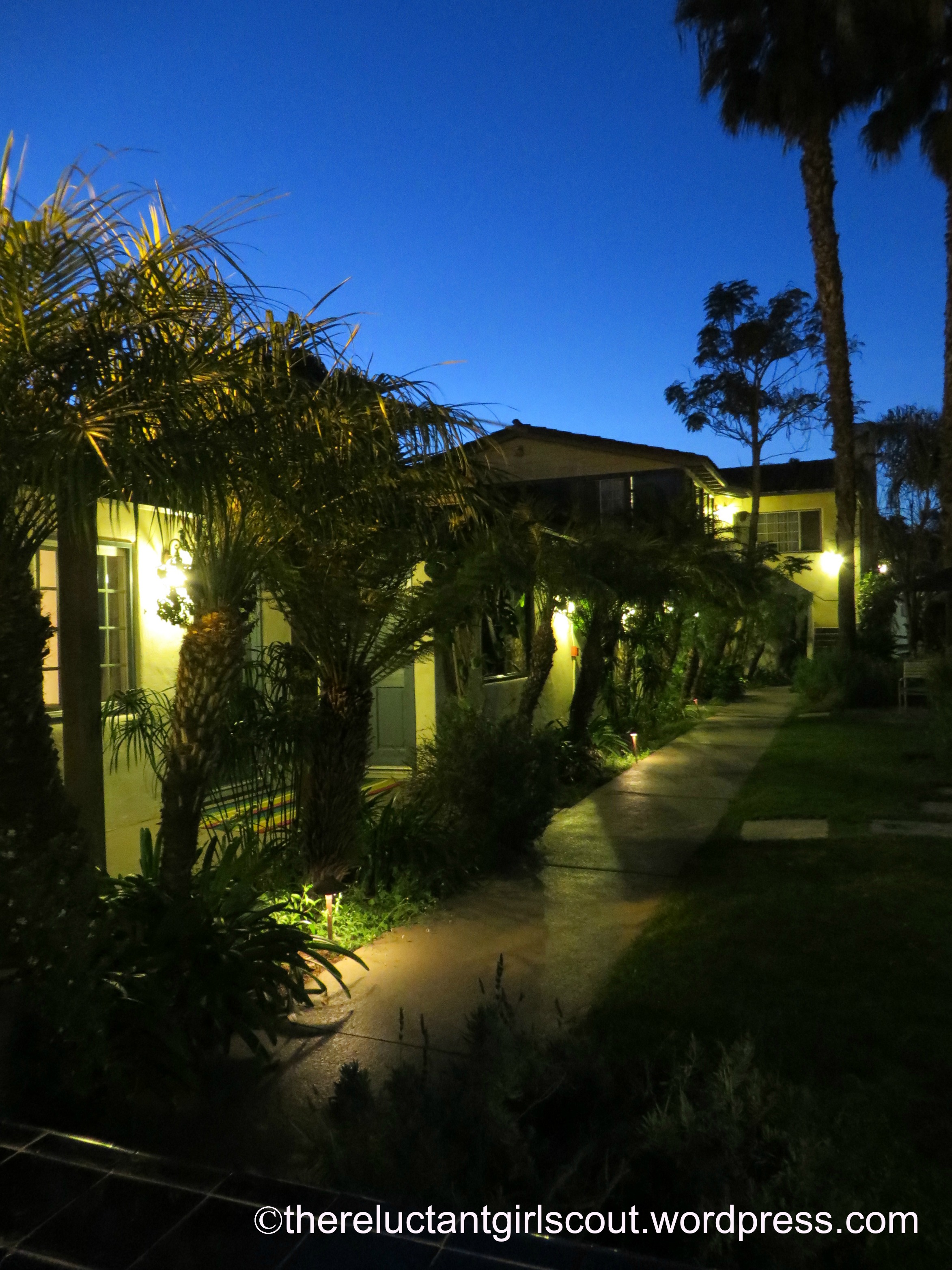
Eventually, I shut my mouth and directed my line of sight on the present. Hotel Oceana was delightful. It was right across from the beach and we splurged on a room with a view. Aside from the view, I was smitten with the Spanish style courtyard that the rooms opened up on. A fountain tinkled. Humming birds flitted around the stralizia. Even the opossum that was creeping up a tree right at eye level and scared me half to death seemed quaint.  When it isn’t a 100 degree humid summer day in Indiana, I’m always struck by the magic of how you can live your indoor life outdoors in climates like this one.

Hotel Oceana courtyard, Santa Barbara

Hotel Oceana courtyard, Santa Barbara

We speculated on the lives of the people in the neighboring room who left their door open, and when we peered in all we could see was a sea of plastic bags—we still can’t decide if they were some sort of bag people/hoarders or if they just did a lot of shopping and weren’t very tidy or safety conscious. We walked on the beach, laughed at the Californians who were bundled up like it was winter as we shuffled around in shorts and flip flops,  and said hello to a host of dogs. We drove out to Z’s old campus and poked around to see how things have changed since he was in residence. Then we investigated his old neighborhood to see what houses survived the fires a few years ago. Finally, we went to his old Von’s grocery store and lamented the fact that Jonathan Winters is dead now so there was no chance of running into him the way Z used to. We had apps with his former boss in an Irish pub and caught up on nearly a decade’s worth of events. Our last night there, we walked on the beach under a full moon, the way you do when there is a beach and a full moon available to you.


Maybe all the time travel I need in this life is the realization that when we are together, we have fun, just like we always do, always have done. Even before we were us.


Moonlight, Santa Barbara

Moonlight, Santa Barbara

(P.S. Should they make a movie of my life posthumously, would one of you please try to secure the rights to that Kate Bush song? I think it would work really well in the “longing for Z” sections of the film.)


A Matter of Perspective

Standard

RGSChristmaslightsinZim

Here in the land of excess, I am able to drive past sub-par holiday decor and curl my lip. Downtown on Tuesday there was an ice sculpture–lovely, lovely ice sculpture–and instead of being amazed that something so intricate could be cut from a block of ice, I sighed and thought, Oh, the Grinch. I was hoping for something more beautiful.

Meanwhile, in Z’s little hometown, people were camping out to see the lighting of the town Christmas decorations. It was cause for celebration. It’s a single string of colored bulbs stretched across a parking lot.  It is cheery and fun and also has pretty much cornered the market on simplicity. While I can’t personally imagine waiting outside for any amount of time to see them lit (with no guarantee that there would be power to light them), I appreciate that single strand of holiday cheer.

So my goal for the remainder of this holiday season is to think like a Zimbabwean. I will turn my nose up at giant, inflated snowmen, and electrified reindeer whose antlers move in time to Jingle Bell Rock. Instead, I will do my best to delight in a sprig of holly, a cardinal on the snow, a single strand of giant, 1950s style Christmas lights lining an eaves trough, which come to think of it, is all the Christmas I needed when I was a kid. My grandparents would hang those lights on the awning of their patio and just seeing them there, ushering in Christmas, gave my cousins and me the wriggles. I remember thinking, “These lights are so beautiful, why don’t they leave them up all year?”

Flashback Friday: Our Bold Lies, Our Selves

Standard

Now that you know the improbability of the fairy tale coming true, I thought you deserved a peek into darker days seven months before Z had his love epiphany.

Monday, March 13, 2006

It’s March. It’s hot. I hate summer, and today has been a painful reminder that we’re heading straight for the inferno. Kamikaze flies are buzzing around my lamp because I opened a non-screened window in hopes of catching a breeze. I’m thirsty and feel like I should sleep in mosquito netting tonight and go on safari.

A while ago I had a thing for an African guy I know. A friend. In my deluded, lovestruck state, I actually thought for the right man (and he seemed like the right man) I would be impervious to heat, to bugs, to dictators, to poverty, to eating crocodile. This is why women haven’t ruled the world for a few millennia: if a man is involved we believe the most ridiculous crap, and most of it is our own fabrication. This guy wasn’t hinting I should come home with him where we could make a home at the foot of the Ngong Hills with Meryl Streep and Robert Redford. Mostly, he wanted someone to go to movies with, someone to play miniature golf with, someone to drive him to the airport for his 20 hour flight home twice a year. I’m the one who filled in all the blanks.

No. It wasn’t any sweet nothings he whispered to me that made me imagine this Daktari-style future. It was all me. And yeah, I wanted him (he smelled good, he was funny, and I loved the way he said ‘banana’), but it is  possible that I also wanted to believe I am the kind of person who doesn’t require air conditioning and porcelain. A person who could say at cocktail parties, “Oh, yes. That’s when I lived in Zimbabwe.” But I’m not. I’m me. I need several months of cold weather to get me through July and August. I need a suitcase with wheels. I don’t really want to drink out of a canteen.

So I kind of know who I am, but what I wonder is this: who ARE those people we imagine ourselves capable of being? What’s the line between having a goal/overcoming personal obstacles and just completely deluding yourself? I’ve never really wanted to be a self-deluder, yet the evidence indicates that perhaps that’s exactly what I am. Perhaps that is the only way we are able to live with ourselves. I could admit–at nearly 40–that I’m never going to join the Peace Corp, yet I like the idea that I might. I might quit my job and join the Peace Corp. I might become a foreign correspondent. Or maybe one of those people who cashes it all in and lives on a sailboat.

This is how fairy tales (and heat) addle our brains.