Category Archives: Indiana

The Ill-planned Grand Tour: Part I

Standard

IMG_3083

My first trip to London was in 1988 with a small group of my fellow liberal arts majors and my beloved mentor, Gibb. I’d just read 84 Charing Cross Road, I was 3/4 of the way done with a lit degree that focused heavily on British Lit, I was studying British history as an elective, and I had an unhealthy attachment to the Royal Family. (Specifically, I was sure I was meant to be one of them and was holding out hope for Edward.) It was my first trip abroad and as soon as I discovered that the ability to read a train schedule, a guidebook, and a metro map opened up a person’s world exponentially, I was hooked. And so a love affair that began in books was finally consummated.

Four years later, a family friend agreed to act as tour guide for Mom and me, and we spent two glorious weeks living in a house owned by Stephanie, an Austrian octogenarian who was friends with the doctor who delivered Prince Charles and knew from first hand experience that Winston Churchill’s wife’s  Siamese cats had ugly dispositions. Her three-story brick house was on Muswell Hill and on the first day there we looked out the back windows to discover not just rose-covered walls but also a community bowling green where men dressed in whites looked like something straight out of a Merchant Ivory film. In America at the time, we were obsessed with all things British, all things Victorian and Edwardian. It wasn’t just Mom and me; entire stores were dedicated to bringing a little 19th Century British class to our ranch houses and condos. Though the city was modern, it was as if the plane that carried us across the Atlantic had also been a time machine. Because of the lady of the house’s age and social class and the length she had owned her beautifully appointed home, we could, at the very least, pretend we were in pre-Blitz London. At night, I’d eat biscuits and work on a needlepoint project I’d purchased at Liberty while Stephanie and I would watch TV. In my twisted memory, instead of viewing episodes of East Enders though we were listening to the wireless and hearing news about impending troubles in Europe. We were delighted one day when Stephanie was in a tizzy because she couldn’t find her hat for Royal Ascot, and the next day, we were lucky enough to see the entire Royal Family leave Windsor Castle for the big race. They were waving and all be-hatted, while we stood along the road, cheering and clapping and taking blurry photographs. (Sadly, Edward did not notice me, and one of us noticed how miserable poor Diana looked despite the fact we were all about to be surprised by her tell-all biography and impending separation.)

Because Barb, our tour-guide friend, had traveled extensively, I studied her actions carefully. She carried a small backpack so she was always ready with a rain coat, London A to Z, and space to shove bread and cheese from Sainsbury’s for lunch on a train to Dover. She understood the Tube and planned well a day’s itinerary so no time was wasted. I could do this, I thought, unadventurous as I was. I was in my early twenties and determined not to spend the rest of my life in Richmond, Indiana, waiting on the Barb’s of this world to take me to the places I wanted to see.

When Mom and I left, we had an extra suitcase full of all the bits of England we’d purchased in gift shops in an attempt to take the experience home with us. In our carry-on luggage alone, we had three teapots. All these years laters, it remains one of the Big Moments on the timeline of our respective lives.

Seven years later, I fell in love with Ireland and never once looked back  across the Irish Sea to England’s green and pleasant land. I became obsessed with Irish literature and Irish history, and the best I can do to explain this is to compare it to the difference between a first love and a soul mate. There would always be a tiny corner of my heart that belonged to England, but I was in love with Ireland body and soul, and because England had been, over 700 years, badly behaved towards Ireland, it was like realizing that first love of yours was actually a bully who’d been taking your (eventual) soulmate out into the school parking lot and beating him senseless while you were eating a cheese sandwich in the cafeteria. In 1998, I started seeing Ireland exclusively and I never regretted my decision. The landscape, the literature, the people—it all felt like mine. The first week I was there, it occurred to me that  I’d spent my twenties looking for the right man when really what I should have been doing was looking for the right place in the world. Ireland was that place. If I could have easily moved there, I would have. Because I couldn’t,  after every return back to America, I’d start planning my next trip, enlisting other people to go with me, traveling solo if the situation dictated it.

So now Z and I are spending a month traveling through England, Wales, and Ireland, while he does research and I write and stare at views and buildings that quicken the heart. It is the most ill-conceived, ill-prepared for trip ever because we’ve had to postpone it twice and didn’t know until two weeks ago that it was even going to happen because of visa issues. (If you have a US passport, might I recommend you take it out of its hidey-hole and kiss and bless it for the ease of travel it provides–not all passports are created equal). Also, the day I decided to extend my trip to Indiana by a week, we got the news that this trip was a go. I don’t regret being home to visit Mom and her ailing back and to help my stepfather celebrate his 70th birthday, but what this means is I was back in Seattle for just two and a half days before we had to be on our Heathrow-bound flight. And finally, in the eleventh hour, I thought I was coming down with shingles again, which would have thrown a further kink into all of our plans. While in my suitcase there are the clothes and equipment for every conceivable weather condition and natural disaster, the rest of the trip has only the vaguest of outlines. Barb nor my Girl Scout leader would be proud with my planning and preparedness levels at this moment. Case in point, we seem to be in London on the brink of both a train and Tube strike, which could make things interesting.

But even with delays and missed connections and the realization there’s no way to do “it all” in just a few weeks, I’m looking forward to reconciling my past love with my current one and sharing both (plus Wales!) with Z, who is better than any Windsor prince, any day, any time.

Stay tuned.

Post-Apocalyptic Lifestyles of the Timid and Bookish

Standard
Columbia River

Columbia River

There’s been a heat wave burning through the Pacific Northwest, so naturally my pale Irish American thoughts have turned to the dystopian future that is probably awaiting all of us. I’ve barely left the house for five days—let’s be honest: I’ve barely had clothes on for five days—I’ve been reading the world-is-mostly-over-because-of-flu novel Station Eleven, Z and I finished binge watching The Walking Dead, and we went with Hudge to see Mad Max, a movie so aesthetically assaulting that I kept my eyes closed for the bulk of it. So it’s hard to see the weeks’ long streak of 90 degree heat as anything other than a harbinger of bad things to come.

In other words, this is my annual post about how much I hate summer.

Robert Frost may enjoy debating whether the world will end with fire or ice in his famous poem, but I have no doubt that ice will not be the method. It’s going to be one really big, hot sun and not enough fossil fuels to run the last remaining air conditioner on the planet. This might explain why I buy three bags of ice every three days from the drugstore on the corner and then crunch it obsessively all day long, much to Z’s chagrin.

Aside from the heat, one of my fears for my future post-apocalyptic lifestyle is that I was always one of the first people knocked out in elementary school when we played Dodge Ball. I wasn’t particularly quick or athletic, which was a contributing factor, but often I’d stand there making myself an easy target in order to get it over with. I hated waiting for the worst. In high school when my friends and I would play Ditch ‘em in one of the farmyards, I was always perfectly happy to get caught early and spend the rest of the game sitting on a hay bale at home base waiting for everyone else to get corralled. It was preferable to the heart-pounding rush of hiding under a pine tree and hoping no one could hear my anxiety driven loud breathing. Despite having a competitive spirit in the board game arena, I have very little in the physical world. In terms of fight or flight, I’m almost 100% flight unless someone mistreats or underappreciates Z, and then I want to cut them.

So when I watch something like The Walking Dead, I want to be Michonne, the sword-wielding badass who doesn’t need a gun to take out a herd of zombies. You never see anything akin to terror or dread on her face. She’s fueled by rage and some innate desire to survive, and she is always calm and rarely breaks a sweat. However, I know should I find myself jettisoned into a zombie-apocalypse situation– even with years of training–I almost certainly would not be Michonne or her male counterpart, Daryl the bow-hunting-survivalist-tracker of few words. Instead, I would be the sniveling character who a) must be protected b) inevitably ends up a zombie feast when the source of my protection has “gone out for supplies.”

Last week Z and I drove down to our favorite beach hideaway on the Oregon Coast. It’s a little cottage that hangs on a hill overlooking an outcropping of rocks and endless surf. We always pack our swimsuits and then discover that only small children, people in wet suits, and the mildly insane can brave the temperatures. This year the Pacific was particularly cold and I couldn’t even stand to wade for very long. While folks back in Seattle were trying to find the one restaurant in town that has air conditioning, Z and I were huddled under our beach towels trying to stay warm. We were committed to the beach experience, even if it meant sweatshirts with hoods up. I was particularly pleased with my heartiness the day I did brave the water for a quick “paddle” as Z calls it, and then he looked down and noted that my fingernails had turned blue. (I’ve never been so cold I had blue fingernails before—what an accomplishment.) We didn’t really care though. The colder it is there, the more the beach belongs to us and it’s just the escape from the city that I wanted and Z earned after his long hard slog towards his much deserved tenure.

When we first discovered this outpost back when we were dating and I was living in a cornfield, I longed for civilization and every night we’d drive into the nearest town for dinner or a trip to a big box store to buy unnecessary plastic objects so I’d feel connected to humanity. On this trip, however, I had no desire to leave our little cottage and drive somewhere with traffic lights—a sure sign I’ve been too long living in our part of downtown-adjacent and way-too-populous Seattle.

On the trip to our beach haven, we stopped in Astoria, Oregon, the place where Lewis & Clark spent the winter when they were busy “discovering” this part of the world. Now, it’s a town of almost 10,000 residents where the Columbia River meets the Pacific Ocean. Then, it was, well, nothing but a vision for westward expansion and commerce. Their trip fascinates me for many reasons. I’m in awe that anyone would look at a wall of wilderness, harsh weather conditions and potentially dangerous situations, and think, hey, let’s see what’s out there. Lewis and Clark probably never had a Dodge Ball strategy that involved letting themselves get thwacked with a ball in the first 30 seconds so the horror would be over more quickly.

I am not a camper or an adventurer. I enjoy the trappings of civilization, even as I am critical of it and all the ways it has really messed up the world. As much as I would love not living in an urban apartment building outside of which a fellow tenant sometimes shouts about the pyramids and unfair rent increases at 2 a.m., I also can’t get excited about a back-to-nature lifestyle that doesn’t involve stacks of books and time to read them and electronic devices and places in which to plug them. I’ve heard when you are conquering new frontiers, there aren’t libraries or a lot of down time, and so other than a little travel, I should be content where I am, five blocks from one of the country’s best independent bookstores, two blocks from a modern marvel of a public library, and surrounded by Starbucks full of people reading real and virtual books. Not to mention the heavy duty extension cord that I cleverly put under our sofa so Z and I have easy access to free plus to charge our devices.

This is a war that constantly wages inside of me: this desire for tranquility, space and a view of the gorgeous sunsets like those outside my parents’ country home versus my love of culture and convenience.

Ultimately, these are my fears about a post-apocalyptic life: I don’t want to have to spend time figuring out how to stay fed and sheltered and cool when I could have my nose buried in a book or a screen showing some excellent television programming. I don’t want to have to work out “reading shifts” wherein someone keeps me safe from zombies or marauders while I read the latest Marian Keyes novel or daydream in front of a vista. It sounds like no kind of life.

Fortunately, I’m well-practiced in how to get out of a game of Dodge Ball.

Oregon Coast

Oregon Coast

Girls Growing Up

Standard
Dear diary.

Dear diary.

If it weren’t a sin to make additions to the Bible, I’d probably implore the folks at Zondervan to include a verse that reads something like: Woe unto the adult woman who happens upon her junior high diaries and reads them, for she will be sorely mortified.


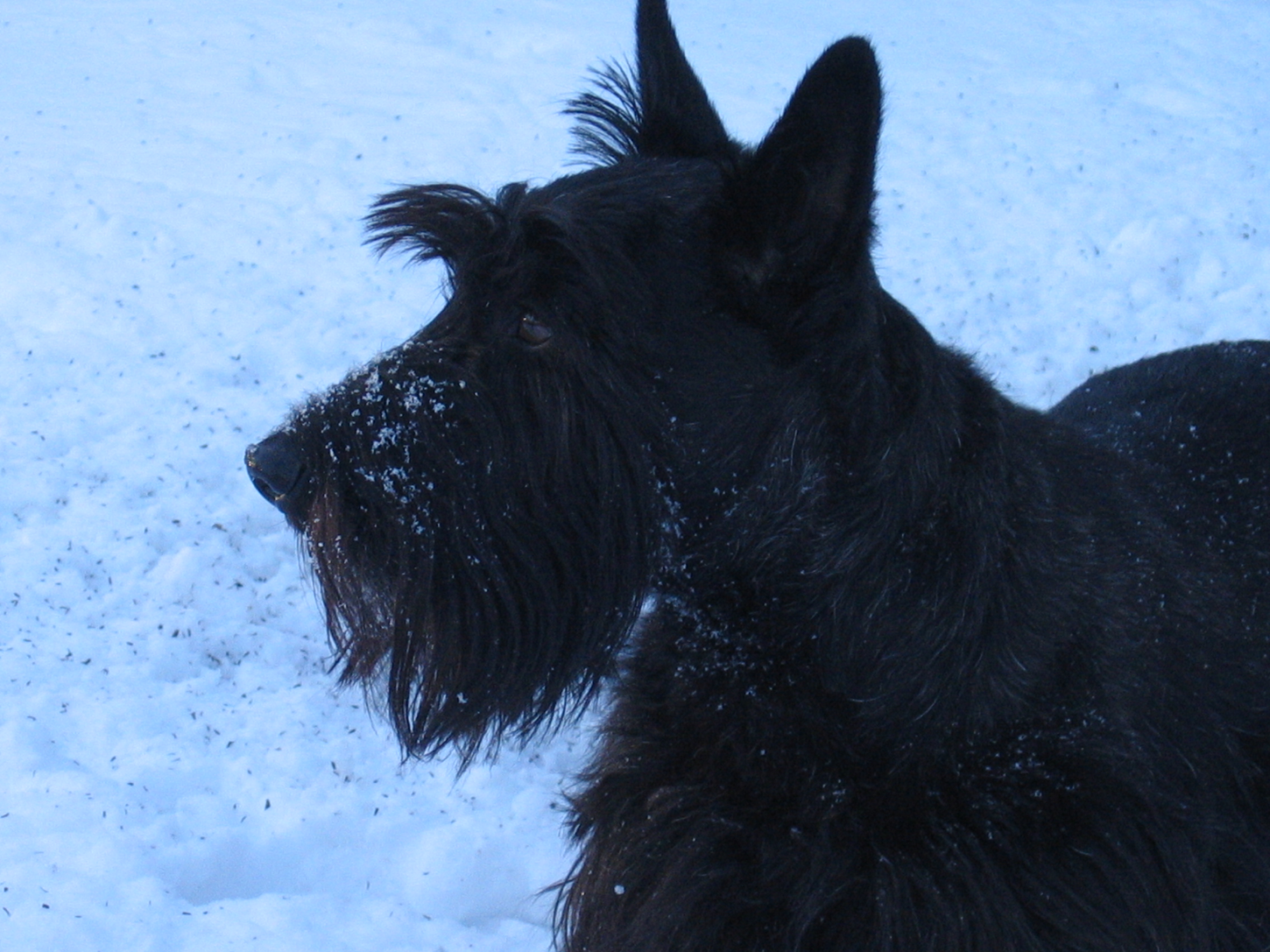
I found the red calico receptacle of my seventh-through-twelfth-grade thoughts on the bookshelves while I was back home in Indiana babysitting Mac the Wonder Scottie. I tucked it into my suitcase before I returned to Seattle, anxious to see what messages I had had for Future Beth. Because I had no such biblical warning and because I was a bookish girl who was overly concerned with grades and my future, I assumed that I would discover raw genius on the pages. I also suspected that early 1980s Beth had a clearer perspective on who her essential self was before she was shaped and twisted by the outside world. I settled in to read these nuggets of teen wisdom with anticipation.


Sadly, what I discovered was that aside from having truly atrocious handwriting, the only thing in my head was apparently boys. Pages and pages about my feelings for and the merits of this boy or that boy. Boys whose names no longer can bring an image to my mind. Boys I barely knew. Boys who likely didn’t know me at all. Sentence after sentence of heartfelt evaluation of the various boys in my school, in my youth group, boys I had known for all of 15 minutes when we were visiting family friends out of town. I had a vivid and completely imaginary romance with a mortician’s son from one of those trips. In one entry, I marveled that I had not gotten depressed when Mom and I went to the wedding of “S”—“S” was the son of a friend of my mothers who was about six years my senior and with whom I had never once had a single conversation. It is a mystery as to why it seemed likely his nuptials would have made me blue.


It was hard not to be retroactively disappointed in myself. Z suggested I should be kinder to the younger Beth because she was just behaving age appropriately, but it took me a good two days to get over the shock of realizing that I hadn’t been some writerly savant. I was no Anne Frank. No junior Virginia Woolf. No teenage girl Pepys. I sure wasn’t writing pages about my career dreams or my hopes (outside of boys) for the future, which disturbs me greatly because I know in 7th and 8th grade I was obsessed with getting a 4.0 GPA, I learned to play string bass because the orchestra had no bass player, I took piano lessons, played a flute, loved art, read, thought regularly about college, and wanted to know everything about the world and the people in it. But none of that is recorded. No one would ever know from the evidence before them in the red calico journal that I had a brain in my head or aspirations beyond convincing the boy I liked to like me back instead of hitting me on the arm so hard I’d have bruises.


(What was that about? Who was I then that I’d let a guy sock me in the arm and not flatten him. I blame his dreamy blue eyes but am thankful that after about three weeks of the daily arm slug, I determined that he “wasn’t really the guy for me.” Ya think?)


The whole time I was reading my journal, I kept texting my oldest friend, Leibovitz, to tell her what 1980something me was concerned about, what she’d been up to, who was annoying us in 7th grade.


“You just danced with J.T!” I’d text, to which she would reply, “Oh, don’t remind me.”


Possibly, my texts were annoying. Her oldest daughter was about to graduate from high school but I was so immersed into the early 1980s–wondering if I’d be more appealing to the boy of the week if I asked for a pair of Bass Weejuns for Christmas—that I couldn’t even fathom a Little Leibovitz existed at all, let alone talk coherently about her high school graduation. It was as if the last thirty odd years never happened (and it may explain why this weekend I bought a pair of Tom Mcan tasseled mocs for $12.99 on a K-mart clearance rack even though, my mother pointed out, I made fun of her for wearing the same in 1998). I did not need a DeLorean to go back to the future; I was wedged in it.


Plus, I admit, I did not like the way Little Leibovitz had recently made me feel ancient. While I’d been home, I took her out to dinner—something I did more regularly when she and her sister were little and I was still living in Indiana. She’s beautiful and seems supremely confident in ways I could not have mustered at her age (or now). Maybe she doesn’t feel like she has the world on a string, but it seems like she does. We chatted about school and her summer and college plans. After we were finished eating, I offered to take her out for dessert or to the mall or something. She shook her head and said no thanks, and then it hit me: Little Leibovitz had been humoring me. She didn’t need me to drive her around town: she has her own car, a rich collection of friends, a busy social life. My offering of taco chips and boring old-people questions about her future plans was not the draw it might have been a decade ago.


The thought of her in a cap and gown made me feel old and I wanted to keep on feeling like I’d just seen Urban Cowboy for the first time. (One advantage to not having children of your own is that you can more easily live with the delusion that you are ageless.)


A few days after reading my journals, I started reframing what I’d read there. Yes, I did talk obsessively about boys, but on a second thought, it was not random, mindless chatter. I was analyzing and evaluating them like I was a detective or a zoologist: what were the subject’s good qualities? Bad qualities? Did those qualities mesh with mine? What was the likelihood of our future contentment? I was picky and dis-inclined to flirt. As my detecting progressed, I moved more quickly reached the “not the guy for me” evaluation and moved on. I seemed to know exactly the sort of person I wanted in my life and I was willing to wait for him. Which is a good thing since it took Z a few plane rides and three decades to arrive on the scene.


If I had the superpower of time travel, I’d put a Post-It in that diary for 12-year-old Beth to read that said something like, “Honey, calm down. It’s going to be a few years before you find the right one. Why not jot down some current events while you wait?”


I'm certain my dog-eared copy of _The Preppy Handbook_ did not allow for shoes from K-mart.

I’m certain my dog-eared copy of _The Preppy Handbook_ did not allow for shoes from K-mart.


Flashback Friday: Lowered Expectations

Standard
Mac, soon to be usurped by Z.

Mac, soon to be usurped by Z.

Thursday, February 08, 2007

[I’m now wearing a whole different style of jeans with a whole host of other fashion problems, but please remember this was eight years ago and don’t judge me too harshly.]

Last week, a precocious kindergartner at the school where my mother works began a conversation with her teacher in that way you do when you assume the person to whom you are speaking has had exactly the same experience as you. The conversation starter was this: “You know when you poop your pants on purpose and your grandma gets mad….”

This delights me (mostly because I am not the grandmother, I suspect). I love the lack of self-awareness, the belief that of course EVERYONE has done just this thing and understands the negative repercussions.

And so I begin this blog….

You know when you buy a pair of low-rise jeans, even though you know you shouldn’t….”

It is typical of me to finally buy into a fashion trend when it is on its way out, and while I know my body is not suited to it from various aesthetically displeasing experiences in dressing rooms across America, I found a cheap pair of jeans I liked and they just happened to be low-rise, and now I have become one of the those Midwestern-shaped women who spends her day hiking up her pants. . . . while shopping, while teaching, while talking to the Vice Chancellor of Information Technology. I don’t know what I was thinking. I am a child of the 80s and as such jeans belong somewhere right at or slightly above the navel. I am not a mother, but I am most comfortable in Mom Jeans.

And we won’t even speak of the ill-advised underwear I bought to accompany the jeans. No we won’t.

Z is in the air, winging his way toward me for a long Valentine’s weekend, though come Sunday it will seem like the shortest weekend in history. He has already been delayed by a couple of hours, and I’m annoyed that an airline snafu is cutting into my time with him. I’m half-tempted to call Northwest and say, “Work with me people!!!”

As luck would have it, I’m at the Dog House for the rest of the month, babysitting, while my Scottie’s parents are off on a cruise of South America. My fantasies of putting the house to good romantic use have already been dashed. The nice thick white carpet in front of the fireplace that would be good for a picnic–or let’s be honest, making out–has been ripped up and replaced with very trendy hardwood and no area rugs. The hot tub is broken. It’s 3 degrees out, so the sweet walks on our old, friendship-only stomping ground cannot be re-dedicated to this new incarnation of us unless we bundle ourselves up like the little brother in A Christmas Story. I’m beginning to suspect the Scottie Dog is not going to approve of the two of us in a romantic relationship, and I’ve already begun envisioning all the ways he will try to break us up, kind of like Hayley Mills and Hayley Mills did to Brian Keith and their potential new step-mother in The Parent Trap. He’s a good dog, but he is an only child. [In fact, Z gave Mac a very sweet talk about how love was expansive and Z was not replacing Mac in my heart. Mac had none of it and promptly hopped in bed, wedging his way between the two of us with his back side pointed in Z’s general direction.–RGS, 2015]

Also, you know when you order a box of chocolates from England for your sweetheart that depict various acts from The Kama Sutra and then you start to second guess yourself and wonder if what initially seemed funny and mildly naughty is really just in poor taste, reeks of desperation and might make the object of your affection go off you completely? Yeah, well. . . .

That’s it. I am officially lowering my expectations for the weekend.

But I am NOT wearing the low-rise jeans.

Flashback Friday: Ring Out the Old

Standard

Nashvilleclock

(In this flashback, I’m making my first trip back to see Z since we’ve become a couple. It’s New Year’s Eve and I’m desperate to get to him before the clock strikes twelve.)


I’ve already failed the first test of a long distance relationship. I had a little, almost tearful, freak-out. United had a bit of a problem, so I was late landing in Chicago and missed my connecting flight to Seattle. As did, apparently, everyone else in a 500 mile radius. I had been assured that United really takes good care of their people and that they’d have it all sorted for me and have me on the next flight by the time we landed at O’Hare.

Hardy har har.

Once in O’Hare, I stood in line for a half hour and then gave up because it was clear that if I continued to wait, all flights to Seattle would have departed. Then I waited on the customer service line for 40 minutes, and the situation got more and more desperate. Finally, the customer service representative told me that she could get me out in TWO DAYS. She said this cheerfully, as if this is all just part of their friendly service. As if I would like the whole Tom Hanks “The Terminal” experience for myself. Because it was weather related (rumor has it that it wasn’t technically weather but that United had run out of de-icer), there would be no compensation, no nice hotel. Just me, wandering around O’Hare for two days, buying travel pillows at Brookstone and covering myself with McDonald’s sacks.

So I did what any normal girl does. I called my boyfriend and almost, but not quite, cried. You would have thought I’d just missed the last helicopter out of Saigon in 1975. It was as if this meant I would NEVER see him again. The end.

He is a world traveler and thus was not as disturbed and had a variety of suggestions, all of which meant me standing in long lines, talking on a crappy cell connection to strangers, and, as he put it, “being firm.” What I could see that he could not was that this was hopeless. There were 60 people ahead of me for a flight out the next day.

“You must be firm,” he said. “That’s the only way to get anything done.”

This is one of our bigger differences, Z and me. In the world of Fight and Flight, he is the Fighter and I am the Flighter. (Only today my wings were clipped by de-icer.) What I wanted to do was quick book another ticket on Alaska Air for a thousand bucks and run away to him. Do I have a thousand bucks? Uh, no. But I do have plastic and this seemed like an emergency. I told him I had to go because I feared the crying and I’d like to save tears for something really important.

I wandered around, stood in line, felt hopeless, called my cousin in South Bend to see if perhaps I could spend two days with her. (She wasn’t home.) And then Z called. He’d found a flight out of Midway if I wanted to book it. “It’s pricey,” he said. How much? Half the cost of what I secretly paid to get to him on New Year’s Eve so we could start the year right. I told him I was being punished for greed and he laughed when he found out how much I paid because of my own impatience, and that made it all okay. Z’s laugh should be made a ringtone.

I had time to kill in the Loop so I made my way downtown on the El with all the TSA workers whose shift had ended, so I felt very safe and very much like I was just one of them. Someone asked for directions, and I was pleased that I could (sort of) answer them. Chicago always comes back to me like, well, what? Riding a bicycle?

It’s still Christmassy and Chicago is a great city for Christmas. I went to the former Marshall Field and was disturbed by how Macy’s has made it, somehow, more tacky, less grand, and just like every other store at the holiday. The Christmas windows were still good with animatronic Mary Poppinses, but the inside decorations could have been JC Penny. Carson, Pirie, Scott, the other former staple of downtown Chicago shopping,it turns out is going out of business. In the past, their window displays have rivaled (and frequently surpassed) Marshall Field’s, but this year the displays were just of things you could get inside for 40% off. I decided to run over to the Midwestern-Sized Woman Store on Wabash to buy something to sleep in in case my suitcase doesn’t catch up with me tonight. (It supposedly caught the next flight to Seattle—the one I wasn’t allowed to catch!) Only there is just a shell of a building where it used to be, and next to it at the Champlaign Building where I spent many hours lurking in the lounges of the School of the Art Institute of Chicago, is also a shell. The sign proclaimed that a new skyscraper will be built there that will change the skyline.

I can hardly wait. Don’t people know the world as I knew and loved it is meant to be laminated?

So I bought some haircare products (Meredith Grey hair has begun in anticipation of Seattle, it would seem), gave money to some homeless people because they were full of New Year spirit, and I marveled at how I must have lost a lot of weight in the last two months with all of my difficult gym work because my pants were really bagging in the seat. Some more people asked for directions. I cruised around my favorite streets. Then I hopped the Orange Line to Midway, checked in, bought an oversized Chicago T-shirt just in case my suitcase never shows up, and then went thru security. The TSA officers suggested I should have a happy new year, but also, perhaps I should zip my fly. My pants felt huge because they were unzipped and my giant turquoise underwear was greeting tourist and native a like.

Now I am at the gate, waiting for the plane to get here to whisk me off (please God) and as I look around at my fellow travelers I wonder how many of them saw my underwear earlier.

To recap, 2006 has ended with flight woes, flat hair, and underpants flashing. Here’s hoping for a brighter, “fuller bodied,” well-zipped new year.

A Tale of Two (or more) Christmases

Standard

IMG_2224

It’s that time of year when I drag out all the Christmas videos that put me in a happy, Christmas space, and force Z to watch them. I don’t always watch all of them—Little Women often gets a miss because I end up in tears when Beth dies—but, like clockwork, there will be a viewing of Christmas in Connecticut, A Child’s Christmas in Wales, A Holiday Affair, While You Were Sleeping, A Christmas Story, and eventually, my favorite, Moonstruck, which, honestly, I sometimes forget is set at Christmas because it’s also one of my favorite non-holiday movies. The script is great, the writing is tight, the scenery is wonderful, and the acting really was worthy of those Oscars back in 1988. The main thing all of these movies have in common though is the promise of a two-hour block of time when Christmas is exactly how you imagine it should be.


As you may be aware, I do my fair share of complaining about city life, but this is the time of year that while I miss home—the city…any city really—comes alive for me.

I first discovered this love for city-life-at-the-holidays in Chicago in the mid 1990s when I’d stand for an hour studying the window displays at Marshall Field’s and Carson Pirie Scott. The displays at Field’s were themed and you’d wait anxiously to see what would be revealed each year: Cinderella, Pinocchio, Wizard of Oz? I could easily get teary-eyed talking about Macy’s take-over of the main Marshall Field’s on State Street and subsequent refusal to retain the historical name and traditions and the bland, seen-it-before holiday decorations that are the new normal, or the Target logo that now hovers over the beautiful ironwork on the Carson Pirie Scott building. So don’t mention those stores to me please. Seriously. Can we just pretend it’s still 1997 and all is as it should be on State Street?


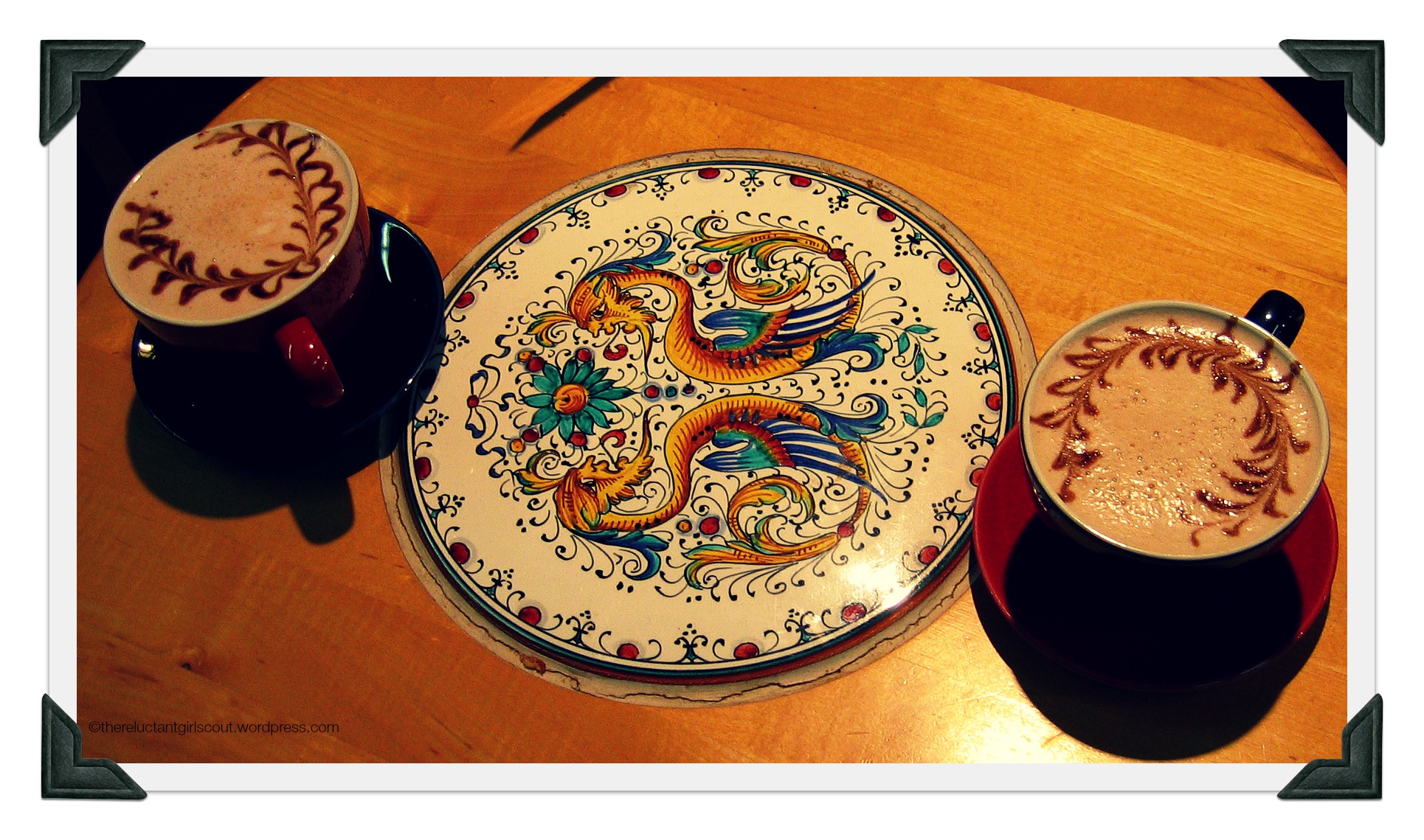
When I was in Chicago, I somehow didn’t mind the cold. I’d stand outside, purposeless, watching the ice skaters, guessing what might be in the bags and stacks of boxes people were carrying around on the Magnificent Mile as horns honked in what seemed like a less aggressive, more festive way than at other times of the year. I’d make time to go to one of the free weekly concerts at Fourth Presbyterian, staring up at the decorated sanctuary that was meant to look like the hull of a Viking ship, and listen with pleasure to carols and concertos. Then I’d get cocoa on the second floor of the now defunct Borders bookstore and stare down at the historic Water Tower and watch the carriages there, carting tourists around with horses sporting Santa hats. I was meant to be in the city for a man, but he was often at work or disinclined to venture out of his Bat Cave, so my time there was solitary and oddly delightful. I didn’t need to be doing the carriage riding or the ice skating; I was content to observe it, to walk amongst the revelers, to soak it in. There was nothing about Christmas in that snowy, blustery city that I didn’t love; even the labored breathing from the icy temperatures and difficulty walking on the snow-packed side streets seemed magical.


Rockefeller Center, 2010

Rockefeller Center, 2010


Chicago set the bar high. Four years ago, Z and I had a blizzard-induced flight delay when we were headed to Zimbabwe, and thus we ended up spending a few nights in New York City. For the first time ever, I finally got to see—in the flesh and electric lights—those famous windows at Macy’s, the tree at Rockefeller Center, wreaths on St. Patrick’s Cathedral. It made our interrupted—and thus shortened—trip to Africa almost worth it. Christmas in New York certainly rivals that of Chicago, but for me, it doesn’t quite win. Maybe a tie. I’ve seen Dublin, Galway, Rome, New Orleans, Harare, Seattle and the closer, Midwestern cities of my youth decorated for the holidays, but Chicago will always be the city that lives inside the flurry-filled snow globe in my brain. I try not to hold that against Seattle, which even managed to produce a few tiny patches of snow this year and get cold enough to keep little driftlets at the bases of about three trees.


But it’s no Chicago.


December hasn’t impressed me much this year. It’s my favorite month usually, but it seems like the whole world is coming unhinged. Normally, it’s the time of year when you can safely insulate yourself from the ugliness out there so long as you toss some money in the Salvation Army pot outside the door at the grocery and feel grateful for your own bounty. But it’s harder this year. People are mad and unhappy and in pain. There have been nightly protests in downtown Seattle to remind us of this. On the one hand, I want to be annoyed that the protestors made a bunch of kids at a choral concert at the tree-lighting ceremony cry at the beginning of the month, but on the other hand, I am sympathetic to the frustration of a faulty system. I am in awe of people who are inclined to let their voices be heard en masse. When I get outraged about something, I send an email and write in my journal or whine to Z, so this level of commitment and the possibility of being on the receiving end of violence—or at least pepper spray and handcuffs—is something to behold. Certainly, it’s making for a different sort of holiday season.


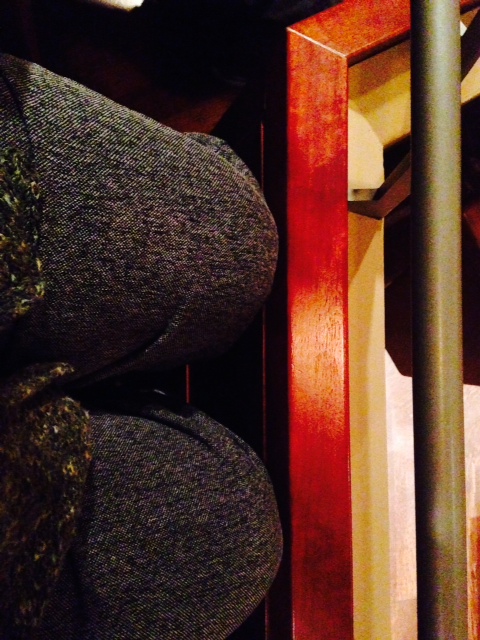
At the beginning of the month, Z and I made our first trip to Benaroya Hall, home of the Seattle Symphony, to hear the Pacific Lutheran University choir and orchestra perform a Christmas concert. We were excited to finally get into the building that for the last eight years has only served as backdrop while we wait for the #12 bus to pick up our tired backsides and cart us up the hill. I admit that I even had some Moonstruck fantasies that I was Cher and Rick was the (pre-crazy) Nicolas Cage, decked out in our finery, going to see La Bohème at the New York Metropolitan Opera, never mind Z’s lack of tux and my clomping around in Danskos and slacks instead of high heels and red velvet dress. We had box seats which we’d been assured were “awesome” by Hudge, and we were imagining something similar to the seats Princess Di used to sit in, looking down on everyone with a clear view of the stage. The view was good, though not Royal-Family private, but my seat was not befitting a princess or any other human. Possibly a potted plant would have found reasonable purchase there. For the duration of the concert my knees were pressed against the banister, my feet had to be tucked far beneath my chair, and during the portions where the audience had to stand up to sing carols, Z had to help me over to one side so I could stand without toppling over, which made me feel even less like Cher (or Princess Diana) and more like someone’s clumsy, ancient, slightly drunk aunt.
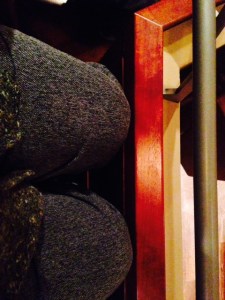
No Leg Room for a Princess

No Leg Room for a Princess

Still, the music drifted up to the rafters and the choir members sang their way out of the auditorium while holding electric candles, and we were both feeling extra Christmassy as we walked home. The flashing lights of cop cars monitoring another night’s protest were at the periphery, blending in with the other twinkling lights of the city. Everything appeared peaceable even if discontent.


The following night we went downtown with Hudge and friends of hers to experience the Figgy Pudding Caroling Competition, a yearly event in Seattle, wherein a variety of groups sing for donations that support a food bank and a senior center, and at the end of the evening the loot in the pots is counted and the “winner” determined. Though it is just a few blocks from our apartment, the streets were packed with, according to some accounts, 10,000 or more people. It was fun, in that it was nice to see so many denizens of Seattle happily bumping against each other in Santa hats, happily dropping money into buckets for a worthy cause. But it was overwhelming to my highly sensitive self. All those people! All those sounds clashing somewhere just above my ears so nothing sounded particularly melodious but more like an aural war being waged, or at least a border skirmish. The police were in full force for crowd control and also because there were rumored to be more protests (later, we learned the protestors and organizers worked out a deal since the event was for a charitable cause, so the protest happened later), but it was jarring to see so many cops at such a happy occasion. And then other little wars started happening inside of me, wherein I wanted to tell them to be safe and that I respected how hard their jobs must be while at the same time I wanted to give little smacks to the ones I thought looked most likely to be trigger-happy racial profilers. (Granted, I had no real data to determine who were the good cops and who were the potentially bad cops, but still, my brain raged to various choruses of “Angels We Have Heard on High” and I came to no solution other than to smile at anyone who made eye contact with me.)


Figgy Pudding crowd, 2014

Figgy Pudding crowd, 2014

The following day, Z and I had rented a car and found ourselves with some leftover Christmas spirit that we were uncertain how to expend. We tried eating pie, but that wasn’t enough to sate us, so at the last minute, we drove onto a ferry destined for the Kitsap Peninsula for an ill-planned visit to Poulsbo’s tree-lighting ceremony. It was so ill-planned we weren’t sure we would even make it as it was meant to happen as soon as the sun went down, and the sun was sinking rapidly as we dozed in our car, bobbing across across Puget Sound. (Ferry sleep is the best sleep you will ever have, fyi).


You may remember my earlier description of Poulsbo, the little Viking-inspired village that was founded by Scandinavians who arrived in the late 19th century for the fishing. It sits right on the Sound and has a quaint downtown with Viking murals and Scandinavian building facades and signs that are in Norse (or an English version of Norse). Z and I arrived just in time, and as we were racing down the hill to the city park by the waterfront, we saw a group of people in a wooded lot, standing around a fire in Viking headdress and furs, making plans for the ceremony. Though we knew during the day they were probably computer programmers or carpenters, it was easy enough to pretend we’d happened upon an encampment of soon-to-be marauding Vikings.


We left them where they were and continued down the hill and got to the city park, just in time to see Miss Poulsbo light the village tree. We were imagining some massive fir tree, because the trees grow big and plentiful in western Washington, but no, the tree in question was only about a foot taller than Miss Poulsbo herself, who Z briefly mistook for a snowman because she was wrapped so tightly in a white cape. We’d been imagining something much grander and briefly considered we’d made an error in choosing our evening’s destination. But there was a huge stack of wood in front of us that was intriguing and talk of Vikings escorting Saint Lucia in to light it, so we stood around with the townsfolk waiting. Compared to the night before in downtown Seattle, this group was much smaller, maybe 200 or so people, and many seemed to know each other. Some little boys dressed in skins raced around the wood and a young bulldog made friends with everyone who walked past. We’d recently binged on all seven seasons of “Gilmore Girls” on Netflix, and frankly, Poulsbo felt very Stars Hollow-esque. (Even the emcee was reminding us a little of the insufferable Taylor Doose.)


Z and I stood by the waterfront looking at the lighted houses across the Sound. And then, off in the distance, we saw flames coming towards us as the Vikings approached on the river walk, brandishing torches. (A kid behind us thought they were bringing us all giant, roasted marshmallows to help celebrate.)

Saint Lucia? Is that you?

Saint Lucia? Is that you?


The anticipation grew as they got closer and people made way for them to get to the wood that would become a proper big bonfire. As they arrived, in their midst were a variety of girls and young women, and we’d be hard pressed to tell you which one was St. Lucia, but my money is on the one with candles on her head because she looked the most regal. (The crowd surged towards the wood and we couldn’t see if Candle Head did the actual bonfire lighting, so I’m still none the wiser.)

 

Vikings lighting the jule fire, Poulsbo, WA

Vikings lighting the jule fire, Poulsbo, WA

Before the torches came down in unison to light the bonfire, one of the Vikings spoke about the meaning of the celebration, the importance of light reaching out in the darkness at a time of the year when the darkness is so vast. Even though it was a fun, silly sort of activity akin to going to a Renaissance Festival, I felt tears threaten because it seemed like the most apt of metaphors this dark, dark year when the world seems to be extra violent and angry and brokenhearted. Maybe this is why it is my favorite time of year despite the crowds and the way my eye starts twitching because I let myself get stressed about buying subpar presents or the guilt I feel that while I’m having a perfectly lovely Christmas, a score of people are depressed or hungry or victimized or not able to be with their families. Z, for instance, will be with me this year instead of in Zimbabwe with his family, and while I’m thrilled that we are together and thrilled that I’m destined for an Indiana Christmas, there is still a certain sadness that we are not with his people too.


But as the bonfire got higher and higher, illuminating the darkness around us (and some of the ash threatening to set those of us in nylon jackets ablaze), I was able to push those trickier aspects of the holiday season out of my mind and focus instead on the light, on the freshness of the impending new year and the possibility of the world getting brighter and kinder.


It was the best kind of holiday night. Maybe even better than a mid-December on Chicago’s wintry streets.


Viking winter bonfire, Poulsbo, WA

Viking winter bonfire, Poulsbo, WA


Reading Between the Lines

Standard

cocoa

Today, my only job in the whole world is to make edits to an essay I wrote on Joan Didion’s “Goodbye to All That” so I can resubmit it to a nice editor at a new journal on the study of creative nonfiction.


My. Only. Job.


I do not have to do dishes. Laundry can wait. I have no tiny noses or bottoms to wipe, and Z will not be expecting a four-course meal when he gets home from work (mainly because he knows I can’t cook). My editing projects are either done or not ready to be started.


No one is expecting me to finish a TPS report at the office. There is no office.


More specifically, this job is not even a complete overhaul of an essay. The editor said after the first five pages that my essay “roars.” I don’t exactly know what that means except “to roar” sounds like the opposite of “to suck” so apparently most of the essay is on the right track, which means 13 pages of it are okay. Maybe even good. But those first five pages? Meh. I’m not bitter about this criticism. I’m a big fan of revision. But I’m clueless as to how to fix these pages, never mind on any given day I write five page emails to Jane before my eyes are fully open. (Tuesday two weeks ago was extra easy because we had a lot to say about Reneé Zellweger’s surprising new face).


Also, I’m sitting in the café at the Elliott Bay Book Co., a place I normally delight in. Everywhere I look there is someone on a laptop that looks like mine, though with cool ironic stickers that I’m too chicken to put on my own MacBook, and none of these people appear to be blocked. In fact, right this minute, I’m just paranoid enough to believe that every one of them to a person is also writing about Joan Didion and doing it far better than I ever could.


I’m realizing now that writing in a bookstore is not good for my psyche. I can see all those books on the shelves, with all their perfectly published words, taunting me. What’s your problem? they seem to be saying. Just get it done.


But I can see this writing day for what it is: over. Instead, I’ll tell you about other words on a page that came somewhat easier and had recent fruition.


Back when I was just giving up on my quest to earn all the Girl Scout badges ever, I started reading teen magazines. My favorite was ‘Teen, which had very informative columns that offered advice on love and friendship and sex. I also read Seventeen, though I found its fashion advice dubious because it was too avant-garde for Richmond, Indiana. (Sweatshirts paired with skirts weren’t happening yet, and I could never believe that red and pink should be worn together—colors should be complements and shouldn’t be reminiscent of Valentine’s Day.) In one of these magazines, you could send in your name and address and be paired up with a pen pal.


It wouldn’t be my first pen pal. Mom had carefully arranged for me to have a Swedish one because she had had a Swedish pen pal when she was my age and she felt they were superior (and there was a lovely array of Swedish candies and doo-dads that got sent my way on the holidays from Cecelia—so, good choice there Mom)! Through a Trixie Belden fan club, I’d acquired a fun-loving girl from Colorado whose dachshund Barney I was jealous of (I lived in a “no pets” apartment with a “no pets but fish” mother). Through school, I acquired a West Indian, and two Canadians, one of whom seemed to delight in copying out sexy passages from trashy novels I wasn’t yet cleared to read and another who sent me a photo of herself with a goat. The most exotic was Glenda from Zambia, who came via the TV show, Big Blue Marble. I loved getting her thin, light blue airmail envelopes and reading about a world so different from mine that it could hardly be imagined. With Glenda, I was concerned that she was in danger of being murdered by Idi Amin because I didn’t fully understand the vastness of Africa (or even that Africa wasn’t a single country). After a few months or a few years, all of these pen pals and I developed differing interests and the letters got fewer and further between until they disappeared completely. I tried reconnecting with Cecilia a decade ago and managed to find her, but she admitted her English was not what it used to be and since I had not learned Swedish, there was nowhere to go with the old friendship except fond memories of her colorfully decorated envelopes and the Carl Larson inspired life I had imagined her living.


But my teen magazine pen pal, C., from a province in Canada that was roughly above my head (how I thought about geography in 1980, sadly no joke), was something different. We were a good pairing: both introverted, goodish girls, book-inclined, and studious. We wrote each other dutifully about the classes we were taking, the books we’d read, the music we were listening to, and for some reason a tradition that has stuck ‘lo these many decades, a list of Christmas presents received. Our letters might have become less frequent as we got older, but we both made an effort to write at least at Christmas to check-in. In retrospect, I think it was my first experience with what would later become a weird sort of computer-age norm: talking to a total stranger about your life and developing this odd sense of knowing them even though you’d never really met them.


Five years ago when Z and I were compiling our wedding guest list, I have no idea what made me ballsy enough to send an invitation to someone I’d never actually met. Who does that? But it seemed weird not to send C. an invitation when technically, she’d been my (pen) friend longer than any of my real life friends who would be there. I never imagined that she and her husband would brave the winter roads to come to our December wedding, but they did. I’d like to say that as soon as we saw each other it was like we were reunited long-lost friends, but the truth is, there were a lot of people at the wedding, my tiara was cutting off my circulation, and I’d had too much to drink to be a proper good hostess. I did, however, feel honored that they’d come, and because I am the sort of person who is often in awe of other people, during a few of my more “aware” wedding moments, I was envious of her sophisticated dress and the ease with which she and her husband glided around the ballroom. (Z and I had exactly one dance move that we put on repeat for the duration of our first dance.)


Last week, C. and her husband incorporated a visit with us into their travel plans to the Pacific Northwest. She texted me updates as they—more adventurous than we have ever been—hiked Mt. Rainier and through the Olympic National Park and ate meals that my bland, 4-year-old-inspired palate would not even consider. We met them for dinner in Belltown on the first night, and I admit while I was excited at the prospect of actually getting to spend time with the real person, I was also wishing there were some sort of pill I could take that would give me an evening’s worth of extroversion and gregariousness. C. and I are clever introverted women, however, who married men with communication skills, so they got things rolling for us, and soon it did not feel at all like strangers meeting for dinner. This night turned into two more meals together during their time in Seattle and some good conversation.


The thing that most struck me after we’d said goodbye on the last day of their visit was that I was saying goodbye not to a new acquaintance but to an old friend. C. was exactly how I’d imagined her for all these years, not because I’m wickedly intuitive but because she’d represented herself so well in the letters she’d written over three and a half decades. I knew what she looked like from photos and our brief interactions during our wedding weekend, but I wasn’t at all surprised by those things you shouldn’t be able to tell about someone you’ve only ever corresponded with: how she carried herself, how she spoke, her quiet but quick wit, the way she and her husband interacted. I felt what can only be described as deep affection for the pair of them–these “strangers”–as they walked down our steep hill towards the lightrail that would carry them  to the airport and then back home to Canada.


If you ask me, telling yourself true is the best writing any of us can do.


Happy Birthday, Baby

Standard
Yours truly, age one.

Yours truly, age one.


Last May when I was in a pet store with my half-brother and his family, my three-year-old niece Bridget and I were perusing a rack of pet-themed cards when she decided she wanted to find her daddy. I was so engrossed in the photos of pug dogs in lipstick and feather boas that I said, “Okay. He’s over by the fish” without once thinking maybe a three-year-old should have an adult escort. A few minutes later my brother came up to me and said, “Um, have you seen my daughter?” Panic. We found her a few seconds later midway to the fish with her face pressed against an aquarium full of gerbils, but I momentarily felt like the world’s worst aunt. So maybe it’s not surprising that I’ve been having such a good time in Indiana that I not only forgot to write a real post, but I also forgot that my baby, The Reluctant Girl Scout, turned one-year-old on the 18th. She’s twelve months old and walking and talking and I totally forgot to commemorate the moment with a snapshot. Oops.


I like to think if I had an actual human child I wouldn’t be so forgetful—failing to celebrate its birthday, leaving it in its carrier on the trunk of the car as I drive off down the road towards some exciting destination—but one has to wonder.


It’s hard for me to believe that it’s been a year since the Xanax Safari to Zimbabwe inspired me to start this thing. My optimistic self thought I’d post every day and so at the end of the year I’d be sitting on a heap of posts and the whole world would be reading me; my pessimistic self thought the likelihood that I’d forget to post at all once the trip to Africa was over was high. So the reality here that I’m still writing but somewhat less frequently than I meant to is both cause for celebration and regret. Though in my defense, there are a lot of non blog-worthy days when I’m just sitting around the house wondering if there’s a better way to organize the plastic bags under the sink.


The three weeks in Indiana have been excellent. The first two weeks we were staying with my beloved Scottie Fairy God Dog, Mac, at his beautiful house while his parents were in Norway. I’ve been staying at this house with Mac and his Scottish predecessors since I was 18, which is to say, a whole lot of years. I love the house, an L-shaped ranch that is situated on the wooded property in such a way that it feels very, very private and remote even though it is in the middle of town and there’s a Famous Recipe Fried Chicken less than a quarter mile away.

RGSpond

When you’ve stayed in someone else’s house for such a big part of your life, it is strange how it gets woven into your fabric as if it were your own. I’m not really talking about ownership of the property or the things inside but the place itself.


It’s the perfect house for entertaining, and with Mac’s parents’ blessing, I’ve done some entertaining there. My extended family has been there enough in both sunshine and in shadow that they think of it as my house (and Mac as my dog) and periodically we have discussions about whether, should the owners ever sell, we should pool all of our money together and buy it so we’ll continue to have such a peaceful, lovely place to gather.


Over the course of a few decades, it’s remarkable how many life events have unfolded there: affairs of the heart begun and ended, friendships begun and ended, baby showers and wakes, family reunions, phone calls both joyous and devastating, holidays, a trip to the ER after a fall through a screen door in the midst of what seemed like a promising date. (Oh, fortuitous, fortuitous accident.)


Lately, whenever I stay there, I’m afraid it will be my last time. Mac is no spring chicken. His parents threaten to move west permanently. I live on the other side of the country now, so my schedule and their vacation schedule aren’t always in sync.


Mac on his evening constitutional.

Mac on his evening constitutional.


When you are living your life at 18, you think it will always be exactly as it is and you rail against it. You fail to enjoy fully the bounty (of someone else’s gorgeous house, of friends and family, of little dogs and gray cats) in front of you because you yearn for your own adventures, your own houses, in places far away. And then you wake up in the middle of your life and realize that nothing is static and maybe you should appreciate that view more, rub the Scottie dog’s ears a few more times, take a picture of the crane about to lunch on a fish in the pond, be grateful for each visit with friends, each dinner with family, any chance you get to be in a place you love. The birthdays that come unbidden.


RGScrane


Flashback Friday: Uniformity

Standard

[Fear not. This is an old post. I do not have Mystery Dizziness. All I have is a pair of tired feet from a day at the 2014 Irish Fair of Minnesota. Hopefully, there will soon be a post about Paul Bunyan and Babe the Blue Ox. Until then, I give you a trip down hypochondria lane.]

Saturday, August 19, 2006

Sometimes when you’ve been dizzy for a week and when you get so dizzy you think you might pass out and when you mention it to a wise friend who had a similar experience and discovered when she went to the hospital that she needed potassium STAT, well, sometimes you end up in the E.R. at midnight.

If you can help it, avoid this.

I miss the days of nurses in starched white uniforms with hats balanced on their heads. I only just barely remember it from my childhood, but there’s something about the current nurse style of smocks with puppy dogs on them and big white athletic shoes that always makes me think perhaps they should be grooming dogs instead of taking my blood pressure. I don’t trust their authority or their expertise. It’s judgmental of me. I’ve taught many fine nursing students who no doubt have a variety of scrubs covered in woodland creatures and cartoon characters, and I’d trust them to take care of me. But still, there was something comforting about those days when people dressed in the uniform of their profession. The reason UPS men look kind of hot now is because uniform wearing is really down to them and the “crew” at McDonald’s.

Also, on the list of things you shouldn’t have to see in a hospital ER: a doctor who appears to be a 12 year old paper boy and who wears, as God as my witness, a shark tooth surrounded by shell beads on a leather cord. I  felt as if I’d fallen out of the Midwestern ER waiting room full of Hoosiers with reflux and injuries from farm implements and into an examining room in the O.C. If this hospital wasn’t situated at one of the furthest points inland you can be from either coast, I would assume he was going to go surfing as soon as his shift ended.

I’m not ready to be a woman who talks about how young the doctors and cops look. I don’t want to have a prejudice against youth. And yet. And yet. I want a doctor, male or female, with understated jewelry who isn’t wearing cabana wear.

Things you should know about your ER visit:

1) Do not tell the doctor what you think your problem might be. Doctors do not like this. Doctors will order the test you think you need but will tell you they are certain you don’t need it and when the results come back negative, they gloat. In this respect, I think doctors also long for a simpler time before their patients had access to WebMD.

2) When the technician comes in to administer an EKG and he is reading the manual, it won’t be done right. He will be pleasant (and mildly cute, so you won’t mind exposing your chest to him so much), but eventually, a woman in a puppy dog smock is going to come in with the same piece of equipment and do the whole thing over again, only more quickly and with more authority. In all likelihood, your results will be normal.

3) Do not assume that you will leave with any sort of sense of what is wrong with you. If you are not having a heart attack or stroke, you will not be admitted. If you are not a baby with pink eye, you will not be given drugs.

4) Do be prepared for looks from the doctor and nurses that indicate you DO NOT BELONG in the ER and that you are WASTING THEIR TIME.

I have since seen my “regular hours” doctor and he doesn’t know what’s wrong with me either. He said he prefer to think it’s an inner ear thing and that my body is overreacting to the dizziness. He has a look in his eye that indicates what he really thinks is that I’m having anxiety attacks.  Any maybe I am. Because, honestly, I’m pretty anxious about becoming 40 in five months and having health care professionals treat me as if I am an over-reacting, hypochondriac middle-aged woman. It’s a downward slide from here.

Youth is wasted on the young. Middle-aged people are wise enough to know that shark teeth make for bad jewelry.

Flashback Friday: Little Brownstone on the Prairie

Standard

rgsroom

[Oh, the irony of this post from eight years ago, particularly when bumped against the one from earlier this week.]

 15 July 2006

Last night I was feeling “troubled” about my silly life as I went to sleep, which is a fairly frequent occurrence. Usually the troubledness has to do with my age, my living situation, my marriage/partner/dating and motherhood status. Other things get factored in based on the latest magazine article I’ve read or Dateline exclusive I’ve watched. Last night, after messing with a picture shelf my mother and I were hanging above my desk and trying to figure out which of my 20 works of art I was going to hang on the little hunk of wall that is left in my room, I was feeling particularly freaky. I have friends who are bitter because their houses aren’t brand new and don’t have granite countertops or swimming pools or room for a home office, but all of them have managed to get more than four walls to hang things on.


This isn’t about some people being luckier or having more than me. I know if I wanted to make it a priority I could maybe get myself eight walls, so I’m not talking about jealousy here. If I wanted to give up the frequent flying and the handmade furniture and the Sundance catalog jewelry, I could buy a little house and hopefully have enough money left over to pay a boy (preferably a shirtless one) to come and do things for me like hang picture shelves. I could.

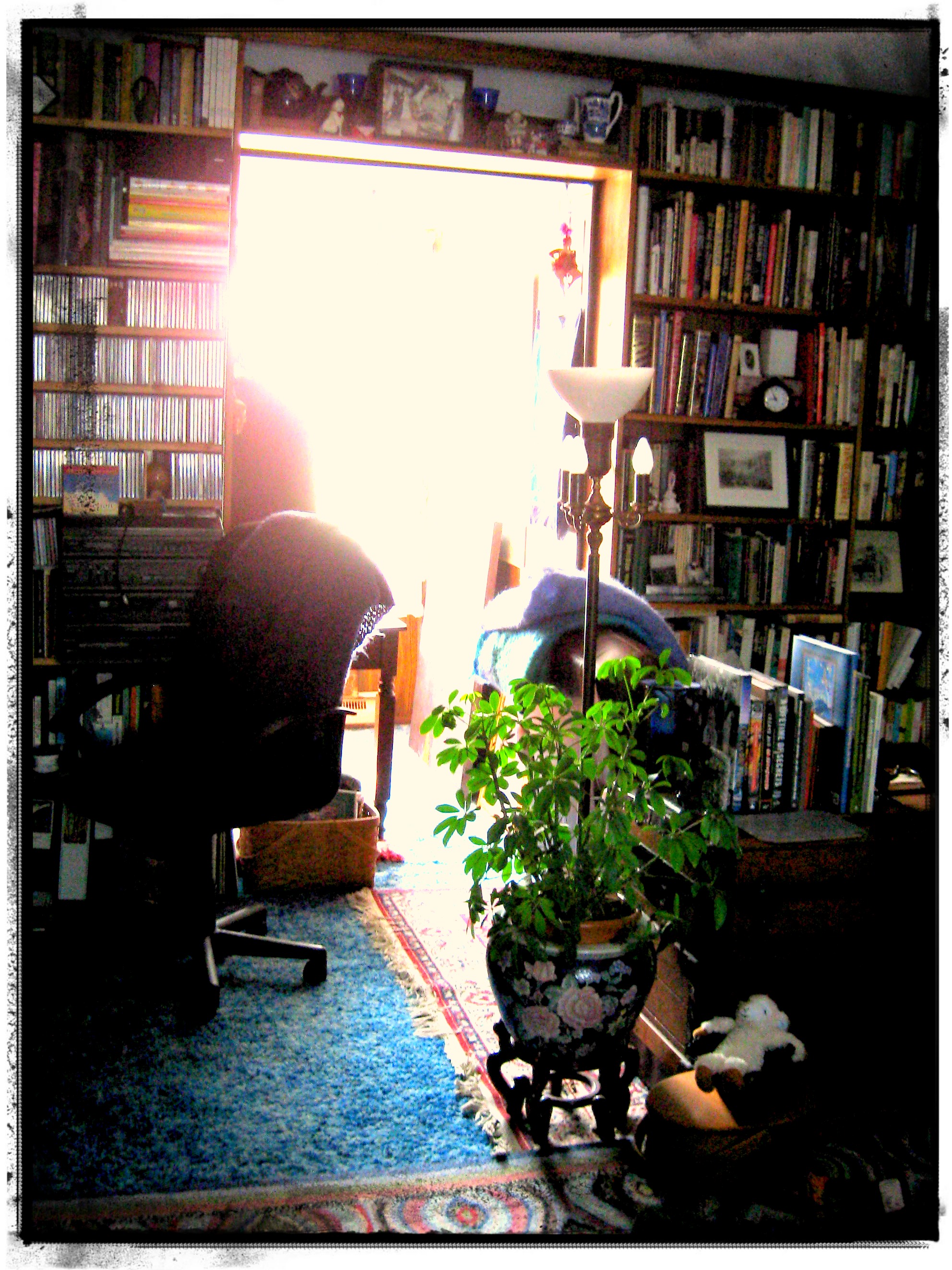
Anyhow, I woke up this morning, looked at all my stuffed-full bookshelves and realized, I’m living in a brownstone circa 1945. I always imagined living a writer’s life in a big city where I couldn’t afford anything but a bedsit so all of my worldly possessions would be in the one room, and for reasons that are unclear, I always imagined doing this in the post war era. And now I realize that’s what I’ve got. Only without the city, without radiators (thank you, Jesus), without loud neighbors, and without a book contract. I AM Helene Hanff. I am whatever the bookish sister’s name was in My Sister Eileen. I just can’t go walk my dog in Central Park (partly because I don’t have my own dog), and I still have not developed a taste for coffee and cigarettes, both of which figure prominently into my 1945 brownstone fantasy.

Also, in this fantasy, I have a throaty laugh and I know how to dance.

I really am amazed by people who figure out how to settle into a place. At almost 40, I’m still trying on locations for size. For instance, I now know I do not want to live in Aspen, even if I do become a billionaire. In fact, you can scratch ‘anywhere in Colorado’ and ‘the Rockies’ right off the list of possibilities. It’s gorgeous there. The quality of life is good. I understand the fervor of John Denver’s Rocky Mountain High, but it is not my place in this world. There is too much sun and too many people happy to be outdoors, risking their lives on guardrail-less roads, in treacherous rapids, and while battling wildfires.

While I was at Aspen Summer Words, my friend Heather drove me up Independence Pass so I could see the Continental Divide. On the way up I told her how beautiful the landscape was and she said, “I know. When I see these mountains my heart just opens right up.” My heart wasn’t opening–not for those mountains–but I liked the emotion with which she spoke. It’s how I feel about the West of Ireland, Chicago, East Tennessee, London. There are places you belong and places you don’t belong and I live in fear that I’ll accidentally end up in a place where I don’t belong, where my heart not only won’t open up but instead will seize because of the ugliness or inhospitably of the people or landscape. For instance, the two hours I was waiting for my return flight from Phoenix, I kept thinking, “This is a dead place. People aren’t supposed to live here.” Yet people do. And some people love it. My grandparents loved it. But they sure didn’t pass those genes down to me. (Nor the genes that would make camping seem like a good idea, for that matter. Nor the ones that would make me good with money or able to cook.)

When I figure out how to get myself to 1940s Manhattan, I’ll let you know.