Category Archives: Midwest

The Photo In Question

Standard
St. Andrew’s Steeple, Richmond, Indiana
St. Andrew's Catholic Church, Richmond, Indiana

St. Andrew’s Catholic Church, Richmond, Indiana

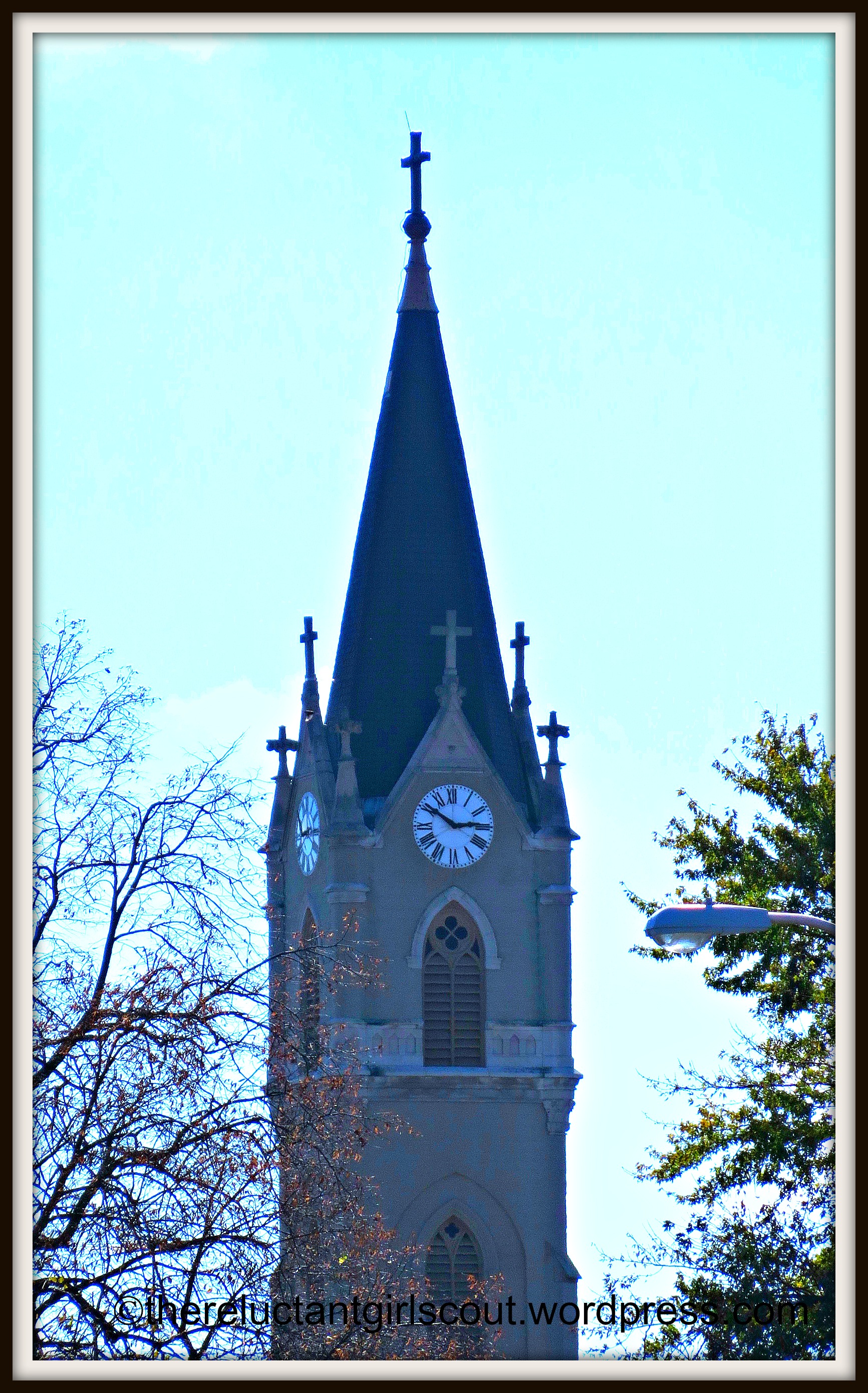
There are a lot of beautiful churches in Richmond, but this is the one that stood guard over my childhood. I could see the clock face from my bedroom window once the trees had lost their leaves. Some nights it looked like the moon. It stands a block away from where I went to elementary school, and I have vivid memories of watching the nuns in their habits walking on the church grounds while I was at recess on the swings. I’d say a prayer to God not to give me The Call because I was pretty sure I would not enjoy life as a nun even though I didn’t really know what it would entail other than lack of clothing options. Though this wasn’t my father’s family’s home parish (the Irish Americans went to St. Mary’s a few blocks away), we did sometimes attend mass here and I loved the neo Gothic architecture, the Stations of the Cross that kept my eye entertained while mass was in progress, the way it felt like all prayers whisked right up into heaven like smoke up a chimney. It’s still one of my favorite sites in my hometown (particularly now that I’m no longer worried about being called to convent life).  This is the photo I was taking when the man in the last post offered me the fan he’d just acquired.

Back Home Again in Indiana

Standard
RGSBlueBottlesFall

Indiana has been clinging to a few leaves just for me, and when I wake up my first morning back home, I’m grateful for its effort. Every one in Puget Sound has been exclaiming about how beautiful the foliage is this year, and it is, but it is more muted oranges and russets interrupted by evergreens. In my part of Indiana, where the hills roll a little and there is almost as much woodland as there is farm land, the colors pop and sizzle. I’m convinced the only place where the fall leaf display might be better is New England, and I’m not even sure about that.  That could just be something the Vermont Tourism Board sells us.

In the first few days I am home my eye is so happy to be looking at a big sky and a horizon instead of layers and layers of office buildings and apartment complexes. Mom complains about how much worse the traffic has gotten since the ethanol plant opened up, and I do notice the loads and loads of grain being carted up the road in long-haul trucks, but compared to siren-infested and traffic congested First Hill, I could be on a deserted island, it is so quiet.

Don’t even get me started on the sunsets or the constellations I can see in the crisp November sky.  In Seattle, we’re lucky to see the moon because of the ambient light and the cloud cover.

This isn’t a home-is-better-than-Seattle post, in case it seems like it is. I’m not unhappy in Seattle, and like most good Hoosiers, I spent a fair share of my youth imagining an escape, dreaming of pulling what my friend Buns calls “a geographic”: moving across country with the misguided belief that a place other than home is infinitely better just by nature of not being the tired town where you grew up, only to discover when you arrive in the new place that all of your problems and quirks and failings have followed you.  So no. I have to let Washington be what it is and I have to let Indiana be what it is and quiet the ranking system that self-starts in my brain whenever I’m in a new place even if at some genetic level I feel like home is “better.”

But there is an ease of being that takes place in your native geography that is astounding. It’s as if I’ve spent the last few months with non-native speakers of English and have had to navigate the quirks of language to get my point across, and suddenly I wake up and find myself in the company of my paisanos, where a gesture is understood without explanation.  In this honeymoon phase of my visit, I’m so glad to be in the land of the un-ironic seed cap and people in Carhart jackets for reasons that have nothing to do with fashion.

My first day home I go downtown to look for something new and fun to wear to the wedding I’ve come home for. In the store, it seems easier to tell clerks that I don’t need help. I’m not navigating around hurried shoppers screaming into cell phones. (In fact, there are so few shoppers in the store I wonder how it stays in business.) When I leave, I stand on the sidewalk to take a photo of the church steeple that was backdrop to my childhood and I don’t have to worry about being in anyone’s way. While I peer out of our little apartment windows in Seattle, the world feels crowded and too full and I want to beg people to quit reproducing because there are too many of us and I am an introvert. But when I am home, there is a surplus of space. In Richmond, if you wanted to walk down Main Street with your arms stretched out beside you, you wouldn’t bump into anyone. At no time while I’m home, will my hips and shoulders be uncomfortably close to the hips and shoulders of total strangers. In Seattle, I’m amazed that we don’t all have communicable diseases because we’re always accidentally touching people we don’t know and pretending we aren’t, staring straight ahead, busying ourselves with our smart phones and creating invisible cocoons around ourselves.

The city is a petri dish.

While I’m snapping shots of the steeple, I hear an older man say, “Excuse me, young lady.” It doesn’t immediately dawn on me that I am no longer young and because I’ve been in the city for so long, I assume I’m in his way and he wants me to move, never mind the perimeter around me that is empty.  I apologize without looking at him and step back so there is more room on the sidewalk. What I’ve become used to in Seattle is ignoring people. It goes against my nature to selectively NOT hear someone talking to me, yet it feels necessary if you have any hope of getting to the drugstore without having to hand out all your dollar bills to the people asking for them on the street corner.

I look at him and he’s a bit scruffy. He has on a puffy, jean jacket and there is a box fan tucked under his arm, which is a little weird for a crisp day like this. He stops in front of me and takes a deep breath, tells me his friend, who is a landlord, just had tenants leave this brand new fan in a vacated apartment. In Seattle, there’s a chance that I’d just not hear him and walk away. But I’m home and it never occurs to me that he could be a threat or even a huckster.  I’m not even in a hurry to dismiss him.  “That’s lucky,” I say. Then he says, “The thing is, I’m tired of carrying it. You want it?”

I can hardly contain my smile at this unexpected turn of events. I assure him that I have no need for a fan but thank him for his offer. He sighs and says, “Well, I guess I’ll just keep carrying it then.”

Later, when I’m driving home, what strikes me is how easy the exchange was. I didn’t ratchet myself up to DEFCON 1 assuming the worst about him and his intentions. He didn’t hold it against me that I wasn’t interested in taking the fan off his hands.

It is good to be home for a couple of weeks, even if I’m missing Z in the process.

Remembrance of Things Bulldozed

Standard

CraneSeattle

Every time I go home to Richmond, there’s a certain sadness that comes from seeing how much things have changed. I don’t stay away long, but even so, when I come back, yet another formerly gorgeous Victorian mansion has been demolished leaving in its place a grassy lot with worn stone steps that go nowhere.  Restaurants I grew up loving have gone out of business. The hospital, parts of which were beautiful and where some of my first memories of the town are stored, has been abandoned and looks both haunted and haunting, standing there empty with its eyes poked out and its structure ravaged.  (A brief aside: those first memories I speak of were not my birth, but because my mother worked there. Before I knew that things I wanted had to be paid for, Toddler Me tried to make off with a toy toaster from the hospital gift shop.)

If you don’t look in the right places where things are still lovely, it’s a heart breaker.

I was raised to appreciate the town’s history and my heritage.  How Quakers (and ones I was related to, which gave me a sense of unearned pride) from North Carolina had made the trip northwest, in part, because they disagreed with the institution of slavery. I knew which parts of town had been settled first, how the gorgeous, crenellated courthouse had a hanging balcony even though no one had ever been hung there, and what businesses had been on what corners at a time that pre-dated me. I grew up in the oldest part of town before it had been revitalized, and I knew that the streets used to have names instead of numbers and on certain buildings you could still see the street markers embedded in the brick. Market and Marion was my favorite intersection, a block from my elementary school.  There was something about these hints at how the place used to be that made me wallow in melancholy and long for a past that I was sure was better (and more aesthetically pleasing) than my 1970s reality.

In addition to the town’s history, I’d also been schooled on family history as it unfolded in this town. I knew which Catholic church the Irish people went to and which one the Germans went to, where my maternal grandfather’s car lot had been, how my other grandfather worked at the old post office, now the site of the Indiana Football Hall of Fame, where my parents met, how my great aunt worked at  the Hoosier Store , where the furniture store had stood before it caught fire in the 1968 explosion that killed a great uncle. I could locate the place where the interurban used to run, connecting Dayton to Indianapolis. I wondered at a postal system that had two deliveries a day and what it must have been like to live at a time when a horse and wagon brought milk (and ice!) directly to your house.  I knew the location where the “girlie” shows used to be that an otherwise God-fearing great-great grandfather was reported to have visited with some regularity.

Somehow I knew it was important to remember and acknowledge this past, despite the fact that people in towns all over America had similar memories and histories. But I liked wallowing in the notion that somehow “my people” had been living life more lovely than I was, and so often I would spend as much time thinking about how it all “used to be” for them than I did noticing the present I was actually inhabiting.

One day before I got married I was driving across the new bridge, hollering to myself about how ugly and modern it was compared to the old bridge.  Suddenly, I was struck by the notion of how much simpler my life would be if I weren’t always reflecting on a past that wasn’t even mine.  I imagined it would be the most astounding kind of liberation, not to have to feel your blood pressure go up when a favorite building was demolished or when another big box store usurped the heart of downtown.  What would it be like to just live my life and not drive past the Leland Hotel without having bricks and mortar trigger a spiral of thoughts including the hotel’s former grandeur, how before it was a building, it was the site of a casket factory where my great grandfather worked at the end of the 19th century, and from there have my imagination take over with constructed memories about how hard it must have been for him to leave his parents in West Virginia, and how hard it must have been for them to leave Ireland and back and back and back . On a drive from one side of my small town to the other, I could have been crushed by the weight of other people’s histories.

And then I moved to Seattle. I missed home regularly, but after a few months I was struck by how light I felt in a city where I had no emotional attachment to anything. It’s as if the Rockies and the Cascade Mountains were holding back all the history of home that had made me broody my whole life. It was a strange sensation to listen to the news and realize I didn’t particularly care if the heavily trafficked but sort of hideous viaduct downtown was demolished. If I saw a wrecking ball, I didn’t assume it was destroying something historically important.  Instead, I’d cross my fingers that a grocery closer to our apartment was going in. Because Seattle is younger than my hometown and none of “my” people had settled it, I’ve been detached as it moves and shifts around me.

But lately…I find I’m suddenly aware of the changes that happen in my vicinity, and I  don’t always like them. Two years ago the grocery down the street that was perfect if you had a late night baking or cooking need went out of business, and I’m still bitter about that loss, but it was more an issue of being inconvenienced than feeling like the fabric of society was ripping.  And of course I was upset when two bookstores I regularly visited went out of business, but that’s how I feel about all independent bookstores everywhere that can’t compete with that other colossal “local” bookstore  (that begins with an A).

No, what I’m noticing now are much stronger negative reactions to changes like the disappearance of an entire swathe of diverse buildings in Capitol Hill—the gritty sort where you can imagine what Seattle was like before the rest of the world discovered it and started fancying it up—which have been replaced by layers and layers of living space that looks identical to the apartment tower next to it and behind it. In the seven years that Z has lived here, Broadway has become more upscale strip mall and less quirky neighborhood haven for artists and social outcasts.

I still can’t even talk about the heartache of the neighborhood Greek diner going out of business and being replaced by something Asian.

Other, smaller changes have begun to bother me: a re-configured turn lane to accommodate the streetcar that will soon be in place (a good thing, really, but still, it rankles);  a dirty-looking hookah bar, parking lot, and drive-thru coffee hut bulldozed in one fell swoop for yet another apartment tower in an area that doesn’t really affect my normal line of sight, but I find the shadows from the taller building off-putting; the removal of an authentic Mexican restaurant so a Mexican food chain could go in its place.

Last week I was mentally growling at a crane and pile of rubble two blocks from our house and realized that I had finally gone round the bend. I was lamenting the absence of what had only ever been a façade for the whole of our Seattle experience. Someone knocked down a building, left the front of it standing, propped up with two-by-fours, and the debris left behind was inhabited only by some street-smart raccoons. What exactly was it that bothered me about that particular eyesore being replaced with the promise of something more substantial (and less raccoon-y)?

The best I can figure is that what I’m railing against is having the backdrop of our history here changed. When Rick first came to Seattle and I started visiting, we were focused forward: our newly discovered love, a new city to explore, a new phase of life. Our history was miniscule—there was nothing to pin to the corkboard in our minds of “how it used to be.” It was a good time; everything was in the present tense.  We may never have gone into the Lusty Lady, a downtown hot pink peep show venue that had been hawking its wares with some hilarious and pun-filled signs for 27 years, but it was part of the landscape of our new life together, and all that mystery and hope. There’s still plenty of both of those ingredients, but some chapters have been written now. When we walk by what remains of the big pink marquis and see “Space for Rent” in place of “We Take Off More than Boeing” it feels a little as if  “Early Beth and Z” is being slowly erased.

Fortunately, new memories are being constructed here daily.
First Day of School (and I Feel Fine)

Standard
Beth writes.

Beth writes.

Because it’s nice out, I decide to go to Z’s campus midday, write in the library, and meet him after work. I have a couple of errands to run nearby, so I load up my bag with my computer, a pad of paper, five pens I won’t use, and the promise that if I don’t stop at Cupcake Royale, I’ll let myself buy something (another pen or notebook) in the campus bookstore before I get to work. I run my errands, wave at Z when I pass his office window, and make my way past the grassy expanse where a delightful array of neighborhood dogs races around, happy to be dogs outside with other dogs. This is perhaps—with the exception of Puget Sound or Lake Washington—the happiest spot in all of Seattle to me, and whenever I see well-loved and well-behaved dogs frolicking here, I pray that campus security will continue to turn a blind eye to the flagrant off-leash rule breaking because it’s good for my soul.

The campus is busier than it has been all summer, and as I zip into the bookstore and see the line, I remember why: it’s the first day of classes. Of course. I won’t be buying any unnecessary writing equipment today because the queue for textbooks snakes around the store. When I go outside, it finally registers that these are students making the campus more lively than it has been for months.

And then it hits me: this is the first fall in eighteen years that I haven’t had my own classes to teach.

Z’s campus has never been mine. My teaching was in Indiana in my hometown. Though in my youth, I’d probably had fantasies about teaching at some tree-covered east coast college, as an adult, I never really imagined teaching anywhere else. I loved working in a place where I knew and understood the community as well as I knew myself. I loved teaching the children of people I’d gone to high school with. I loved walking across campus or running to that bookstore or library and saying hello to ten different people I’d known for years. It was my home.

But I wasn’t counting on Z or how he is my real home even if his GPS coordinates and the coordinates of my hometown are two thousand, three hundred and seventeen miles apart.

After we got married, I taught courses online for the same school, returning multiple times a semester for work obligations, and lived with a foot in Indiana and a foot in Seattle. It was a weird existence. When people would ask me where I lived, I had a hard time answering. In retrospect, I realize I’ve always been the sort of person who pulls a Band-Aid off a millimeter at a time instead of in a single, painful rip, and this move to Seattle has been no different. That is, until May when I resigned and began this new stage of my life in earnest.

Hello. My name is Beth. I live in Seattle.


Z and I decided that if ever there were a year to discover if I liked the life of a full-time writer, this was the one. I’ve got multiple degrees assuring the world (and myself) that I am one, I’ve been writing since before I could string multiple words together, and this will be my first opportunity not to distract myself with the writing of students in lieu of doing and promoting my own.

So here we are.

My name is Beth. I live in Seattle. I am a writer. I don’t care where you put your commas.


Still, it is very strange to be walking across this campus, looking at these 19 year olds and knowing that there are no 19 year olds anywhere in the world that I am currently responsible for educating. I can’t quite name the feeling. It’s a mélange of excitement and contentment, with just a few drops of wistfulness. Two drops. Maybe three drops. I suspect one of those drops is really just wistfulness for feeling as if I belong somewhere.

I set up shop in the library at a table that looks out at Mt. Rainier, when it can be bothered to show itself. Today is one of those days. I write for three hours, looking up at it periodically and stretching. Though I want to wander around the stacks and find books to lose myself in, it feels like the mountain is looking at me sternly and telling me to sit where I am and do my work. So I do. That thing has lava in its darkest recesses. Who am I to argue?

At six, I meet Z outside of his classroom, and we walk to the dog lawn, where I wait for him while he runs to his office to drop off his books and papers. There is a tiny ribbon of envy I feel unfurl when a student greets him by name or I picture him in his office being greeted by colleagues or grousing with them about some overlord who is causing them grief. I’m a lone wolf now and unless I want to start randomly complaining about the publishing industry to strangers hammering out novels in coffeehouses across the city, I’ll have to save my work angst for emails to writer friends.

The sun is shining. The tails of twelve dogs are wagging wildly. Z walks towards me, and we head off toward our apartment, where I have notebooks to fill and not a single paper to grade.

Things I Forget About Seattle When I’m Gone

Standard
IMG_1487

When I’ve been away from our apartment, I sometimes long for its coziness and I may even miss the hum of the city if I’ve been too long listening to crickets (or roosters).  But without a doubt, there are a host of things that I forget about the place that are a shock to the system when I get back.

  • Seattle possibly has too many people in it.
  • There are too many people having accidents and then being delivered by shrieking ambulance to one of the three major hospitals in our neighborhood. (Be careful out there, Seattle Citizens. Z and I are watching Orphan Black and your emergencies sometimes interfere with our TV viewing.)
  • Seattle is full of hills and we live ¾ up one of the steepest ones. Despite the fact that I know where the ascent is easiest, it’s still a workout.
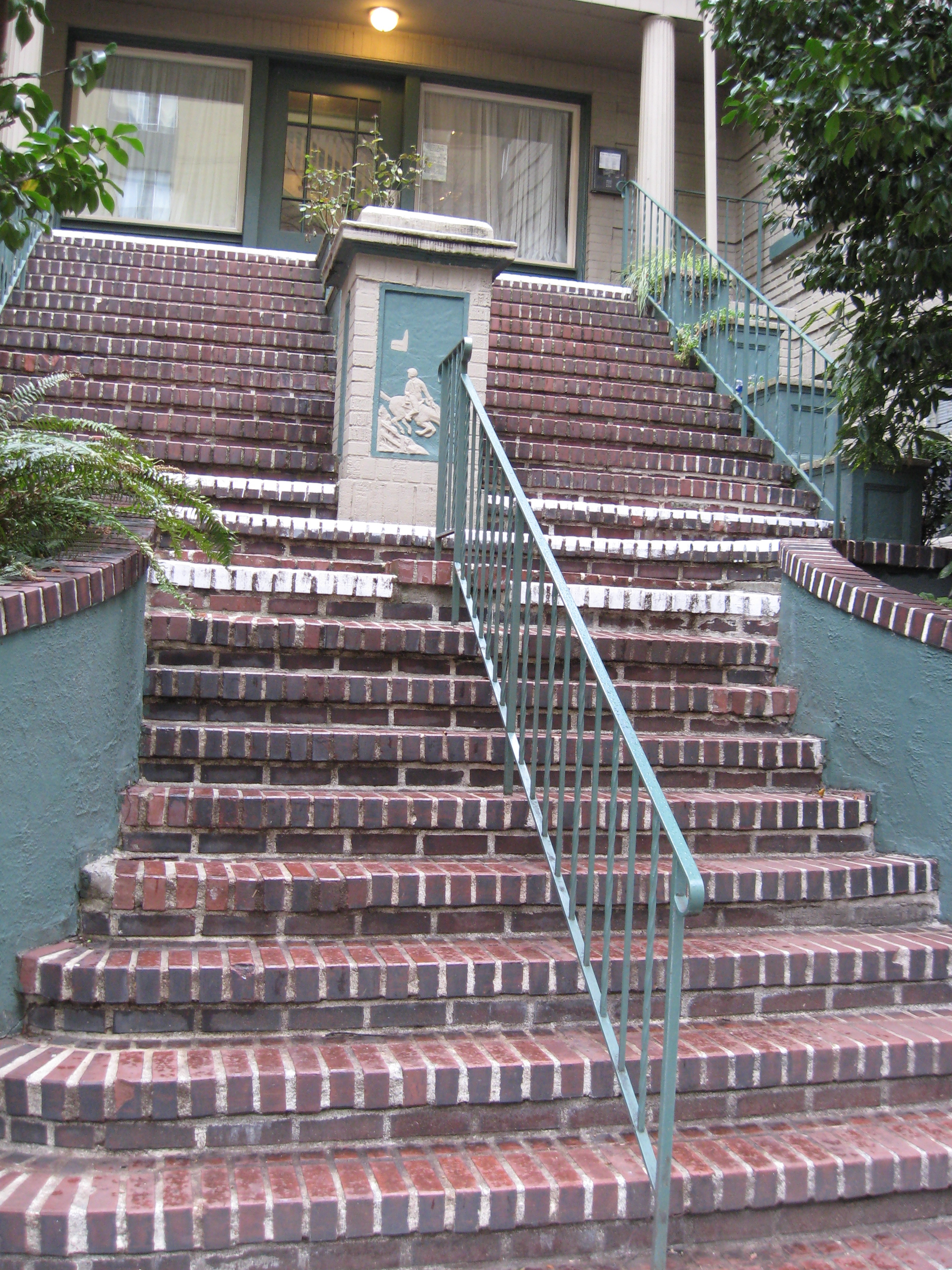
  • There are 23 steps outside our apartment building. (It feels like 53 when we’re carrying groceries.)
  • 0ur building manager is lovely but sometimes promises things and doesn’t deliver them right away. In this case, a much coveted dishwasher. Coupled with this realization, is the harsh realization that Eunice did not travel back from Zimbabwe with us, and I am the house dishwasher since Z is the house cook.
  • The M 303 bus idles outside our living room window five hours a day, starting at 6 a.m. depositing soot onto our windowsills and on onto our westernmost belongings.
  • The buzzer for our apartment building is outside our bedroom window and our building mates have a lot of noisy, late night friends, pushing all the buttons except the right ones. I try to comfort myself with the knowledge that at least Amanda, the possible prostitute and/or drug dealer, no longer lives here. The buzzer was humming back in those days.
  • We don’t have a car in the city unless we rent one, so those groceries we need must be toted up the hill (or down the hill, depending on which grocery we use).
  • We left the apartment in kind of mess.  We always do this. Departure times are a big surprise every time, and I am a time optimist.
  • Z will be going off to teach in a few short days and it’s going to be lonesome in the apartment, just me and my computer and the screaming blank page.

And then there is the weather.

My first trip to the Pacific Northwest was to a writing conference in Vancouver, B.C., in 2005. While there, I took a tour of the city and ended up on the tour bus by myself with a very chatty U.S. ex pat guide. He was friendly and answered my questions about the city and his choice to immigrate. But then I made the critical error of asking if the grey, rainy days ever got to him. The temperature in the bus dropped five degrees. He launched into a tirade about other people’s views of the climate and how wrong they were. I backtracked quickly and he warmed again, but I felt like I’d learned the first lesson of Pacific Northwest Fight Club: don’t talk about the weather.

It’s how people who live here and plan to stick around recognize tourists and fair-weather residents who stay only long enough to take in the geography and bulk up their bank accounts before moving to sunnier climes.

The truth is, the rain here isn’t that bad. We laugh when we see depictions of Seattle, like in The Killing, in which windshield wipers are cranked up to high and everyone is drenched. It’s usually more of a delicate mist, and truth be told, I’ll be happy to feel it on my so-recently-parched skin. So I’ve done my best to abide by this code of weather silence. I might complain to Z if it’s a particularly hard, cold rain, but that’s it. Were I in Indiana, I’d be Goldilocks-ing it up: it’s too hot, too cold, too dry, too damp, not enough of a freeze or so much snow I’m thinking of moving to Florida. This is my native language.. It’s how Hoosiers bond with neighbors and strangers at the Meijer check-out. But not in Seattle. There are only three times you are allowed to talk about weather here as far as I can tell. The first is if it snows in the city. The whole place shuts down, but even so, you are amused by it—it is not cause for stocking up on bread and milk and blizzard preparation mode. It’s a two-hour anomaly. The second is if there is thunder. A single thunder clap is conversation fodder for days.

And then there is the third. Unlike me and the things I forget when they are out of my line of sight, most people in Seattle never forget what once was and will be again: winter. Yesterday, the first day I’ve felt human since we got back, I climbed the hill to the Corner Café for a solitary lunch with my book. I kept my sunglasses on while I read because the sun was blinding me when it hit the pages. The server, who is always upbeat and pleasant, let out a loud sigh when she delivered my sandwich and said, looking outside, “Summer is over. It’s depressing. Winter will be here before you know it.” She sounded like a spokesperson for the House of Stark. I peered outside to see if there’d been a big shift in weather since I’d arrived 15 minutes before. It was 84 degrees and the sky was completely cloudless. I raised my glasses for a closer look and then looked back at her and asked if the weather had been bad while Z and I had been away. She wrinkled up her face, trying to remember. “No. I think it sprinkled a little last Monday.”

There is, I think, a one-week window here wherein you are allowed to complain about future weather even though the minute the rain starts, you will be so busy pretending it doesn’t exist that you won’t even carry an umbrella.