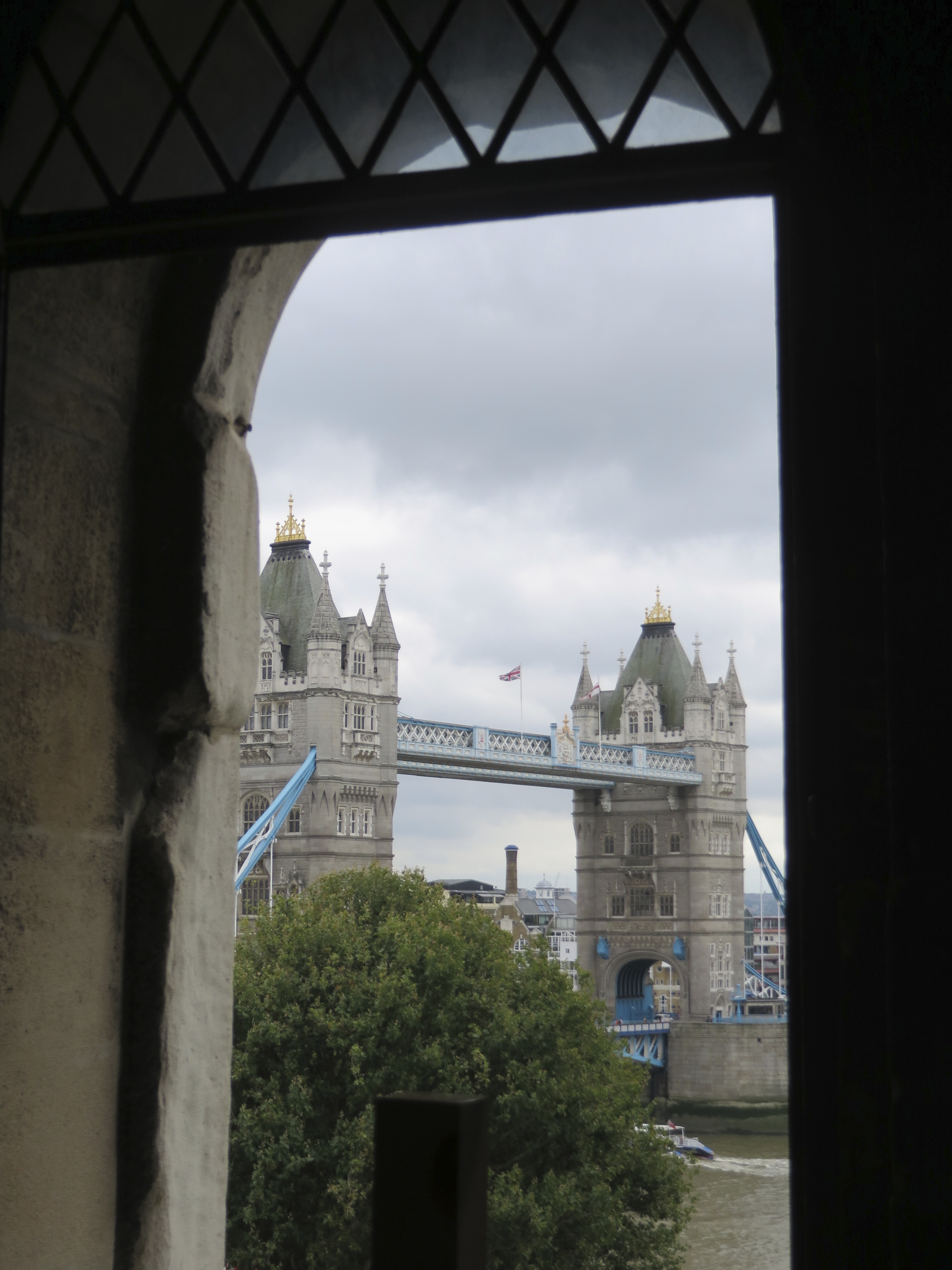
Category Archives: Seattle

Of Minutiae and Lack of Momentum

Standard


RGSrockunicycle

Ethan Currier’s rock art, Bainbridge Island, WA


I’ve been waiting for a day when the news isn’t so horrendous that I can blog about frivolous things without feeling superficial, but it’s becoming apparent that I could be waiting a very long time for that day to dawn. In the interest of not letting the terrorists, racists, misogynists and general practitioner haters “win,” I’m just going to write. Just going to go right on as if in the midst of the world ending it’s perfectly reasonable to be talking about things like houseguests and having to pretend the trolley system in Seattle is a viable means of transportation and how my friend Jane nearly ruined my life by forcing me to read The 12-Week Year. Forgive me.


Aside from all that ails the world, here is my list of beefs today:


  • It’s supposed to be in the 80s next week and you know how much I hate heat.
  • Hudge invited us to an outdoor movie tomorrow night, which sounded like fun, except I pretty much can’t be outside in the evening anymore unless I go in full-on beekeeper garb to ward off mosquitos; I am the sad combination of delicious and allergic.
  • The high-rise across the street from us is putting in new windows. Did you know that installing new windows requires a buzz saw at 8 a.m.? Me neither. Also, at the rate of two-windows-per-day, it’s going to be a loud, peace-less summer here on First Hill.
  • The election. The mean memes. The idiots.
  • People on Twitter are shouting that little Prince George should be sent to jail because in his just-released 3rd birthday photos, he appears to be feeding his dog Lupo some ice cream. He’s 3. His parents aren’t idiots. I’m guessing if it was intentional, then it’s probably a vet-approved iced doggie treat, but even if it wasn’t and Lupo licked that lump of ice cream, dogs eat truly terrible and disgusting things on a daily basis. The likely result will be either nothing or a single puddle of dog crap that someone (who is not the Duke or Duchess) will have to clean up. This is NOT animal cruelty. (What do people get from this online righteous indignation? I imagine them walking around all puffed up and proud of themselves after posting their “wisdom” but they’re really just self-satisfied idiots who can’t read a situation. Kind of like the warriors who “liberate” dogs trapped in cars even though the dog in question is not in distress—because it’s November—and the owner has been gone all of two minutes.)
  • A mouse is trying to move into our apartment.
  • Why DID Seattle try to sell us on the perfection of above-the-traffic monorail travel at the 1963 World’s Fair but then choose in the 2000s to cast their lot not with the monorail—a futuristic and therefore superior mode of travel that shows up in virtually every sci-fi movie ever made—but instead with a nod to yesteryear and a streetcar that holds fewer people than a bus and is stuck in the same rush hour traffic that all the cars and city busses are in, except on a track so it can’t even navigate obstacles? Mind the gap.
  • Someone washed and dried what appears to have been the innards of a hamster cage in the communal machines in our basement and didn’t bother to clean out the woodchips, animal fur, and chocolate chips. (I’m pretending they are chocolate chips. Please don’t tell me they aren’t chocolate chips.)
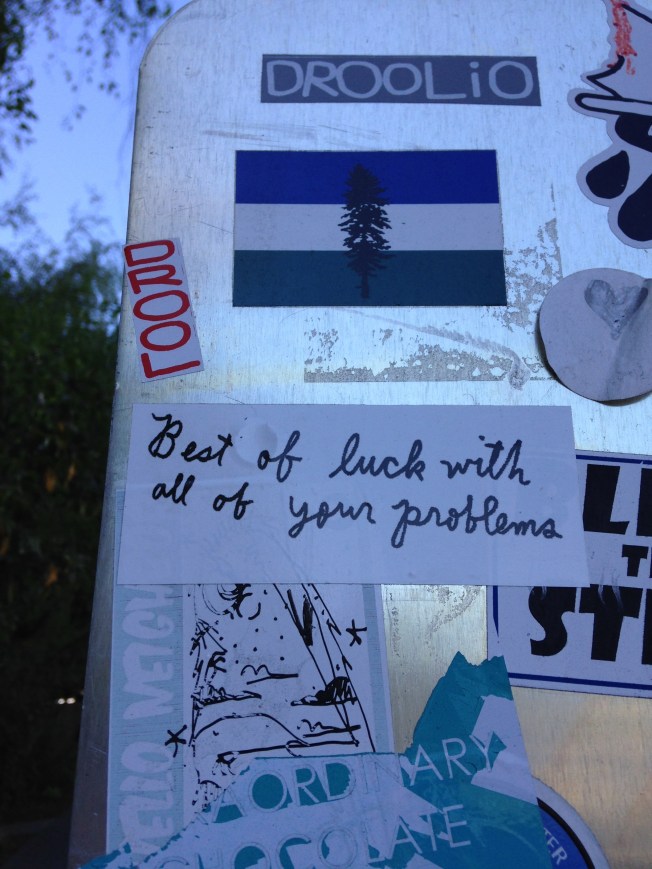
 

IMG_0636

Graffiti encouragement, Seattle


Jane, who is one of my oldest friends from college, suggested that I should read Brian P. Moran’s The 12-Week Year, and it is exhausting me. The principle behind it is good: most of us put off goals and projects until the 11th hour, so instead of giving yourself a long time to get something done, give yourself a short time and impress your friends and neighbors with how much you have accomplished.


In theory, it agrees with me. I am a procrastinator by nature and almost anything I’ve ever accomplished in my life—from a master’s thesis to stacks of student papers graded—happened in that magical eleventh hour when suddenly my thoughts, my energy, and my ability to solve problems would somehow work together to get me across the finish line just before the due date arrived.


In practice, I’m having to make out goals and lists of tasks, and then do those tasks to accomplish the goals, and then assess my progress on the tasks and the goals both daily and weekly. It is seriously cutting into my relaxing time. I’ve never been particularly good at anything close to a long-range plan, which explains in large part why I forgot to have children and have never really achieved the perfect capsule wardrobe.


The fatal flaw in my embracing of the 12-week year, however, was my idea that Z might like it too since he isn’t teaching this summer.


Z is much more task oriented than I am. He gravitates toward routine and is a creature of habit. The salad days of our summer are now over because of my stupid suggestion. No longer do we stay up until 3 and sleep until noon. No longer do we lounge on the couch watching episodes of “The New Girl” we’ve already seen twice. No longer do I have graham crackers and beef jerky for breakfast, because he’s got me on an oatmeal and banana system to help with the 12-week goal of “better health.” Do you know how much less fun this breakfast is than Pop-tarts or a bowl of Lucky Charms? (If he were writing this, he would tell you that the oatmeal has to be nuked so I’m basically eating an oatmeal cookie and we’re sharing the banana. Also, he would want you to know that I am very dramatic.)


After the banana, when I’m just starting one of my eight-page emails to Jane or a witty Facebook update, he ushers me next door to the writing studio, where he sits down and instantly goes to work.


Mac used to have to scratch his bed for five minutes and then turn in circles three times before settling down to sleep, and I’m similar with writing. Only I’ll spend about an hour putzing around online or reorganizing my paper clips and Post-it pads. Often, I have to re-read something I’ve already written years ago and consider its merits and failures, or read something someone else has written to get in the right frame of mind. And then I have to sit and think about what I want to write.


I could spend DAYS doing this. It is hard, hard work, the trying to write, and the results are inconsistent. Sometimes, while I’m trying, I actually do write something. But sometimes, at 6 o’clock, Z will slam shut his laptop and say, “I’m done” and he’s accomplished 15 things and I’ve still only written two sentences. Correction: two sentences I hate. Maybe I’ve also doodled a picture of Virginia Woolf in my notebook if it’s a really good day. He’ll ask me what I’ve done with my time, and I have absolutely no idea. No. Idea. I sat down. I started thinking my thoughts and now it’s 6 p.m.


Until we started this program, Z had no idea how much time slips through my fingers. He’d come home from work, ask what I’d done all day, I’d say, “I wrote” and because I had no goals written down where he could see whether they had a check next to them or not, he was none the wiser. Possibly he was suspicious since in the three years since I quit teaching and started working for myself he has never come home from work and had me place an entire manuscript into his hands. But now, for sure, he knows he is married to the least productive person in Christendom.


Last week I was reading a novel in which two women accidentally killed a man (he wasn’t very nice, so it was no great loss) and they had to clean up the mess and hide his body before the lady of the house returned home. It was set in the 1920s, so there was no Roomba or Dyson sweeper, no Lysol wipes, and I can only assume neither of them were doing Crossfit, so the heavy lifting had to be hell. Yet somehow, through sheer determination and hard work, they moved his carcass out of the parlor and into the alley, cleaned up all evidence of scuffle and bloodshed, and hopped into bed pretending to be asleep when Madame returned an hour later.


As I was reading it, I did not think what a tragedy it was. Nor did I feel fearful about what would happen when the cops discovered the body. I didn’t even worry about the bits of bloody apron that got buried in the ash pile, just waiting to be discovered. Instead, all I could think was, I must never kill anyone because I wouldn’t have the energy to clean up the mess.


A good life lesson, perhaps, but probably not what the author was going for.


And since I’m confessing all of my sins of laziness and haphazard lifestyle choices, let me add that last night I got an email from the Seattle Public Library requesting volunteers for homework help with school-age kids who are speaking English as a second language. As soon as I saw it, I realized that I probably ought to volunteer because I don’t do much of anything for the local community except complain to the parks department when they make bad projected plans for existing green space or steal parking spaces, paint them blue, and pretend it’s a park.


rgsparklet

Ridiculous “park” five feet from real park with trees and water fountains.

So it is with great shame that I confess to you now how relieved I was to discover at the bottom of the email that the closest library within walking distance was not participating in the program. It was like the most glorious snow day radio announcement of the 1970s and ‘80s liberating me from a day of school: all the free time I thought I was going to lose was suddenly mine again!


Other joys this week: aside from recommending books that are quality-of-life-ruiners, Jane and her family flew cross country and came to my noisy, congested, but sometimes glorious city for a few days. In another life, I should have been a tour guide. I love offering people suggestions about what to do, leaving helpful maps on the coffee table, having some candy bars in a dish waiting for them. I love introducing my people to new places.


IMG_1219

Space Needle, Seattle

Mostly though, I just loved having them here. I may be six years deep into this Seattle experiment, but it feels so good to have people around who know me in the context of my natural habitat, where there is no need to explain myself, apologize for my Midwestern-sized butt or Midwestern values or the way I say “pen” and “pin” so they sound like the exact same word.


I don’t have to work so hard to hold back my essential self, in other words.


It felt good to talk to them. To see their offspring growing and thriving. To take them on the Bainbridge ferry and stand on the bow of the upper deck and look down at a woman with dreadlocks holding her pet duck up so it could enjoy the sea spray. To have mutual friends from college over for a dinner that was nicely cooked and presented by the Great and Talented Z, so the whole lot of us could sit around reminiscing about life when it seemed less violent and ugly. It was violent and ugly then too, but we were young enough to believe that with Bono’s three chords and the truth and our own starry-eyed optimism, things were going to get better.


Some things did get better. When I went to college, Apartheid was still a thing. LGBT students on our campus had to keep themselves closeted or could be kicked out and they certainly had little hope of having rights equal to their straight classmates once leaving campus either. AIDS was still a death sentence instead of a chronic condition. When we graduated—we women of Anderson University—we’d be making 65 cents to the dollar that our male classmates were making, and now we’re up another thirteen cents (though we’re spending most of that on waxing). If people are being harassed by anyone because of the color of their skin, gender, the uniform they wear, their accent, etc., we’ve often got access to video coverage, shining a light on injustice and sent out over the internet while it happens. We’ve had our first black president and our first female presidential nominee.


We’ve seen the surface of Mars.


It’s easier (and sadder) to look back at all the things we were too naïve to know then: that the Challenger wouldn’t be the worst televised national tragedy in our lifetime, that terrorism would become real to us, that we’d get mired in a 15+ year war that shifts geography but shows no signs of stopping, that something as magical as the internet would highlight some of our ugliest human tendencies.


We didn’t even know what a Kardashian was or that they’d be trying to weasel their way into our homes on a daily basis.


IMG_5794

A girl and her duck.

When asked if the glass is half full or half empty, I’m inclined to recognize that what you have in your hand there is half a glass of something to drink, which is better than nothing but not quite as good as full-to-the-brim. But with the company of Z and good friends, my glass was full this week, even with buzz saws across the street, hamster cage dumpings in the washing machine, and the realization that I’m too lazy and discombobulated to clean up a crime scene.


Peace be upon us.


RGSthesound

Puget Sound


Politics and Religion

Standard
photo 5

Whitewater United Methodist Church (Photo courtesy of Val Jennings)


Midwesterners often live by the adage that you should never talk about politics or religion. If we don’t live by it, we’ve heard it enough and have probably kicked ourselves at least once for bringing either topic up in “mixed company” only to have the conversation fall flat or get heated in un-enjoyable ways. Were I a better arguer, then maybe I’d love the challenge of heated debate or see such discourse as entertaining, educational or satisfying.


But I’m not.


I don’t enjoy strife. Z once got in an argument with a peace protestor by Westlake Center, and I skedaddled half a block away from him so I could avoid hearing whatever words he shared with the tired-looking woman with the “Give peace a chance” sign scribbled on cardboard. I’m not sure what I was afraid of: Z is not rude OR hawkish, but he does like clarity and finds idealistic platitudes useless and so wanted to know what giving peace a chance looked like to her in regard to the quagmire the Middle East had become. Still, I didn’t want to hear their words even if it was a pleasant exchange.


Were it not unseemly for an adult person to put her fingers in her ears and sing “la la la la” whenever there is a disagreement, I would do it.


At home in Indiana, I basically know the rules. I can have a religious or political discussion with a good friend who I already know basically believes what I believe. I know that with my extended family or friends who have differing beliefs, we can ignore uncomfortable topics (the best choice, really) or, if we are feeling brave, each say one conflicting thing politely to the other before we start talking about something innocuous like pie. The objective of these exchanges is that everyone knows there is no ill-will even if someone’s belief system is faulty. The closest I ever got to a political argument was when my uncle, the farmer, sputtered about how difficult the EPA was making his life re: what weed killer he could use on his crops, as if somehow my first-ever vote in the presidential election of 1992 a few months before had caused his headache. Of course even this wasn’t an argument. My uncle said his piece and I said, “Hmmm. I hadn’t considered that,” and then the subject got changed, though neither of our minds did.


But this political cycle is like the beast from the Book of Revelation, thrashing around, wreaking havoc where previously there were harmonious relationships. Usually, during the primary season, people who are not on the podium are relatively civil to each other as they try to figure out who would best lead their party of preference. They say things like, I don’t know, I kind of like the look of _______. Have you listened to him? and they save the ugliness for the second half of the year when they want to tear the opposition from limb to limb. But with the help of social media and everyone’s lack of tolerance and increased righteous indignation, this has been the some of the most stress-inducing six months of 2016 (and I’m  including the parts of the year where beloved pop icons died of drug overdoses, terrorists killed people trying to have a good time/do a hard day’s work, and my mother had a stem-cell transplant). One political party has almost completely imploded and the other has turned against itself like one of the more grizzly battle scenes from Game of Thrones.


Most of these battles are being fought in the media or on social media. Certainly, my own shouting fits and blood pressure spikes have only come from Facebook feeds and comments sections and not from any “real” interactions with humans. I don’t want to suggest that before Facebook was a regular part of our lives that we were a polite and genteel culture, but surely we’ve gotten ruder, haven’t we? And more full of ourselves? More certain that we are right and if we say something over and over enough times, everyone else will eventually be forced to agree with us because our logic and our words are so superior? Also, I’m not sure what convinced us all that our opinions actually matter and must be heard, like we’ll shrivel up and die Wicked Witch of the West style if we don’t speak our minds.


There’s got to be some diagnosis in the DSM-V that explains this lunacy.


A couple of weeks ago while I was talking to Mom on the phone, her call waiting went off and she came back, a bit breathless, and said that the church was on fire and she and my stepdad had to go. I sat around the rest of the afternoon feeling like I was waiting on a health report from someone who’d been rushed to the ER. The church is in the middle of the countryside and I knew the prognosis probably wasn’t good; it takes time for firefighters to do their job when they’re called in from the small neighboring towns and villages miles away. Later that night when she reported that the church was still standing but charred on the inside nearly beyond recognition and likely a lost cause, and later still when the photos rolled in, I cried. It felt like a family member had died.


I haven’t been in that little white church for probably two decades, and I haven’t attended services there since I was 19, but I always imagined it would be available to me. It is the oldest Methodist church in Indiana, nestled on the outskirts of a teeny village in the country, started at the time of circuit riders. It’s the church my mother and I started attending right after my maternal grandfather died unexpectedly and we were trying to find our way in the world without our patriarch. The church we started attending just before she and my stepdad started dating. It’s the church my great-grandmother went to and the church my great-great-grandparents attended. One particularly hot Sunday morning when I was bored during a sermon, I looked out the opened stained-glass window at the field behind the church and I could imagine the generations before me sitting there, so much hotter in their long dresses and suits, staring out the same window, their horses tied up outside, shuffling feet and nickering.


For me, the church was a source of great love and great conflict. Any church for me is that way, really, but this is the church where I came of age and where I first felt those tugs in opposing directions. I longed to belong, but never fully did. I was a divorced kid in a congregation that mostly wasn’t. I was an introvert in a congregation that, it seemed to me, preferred people not too timid to stand up and perform some service. I was living in the city and everyone else was from the country. I played the piano briefly when we lost our much more accomplished accompanist, but I wasn’t really a musician, so even that didn’t feel like the right fit. Plus, I’d spent more Sundays in mass with my father’s family than in a Protestant church until that time, so while I liked the deviations from the script that the Methodist minister took for dramatic effect or because he felt spiritually led to do so, I missed the comfort of the ceremony, beauty, and sameness offered at the Catholic Church.


There was an awful lot of politics in the church. People who thought they ran things. Other people who did a lot of the daily maintenance that kept the church running but got none (and asked for none) of the credit and had none of the say. People who had strong opinions about what the youth of the church should or shouldn’t be doing. People who had opinions if you skipped church to go to a Cincinnati Reds game. People who assumed that because you went there you must believe exactly how they believed and vote exactly how they voted. I’d feel crabby some Sundays, but then as the service came to a close we’d all stand to sing the doxology, say our goodbyes, and before getting into our cars and heading home, a sort of peace would descend that felt an awful lot like belonging. Like maybe despite the differences, we were all on the same team. And we were. If someone was in crisis, there were the prayers, the casseroles, the quiet concern.


In retrospect, I suspect I was just an emerging feminist trying to figure out what exactly my place was in an institution—or, at least, certainly a little country church—that liked it best when a person fit into a role. Though no one expressly told me my role was to be a good girl until I was a wife and mother or that I shouldn’t be overly interested in the leaders of the Women’s Movement or worldly concerns, it seemed to me that that was the track I was supposed to be on: one that didn’t ask too many questions, shake too many boats, or rattle any cages. So what to do with the secret knowledge that I spent as many Sundays in the sanctuary thinking lewd thoughts as I did concentrating on God? What to do when I felt cantankerous when someone made a request of me about performing some activity (lighting candles, speaking on behalf of the youth group in front of all those people, babysitting in the nursery) that I didn’t want to do? As a female, shouldn’t I be compliant and happily subservient? What to do with the realization that while I wanted to be one kind of person (a good, church-going, rule-following woman who read mostly Christian books and listened mostly to Christian music and shied away from anything too earthly), I also wanted to be myself (someone who devoured all texts, dipped toes into a variety of musical genres, and maybe rubbed up next to a boy I might not marry).


I never did make peace with that quandary, but eventually, my desire not to feel controlled outweighed my desire to conform.


I’m not sure what my little country church has to do with the 2016 election except on Facebook I read today that I can’t be a Christian if I vote for a Clinton and I also hear regularly in Seattle and online that if I were really a humanitarian—and surely that’s what Jesus was—then I would have chosen Sanders and not a “criminal” as my candidate. My “favorite” criticism this year has been the implication that by voting for a woman, I’m clearly making my choice based solely on our shared gender and have not relied on logic. As if I’m too feather-brained to realize I shouldn’t vote for someone for whom I hadn’t done some research and weighed the options.


All of that external judgment shares the same quadrant of my brain as my earlier internal conflicts in church. To be good? To be unapologetically myself? It isn’t lost on me that I’m still just as conflicted about being “good” and getting approval now as I was then, but also just as determined to be true to my own beliefs. The best example of this conflict hashing itself out is my choice this election season to wear a tiny, dime-sized button with a vivid pop-art picture of Clinton’s face that I pin on my purse and can cover up with my hand if I know the person viewing it will get too riled up. I’m not proud of this compromise, but it’s a good Midwestern coping mechanism as deeply ingrained as my need to be viewed as good and my desire to be an independent entity.


When I was home this winter, my stepdad would return from Sunday services, and I’d want to hear the news. The church, which was ten times larger when I went there, had dwindled down to a congregation smaller than ten and there’d been talk of closing. When I imagined it in February, I didn’t picture a tiny congregation of which my seventy-year-old stepdad was the youngest member. When I imagine it today, I don’t picture its now-charred remains. Instead, I imagine it when I was 16: people in every pew, friends of mine lighting the candles up front and our plans for the evening’s youth group activity being written about on the week’s program, my step-grandfather leading the singing as my step-grandmother plays the organ or piano, a message I’m half listening to while staring out the window or trying to catch the eye of a guy I have a crush on, maybe communion, an offering, another prayer, the smell of thousands of earlier church services, the doxology that ended it all so well (and that maybe we should be singing to each other now until after November to remember we’re all on the same human team): God be with you ‘til we meet again/by His counsels guide uphold you/With His sheep securely fold you/God be with you ‘til we meet again.


photo 5 copy

(Photo courtesy of Val Jennings)


Hoosier Ecclesiastes

Standard

rgsbottle

For the last ten weeks, I’ve been in Indiana, sleeping in the bedroom of my girlhood home while my mother recuperated from a stem cell transplant. It’s a pretty scary and significant medical ordeal if you are unfamiliar with it, but she was in good hands at IU Health in Indianapolis. The day my stepfather and I brought her home with her brand new immune system I felt like I got a teensy inkling of how nerve-wracking it must be to bring a baby home from the hospital for the first time. Everything seemed like a danger. I got on Facebook and threatened to taze anyone who stopped  to see her or even thought about breathing their germy breaths on her. I fielded all calls because she didn’t have the energy to answer. (A bath would require a two-hour nap afterward, so there was no bonus energy for entertaining even her favorite people.) I stayed away from everyone myself—even perfectly healthy friends—because I was afraid I’d catch some bug  and give it to Mom.


I did my best to assure her that she’d feel like herself again eventually—as the doctors had promised—even though I had absolutely no idea what I was talking about and Mom clearly knew it. Also, the Domestic Arts are not really in my skill set. I rubbed all knobs and switches with antibacterial wipes as if I were sprinkling the house with holy water. I had to try to figure out what food would taste good to her, and then felt like a failure (but also slightly relieved because it required no cooking) that the main thing that she could tolerate was Cherry Garcia. There was the ER trip after she broke out in hives for no good reason and the ensuing fear that she was rejecting a platelet transfusion. There was the frustration of her not acting quite like herself—no interest in TV, in conversation, in reading—and worrying that my “real” mother would never come back. There was the night my step-dad ended up in the ER and then the hospital for a few days and I felt torn between which parental unit I should be with—there’s the true curse of the Only Child…there’s only the one of you to go around.


Then there was the date of my return ticket to Seattle at the end of three weeks and my sense of impending failure: what sort of daughter leaves her mother to answer her own phone, fend off visitors, and go to a germy grocery to buy her own Cherry Garcia? I’ve never completely come to terms with the normal guilt I feel from moving to the other side of the country, but now? Ugh. At night when when I was alone in the bedroom of my teens, I’d feel cranky with myself that when Z and I got engaged eight years ago I didn’t at any point think that I could say, “Yes, of course, I’ll marry you, but I’m not leaving Indiana. We’ll buy a house with more square footage than any apartment we could ever afford in Seattle and we’ll learn about things like caulking and lawn mowers together and I’ll teach you to hate Daylight Savings Time, appreciate Mellencamp lyrically,  and to be more tolerant of the 14-haired mustaches so popular here on  Hoosier youth.” But I didn’t say any of those things then, hence the post-transplant-impending-flight-back-to-Seattle frustration.


Fortunately, Z is always clever, thoughtful, and clairvoyant about my feelings. He called one night to say he thought I should stay in Indiana awhile longer and since his sabbatical would be starting soon, he’d join me for a few weeks in Indiana. (Right now we will not discuss the state of my feminism—weak, apparently—and how I needed him to make this decision instead of me making it for myself. I’ll save that for some later blog post when I’m feeling more self-fulfilled and we can all just laugh at silly, silly Beth and her inability to name the thing she wants. Ha ha ha. But let me tell you, there were tears.)


Z arrived and went with me on my regular trips to restock ice cream and we all watched reruns of “King of Queens” every night. Mom started to laugh more and to want to eat things not made by Ben and Jerry’s. After she got the okay from her oncologist, we’d go out for dinner and I quit looking at her as if she were a toddler about to put a bobby pin in a light socket. Z and I took a road trip to Minnesota to see a friend get married. I texted Mom photos of every state line we crossed, interesting roadside attractions, a church where Laura Ingalls Wilder attended, landscape photos so she and I could try to scientifically determine if the flatness of Iowa was equal-to-or-greater-than the flatness of northern Indiana. She seemed interested in the world. When we got back a week later, there was a massive stack of books next to the sofa; she’d read every one of them while Z and I were away. Suddenly, when we’d enter the room, she’d be peering into a book through the $1 bright green reading glasses we stuck, as a lark, in her Easter basket.


I don’t know how you parents do it—not crowing about every achievement your child has made—because I was telling complete strangers, “Mom is reading again!” while they looked at me with confusion. Seeing her stack of recently read books is one of the sweetest sights ever. She was back. I won’t say it made it easy to leave her a week later, but it definitely made it easier.


It was a weird trip home. One of those strange moments in time where great joys (a mother on the road to recovery, the announcement of a cousin’s new baby, good health news from Zimbabwe about Z-ma who had been living under a potentially very dark medical cloud, another family friend whose post-cancer surgery scan was all clear, young people counting down the days until their driver’s licenses/ graduations/weddings) bump up against terrible sadness. There was a lot of drama and loss in the local community while I was home, and it was not lost on me that while I got to leave on the happy note of a mother who was nearly herself again , some of my cousins were called in to be with their own mother who is critically ill.


It was two-and-a-half months full of all the things that make being human glorious and terrible.


So now I’m three days back in Seattle, and I’m suffering my usual culture shock. Monday morning I was lying in my old Indiana bed, looking out the window at the long shadows of the trees in the backyard that were stretching west towards a cornfield, listening to birdsong, and feeling amused by a cheeky cardinal who desperately wants in my parents’ house and hangs on the screen, peering in, flapping his wings. This morning in Seattle, I woke to the bus out front that idles there during rush hour, waiting to dump off a host of workers at the neighboring hospitals. Outside my screen, there’s been one domestic altercation, one woman weeping because something unfortunate happened to her backpack, and at least five sirens. And let me not forget the early morning leaf blowers because at some point cleaning the street and sidewalk with a near noiseless broom became passé and you apparently aren’t really cleaning anything if you don’t have a leafblower strapped to your back causing a racket before the more artistic types among the citizenry are ready to get out of bed (ahem). Since I’ve moved here, there’s never not the sound of traffic, dogs, humans. There’s never not something unfortunate in the street to step over: trash, dog crap, or someone passed out in a doorway. If a bird were tweeting here or pecking at the window, I’d never hear it.


This is not to say I hate the city. In a week or two, I might like it again. No doubt the next time I leave it, I’ll feel a little blue about being parted from its company.


But today is not that day, and the news that Prince just died—thus sealing the door on the vault of my youth forever—isn’t helping. Other people who knew the intricacies of His Purple Majesty’s guitar licks and the nuances of his lyrics will be writing about him for the next weeks with passion, but I was never more than a middling-level fan who knew his major hits, his full name, can quote a line or two from Purple Rain, believed his Super Bowl halftime show to be the best in memory, and who still feels happy if one of his songs comes on the radio. But I don’t deserve to say much about him because I haven’t put the time in. I never went to a concert. Never read an unofficial biography. Never really “got” his movies. Didn’t follow his Princetograms. I’m glad that his music was playing as part of the soundtrack of my life, and I’m glad that when I hear one of his less-played, more raunchy songs, I still get the devilish thrill I did when I was a teenager as I sing along, that I’m still waiting for my mother to say, “Beth Lynn!”


And I’m glad that I never go to a wedding without mentally finishing the officiant’s “Dearly beloved…” with Prince’s “we are gathered here today to get through this thing called life.”

An electric word, life.

photo


The Ill-planned Grand Tour: Part 2

Standard

IMG_3048

In 1988 when I flew to London with some of my classmates from Anderson University, the song that was stuck in my head was Kate Bush’s “Oh England My Lionheart” which had the most gorgeous, historical and literary lyrics and the refrain, “Oh! England, my lionheart/I don’t want to go.” As we boarded our plane for home, at least half of us were mentally humming this song. We weren’t ready to say goodbye to this city that existed for us previously only on the pages of the books we were studying.


As Z and I walk along the Thames, by Parliament, up Whitehall past the statue of Charles I staring forever towards the place where he lost his head, through the tombs in Westminster Abbey where Queen Mary I and Queen Elizabeth I are stretched out side by side despite a lifetime of distrust, imprisonment, and conflicting religious ideologies, what song is in my head? Why, Fergie’s “London Bridge” with lyrics that I won’t repeat here because my mother-in-law reads this blog. It will NOT leave my head. I walk around looking at sights that quicken my heart while mentally, there’s Fergie, getting her groove on: All my girls get down on the floor/back to back drop it down real low.


This difference pretty much epitomizes the alterations that twenty years can make on a place. I’m not sure if those differences I see are primarily in my head or if they are in the city itself. Certainly, London has changed. I need only look at the skyline across the Thames to South London to see the difference. Skyscrapers, the London Eye (a massive Ferris wheel built to celebrate the Millennium that wrecks that old world feel I loved so long ago, though demonstrates what a modern tourist destination London is), and the general hubbub makes the south side of the river suddenly seem like the place to be instead of the stuffy historical sites on the north side. (We stay on the north side.) Also, though one of my previous trips was during the tourist-laden summer, London feels positively stuffed to the gills with people. There is no room for us on the tours, on the sidewalk, in the Tube. I can’t decide if this is my age, the fact that now that I live in a city I’m no longer as enamored with them as I used to be, I’ve become a claustrophobe in middle age or because the EU and globalization have turned the city into the world’s oyster. Also, a new development since 1992: at least ¾ of the people we pass have their faces buried in their smart phones with no awareness that the throngs are having to dodge their zombie-esque lumber down the middle of the sidewalk.


At one point, I actually think but don’t say, “London may be due another plague to thin this herd.”


Lest it seem like I haven’t enjoyed myself and don’t love this city, fear not. Z and I have had a great time. It’s hard to see a red double-decker bus, a red phone box (a few less since last time I was here), or the iconic red mailboxes without catching a little London fever. Samuel Johnson said that when a man is tired of London, he is tired of life, and I’m inclined to agree. I will never be “over” London, though I do wonder if Dr. Johnson was ever tired IN London as we have been, and if he didn’t ever long for a little respite in the Lake District. Certainly, at the end of our days, we’re happy to stumble into our hotel room.

IMG_3103

Our hotel, The Regency, in South Kensington, is delightful. Its location just a few blocks from the Tube is why we picked it, but when we walked up to it we knew we’d be in good hands. Queen’s Gate Avenue is a wide, flower-lined street with Georgian homes that lead into the Queen’s Gate in Kensington Gardens. Though the room is small and the water pressure is non-existent, the quirkiest thing about it is the high tech light system that the hotel staff is very proud of. If you get up in the night, the lights sense your movement and pop on. This would be handy if you were in a room by yourself, but with two people, it’s unsettling to have the lights flash suddenly because your spouse needed to make a late-night trip to the loo. The hotel is quiet and they accommodated my ice addiction by bringing me a bucket of ice every night. (Though on the last night, I only got a glass of ice, much to Z’s delight. He couldn’t quit laughing at my disappointed face.)


In Seattle, the city parks planners have recently started a “parks to pavement” movement, the result of which means on our block of First Hill we’ve lost about six parking spaces that have been painted aqua. They chained some jaunty folding chairs to sign posts and we’re meant to think it’s a park (and it’s worth noting, it’s five feet from a non parking lot park). But you only need to be in London about five minutes before you see proper parks, both big and small before you realize that Americans often don’t really do parks right at all. The ones in London are under huge canopies of trees and there is everywhere evidence of landscape design. Aside from the big parks, there are also little “squares” in the midst of Georgian row houses that are private for the residents around the block. It’s a bit disconcerting to be on the outside of the locked gate looking in, but it must be such a delight to live across the street from one and know that you have access and can find therein a park that is less likely to have litter strewn about, needles cast aside, and a safe haven from the stress of the city. There should be more of these everywhere and not just in wealthy neighborhoods. It seems like it would foster a sense of community more than our little patch of aqua pavement. If we went to a park every day of our stay here, I’d ask to go to two.

IMG_3003

On our first jet-lagged afternoon, Z and I head off to Hyde Park and Kensington Gardens (the two parks bleed into each other and even my pop-up map is vague about where one ends and the other begins, but combined they are larger than the whole of Monaco!). Henry VIII created Hyde Park for hunting, and London is all the better for it. Marble Arch in Hyde Park was my very first tourist stop in 1988, so I’m always happy to return there, even in a gentle rain. Z and I stop for photo ops at the Albert Memorial, created by Queen Victoria to pay tribute to her beloved husband, and I remember in college how silly she seemed to have gone into a mourning that lasted the rest of her life though her husband died when she was 42 and she would live to be nearly 100. Standing there with Z, it makes much more sense to me now that a woman who ruled half the geographic world would feel she’d lost her own when her husband died. Is it possible that I’m more romantically inclined in middle age than I was as a twenty year old?

IMG_3012

While in the park, we walk along the serpentine–a swan-laden lake that twists and turns—and we visit Peter Pan, pass the Italianate garden that looks like it belongs in another country. It’s a peaceful re-introduction to London.

IMG_3044 (1)

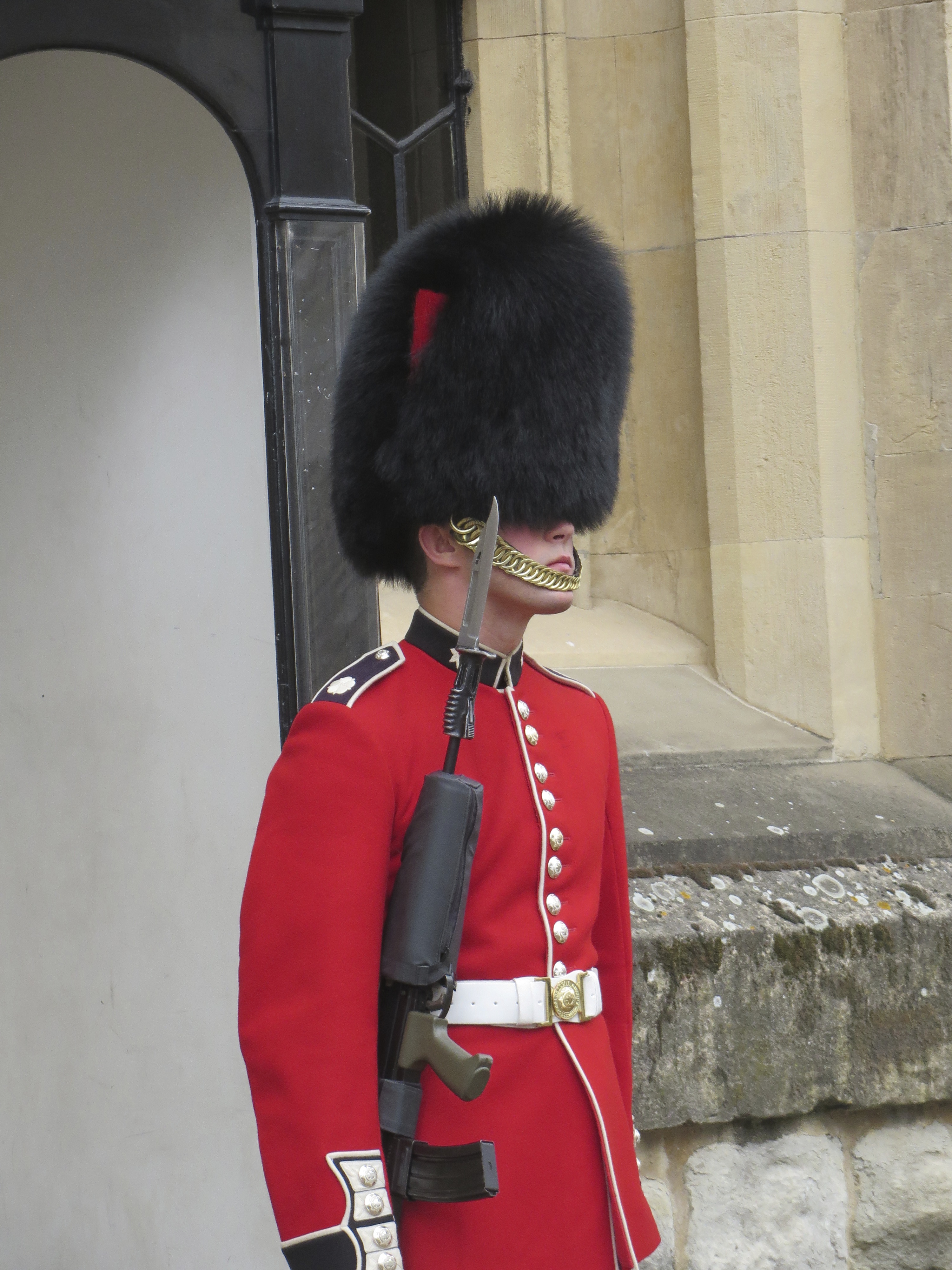
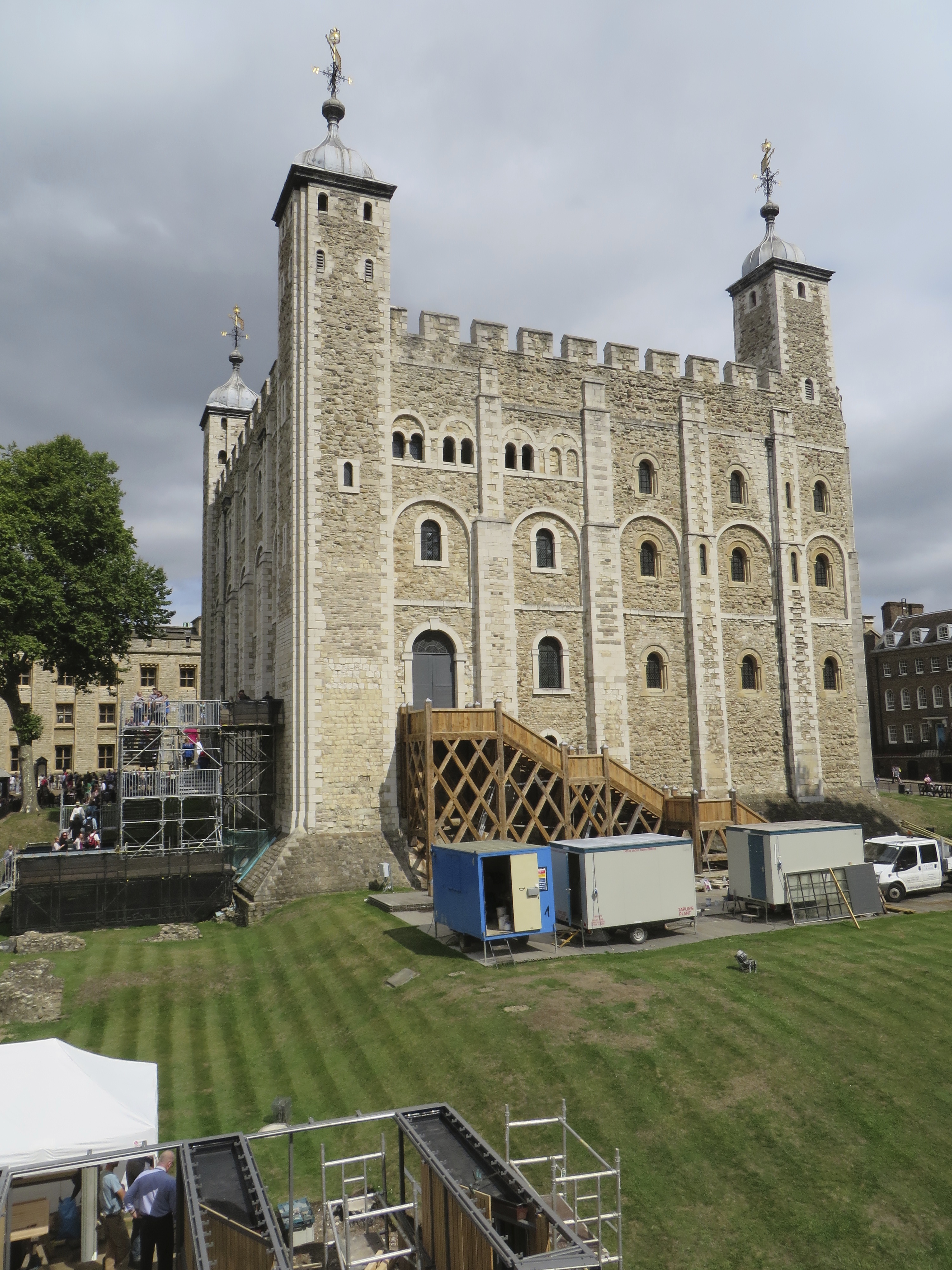
The next morning, we manage to get ourselves to what was previously my favorite place in London: The Tower. It’s a fortress comprised of multiple buildings that span centuries in architecture and that was the backdrop for some of England’s more grisly history, including the place where wives lost their heads simply because Henry VIII had in mind to wed another and where people whose faiths differed from the monarch’s were put to death for heresy. When I was 21, this place sizzled for me. I walked along the parapet where Elizabeth I walked when she was being held prisoner by her sister and felt alive, like I was somehow touching the past. I watched the ravens hopping freely across the green and recited to myself the myth that if the ravens leave, the Tower will fall. (They haven’t left because their wings are clipped, and now, sadly, they are in cages.) I traced Jayne Grey’s name, carved in the wall by her husband before the pair of them were beheaded at the end of Jayne’s 9 day reign as queen and got choked up. I stared at the Crown Jewels and imagined which crown I’d get to wear when Prince Edward finally saw sense and married me. Full disclosure, I also stared at Henry VIII’s codpiece and wondered if I could get Edward to don similar armor periodically to keep things spicy.

IMG_3037

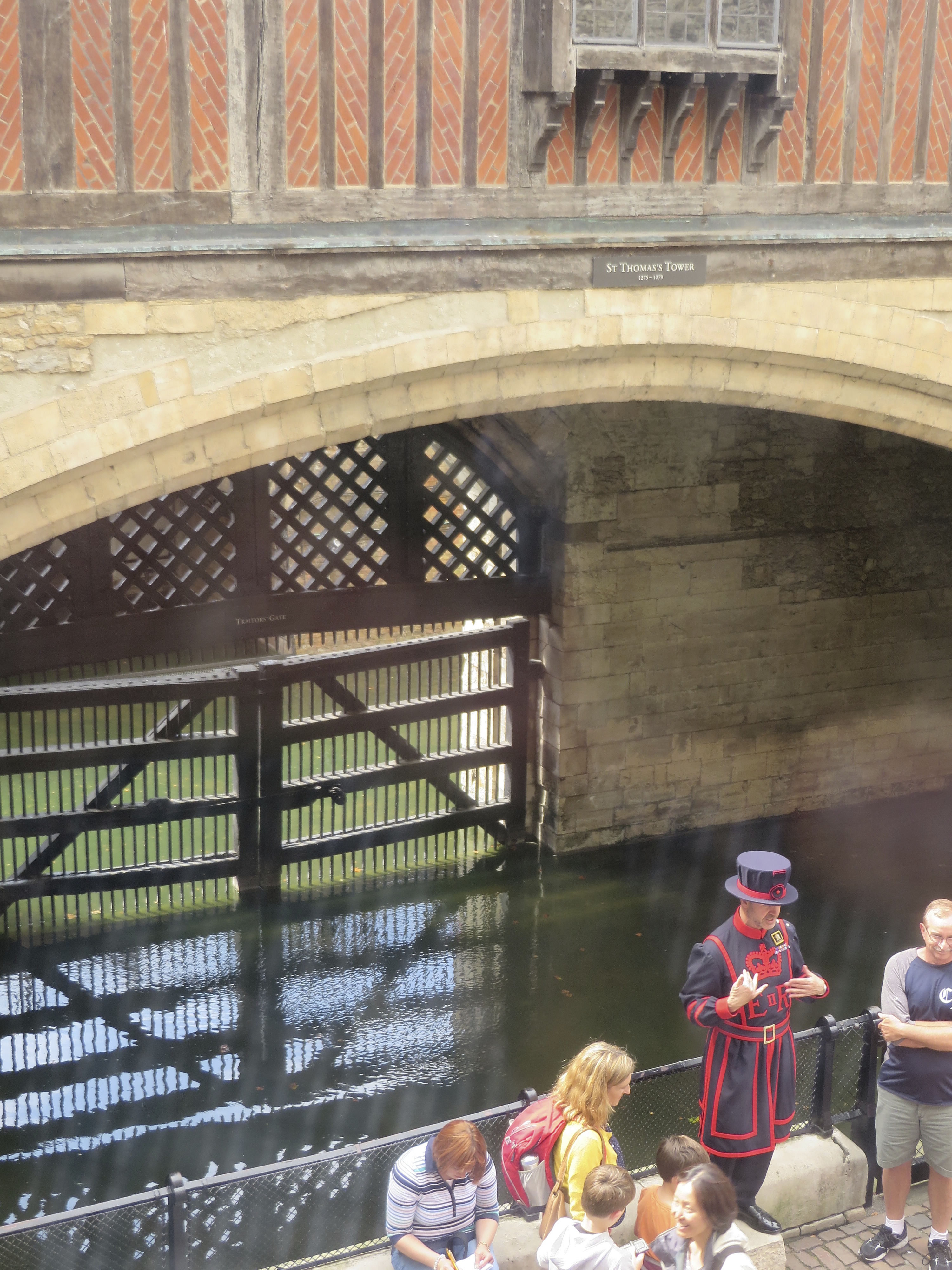
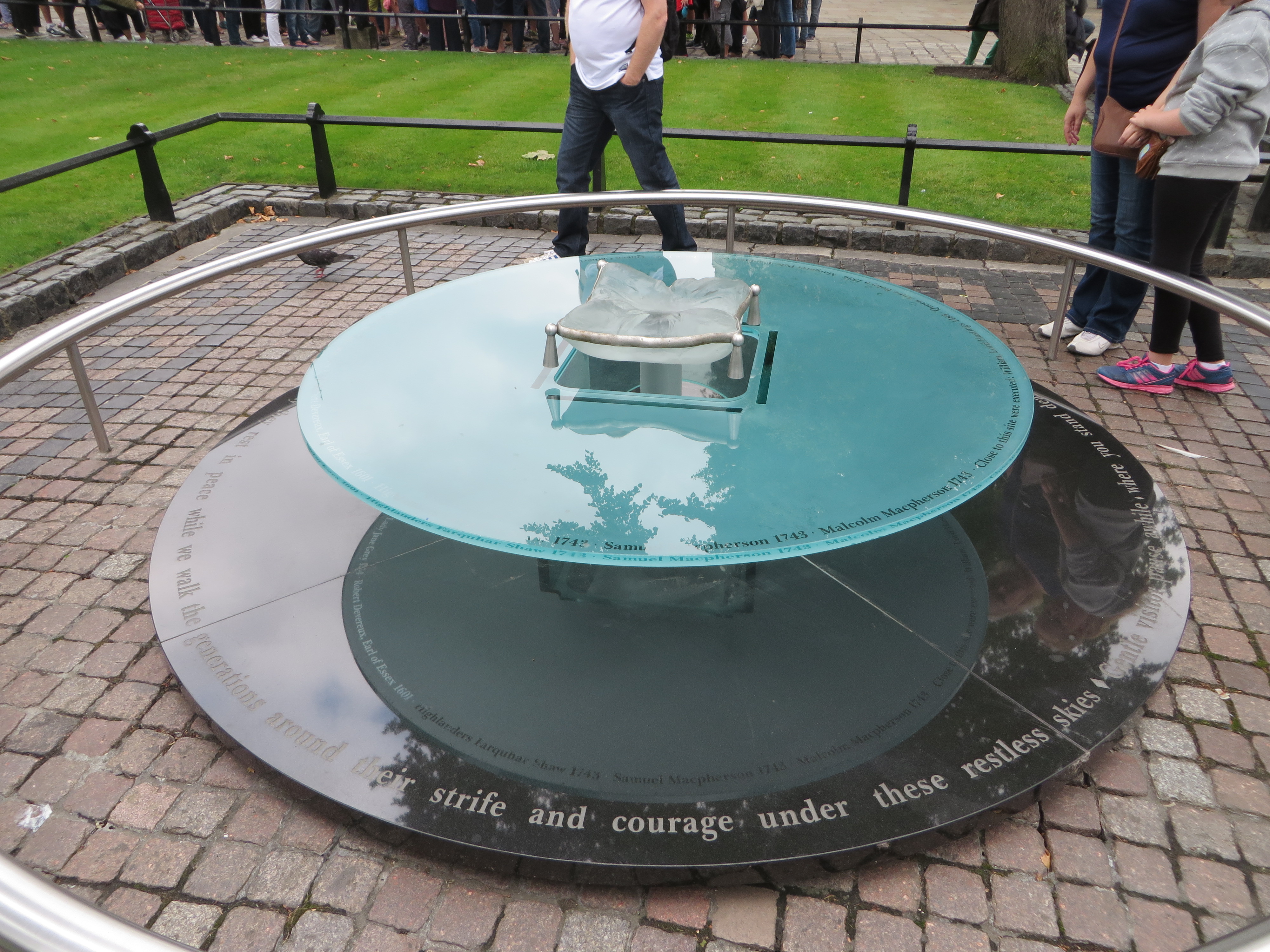
On this August day, the Tower is crawling with tourists. Since last I was here, they’ve built a souped up tourist center and started charging a lot more, including a “voluntary donation” that is in the price posted! There are lines for the Crown Jewels that snake around the White Tower and leave Z and I shaking our heads: I’ve seen them before and he isn’t that interested, so we move on. They’ve refurbished apartments above Traitor’s Gate that belonged to Edward I, which are fascinating in their medieval-ness. In other places, I feel disappointed that “improvements” have been made to entertain children—unnecessary sound effects that make it impossible for me to do my own imagining, a lot of hands-on feeling of feather ticks and metal soldiers’ helmets, and an array of animal sounds from the menagerie that used to live there. I understand the inclination to make history come alive so young people will be interested, but what I notice is most of them could care less about the history and simply want to move from experience to experience. I feel sad for them that they live in an age when grown-ups feel they must entertain children instead of helping them develop imaginations that can fill in blanks, but mostly I’m sadder for myself and Z. There is no time or space now for reflection about politics, faith, war and affairs of the heart without hearing “tigers” growling and the clang of swords from a mock joust. Even Tower Green, which used to have a sort of tacky chopping block to illustrate where heads were lost now has a beautiful monument made of glass and stone with a lovely poem etched into it and a sculpture of a pillow.

IMG_3051

I’m still unsure how I feel about this. The poem is nice and offers a sort of benediction for those who have become cartoon characters in the history books of our minds, but it’s a little too pretty. For me that chopping block was jarring reminder in such a beautiful setting that the Tower wasn’t all banquets and Tudor-era tennis.


But still, why am I complaining about any of it? For an American whose history barely goes back 200 years, it’s amazing to stand in a structure that has existed since William the Conqueror in the 11th Century. I get chills standing in the Chapel Royal of St. Peter ad Vincula knowing that two of Henry VIII’s wives lie beneath the floor, heads no longer intact, and can’t be having much of a peaceful rest with all the tourists that trek through on a daily basis.


Because I’ve always wanted to walk along the Thames—mistaking it, I suppose, for the Seine—Z and I leave the Tower and walk towards Parliament on the Thames River Walk. It is a longer distance than our pop-out map indicates, and more to the point, London is a boom town with a lot development happening along the river, so we walk twenty feet and then have to circle around construction; walk another twenty feet, circle around. It’s hot. We are tired. Honestly, I prefer the Thames in my mind. As we walk away from Tower Bridge, towards London Bridge, Fergie cranks up in my head, and I sigh. I think I’m missing 1988 London. Possibly, I’m missing 1588 London.

I’m Fergie Ferg. Me love you long time.

IMG_3054

Post-Apocalyptic Lifestyles of the Timid and Bookish

Standard
Columbia River

Columbia River

There’s been a heat wave burning through the Pacific Northwest, so naturally my pale Irish American thoughts have turned to the dystopian future that is probably awaiting all of us. I’ve barely left the house for five days—let’s be honest: I’ve barely had clothes on for five days—I’ve been reading the world-is-mostly-over-because-of-flu novel Station Eleven, Z and I finished binge watching The Walking Dead, and we went with Hudge to see Mad Max, a movie so aesthetically assaulting that I kept my eyes closed for the bulk of it. So it’s hard to see the weeks’ long streak of 90 degree heat as anything other than a harbinger of bad things to come.

In other words, this is my annual post about how much I hate summer.

Robert Frost may enjoy debating whether the world will end with fire or ice in his famous poem, but I have no doubt that ice will not be the method. It’s going to be one really big, hot sun and not enough fossil fuels to run the last remaining air conditioner on the planet. This might explain why I buy three bags of ice every three days from the drugstore on the corner and then crunch it obsessively all day long, much to Z’s chagrin.

Aside from the heat, one of my fears for my future post-apocalyptic lifestyle is that I was always one of the first people knocked out in elementary school when we played Dodge Ball. I wasn’t particularly quick or athletic, which was a contributing factor, but often I’d stand there making myself an easy target in order to get it over with. I hated waiting for the worst. In high school when my friends and I would play Ditch ‘em in one of the farmyards, I was always perfectly happy to get caught early and spend the rest of the game sitting on a hay bale at home base waiting for everyone else to get corralled. It was preferable to the heart-pounding rush of hiding under a pine tree and hoping no one could hear my anxiety driven loud breathing. Despite having a competitive spirit in the board game arena, I have very little in the physical world. In terms of fight or flight, I’m almost 100% flight unless someone mistreats or underappreciates Z, and then I want to cut them.

So when I watch something like The Walking Dead, I want to be Michonne, the sword-wielding badass who doesn’t need a gun to take out a herd of zombies. You never see anything akin to terror or dread on her face. She’s fueled by rage and some innate desire to survive, and she is always calm and rarely breaks a sweat. However, I know should I find myself jettisoned into a zombie-apocalypse situation– even with years of training–I almost certainly would not be Michonne or her male counterpart, Daryl the bow-hunting-survivalist-tracker of few words. Instead, I would be the sniveling character who a) must be protected b) inevitably ends up a zombie feast when the source of my protection has “gone out for supplies.”

Last week Z and I drove down to our favorite beach hideaway on the Oregon Coast. It’s a little cottage that hangs on a hill overlooking an outcropping of rocks and endless surf. We always pack our swimsuits and then discover that only small children, people in wet suits, and the mildly insane can brave the temperatures. This year the Pacific was particularly cold and I couldn’t even stand to wade for very long. While folks back in Seattle were trying to find the one restaurant in town that has air conditioning, Z and I were huddled under our beach towels trying to stay warm. We were committed to the beach experience, even if it meant sweatshirts with hoods up. I was particularly pleased with my heartiness the day I did brave the water for a quick “paddle” as Z calls it, and then he looked down and noted that my fingernails had turned blue. (I’ve never been so cold I had blue fingernails before—what an accomplishment.) We didn’t really care though. The colder it is there, the more the beach belongs to us and it’s just the escape from the city that I wanted and Z earned after his long hard slog towards his much deserved tenure.

When we first discovered this outpost back when we were dating and I was living in a cornfield, I longed for civilization and every night we’d drive into the nearest town for dinner or a trip to a big box store to buy unnecessary plastic objects so I’d feel connected to humanity. On this trip, however, I had no desire to leave our little cottage and drive somewhere with traffic lights—a sure sign I’ve been too long living in our part of downtown-adjacent and way-too-populous Seattle.

On the trip to our beach haven, we stopped in Astoria, Oregon, the place where Lewis & Clark spent the winter when they were busy “discovering” this part of the world. Now, it’s a town of almost 10,000 residents where the Columbia River meets the Pacific Ocean. Then, it was, well, nothing but a vision for westward expansion and commerce. Their trip fascinates me for many reasons. I’m in awe that anyone would look at a wall of wilderness, harsh weather conditions and potentially dangerous situations, and think, hey, let’s see what’s out there. Lewis and Clark probably never had a Dodge Ball strategy that involved letting themselves get thwacked with a ball in the first 30 seconds so the horror would be over more quickly.

I am not a camper or an adventurer. I enjoy the trappings of civilization, even as I am critical of it and all the ways it has really messed up the world. As much as I would love not living in an urban apartment building outside of which a fellow tenant sometimes shouts about the pyramids and unfair rent increases at 2 a.m., I also can’t get excited about a back-to-nature lifestyle that doesn’t involve stacks of books and time to read them and electronic devices and places in which to plug them. I’ve heard when you are conquering new frontiers, there aren’t libraries or a lot of down time, and so other than a little travel, I should be content where I am, five blocks from one of the country’s best independent bookstores, two blocks from a modern marvel of a public library, and surrounded by Starbucks full of people reading real and virtual books. Not to mention the heavy duty extension cord that I cleverly put under our sofa so Z and I have easy access to free plus to charge our devices.

This is a war that constantly wages inside of me: this desire for tranquility, space and a view of the gorgeous sunsets like those outside my parents’ country home versus my love of culture and convenience.

Ultimately, these are my fears about a post-apocalyptic life: I don’t want to have to spend time figuring out how to stay fed and sheltered and cool when I could have my nose buried in a book or a screen showing some excellent television programming. I don’t want to have to work out “reading shifts” wherein someone keeps me safe from zombies or marauders while I read the latest Marian Keyes novel or daydream in front of a vista. It sounds like no kind of life.

Fortunately, I’m well-practiced in how to get out of a game of Dodge Ball.

Oregon Coast

Oregon Coast

Hey There, Little Red Riding Hood

Standard

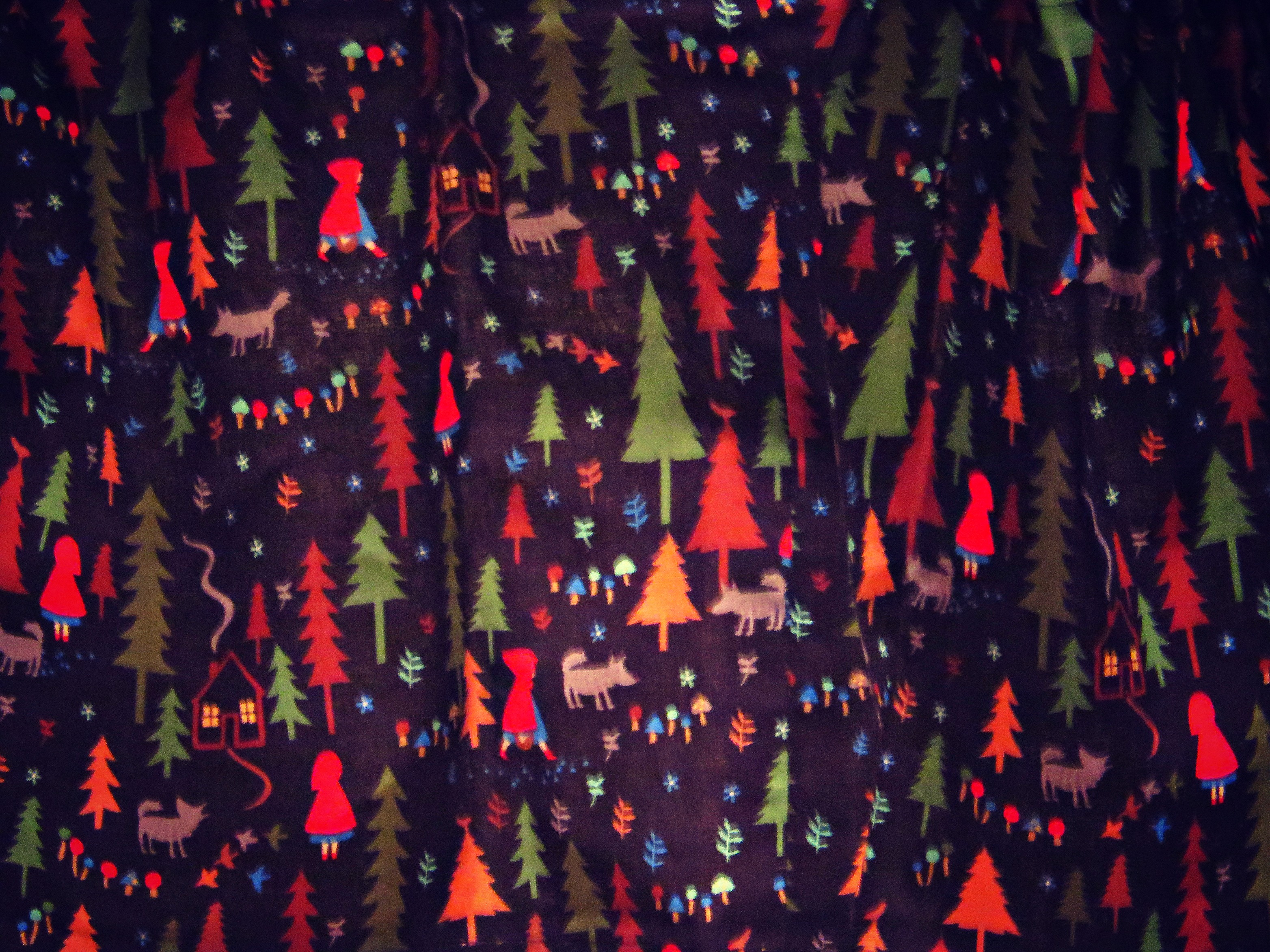
RGSRedRidingHoodMaterialIMG_2441


“Alas for those girls who’ve refused the truth: the sweetest tongue has the sharpest tooth.

—Jack Zipes Little Red Riding Hood and Other Classic French Fairy Tales


I’ve been lost in the writing woods for a few months, hence the lack of blog posts or tangible proof that I’m a writer. For the last hour, I’ve been jotting down lines for this little ditty and then immediately deleting them. I stare at the screen. Make a list of things I think I want to say. Crunch through a cup of ice (which feels really productive even if it is bad for my teeth). Stare at the screen. Read a chapter of a book. Write a line. Delete it. I keep reminding myself that this is a single blog entry and not the opening lines to a novel I hope will win a Pulitzer Prize, but still, the words won’t come. Z will be home in three hours and I have zero faith that this post—let alone an essay I’m trying to finish and ship off—will be done before his key is in the door.


Even eating the last remaining strip of Easter Marshmallow Peeps has failed to get the juices flowing.


Last fall while Mom was visiting Seattle, we were at a fabric store because the elastic on a skirt I wanted to wear had gone rogue. While I was supposed to be finding the necessary repair tools, what I found instead in the kid section was the most delightful Red Riding Hood material. A more sophisticated woman might see it and think it would look nice in someone’s nursery, but I saw it and felt certain that my life would not be complete until I had it whipped up into some curtains to hang in my writing studio.


When I showed the material to Mom and asked her if she thought it would be hard for me to make into curtains, we both knew that what I really meant was, “Could you do this for me, pretty please?”


Poor Mom. I can’t tell you how many of my hair-brained projects she has gotten roped into because I have great faith in both her skills and her love for me. Could you just paint my bedroom that perfect shade of blue? Could you just make me a mirror out of flattened out soda cans? Could you just design, carve a linoleum block, and hand print all of my wedding invitations, even if it gives you temporary carpal tunnel? The fact that she never says no to me is testament to what an excellent (long-suffering) mother she is. Were our roles reversed, I’d probably say something like, “Honey, why don’t you find a YouTube video that will show you how to do it yourself?”


Thus, my favorite Christmas present of the year from Mom was a bank of café curtains that have transformed my little writing studio.

rgsredridinghoodcurtainsIMG_2437

I grew up on fairy tales, both the sanitized Disney and the grimmer versions where badly behaved step-sisters were inclined to get their eyes plucked out. Though I liked the ones that ended with princes and castles, Little Red Riding Hood was always my favorite. As an introverted only child who tried hard to follow the rules, I loved Red’s solitary walk through the forest, her purposeful journey to get to her destination with a basket of treats for her ailing grandmother, her stylish outerwear. Though admittedly, I could never imagine my over-protective mother sending me out into the woods on my own when she knew there were sinister forces lurking behind trees.


A lot of the time when I’m writing, I feel like Red, trudging through the forest, hoping to stay on the path, attempting to avoid wolfish distractions. Often, I fail. It seems only fitting that she should be there with me in my writing studio, while I try to stick to a plan.


When I would teach a fairy tale unit in my composition class, we’d often end up talking about Red Riding Hood and the various endings that befall her depending on the teller of the story. With most other folk tales, I’m always keen to know the oldest, most original version because I see that as the “true” one. But with Red Riding Hood, I don’t care how it ends. It doesn’t matter to me whether she is eaten whole by the wolf and either digested or rescued by a woodsman and his sharp ax just as she begins simmering in gastic juices. I don’t even really care if she saves herself. (Okay, okay. I hope she saves herself.) For me the real crux of the story is that moment when she must choose between following the rules given to her by her mother (“never talk to strangers” and “stick to the known path”) or whether she will follow what I always believed was a Midwestern cultural imperative to be polite. On the surface, the wolf demonstrates no savage tendencies, and in most versions he isn’t even trying to get her to leave the path. Instead, he offers to accompany her once he knows where she’s heading, and it is very difficult for a girl to say, “No thanks” without feeling rude. Even so, when I read the story, I want to shout at her, “Ignore him! Tell him nothing!”


It occurs to me now, that pre-Z, this might explain why my dating life was so abysmal. On multiple occasions the most benign of men might say hello to me or ask me a question as a sort of opening line, and instead of being flirtatious in return, I could see only wolfishness in the eyes, a salacious sheen on the teeth, and I would run—sometimes literally—the other way. I have no doubt, the “danger” was all in my head. Often I give Z a hard time that he made me pursue him for so long before he was willing to admit we belonged together, but the truth is if he had seemed even the least big eager, I’d have zipped away at lightening speed. Well played, Z. Well played.


Monday I went down to the International District to sit in the waiting room of a doctor’s office while Z was inside getting some results from a routine doctor’s visit. It’s not our neighborhood and not a doctor we are familiar with. Though the receptionist and nurse were friendly to me while I sat there, I felt out of my element. It was just me sitting across from a fish tank that appeared not to have as single fish in it, reading the signs plastered on the walls in English and then trying to find meaning in the Chinese characters beneath the English letters, as if I were finding a pattern to crack the Enigma Code.


A tall, older guy came in, moaning and dragging his leg behind him. Oh no, I thought. Drama. I hate public drama and there is too much of it in the city. He dragged himself up to the window and said something to the receptionist and they both started laughing. Tension broken. He wasn’t really in pain—he was waiting for test results too—and he’d just been trying to add a little levity to the day. He sat down across from me and waited. I poked around on my cell phone.


He sort of relaxed against the wall and started singing low and sultry like Barry White: Girl, come on back to my place. You know we’ll have a good time. Girl, come on back to my place….


Sexy as I was there in my green fleece hoody, un-brushed hair and big middle aged Midwestern body, I felt fairly confident that he wasn’t singing to me. And even if the amazing Z hadn’t been on the other side of that door, I wouldn’t have been inclined to follow this guy out into the concrete forest that is Seattle if he had been making up this song just for my ears. There was a certain confidence he emanated that seemed related to his belief that his dulcet tones would stir something up in the women of the International District, and that confidence annoyed me.


I stared at my phone like I was cramming for an exam, like I was deaf and couldn’t hear this serenade that filled the small room. (Never has an article about global warming been so mesmerizing.) I could not allow myself to look up. I could not do what I normally do in a doctor’s office and smile at the person sitting across from me before quickly looking elsewhere lest I see overly interested in what might be ailing them. It felt dangerous. The guy sang several more choruses—all with similar lyrics—before letting out a big yawn and then asking the receptionist to be let into the back to use the restroom. My sense when I heard the yawn was that he found my response uptight and boring, though in all likelihood this entire storyline was unfolding in my head only. Even so, when Z came out, I nearly leapt into his arms.


This is why I need to brave the forest in my mind, sit at the desk, get the words in my head out onto the page. Because if I leave those words inside for too long, it just gets weird.

Flashback Friday: An Omnibus

Standard
Lighthouse, San Juan Island

Lighthouse, San Juan Island

[Herein are three baby posts from the first spring break I spent with Z in Seattle in 2007 right after we’d first gotten together. There are other posts from this visit that I’ll flashback to at another time.]

Thursday, March 15, 2007

Flying Alone

The main reason I shouldn’t fly alone is this: I hate people. When I fly with another person, I’m usually too engaged in conversation to notice that despite a sea of empty chairs at the Indianapolis airport, two different sets of people have decided to bookend me. But today, I am alone, so I loathe them instantly for crowding me, and even though I know it is the airport that smells of dirty feet and not my new neighbors, I blame them just the same. The lady next to me just flopped down a red and white L.L. Bean tote that has “winkdogs” embroidered on the side. There’s no telling what a winkdog is, but I’m pretty sure I don’t like them either. I imagine they are small and yappy.

Anyhow, this is one of my character flaws. When it is 6:30 in the morning and I’ve been up since 3:00 a.m. and I had to drive thru the spring rains Central Indiana to get to the airport, I just don’t want to be bothered. I should be excited because I’m on my way to Rick, but it is just too early in the morning for so much humanity. Add to this that it isn’t even the REAL 6:30 but the imposter 6:30 the governor imposed on us when he made us adopt Daylight Savings Time. My jeans are soaked to the knee from the walk from the car to the shuttle stop and back to the car to retrieve my iPod, which, it turns out, was actually in my pocket, and then back to the shuttle.

On the plus side:  so far my flight is on time and Z is on the other end of it waiting on me. (Well, technically Z is asleep, but if he were awake, he would be waiting on me.) I must learn to embrace my co-travelers and their winkdogs.


Olympic Sculpture Park, Seattle

Olympic Sculpture Park, Seattle

Friday, March 16, 2007

Eternal-ish City
When I was in Rome two years ago, I met a friend of the cousin I’d gone to see who was resident director for some American college students who were staying in the university’s hotel/dorm. She was in her early twenties, small and perky, and she was climbing onto the back of a motorcycle with a handsome Italian man. They even said ciao as they sped away into the night. God help me, I was jealous. I was jealous because I was no longer twentysomething. I was jealous because when I was twentysomething not only was I not living in Rome, but I was in Indiana not riding motorcycles with handsome foreign men. I was jealous because I imagined their ride would end somewhere romantic, outside the Pantheon, on the banks of the Tibor, near the Trevi fountain, and then at some point they would get back on that bike and go somewhere private to have loud, hot, sweaty, Italian sex. While Puccini played in the background.

I really kind of hated that girl and I only knew her about three minutes.

Today, I was in Seattle, which is not as sexy as Rome. I was walking in army green Crocs (not sexy leather boots) instead of riding on the back of a sexy motorcycle. My hair was it’s typical Seattle, Meredith Grey unsexy. Instead of looking at ancient, sexy lifelike sculptures carved into Italian marble, I was looking at abstract cubes and giant typerwriter erasers in the Olympic Sculpture Park. But I was with Z, who smelled so good and held my hand so well and who occasionally molested me in little, welcome ways behind particularly big sculptures. I thought about that girl and realized young, young her could not have been half as content, half as giddy, half as sexed up as I was, standing next to my 50% Italian as we tried to figure out what in the world a series of rusted shapes could possibly mean, as we laughed at the sometimes pretentious explanations of the hulking heaps of metal, as we noticed a young mother who was breastfeeding her baby on one of the works of million dollar art. The sky was clear, the Olympic Mountains were in the distance, the waters of Elliott Bay were calm.

Yeah, I feel a little guilty about that hate now.

SanJuanIsland

Wednesday, March 21, 2007

Island Girl

Here’s a tip: when you find a deal for a cheap room in an historic inn on the San Juan Islands, make sure the room has a bathroom included and that you aren’t expected to share with other guests.

The ferry ride on Monday from Anacortes to San Juan Island was beautiful but cold. We wended our way between islands and Z and I made periodic dashes outside to stand on the bow for a cold but unobstructed view. We guessed about what islands we were passing, and as is typical of me, I feared we were passing better islands than the one we had made arrangements to be on. In a little less than an hour we had docked in Friday Harbor—the “city” by island standards—and made our way up to Friday’s Historic Inn, where we were cordially greeted and given a key to our room. That’s when we discovered that despite beautiful antique furnishings and a harbor view, we would have to go downstairs for the shower and toilet. I’m not a princess, but I am an introvert with certain hygiene requirements, and I was not prepared to spend my two-night un-honeymoon in the hallway of Friday’s Inn making small talk with hair-shedding, toilet-seat-leaving-up tourists while I waited my turn. No, it wouldn’t do.
The desk clerk didn’t seem surprised at all when I came lumbering back down the stairs with my credit card in hand and was directed to a slightly pricier suite with private bath and Jacuzzi.

I don’t know if I’m cut out for island life. The San Juan Islands are beautiful and the views are breathtaking. This is landscape I was meant for instead of the tropical tableau that comes to mind when one hears “island.” The people are friendly and the pace is very laid back. But there is this tiny panic in my core—what if I need to go to Wal-mart at two in the morning for nail polish remover? There is no Wal-mart unless you go back to the mainland, and there is no ferry at 2:00 a.m. WHAT DO YOU DO IF YOU HAVE A LATE NIGHT NAIL POLISH REMOVER EMERGENCY??? I’m reminded of my last visit to the much less inhabited and much more rustic Inisbofin off the western coast of Ireland, when the electricity was shut off for the entire day while they did upgrades on power supply from the mainland and I had this sudden, crazed desire to plug something in.

But mostly I am able to keep the dogs of anxiety from barking. Z is good for that. We have tame adventures, driving around the island, having an impromptu picnic on the doc in front of the Hiro Hotel where Teddy Roosevelt stayed a couple of times. We walk on the beach and pick up driftwood for a shelf Z hopes to build (but fears will stay driftwood on his kitchen floor) [Note: it DID stay on his kitchen floor for over a year and then was unceremoniously thrown out. Also, we discovered belatedly it might have been a crime to collect the driftwood in the first place.] We look for whales and see them with every crest of wave, only to discover a log or a shadow instead. We look at a seal/sea lion and try to remember how you can tell one from the other before it swims away. We drive past Pelendaba Lavender Farm after buying lavender from their shop in town, where Z impresses me terribly with his international-ness when he asks the clerk what the South African connection is because he recognizes the name as Zulu. (I can’t remember what it means now, but think it is “please do not gag while eating our lavender-flavored chocolates.”) We visit baby alpaca’s and I consider buying $75 alpaca slippers and say a silent prayer of thanks when they do not fit. It’s a good life, this island one.

There is a lot to be said for a few days of relaxation on vacation instead of the style of tourism I usually sign up for, which involves packing as much activity into as little time as possible so I can say I’ve done it all. They say Friday Harbor is hopping during high season, and if that is so, I’m glad we came in March when the roads weren’t crowded, their were no waits in restaurants, and we had our pick of rooms that were en suite. We both agree that it is a place we would return to, though I know as the ferry takes us back to Anacortes I’m going to wonder if next time we shouldn’t visit one of the other islands to see what it has to offer.

Flashback Friday: Rip Van Winkle & the Gastritis Queen

Standard
[We return here to a recently reunited, fresh-in-love, Z & Beth. Sadly, things are not going well.]

3 January 2007

I made it to Seattle before the clock struck 12. Just barely. Z and my luggage were both waiting on me, so I felt welcomed. We took a taxi back to his flat, where he had New Year’s champagne waiting as well as those little confetti bottle poppers. By the time we got back there was precious little time to get anywhere fun for midnight, so we watched the Space Needle fireworks display on television. It’s weird to be one of the last places on the planet to experience the New Year. I kept waiting to see Dick Clark, but he’d been in bed for three hours—2007 was already old news by the time it hit the Pacific Northwest.Don’t judge me harshly, but I’m a little superstitious. It’s haphazard superstition. I’d walk under a ladder, but I don’t like a candle in my house with an unburned wick. The whole black cat thing annoys me because it smacks of feline racism. One of my superstitions is that however you spend New Year’s Day will pretty much determine the shape of your year. It’s not looking good for us. Z was still horribly jetlagged, so he slept until 6 p.m. on January 1st. [It is worth admitting here, that I went mentally ill for a few hours and convinced myself that he was pretending to be asleep because he realized he didn’t want to spend any time with me, so there was some cabinet door slamming and a pouty walk up to McDonald’s where I ate alone and wondered if I should book an early ticket back home. I hadn’t yet flown to Zimbabwe and didn’t know about jetlag of this magnitude.–RGS] Once he was up, we walked to his office so he could take care of some things before classes started and then decided to eat at our (formerly) favorite Mexican place. It was not so good as we remembered, and by 3 a.m. I was awake with “gastrointestinal distress.” By the time I woke up the next morning, I was achy and still making regular trips to the bathroom. Between my marathon bathroom visits, we lounged in bed watching Gerald Ford’s funeral. Not really the honeymoon-ette I was planning.

Also, my hair has gone from Meredith Grey to Slobodan Milosevic. Who knew it could get worse?

Z went to work and left me alone with my ailments. He called and suggested I go to the ER around the corner if I felt too bad. I laughed at this. It’s just the flu. We hung up. And then I started thinking about all the symptoms of toxic shock syndrome and how my recently purchased contraceptive sponges could cause said syndrome, read up on it on the internet and discovered I had every symptom except a sunburn-like rash. Hmmm. Intuition told me this was an unlikely diagnosis, but the big warning at the bottom of the box saying “Seek medical attention immediately” scared me. I weighed the evidence. These really were the worst flu-like symptoms I’d ever felt. And would I be achy if it was Mexican food poisoning? I walked across the street to the ER.

If you ever have to go to an emergency room, try to go to one in Seattle. I’m not a regular ER visitor, but based on my experience at my local one in August, I can see a vast difference. Here, I was treated kindly, I was given warm blankets, I was clucked at and reassured. No one made me feel as if I had no business being there. The doctor looked like someone who would turn the heads of both McDreamy and McSteamy’s. She was kind. Kind and beautiful and smart. It was like night and day when I think about the shark-tooth wearing doctor I had to see in the fall and how I felt like I was wasting everyone’s time.

Z came and entertained me, though I kept dozing off from the IV they’d given me for dehydration. The blood work indicated that it was “just” gastritis, so they gave me some drugs, some instructions, and sent me on my way. One of the drugs to stop nausea I vowed not to take: a suppository that Z and I immediately referred to as a “spy pill” like the cyanide capsules that are last resort for secret agents.

So it definitely isn’t the start of 2007 with Z that I was anticipating. He’s been a wonderful care-giver though. I awoke this morning to Post-it notes all over the apartment with well-wishes and numbers where he can be reached and two cans of chicken noodle soup that he had gone out last night in the rain to buy for me. I feel better. The sun is out. My fingers are crossed that he won’t get sick and that the rest of my stay will be good. And also, that my hair will start looking more like mine and less like Meredith Grey’s and now-dead foreign leaders.

Our Fake Life

Standard

RGSTouvelleHouseexterior

A week ago, Z and I embarked on a road trip from hell to get to southern Oregon to celebrate the 90th birthday party of a family friend of his. Forty-five minutes in, I had a skinned knee, we’d had to return one rental car in need of engine maintenance for another, and we’d been in a high-speed fender bender on I-5 that could have been deadly but instead was just nerve-wracking. It was pouring with rain and while a shaky Z pointed the car to downtown Tacoma so we could grab lunch and collect ourselves after the incident, we considered the possibility that we weren’t meant to make the journey. We both wanted to go home and pull a blanket over our heads and send our apologies to the Birthday Girl.


I’d been looking forward to the trip ever since we’d made plans, but after this start, I’m honestly not sure what made us climb back in the car and keep driving south other than a shared belief that you need to get back on the horse that threw you. Well, that and a desire to fulfill some fantasies.


Though I grew up content to be the only child in our little apartment, I was fascinated by larger families and some of my favorite TV viewing included families where there were more than the American Dream recommended 2.5 children: “The Brady Bunch,” “The Waltons,” and “Eight is Enough.” There was something about all that noise and hubbub and ability to disappear in a crowd of siblings that intrigued me. Because it was just Mom and me coasting our way through the 1970s, we often found ourselves staying with friends and living on the periphery of other people’s lives. While I was never disappointed to return back to our quieter, more peaceful existence, when we were staying with family friends, I loved observing what life in a larger sort of family might be like. One of the more fascinating qualities to me was that the larger the family the more able it seemed to incorporate additional honorary members. In our little apartment of two, if we had a guest, it was an Event. But we once spent an entire summer with family friends and while we were staying with them, two other people were also summer guests and seemed to barely affect the functioning of the family other than the number of chairs that had to be pulled up around the table. I consider these expeditions into a larger tribe to be a highlight of my solitary childhood.


When I married Z and moved to Seattle into another apartment of just two, I wasn’t thrilled about the loss of easy access to “my people”—my cousins, my friends, and those above-mentioned family friends. I did, however, inherit family friends of Z’s who at the time were living near Seattle. A few decades earlier, the Birthday Girl and her husband had been staying in Z’s hometown as part of a service group—think Doctors Without Borders—for retired professionals, where her husband was offering his knowledge to the local paper mill. Z was soon to leave for college in America, so when Z-ma found herself playing bridge with this American woman, she had a lot of questions for her. A friendship was forged and the Birthday Girl and her family provided Z with the sheets and towels he didn’t have room to bring in his suitcase. Later, they hosted young Z on his first trip to the Pacific Northwest, where he met the family. It seemed fortuitous a few years ago that Z got a job in Seattle that put him in close proximity to these family friends.


My first Thanksgiving away from Indiana—when I was weepy because I missed home but insisted it was only because I couldn’t find the box-mix of gingerbread I’d been eating since I had teeth—was spent with the Birthday Girl and part of her family.  I was happy to feel connected to someone out here. We all sat around a huge round table with a large Lazy Susan in the middle of it, spinning helpings of food around to each other. I looked at the members present and imagined the life they’d had together and apart in this other hunk of the country, and because I was on the outside looking in, all I could envision was something akin to a more contemporary Norman Rockwell.

When we would visit the Birthday Girl, I’d ask her about her life as a young woman, a young mother, a grandmother. I was itching to hear her stories about going to work at Oak Ridge when the US government was piecing together the atomic bomb, how they’d lived in Mexico for a time, how she, who had done a lot of volunteer work for Planned Parenthood, had ended up with an astounding number of grandchildren and great grandchildren. I’d study the artist’s renderings of the various houses the family had lived in that hung along her stairwell and look fondly at the wedding photos of all her children that hung above the piano.   I loved her house and the way I felt cared for there while looking out at Puget Sound. I even loved the spread of magazines on her coffee table: National Geographic, The Atlantic, and Smithsonian that made me feel better informed just by being near them.


A few years later after her husband had died, she relocated to Oregon to be nearer her daughter. Z and I felt a little bereft. It’s not that we saw her daily or weekly, it’s not that we talked to her with any regularity, but knowing that she was nearby made us feel connected to something beyond our small city life. Not long after she left we found ourselves driving near her house and it was almost more than we could bear to know she wasn’t inside, having a cocktail and reading those magazines.


I-5 South thru Oregon

I-5 South thru Oregon

So, despite the accident, we headed south and both of us had some mini-version of PTSD wherein we felt certain that every car and big rig was about to careen into our lane and sideswipe us. The traffic was slow. The rain never let up. Fog set in, and though we should have been at our destination before the sun went down, the trip took two hours longer than it should have, so I was steering the dented car up and down mountains in the dark. It wasn’t “unsafe” in that the traffic by then had thinned out, but it was unnerving because the wipers were sub par and the unfamiliar road with twists and turns offered no view into the distance so we could anticipate where the road was taking us.


Eventually, we reached the Birthday Girl and her family, where we were greeted as if we were part of the clan instead of interlopers. We caught up with various family members, watched its newest members tumble around on the floor, talked to the most recent crop of young adults about their plans for the future. It was chaotic and loud and fun. We stole a couple of hours with the Birthday Girl herself and were happy to see her looking healthy and willing to talk about the books she’s reading and her bridge games and specific memories we asked about. It might not be our family, but it felt like a real gift to be included in this one’s big milestone celebration. Our only regret was that Z-ma wasn’t able to be with us so the pair of them could see each other again.


TouVelle House, Jacksonville, OR

TouVelle House, Jacksonville, OR

We were the only residents our first night in the TouVelle House B&B, a gorgeous Arts & Crafts mansion decorated with period furniture and trimmings. Normally, wherever I stay, I feel like my room is “mine” and the only time I’m in a lobby or shared living space is when I check in or check out or, if in Ireland, someone is feeding me a big Irish breakfast. But this place was too beautiful to go scurrying up the steps to our suite. Z and I came in from the rain, shook off our raincoats in the huge entry hall, made hot drinks for ourselves in the darkly paneled dining room, and then settled down on the Stickley-esque furniture next to the fire in the expansive living room. I’ve always admired Arts & Crafts houses but felt it would be too difficult to live a modern life in one while making it look the way it was meant to. But this night was our chance to try it on for size. The fire crackled while we talked about politics and world events and the annoyance of the drive down. Neither of us were making a mad dash upstairs to our screens… in fact, it was as if we were living in a pre-screen era. We refilled our mugs and talked some more. In the flickering light, it was easy enough to pretend it was our house and this was any ordinary Friday night for our more sophisticated alter egos.


The next morning, we shuffled downstairs to the gourmet breakfast and chatted with the owner, who looked entirely too young to own a house so grand. I peppered her with questions so I could better understand what a day in the life of an innkeeper is like, and because I’m always curious about how people ended up where they are. She was friendly and we felt well cared for as she made suggestions for the day’s activities and offered to make us a to-go breakfast for the next morning since we hoped to be headed home before the regular breakfast would be served.


TouVelle House, Jacksonville, OR

TouVelle House, Jacksonville, OR

Other than the potential nightmare at the beginning of the trip, the weekend was a dream. A sort of fantasy. Because the TouVelle House was not ours, I didn’t have to think about how the property taxes would get paid or how much it cost to heat such a big space or whether any of the beautiful artwork might “accidentally” end up in a guest’s suitcase. (There was a clock there I really wanted to bring home!) I only had to sit by the fire and slide into the 400 count sheets and pretend it was mine. I could pretend the owner was our friend who was feeding us not because we paid her but because she wanted us well-fed and happy. I could pretend that big, unwieldy family a few blocks away was my own without having to jockey for time to myself or ferry someone to a doctor’s appointment or look at the breadth and depth of the family history and wonder what my place in it was. I could just let it all wash over me and for a minute try on a different sort of life.


When we come back to Seattle, I’m always a little indifferent. If I’m with Z, then that is home, but there are other places that call to me and so I don’t often walk into the door of our little apartment with the same exhalation of relief that I do when I return to my folks’ place in Indiana, for example. Even though the drive back was kinder than the trip down to Oregon, when we crested the hill on I-5 and saw Seattle splayed out before us, I felt a little flutter beneath my ribs.

The spell was broken, but I didn’t mind.

TouVelle House, Jacksonville, OR

TouVelle House, Jacksonville, OR

Flashback Friday: Ring Out the Old

Standard

Nashvilleclock

(In this flashback, I’m making my first trip back to see Z since we’ve become a couple. It’s New Year’s Eve and I’m desperate to get to him before the clock strikes twelve.)


I’ve already failed the first test of a long distance relationship. I had a little, almost tearful, freak-out. United had a bit of a problem, so I was late landing in Chicago and missed my connecting flight to Seattle. As did, apparently, everyone else in a 500 mile radius. I had been assured that United really takes good care of their people and that they’d have it all sorted for me and have me on the next flight by the time we landed at O’Hare.

Hardy har har.

Once in O’Hare, I stood in line for a half hour and then gave up because it was clear that if I continued to wait, all flights to Seattle would have departed. Then I waited on the customer service line for 40 minutes, and the situation got more and more desperate. Finally, the customer service representative told me that she could get me out in TWO DAYS. She said this cheerfully, as if this is all just part of their friendly service. As if I would like the whole Tom Hanks “The Terminal” experience for myself. Because it was weather related (rumor has it that it wasn’t technically weather but that United had run out of de-icer), there would be no compensation, no nice hotel. Just me, wandering around O’Hare for two days, buying travel pillows at Brookstone and covering myself with McDonald’s sacks.

So I did what any normal girl does. I called my boyfriend and almost, but not quite, cried. You would have thought I’d just missed the last helicopter out of Saigon in 1975. It was as if this meant I would NEVER see him again. The end.

He is a world traveler and thus was not as disturbed and had a variety of suggestions, all of which meant me standing in long lines, talking on a crappy cell connection to strangers, and, as he put it, “being firm.” What I could see that he could not was that this was hopeless. There were 60 people ahead of me for a flight out the next day.

“You must be firm,” he said. “That’s the only way to get anything done.”

This is one of our bigger differences, Z and me. In the world of Fight and Flight, he is the Fighter and I am the Flighter. (Only today my wings were clipped by de-icer.) What I wanted to do was quick book another ticket on Alaska Air for a thousand bucks and run away to him. Do I have a thousand bucks? Uh, no. But I do have plastic and this seemed like an emergency. I told him I had to go because I feared the crying and I’d like to save tears for something really important.

I wandered around, stood in line, felt hopeless, called my cousin in South Bend to see if perhaps I could spend two days with her. (She wasn’t home.) And then Z called. He’d found a flight out of Midway if I wanted to book it. “It’s pricey,” he said. How much? Half the cost of what I secretly paid to get to him on New Year’s Eve so we could start the year right. I told him I was being punished for greed and he laughed when he found out how much I paid because of my own impatience, and that made it all okay. Z’s laugh should be made a ringtone.

I had time to kill in the Loop so I made my way downtown on the El with all the TSA workers whose shift had ended, so I felt very safe and very much like I was just one of them. Someone asked for directions, and I was pleased that I could (sort of) answer them. Chicago always comes back to me like, well, what? Riding a bicycle?

It’s still Christmassy and Chicago is a great city for Christmas. I went to the former Marshall Field and was disturbed by how Macy’s has made it, somehow, more tacky, less grand, and just like every other store at the holiday. The Christmas windows were still good with animatronic Mary Poppinses, but the inside decorations could have been JC Penny. Carson, Pirie, Scott, the other former staple of downtown Chicago shopping,it turns out is going out of business. In the past, their window displays have rivaled (and frequently surpassed) Marshall Field’s, but this year the displays were just of things you could get inside for 40% off. I decided to run over to the Midwestern-Sized Woman Store on Wabash to buy something to sleep in in case my suitcase doesn’t catch up with me tonight. (It supposedly caught the next flight to Seattle—the one I wasn’t allowed to catch!) Only there is just a shell of a building where it used to be, and next to it at the Champlaign Building where I spent many hours lurking in the lounges of the School of the Art Institute of Chicago, is also a shell. The sign proclaimed that a new skyscraper will be built there that will change the skyline.

I can hardly wait. Don’t people know the world as I knew and loved it is meant to be laminated?

So I bought some haircare products (Meredith Grey hair has begun in anticipation of Seattle, it would seem), gave money to some homeless people because they were full of New Year spirit, and I marveled at how I must have lost a lot of weight in the last two months with all of my difficult gym work because my pants were really bagging in the seat. Some more people asked for directions. I cruised around my favorite streets. Then I hopped the Orange Line to Midway, checked in, bought an oversized Chicago T-shirt just in case my suitcase never shows up, and then went thru security. The TSA officers suggested I should have a happy new year, but also, perhaps I should zip my fly. My pants felt huge because they were unzipped and my giant turquoise underwear was greeting tourist and native a like.

Now I am at the gate, waiting for the plane to get here to whisk me off (please God) and as I look around at my fellow travelers I wonder how many of them saw my underwear earlier.

To recap, 2006 has ended with flight woes, flat hair, and underpants flashing. Here’s hoping for a brighter, “fuller bodied,” well-zipped new year.