Category Archives: Ugliness

There Goes the Neighborhood

Standard
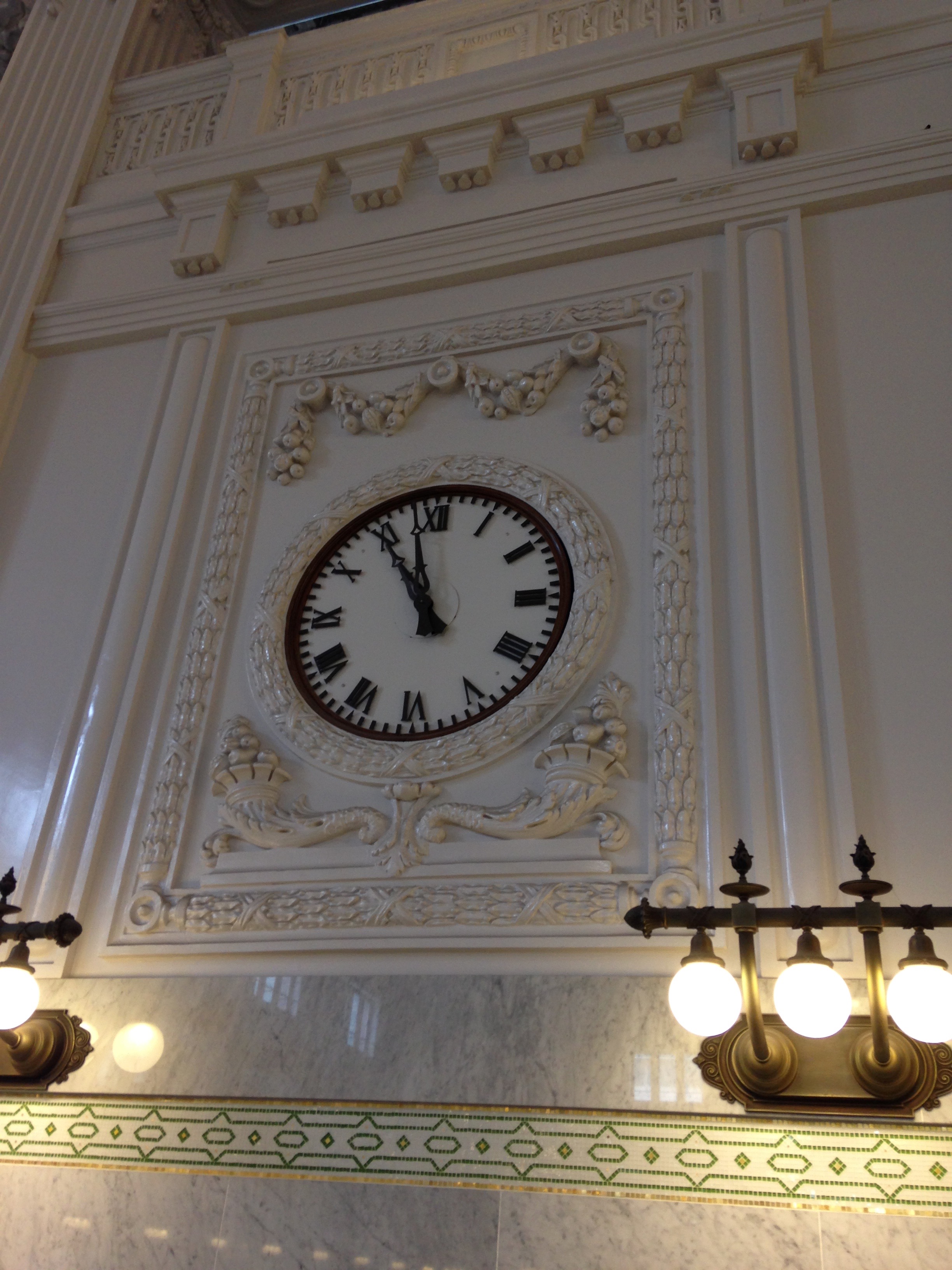
Clockface with Bartell Drugs written on it.

Headline news in our part of First Hill is that the local Bartell Drugs at the corner of Madison and Boren is closing in a few days. Between this and our old apartment building having turned to dust, I’m feeling like a crotchety old crone, longing for yesteryear.

Last week when I was entering the Amazon Go that lives beneath Oh La La, I asked the school boy coming in behind me to wait until the gate had closed before he waved himself in with his Amazon phone code in order that his pizza and soda wouldn’t get charged to my account. I said it nicely, not like a Karen at all, but then I heard his friends laughing and saying, “Yeah, Noah. Don’t go in before the gate has closed.” I could tell from the tone and general hilarity in their voices that they were not making fun of this Noah kid but instead making fun of me.

Reader, this was like a stab to my heart. I’ve always liked seeing these Catholic school boys—young men—in their uniforms, with their short hair, politeness when in the company of adults, and look of the future on their faces. On lunch breaks and after school and after basketball practice, we see them at the local eateries, in the above-mentioned drug store, and in Amazon Go, the store that makes you feel like a shoplifter even though you aren’t because there’s no cashier and some kind of magic that alerts Jeff Bezos to what you put into your bag, charges it to your credit card, and then you walk out.

Outside shot of Amazon Go store.

So, I could have ignored them, but instead, it was terribly important to me that I prove to them that I was cool and not a cranky witch. I turned around and said, “So do you not have to wait for the gate to close?” I asked with my eyes big, imploring them to explain the technology to me, even though my goal was not to have it explained but to make sure they knew I was not a person who despises youth.

Noah, bless him, explained very earnestly that it’s not about the gate closing, but once you hear the beep of the next person waving their phone/QR code on the scanner that you know you’re in the clear and all Red Bulls and Skittles will be charged to the next person’s account and not your own.

“Thanks for explaining that to me,” I said before making a beeline to the bakery case, beating them to the iced maple bars before they could clean them out. I’m not sure I softened relations between Gen Z and Gen X—we are, I believe, comrades after all but that’s another blog post—but I like to think at the very least the Karen scoreboard next to my name is still set on zero.
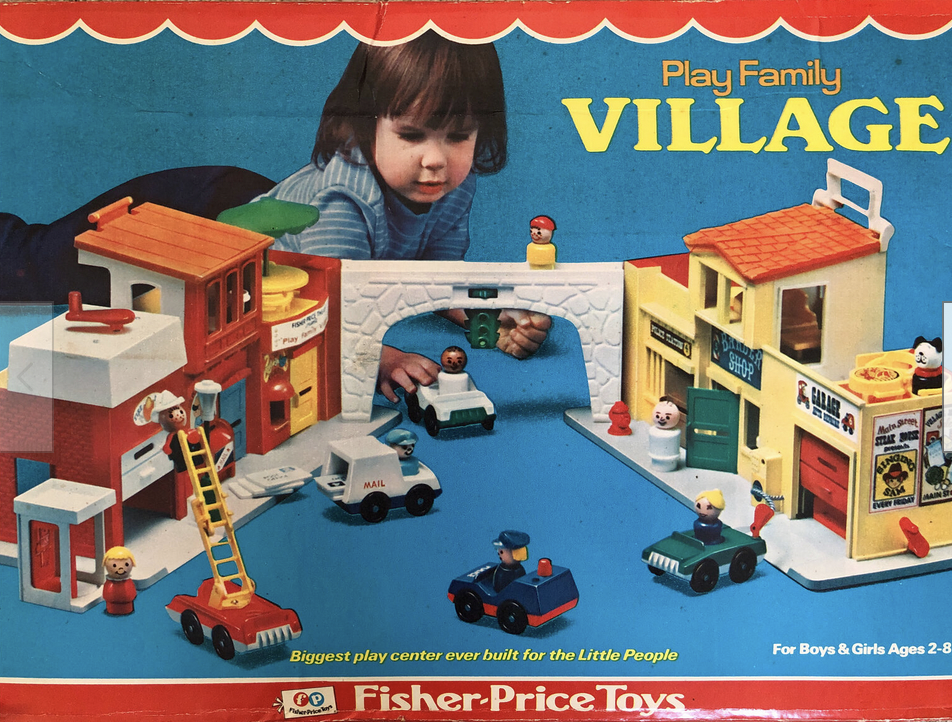
Box image from 1972 toy village of girl pushing car on Play Family street.

My sense of a neighborhood was created by two things: my Fisher-Price Village when I was six and Richard Scarry’s Busytown books, that featured very busy animals working hard at jobs, often in lederhosen. When I first started visiting Z in Seattle 17 years ago, I thought Seattle was where he lived, but after moving here myself and feeling less and less pull downtown unless I wanted something specific (a ferry ride, a trip to Target, the Seattle Art Museum, or a movie), we really lived on First Hill. As per those two sections of my Fisher-Price Village that unfolded and made a city block, the only things we don’t have up here are our own U.S. Post Office or a jail.

Other than the local hospitals, the great class equalizer up here has always been Bartell Drugs, which stands on the corner of Madison and Boren. You could be standing in line behind a person who had just been asking for money on the street three minutes ago and in front of members of the University Club next to Oh La La, all while nurses and doctors from the neighboring hospitals look for lunch options in the aisles.

Outside of Bartell Drugs. One door covered with plywood.
In happier days, there was no need for plywood on the front door.

Bartell was originally a local chain that reportedly treated its employees well, offered local brands, and manage to have everything in the store that Z and I needed: our prescriptions, sure, but also toilet paper, Scotch tape, Beecher’s cheese, shower curtains, plungers, socks, bananas, necessary seasonal items, and Oberto beef jerky. Over the last 17 years, I don’t even want to guess how much money we’ve spent there when we “just run in” for one thing. If our grocery disappeared, we could get by with Bartell for awhile before needing to find a different place to buy fresh fruit and chicken breasts.

For the record, my mother has been lamenting the loss of her beloved Hook’s Drugstores—an Indiana staple—since 1985. She was inconsolable when the news came that they were closing, and I didn’t understand at the time because I’d just graduated from high school and thought national chains were always better than local ones. More stuff. Cheaper stuff. More locations. (I did not take an economics class in school and thus knew nothing about end stage capitalism or the corporate machine.) Now I understand her sadness.

Over the years, we’ve gotten to know some of the clerks and pharmacists at Bartell. By “know” them, I don’t mean we’ve had them over for drinks, or are hip to anything about their lives outside of where they work, or even, often their names. When we walked by the building, we might see “Mort” outside on his breaks, stroking his greying beard, eating a snack he’d just purchased, and listening to music on his iPod. We’d wave and say hi, and he would smile with recognition. (“Mort” was a favorite of mine because one day I was in line at the photo counter where he checked customers out sometimes when he denied Governor Inslee a plastic bag in which to put a bouquet of dripping flowers because the city’s plastic bag ban had just gone into effect. His Honor looked disappointed —despite his approval of the ban—as he stood there in his suit, daisies dripping on the floor.) Another clerk—a young guy that had “manager potential” written all over him— had a fancy sports car that he parked out back, and we’d keep track of whether he was at work or away from work on our daily walks.

We often didn’t know their names and so called them (amongst ourselves) Gravelly Voice, Round Faces (two women who appeared to be related), Beardy Guy, and The Crab. If they wore a name tag, we learned their names, but we aren’t either of us extroverted enough to ask or introduce ourselves. Some days, when I first moved here, the clerks were the only people I saw regularly other than Z. The best day was when the man checking me out noticed my last name and and said that was his partner’s last name and so we talked about lesser Irish names and Irish American-ness.

The Pandemic was not kind to our Bartell but not necessarily because of the virus. At least not directly. The family who started the stores in 1890 sold the chain to Rite-Aid in 2020. There were other mitigating factors like the protests that took place in the city after George Floyd was killed, increasing tensions between the police and the local citizenry. The police force shrank and in addition to fewer cops being available, it felt as if law enforcement desire to help out on non-violent crimes evaporated. Suddenly, in a store where we’d never once witnessed shoplifting we were now seeing people walk in with backpacks, fill their shopping lists, and walk out. We saw people come in and clear an entire shelf and walk out. And in one instance, Z saw a man get a box of Hefty trash bags off the shelf, open it, pull out one bag, throw the box in the bag, and proceed to shove whatever was within reach into it. And walk out.
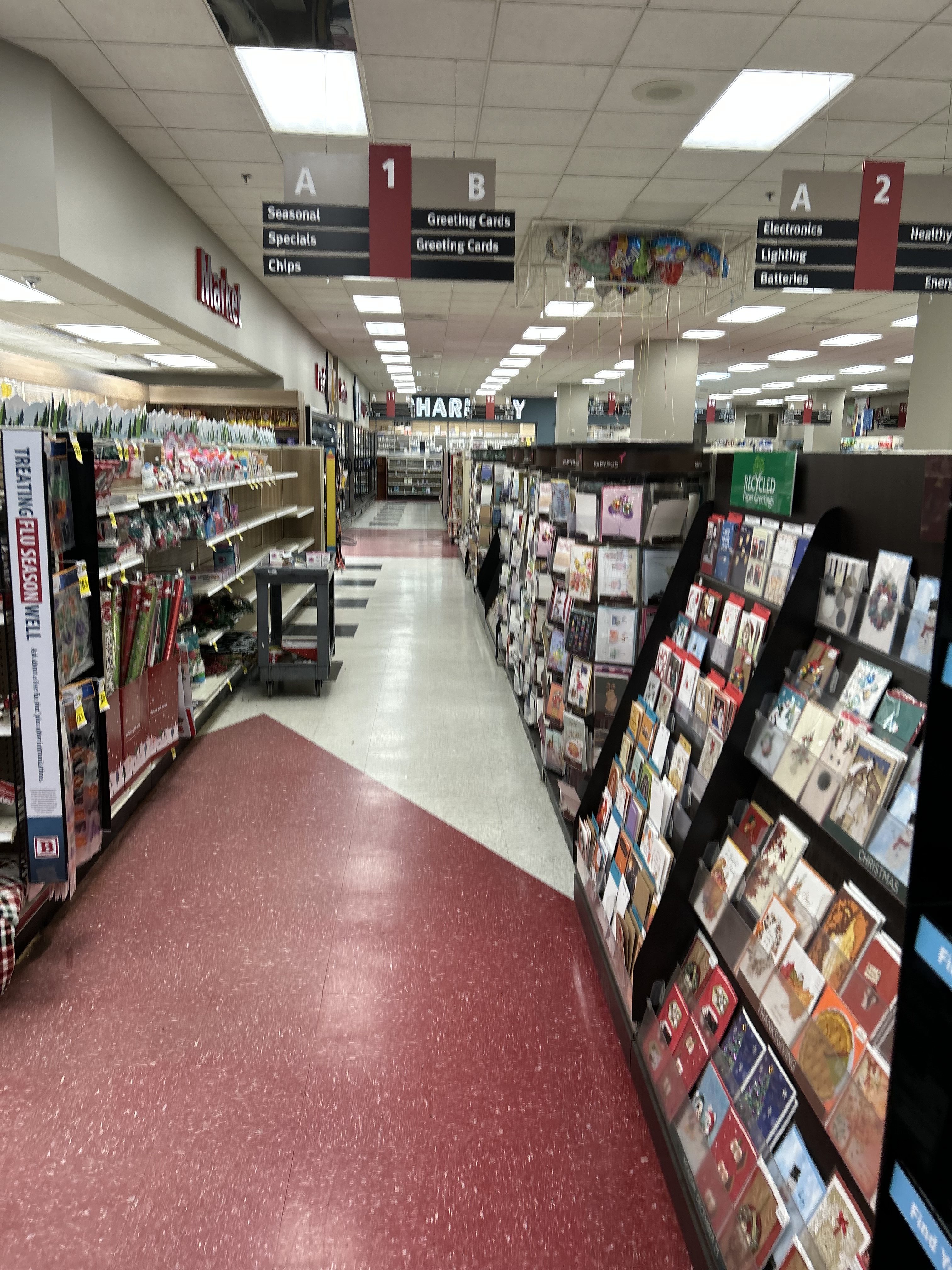
Interior of Bartell Drugs. Greeting cards and seasonal decor.
It almost looks normal from this angle.

The store hasn’t been the same for awhile. It got the smell of Rite-Aid on it once it sold. The products weren’t the same. Even the labels on our prescriptions were different, with a phone number that was impossible to read when you wanted a re-fill, almost as if they hoped you wouldn’t bother them. The brands changed so there was more and more Rite-Aid generic and suddenly we were witness to more altercations between clerks and angry customer-shoplifters. Eventually a series of security guards were hired with uneven success as many were primarily interested in their phones and not the folks walking in and walking out with the stores wares. Last week, Z happened to get locked in the store when a tiny, fiery female security guard wouldn’t let the man who had ice cream shoved under his coat leave. He shouted that he needed ice cream, and the security guard shouted back, “No one needs ice cream!” He gave up on the ice cream but not before getting melted ice cream on her uniform from a pint he’d—apparently—stolen from some other place. Maybe no one needs ice cream, but he clearly had a strong desire for it.

So it’s not always pleasant at Bartell, but it’s been ours. And handy. I was over there this week three times in an attempt to get a prescription filled, and it wasn’t a huge inconvenience because it’s right across the street. It turns out “close” and “nostalgia” are the things that keep us loyal customers.

Rite-Aid filed for bankruptcy earlier this year, and we breathed a sigh of relief when we discovered our store wasn’t on the chopping block. It made sense that it would stay in business. It’s the only big chain pharmacy in our radius where we’re surrounded by hospitals. Then five days ago we found out ours was closing in a little over a week. We were dumbfounded.

Interior of Bartell Drugs. Empty shelves and Pharmacist sign in background.

Today I went over to get toilet paper and it was a chock full of people, the line at the registers snaked deep into the shampoo aisle. The toilet paper was gone, but I did manage to score two big bottles of laundry detergent, two roles of Scotch tape, and two boxes of Dots. There were other things I should have been getting, but I couldn’t think straight. I was reminded of all the afternoons I’d wander over to Bartell to buy new nail polish when I’d had to quit my teaching job in Indiana, was in a funk, and new nail polish seemed like a salve. (It wasn’t.) I was remembering how Z and I pieced together early Christmas decor with day-after sales of leftover holiday doo-dads. How I’d stood in the greeting card aisle picking out greetings and postcards for people back home that I missed in those earliest days here.

Bartell is like the EPCOT of cashiers, with all ages and races checking people out, and it has been such a good reminder of what I love about living in a big city. All of humanity working together with the common goal of giving us our goods, receiving our money and getting us out the automatic door. I was hoping “Anne” would be there so I could say goodbye. She’s one of our favorites. Some days she greets us like she knows us and others she’s all business. She strikes us as someone who we would really like to know but we’re kind of terrified to engage too much lest it be one of the days when she just wants us to pack up our purchases and leave. We’ve felt weirdly bonded to her since election night seven years ago when Z sidled up to her register with a bottle of $5 champagne.
“We’re going to toast Hillary tonight!” he said, with a smile on his face. That morning he’d asked me if he should wear “suffragette white” to celebrate the day. We had no question about on whom the confetti and balloons would be falling later that night. The world was changing for women and we both felt excited about it.
“Anne” rang up the champagne and said, “I don’t know,” and shook her head. In the moment Z assumed she was just being cautious, but by the end of the evening, we were keenly aware that we hadn’t been paying attention to the right people during the election cycle. Ever since then, we’ve looked at her with reverence. She imagined what we could not, probably because she understood things about America that I’d never had to as a citizen and Z had never wanted to as a Zimbabwean making his home here. I wish we’d tried harder to extrovert around “Anne” and find out what she was thinking about things besides the weather and how busy or quiet the store was for the day. And now it looks like we won’t even get a chance to say goodbye.

Today while I stood in line to buy my six 50% off items, an older lady walked up to me and said, “I’ve lived in Seattle all of my life. Bartell is supposed to be here.” She shook her head and looked stupefied. A guy in front of me turned around and said, “Bartell is closing?” He looked as if I’d kicked him in the gut (though I’m still trying to piece together what excuse he had made for all the empty shelves).

Some people might think this is no big deal. In fact, there is another, bigger Bartell that isn’t closing only six blocks from our house. But it is above a busy grocery, in a busy shopping complex, and it doesn’t feel like a neighborhood store. I don’t want to walk there three times in the same day. Also, how long before Rite Aid decides to pull the plug on it too?

Interior of store shelves, half empty, inside Bartell Drugs.

We’ve decided we’ll go there to do some shopping, but as for our pharmaceutical needs, we’re trying a tiny, independent pharmacy four blocks away where there is a friendly staff, tables and chairs to sit in while you wait, snacks, greeting cards, and things you didn’t know you needed like tiny reading glasses that fold up on themselves and scarves with pockets on the ends. On Friday, we both went there to get vaccines. It wasn’t Bartell, but Z said it reminded him of the “chemists” in Zimbabwe, and so now I guess it’s our new local.

Maybe nobody needs a Bartell across the street, but we sure are going to miss it.
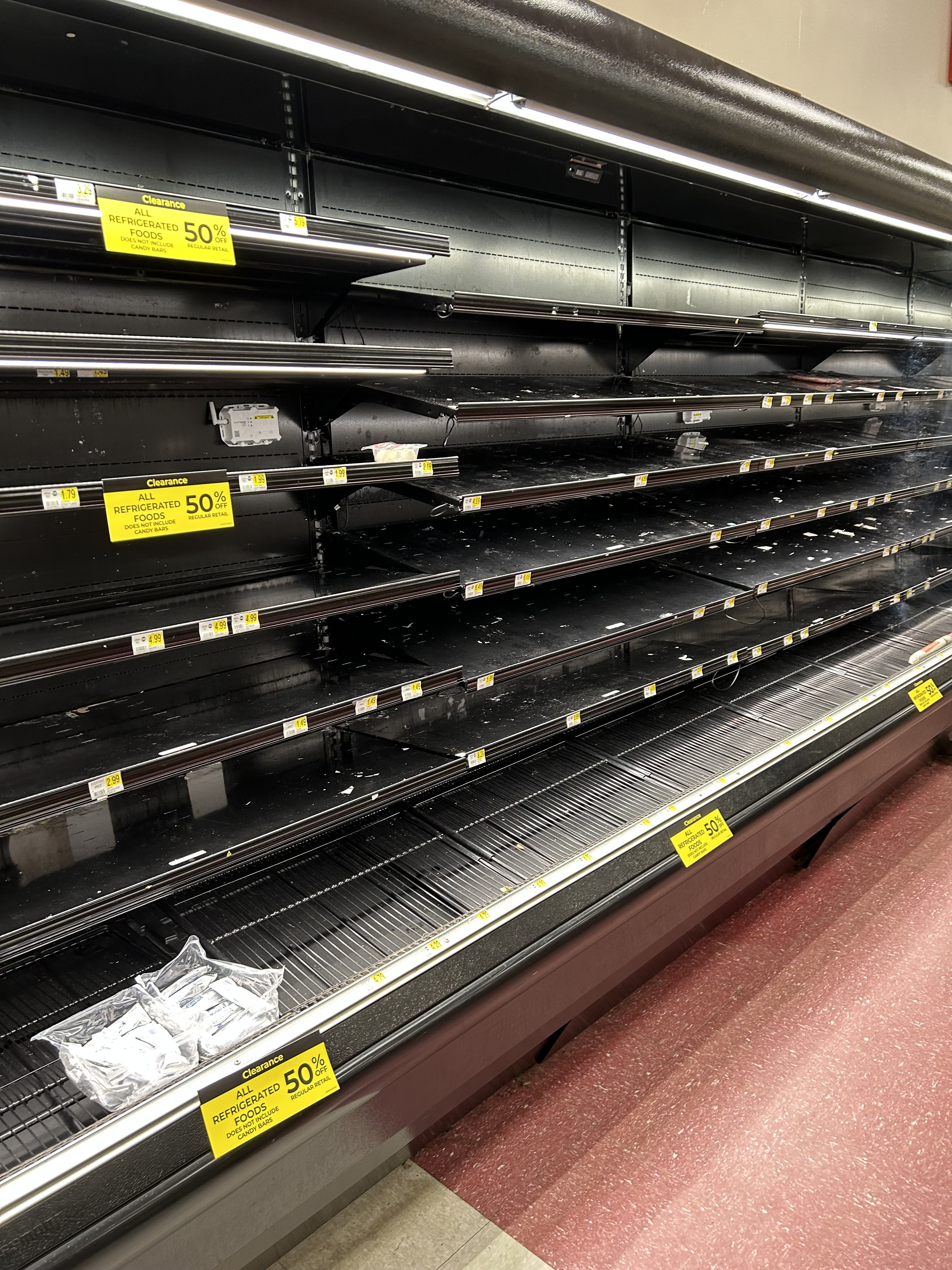
Empty refrigerated case with sale signs on it.

No Elderly Ladies Were Harmed in the Writing of this Post

Standard

I dreamed the other night that one of my manuscripts had been turned into a blockbuster movie, and I went to the premiere but was so late I could only get seating in the back row where the big, movable seats were malfunctioning. As soon as the opening title rolled, my chair shifted violently to the side and I couldn’t see the screen. I could only hear the movie and comments and coughs of the audience as I stared at the dark wall and ceiling, shadows from the movie flickering in the periphery.

On the plus side, it seemed to be a success based on dream-comments, and the news that Mattel was putting out dolls based on the characters (probably all versions of me). That last bit was only because Z and I recently saw Barbie, though by now it is surely a truth universally acknowledged that until there are Barbies, Funko Pop figurines, T-shirts, and Happy Meal prizes based on your characters, you haven’t really succeeded.

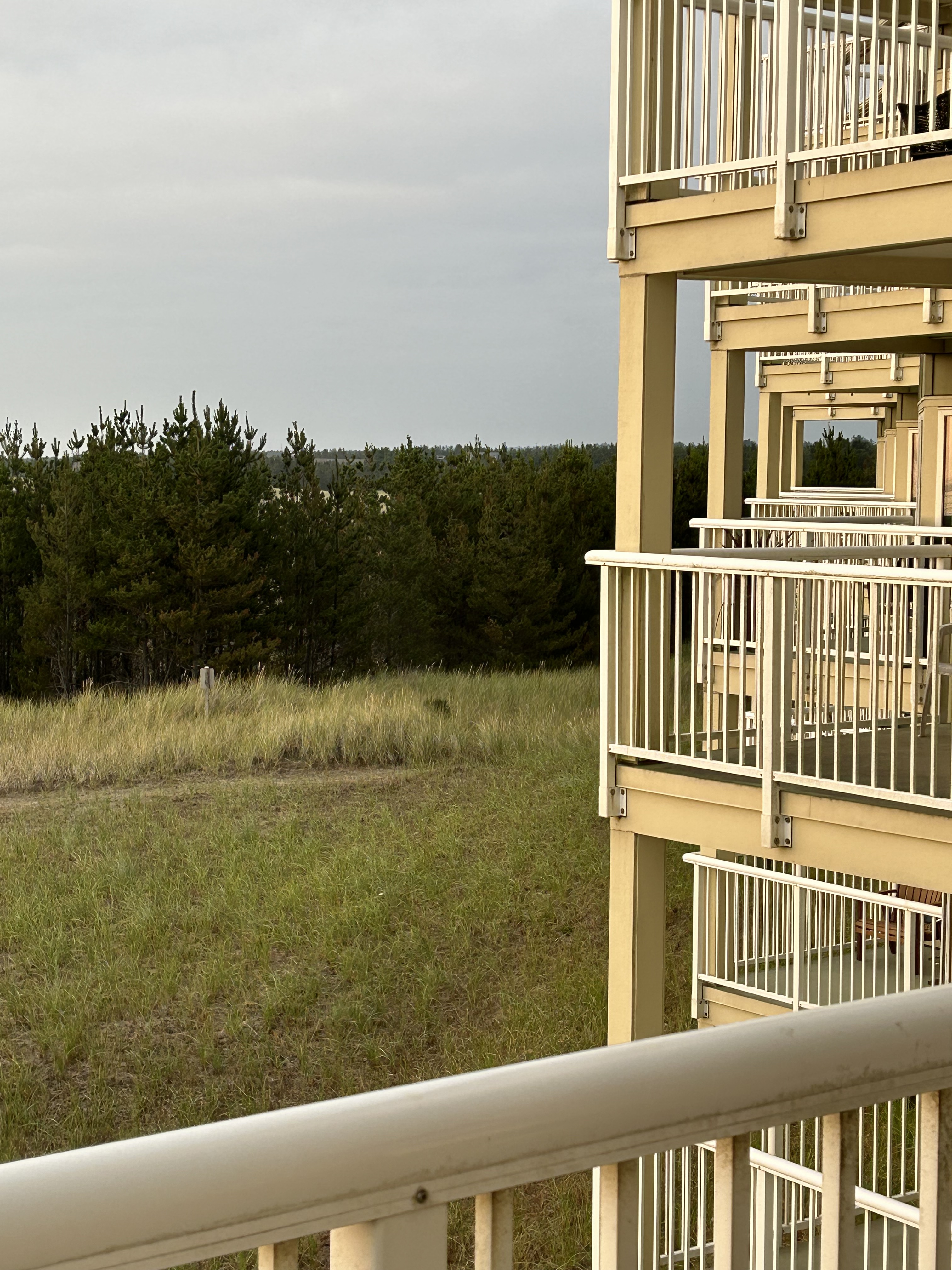
Pretend there are kites in the distance. They were there most of the time we were in residence.

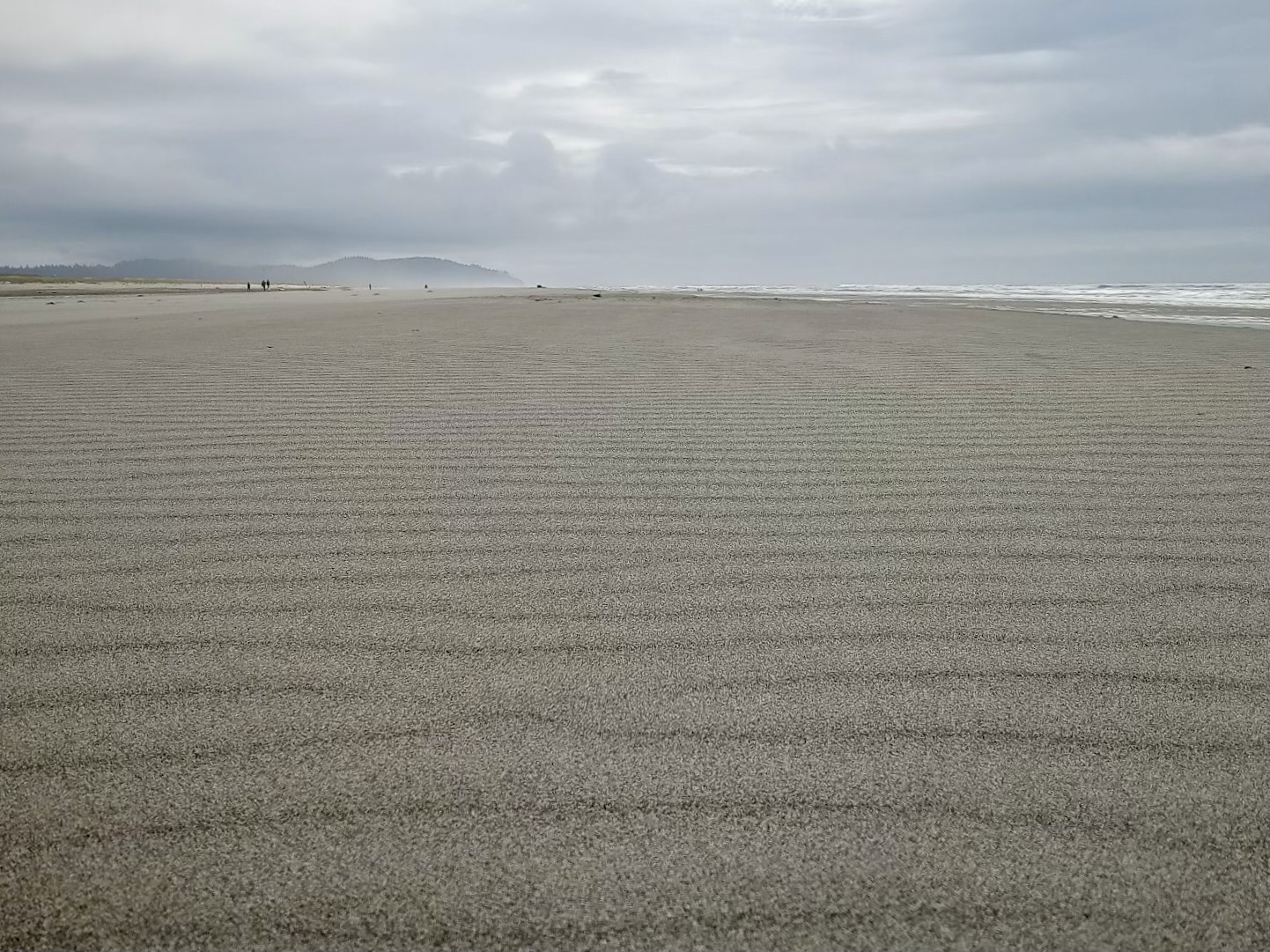
Z and I went on a short trip to Long Beach, Washington, with Hudge. It’s the first we’ve been to the seaside since the Pandemic. We stayed in a condo right on the beach and spent our non-beach time listening to the waves, watching a family of deer who showed up daily under our balcony looking up expectantly at us like Romeo in the Capulets’ courtyard. Walking the wrack line to the south, we dodged jellyfish and piles of seaweed and some brown foam that made me wonder if mermaids had gastrointestinal disorders. And in the distance, we could see Cape Disappointment—a high cliff with a lighthouse perched atop it to alert boats that this hunk of ocean where the Columbia wends its way into the sea can be hazardous.

Hudge and I do a mean puzzle together when not taking in the view.

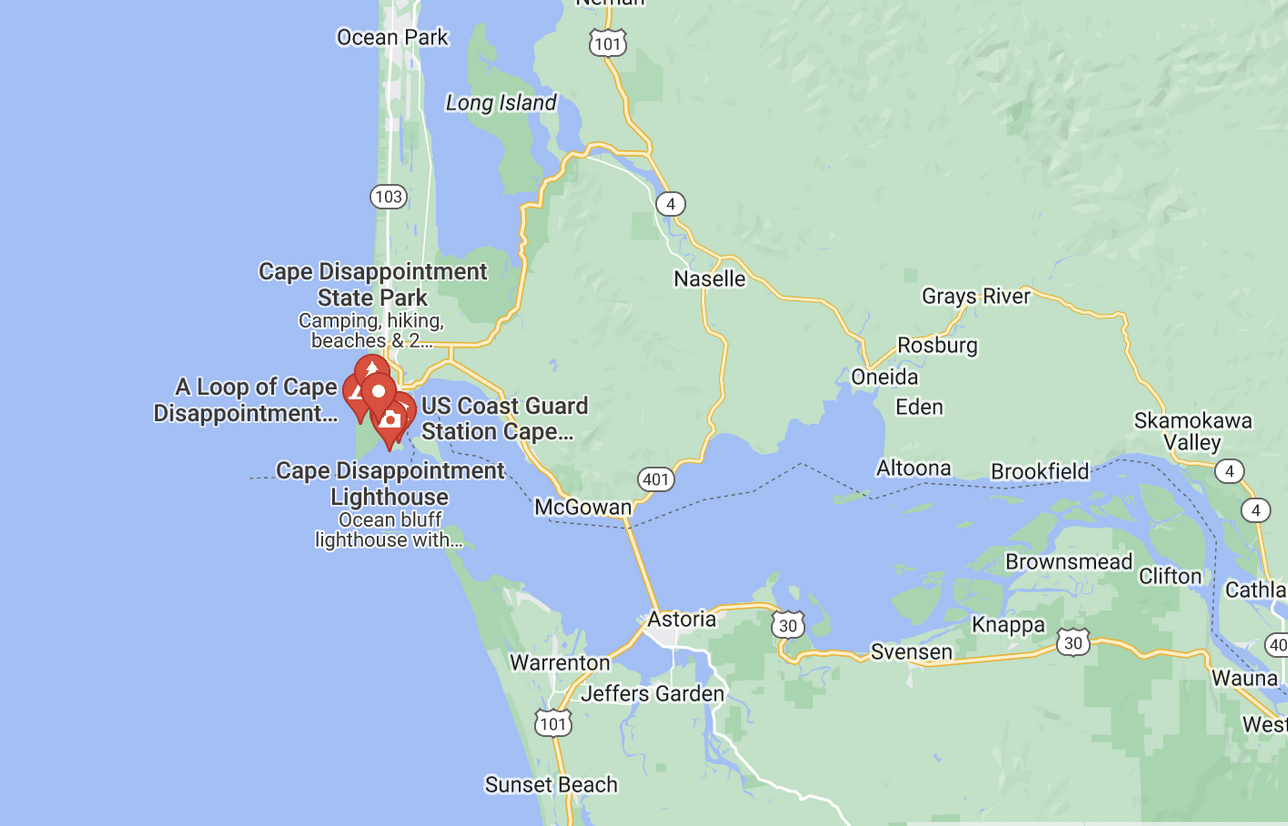
Isn’t that name the best? Cape Disappointment. It was given this name in 1788 by British trader and naval commander, John Meares, who was looking for the mouth of the Columbia River based on an earlier description from a Spanish explorer. He thought he’d failed when he landed on the cape and didn’t recognize the estuary. Well, I should rephrase that. He didn’t think he had failed; he assumed that the Spaniard had shared faulty information. Why blame yourself when there’s someone else at whom you can direct your frustration?

Long Beach, WA–Cape Disappointment in the distance, not disappointing.

You can kind of see from the map below how Meares might not have recognized a river when he saw it. There’s no neon sign with El Columbia está aquí pointing to it.

Usually when I’m at the beach—or on any vacation—I spend a fair amount of time berating myself for not doing it better. For not walking further or reading under an umbrella picturesquely or drawing something in my sketchbook. At whatever place we stay, I imagine missing something in the tiny little downtown and think maybe I should be poking in the shops there or eating local cuisine, but if we do venture out, it seems like a waste. Who wants to shop when you’ve “bought” a view for the weekend?
Like Prince’s mother, on a beach vacation, I’m never satisfied, though instead of blaming a Spaniard or Z, I assume the problem is with myself.

Wherefore art thou and thy apple slices, Juliet?

This trip, however, I allowed for no self-flagellating. I read a lot. (Circe by Madeline Miller—so good.) I listened to the waves and I read some more and didn’t apologize or worry that I was missing something on a walk or at the kite competition that was happening up the beach or that I wasn’t sucking the marrow from the condo we rented because I didn’t flip through the notebook of suggested activities or all the slick coffee table books about sea glass and the Washington coast. My laptop remained in its case. I posted no pictures on social media. I worried about nothing, not even when my mother reminded me that all of the poisonous water from the Fukushima reactor had been released into the Pacific. I picked up one stray Croc someone had left behind and got it out of the water’s path so no creature would choke on it, but I otherwise chose not to worry for four days about all the ways I’ve screwed the planet personally (all those bags of minute rice and plastic candy bar wrappers; all that gasoline and sucking up of groundwater). Instead, I enjoyed the food Z and Hudge cooked and didn’t once worry that I’m a failure as a woman—as a human—because I’ve no interest in the kitchen. I just was.

Reader, it was one of the most relaxing vacations I’ve had no matter how short, not because of what I did or didn’t do, but because I just got out of my own head for 86 hours. I’d like to spend the rest of the year trying this experiment in my regular life. Making decisions. Saying what I want. Doing what I want without consulting my to-do list and feeling guilty about the things I’m not doing or did do but shouldn’t have. (Tubs of Ben & Jerry’s non-dairy Phish Food, anyone?)

What brings me here today, however, is that when Hudge mentioned my blog and Z said I hadn’t posted in over a year, I was shocked. I’ve started entries and written even more in my head, and it hasn’t seemed that long to me. So here I am, cap in hand, not out of guilt but because I have. . . missed doing it.

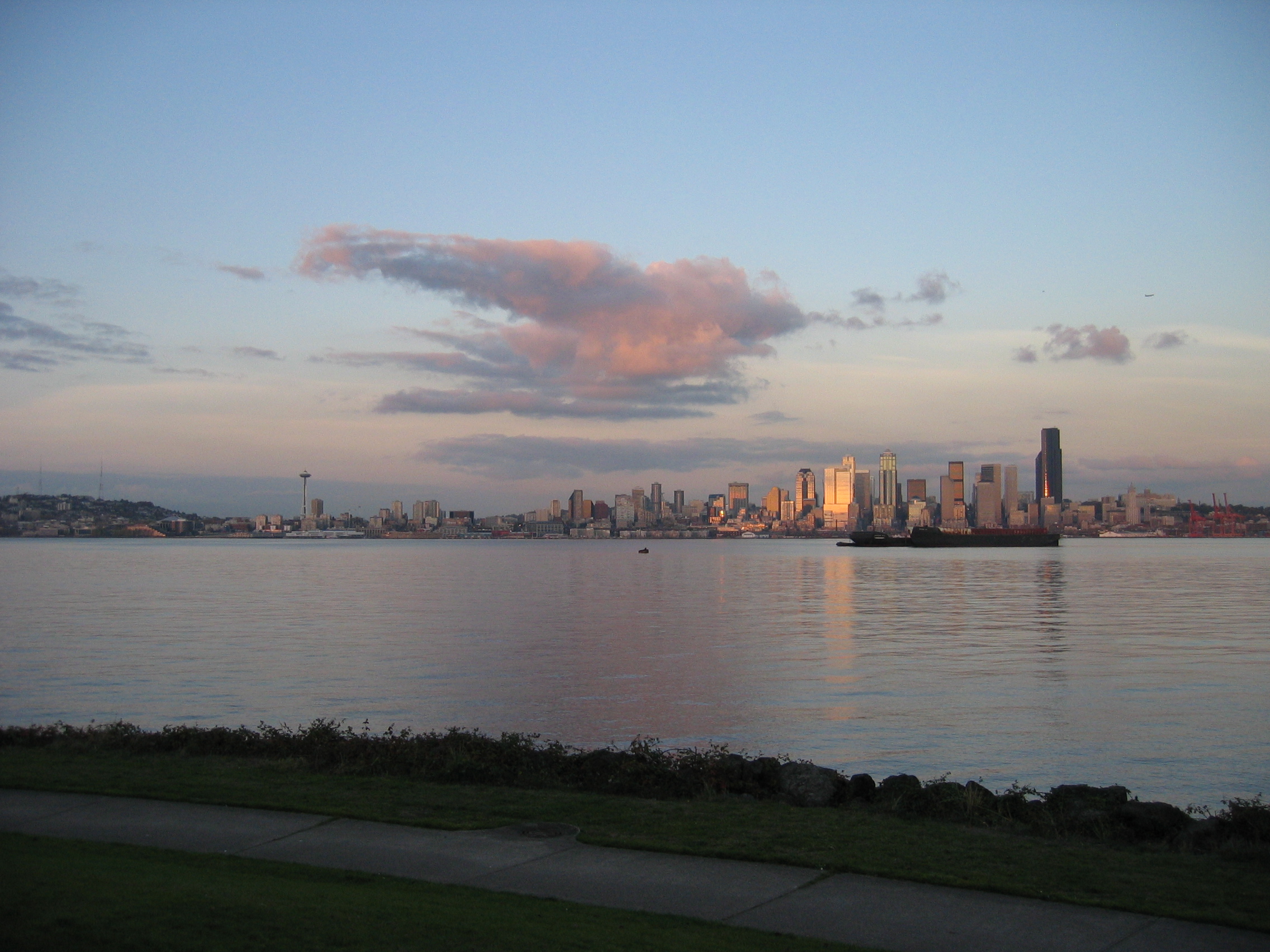
I have been writing regularly, it just hasn’t been a blog and most of it hasn’t yet been polished for human consumption. Still teaching writing, reading other people’s writing, critiquing writing, and, when there is time left over, reading for pleasure. Also, I got a new iPhone that came with few months of Apple+ for free, so there has been some bingeing of shows like Ted Lasso, Silo, Trying, and Encounter. And for mindless viewing, we’ve been watching (re-watching in my case) lots of Grey’s Anatomy so we can see the Seattle Z moved to in 2006 vs. the Seattle that exists now. Very different skyline. Very different vibe. Mostly, we’re pleased with the Seattle shout outs and how they use familiar-looking Native American art in the hospital. The only thing TV and movies never get right is the rain. Always it’s torrential. Always it’s with lightening and thunder. It’s meteorological Shonda Drama.

Seattle skyline circa 2007–around the time when Shonda Rhimes introduced Seattle to TV viewing America.
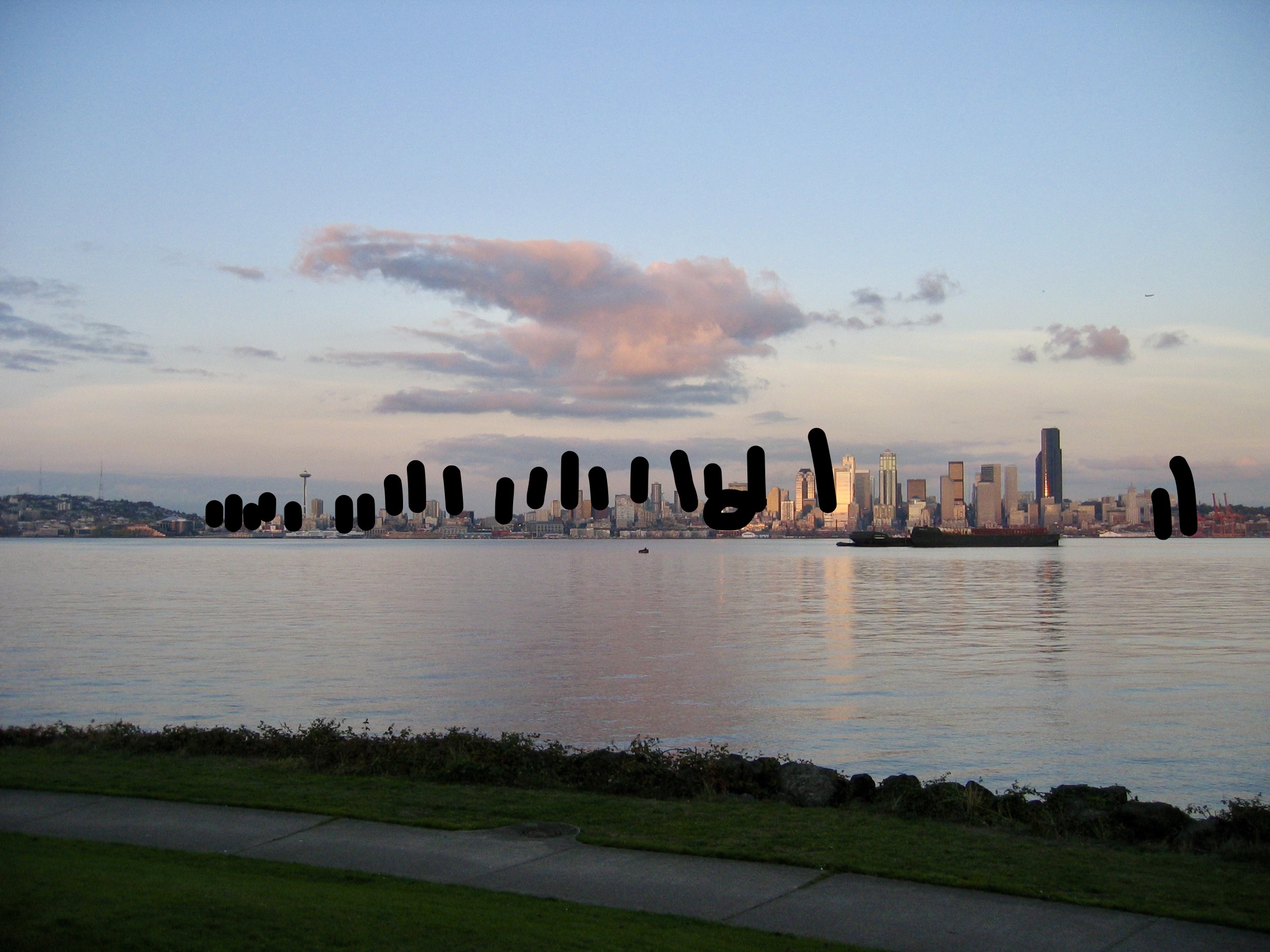
Seattle Skyline 2023–Artist Rendering.

I have a Post-it on my computer that says “Past disappearing with smoke.” Anybody know what that was for? Pretty sure I had something to say about it, but now, I don’t know what it was. Maybe it had something to do with the Canadian fires this summer, but it might also have had something to do with my failed attempt to use sealing wax on a letter to my college roommate and it ending in a failure of flame and smoke and nearly burned up correspondence..

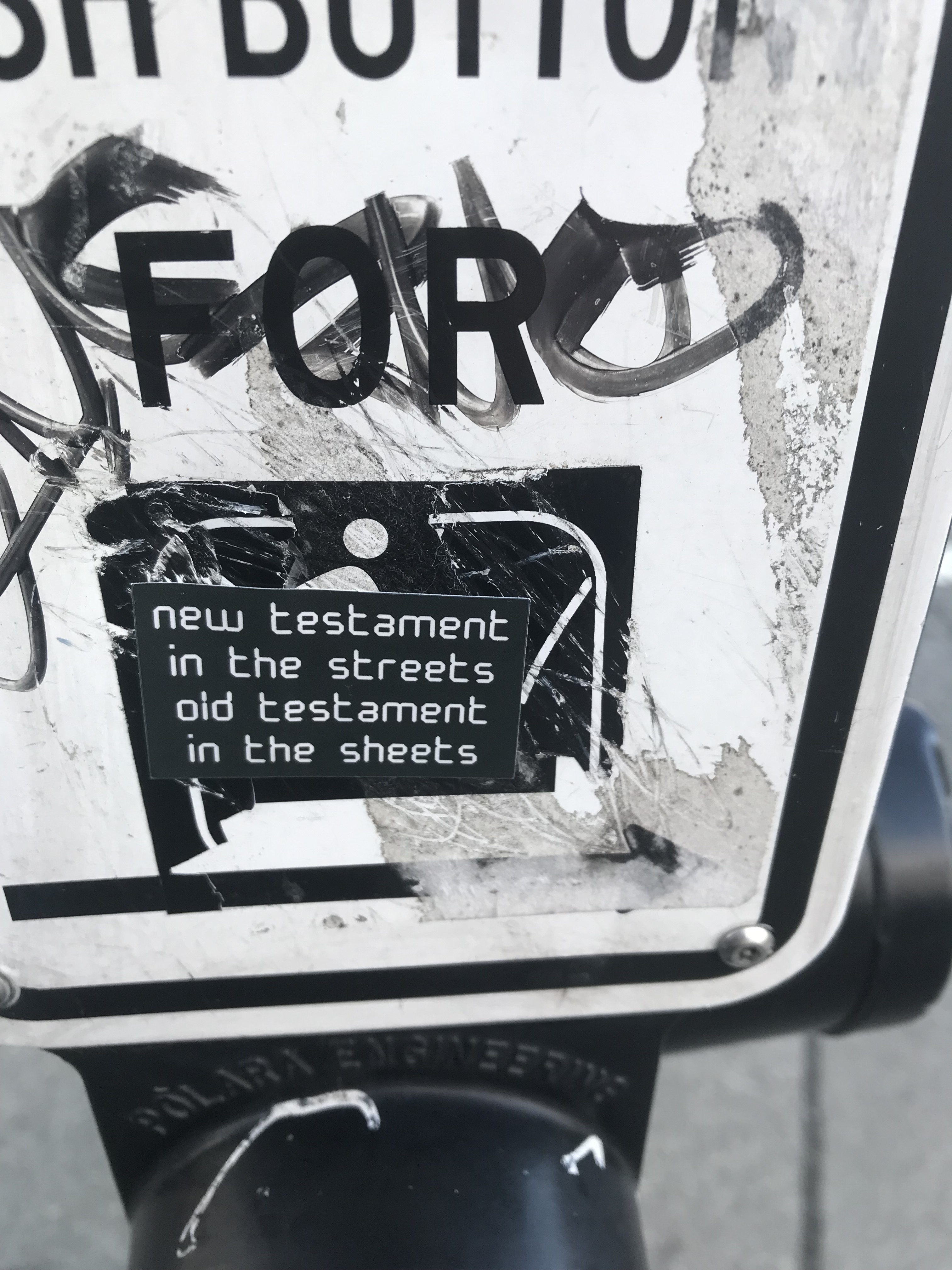
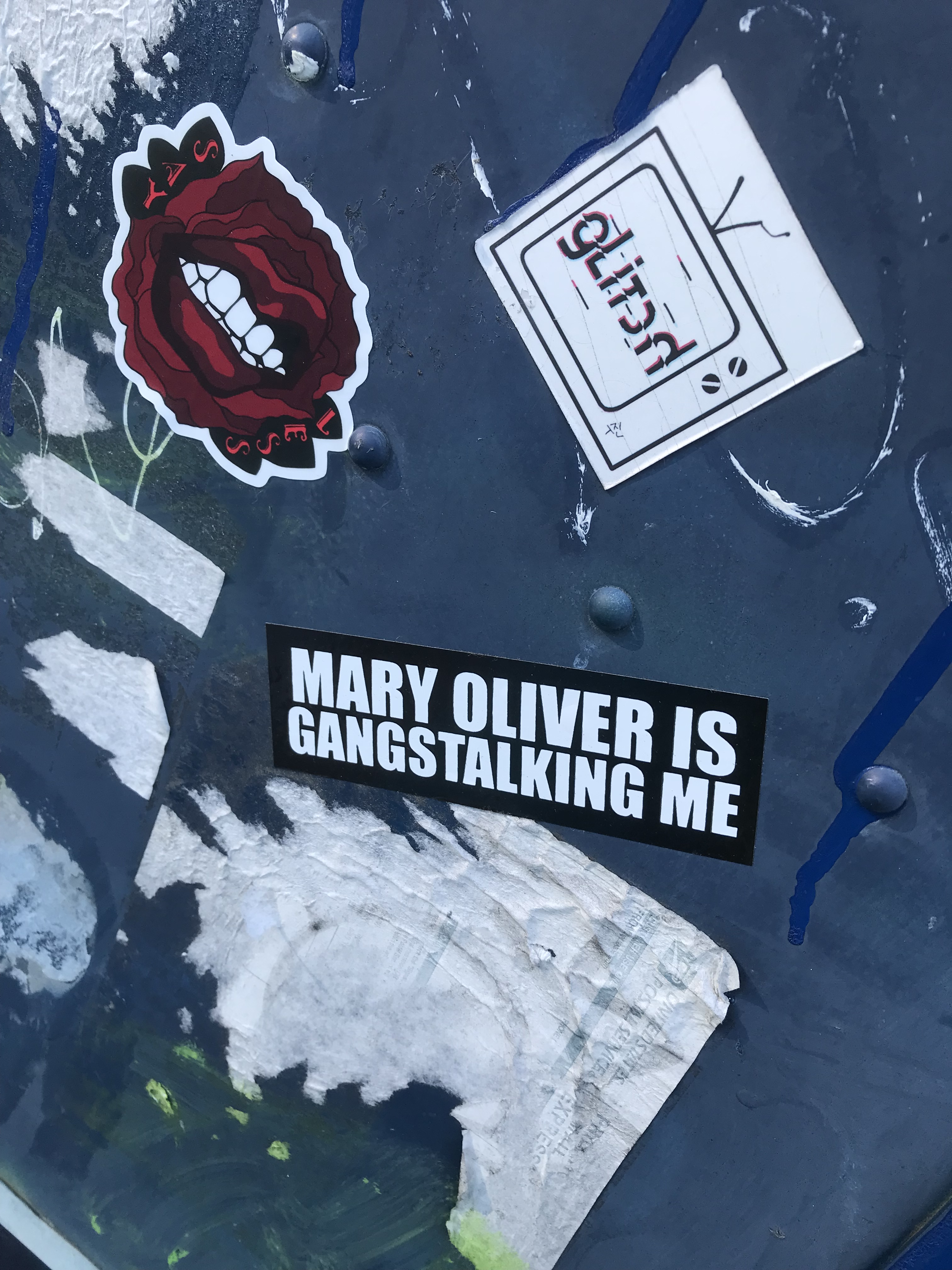
My two favorite stickers I’ve seen on the light poles and mailboxes of First Hill recently:

I think I prefer the Mary Oliver one. I feel this way on days when the words aren’t coming. But I’ve enjoyed reflecting on the Old and New Testament versions of the former.

Do with those nuggets of wisdom what you will.

Yesterday, Z and I were walking down Madison which has been in a constant state of various degrees of construction for the last four years as they modernize utilities and get ready for the 2024 launch of Rapid Ride bus stops here on First Hill. On any given day, we leave Oh La La and find our road blocked or a snakelike arrangement of barricades on sidewalks we were able to walk down the evening before. On this walk, we looked across the street and saw an elderly woman who’d gotten herself on the wrong side of the barricades and so was headed into the rubble of the ripped up road. Her only option was to go all the way back up the block and get on the right side of the barriers or walk into traffic.

Though I have sold myself to you as a Girl Scout, albeit a reluctant one, what I really am is an observer. I watched this lady creak along towards the rubble with some curiosity. She stopped and looked around, and my reaction was not to offer assistance but instead to stare at her, as if she were a squirrel trying to decide where to bury her nuts. What would she do when she got to the most extreme part of the torn up street? Would she turn around? Would she curse? Would she tip over?

Z, however, IS a Boy Scout. He marched right over to her, moved one of the traffic cones and ushered her from the busy street to the sidewalk and made sure she knew which way to head to get to her destination. Earlier in the summer we’d passed an older (than us) woman who looked weak and was trying to navigate the steps to her condo with a shopping bag. So Z gave her his arm and carried her bag up the steps and asked if she was okay. He’s always doing things like that and has the kind of presence that offers a certain authority: you should do what he is suggesting—take his arm, let him carry your bags, follow his lead.

Meanwhile, I’m standing on the corner with my head cocked as if I’m watching something unfold on TikTok instead of offering a helping hand. I’d berate myself, but it’s against my new policy so I’m putting it in the category of “interesting things I’ve recently discovered about myself.” If you have an accident in front of me, there’s a good chance it will take me minutes before I realize I should offer you a Band-Aid or call 911. (For the record, I am really good at intuiting when someone is lost and needs directions or offering up a Tide Stick if you stain your shirt.) But by golly, I will write about it later.

I’ve always been an observer, but it did get worse when I moved in with Z at our first apartment at The Paul Revere. Another great name, though what Paul Revere has to do with Seattle or one-bedroom rentals that were built in 1923 is anyone’s guess. It felt like it was our duty to be alert to imminent attacks by the British, but in our decade there, I didn’t have to light any lanterns or ride a horse to let neighbors know to grab their muskets.

We had a bank of windows across the front section of the building and often when I was supposed to be writing, I’d be staring down on the activity below on the street. The traffic squabbles and squealing reunions and the confused people tring to understand the complicated parking rules in front of our building, failing, and being towed were daily. It’s much harder to be an on-the-street reporter at Oh La La because we’re eight stories above the goings on.

The Paul Revere was full of quirk. A 1923 building with blooming camellias on either side of the steps that set off the “fresco” of Paul Revere on the brickwork. Inside, we had glass doorknobs and an old etched mirror, and a single teensy closet meant for clothes, linens, shoes, and anything else the modern flapper might need. It forced me to consider how much baggage modern Americans carry with them now. Because of its close proximity to the hospitals here on “Pill Hill,” I always imagined that those earliest residents were probably nurses or interns who wanted to live near work. Some from the country who must have enjoyed the excitement of an up and coming city.

It was hard to picture our lives post Paul Revere because we’d been so happy there, but the glamor Oh La La’s views and amenities made us quickly forget our first home. Or remember unkindly how much we hated doing laundry in the basement, doing dishes by hand in the teensy kitchen, and hauling garbage to a dumpster in the alley that we had to lock up as if we were depositing treasures outside. Also the exhaust from the bus that idled out front. The unhoused guy who slept in our hallway once. The person who sold drugs on the third floor and who kept the intercom right outside our bedroom window buzzing all hours of the night. The handyman who raised mice that escaped and contributed to the building’s rodent problem.

A lot can happen in a decade in a city.

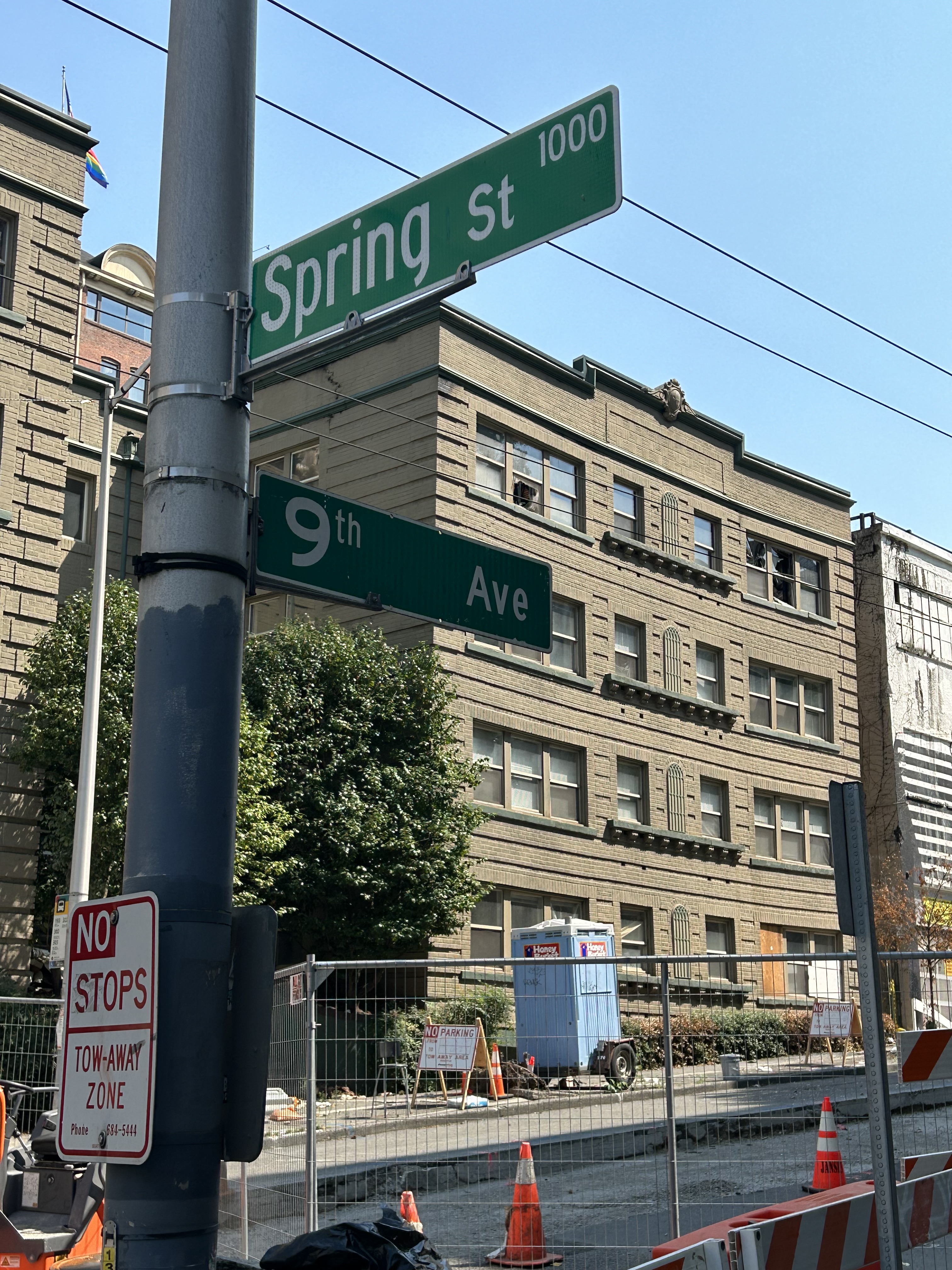
The building has been empty since everyone was paid to hustle out in the middle of the Pandemic because it was structurally unsound and wouldn’t have survived the Big One —no joke. We pass it now with some nostalgia. Initially, there were lights on and it seemed work was being done to repair it. We had hopes they wouldn’t tear it down, but then it got increasingly downtrodden with a broken window here, graffiti there. Eventually the management company took down its sign as if it wanted to dissociate itself with such a squalid looking place. Squatters moved in. Over the summer, there were two fires that started there, whether intentionally or accidentally is unclear. The second fire was large, burned a hole through the roof, and we can now see that not only is the roof gone but also the back wall. There’s a security fence around it and the sidewalk is closed. It’s unlikely we’d have moved back if they’d fixed it up, but still, it’s the end of an era, or, several eras for the building itself.

We would NOT have been thrilled with a Honey Bucket right under our living room window.

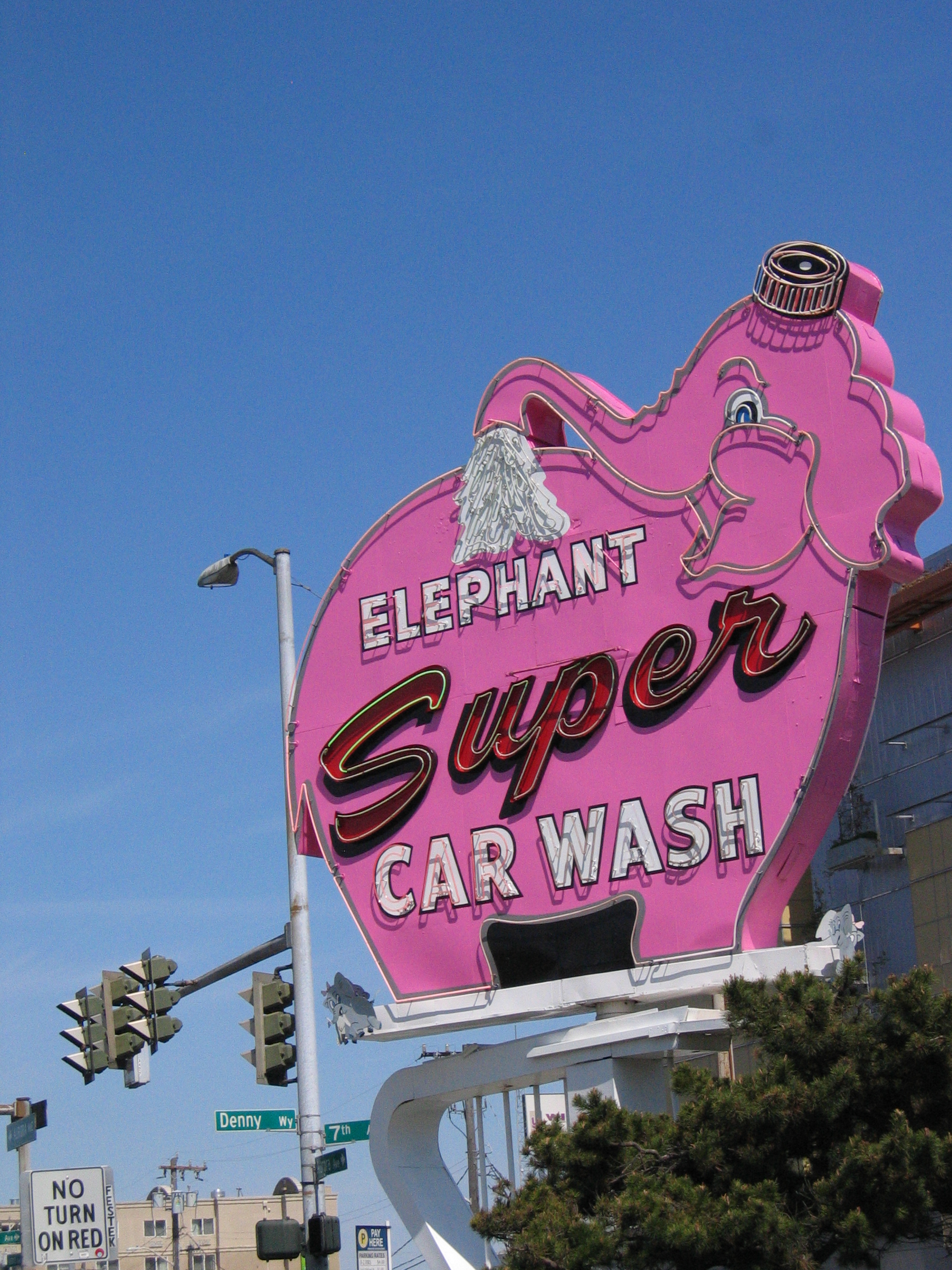
The big lesson city life seems to want to teach me is that nothing is permanent. There’s no point getting attached to the way a certain building looks or the foliage of a particular tree because next week there might be a removal sign and six months after that a security fence and a bulldozer. Things change quickly. After all, it wasn’t that long ago that there was a pink elephant car wash sign over an actual car wash instead of as an artifact of yesteryear and where Oh La La sits there was a decades-old McDonald’s that might have sold those Happy Meals with my dream movie prizes inside. But they are gone and now there are other things that will seem like quintessential Seattle to whoever arrives today.

All this to say, it’s good that I had that beachside epiphany this month so I can finally make peace with our revolving door city and neighborhood. I’ve decided to make John Mellencamp’s “Your Life is Now” the theme song of the rest of the year. Let’s see where I end up. (And if I ever remember to ask the old ladies if they need help across the street or if I decide definitively that it’s my job just to observe them like a social scientist.) Tune in next time to find out.

Anomalies in Style

Standard
Clay heads staring out of multi-pane windows.

Neighbors from the Seattle University art department.

Recently,  I started my Writing for Procrastinator’s class at Hugo House—a favorite of mine to teach—and I’m finding myself in the unfortunate position of not having taken my own advice for the last three months. I’ve written at least five partial blog posts, but then I make the mistake of reading the news and my mind gets funky. Like a lot of us, I sit and stew in the news’s aftermath and wonder what the point of any of it is. And then I distract myself with writing, or reading,  or watching the hummingbirds that come to our window daily like well-dressed drones, peering into our windows.

Me telling you about my new glorious votive candle seems trite in the face of war, disease, pestilence, etc. Who cares if I’ve discovered the perfect chocolate bar and pen when we’re all clearly in a hand basket headed straight for hell.

But also, who wants to read—let alone write—more words about how rotten the world is at the moment? Maybe it’s the muchness of information that exists in all of our lives now, but at the moment, it feels like there are enough people writing about the horrors out there, enough people reminding us that we shouldn’t be enjoying X because the Ukrainians can’t or because people suffering Long Covid can’t remember that a chickadee is their favorite bird or whatever. There were enough people weighing in on the Oscar slap heard ‘round the world that I really, REALLY don’t need to add my two cents.

Book with photo on cover of Native Americans above title and skyline of Seattle.
Oh, how that skyline has changed just since I’ve been here.

Also, I’m reading Coll Thrush’s 2007 Native Seattle: Histories from the Crossing-Over Place (highly recommended for anyone who lives or knows Seattle, and for anyone interested in blasting away the myth that the indigenous people of what would become the United States disappeared and weren’t a part of the shaping of urban centers). With practically every page I turn I’m reminded that what we’ve been living through the last few years is just life. I’m only halfway through the book, but it’s all pretty relatable: the virus in question is small pox, the clashes are between cultures, yes, but also different ways that “the Bostons” (aka settlers) envisioned the future of Seattle, etc. There really is nothing new under the sun, something it would do me good to remember when I close my eyes and ignore the news.

Let’s call the above five paragraphs what they are: me finding fault with the things that occupy my mind so you will be less inclined to find fault with me and how I’m writing about the frivolous instead of the important.

The Big News on the Beth-n-Z frontier is that I won the lottery and get to have the Evusheld shot next week that will bring my wonky immune system up to something more akin to “normal” and thus—with precautions—I can maybe see a friend or two, maybe visit my beloved Elliott Bay Books for more books by local authors or on local history. Also, there is a breeder of the rare and delightful Glen of Imaal Terriers in town and she has invited me over to meet her first litter of puppies to see if they can woo me away from my Scottie love. By now, I suspect the puppies are all spoken for and Z is not in a pet-ownership mood yet, but it’s coming people. It’s coming. I’m tired of looking at people around the city with their cute dogs and badly behaved dogs and bedraggled dogs and well-dressed dogs, and wondering when I’m going to be adult enough to say, this…this is what I want in my life. Once I have this magical shot, visiting a stranger who lives on Queen Anne to see some puppies can actually happen and though nothing will come of it, it’s a step closer to me stamping my foot and pointing out the faulty logic my mother (in the 1970s) and Z (in the 20nows)  have both presented me with re: the impracticality of having a dog in an apartment.

In case you are unfamiliar with the breed, here is one of the wee beasties—Jill–that I follow on Instagram. In at least half the posts she has a stick twice her size jammed in her mouth, and it astounds me that someone else’s dog—and a dog that lives on the other side of the world at that—delights me so much.

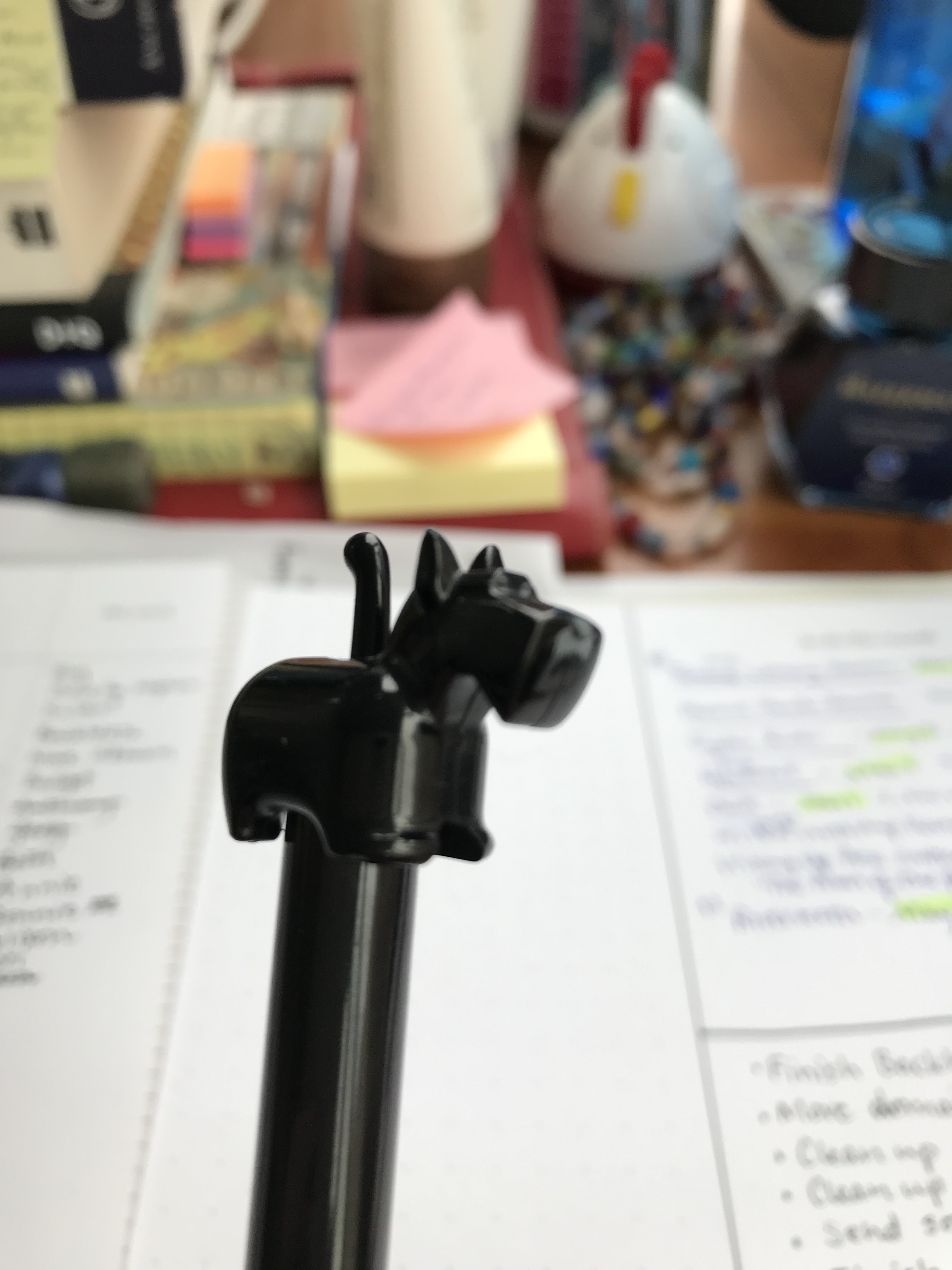
Last month, Chickpea sent me a package that was the fabulous surprise of not only the perfect Scottie dog pen but also a Saint Stevie Nicks votive candle, and I see that as a positive sign about better days ahead. Or at least the days right in front of me that I—right this minute—can enjoy as they present themselves.

Plastic Scottish terrier on pen.

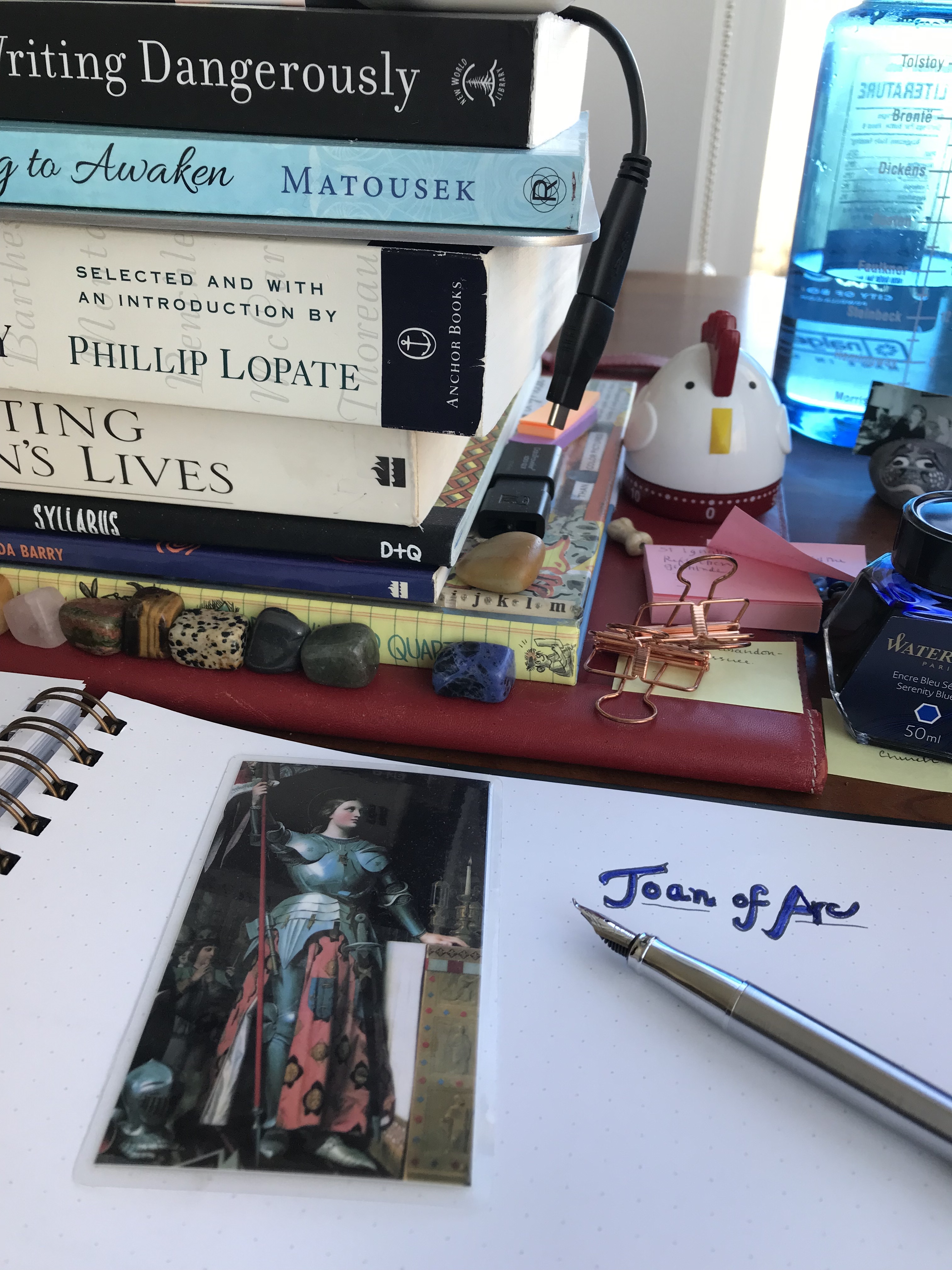
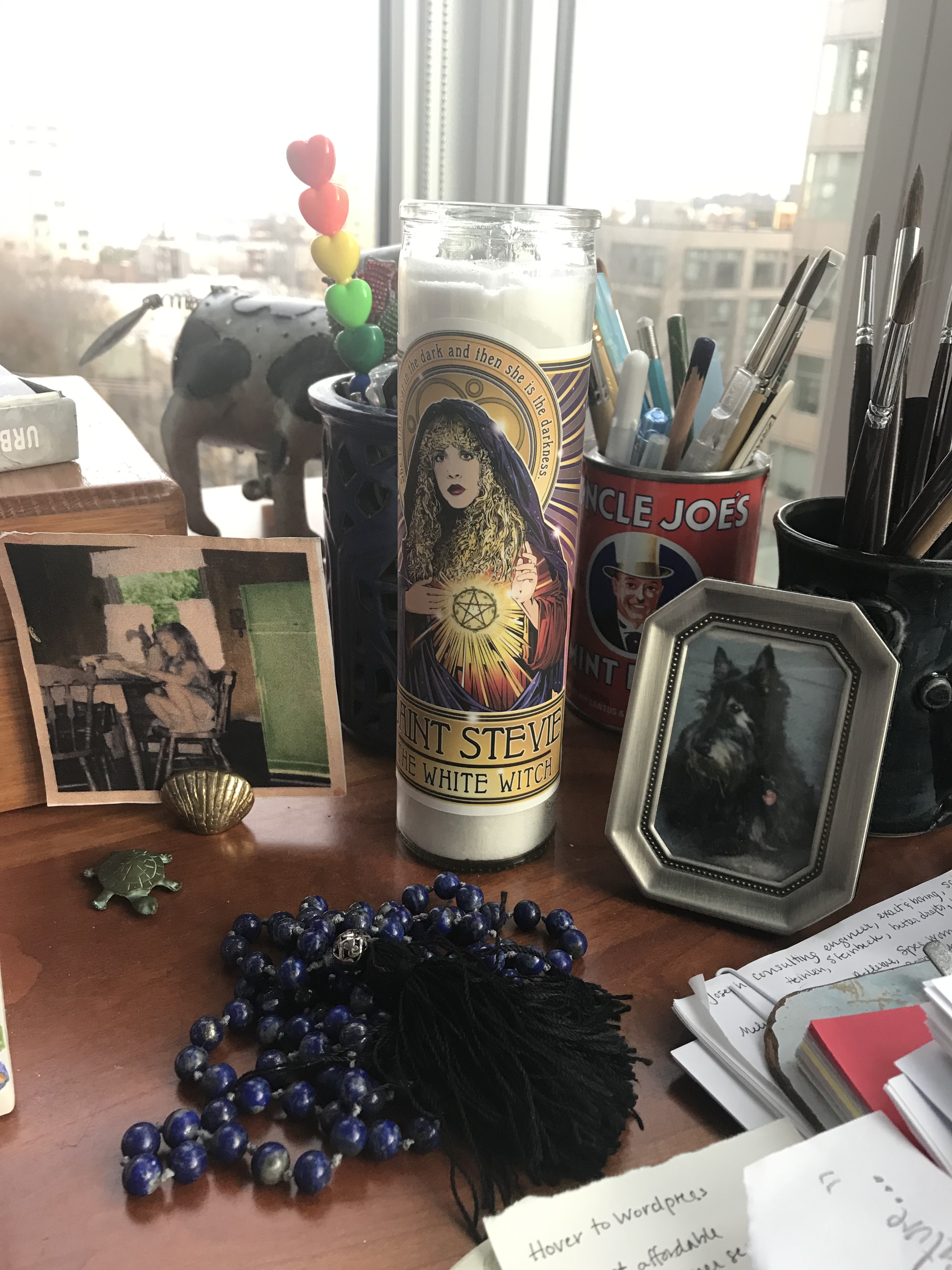
Stevie is now living in the “Lady Magic” corner of my desk where I keep my inspirational baubles and reminders that though I was raised in a patriarchal religion it’s okay if I have touchstones with the Eternal Feminine. You’ve been introduced to some of the relics there and others might be new to you. At the moment, those items include: three different containers full of my favorite pens and paint brushes; a photo of Bailey, the first Scottie dog I truly loved; another of me, aged four, typing away on my mother’s Olympia typewriter despite having only a few spell-able words in my brain and no idea what a narrative arc was; a third photo of my parents in 1966 when I was still baking and they were young, happy, and looked exactly like younger versions of themselves;  a prayer card of Joan of Arc, believing in her visions and ready for battle; at least one set of prayer beads draped over a shrine I’ve made to Our Lady of Perpetual Help; a wooden file box with index cards in it for places to send my work and notes about what is circulating and what has been rejected.

Holy Card of Joan of Arc in armor and skirt holding a staff.
The pen isn’t working for me, but that ink. My.

I also recently added Crow Oracle cards (designed by Seattle artist MJ Cullinane) that I use to start writing sessions by selecting a card and seeing if it gives me a new way to look at my work. Today’s card: Anomaly—a depiction of a white crow—sits on my computer so I’ll see it throughout the day and ponder the notion of differences, of what is “normal” and what stands uniquely alone.

Picture of a car with a white crow on it in a field of dandelions.

Stevie will be at home here. All that is missing is Blue Pearl incense, which I can’t burn because of Oh La La’s policies against open flames and because Z and I have lungs that do not appreciate incense of any variety. Even so, I took a chance and briefly lit the Stevie votive in the bathroom with the fan on because I had a great grandmother who believed that unlit candle wicks were bad luck, and I’ve adopted it as my own superstition. It was lit just long enough to blacken the wick and not long enough for the smoke detector or Deputy Z to notice and report me to the management.

It’s good to have things to rebel against when you light a candle—oh so briefly—to a rock goddess.

Tall votive candle with illustration of hooded Stevie Nix likeness, picture of Scottish terrier, child at a typewriter, prayer beads.
“She is like a cat in the dark and then she is the darkness.”

Look at her. Nobody can wear a hooded cape or red lipstick like Stevie. And I’d like my 13-year-old self—who was always on the lookout for backward masking and Satanic symbolism on my LPs in the early ‘80s—to take note that that pentagram on her chest is not upside down and therefore not shaped like a goat’s head and therefore nothing to be concerned about re: Satanism. Stevie has been many things but the reason she scores a place in the creativity corner is because she has such confidence in her lyrics’ right to exist. And nobody dare question her fashion choices.

You need someone like her in your corner when you are a woman of a certain age who has erred on the side of caution re: expressing yourself. Stevie has never erred on the side of caution. She has written the tortured love songs (which, I posit, no one truly understands—least of all Lindsay Buckingham) and they have been hits.

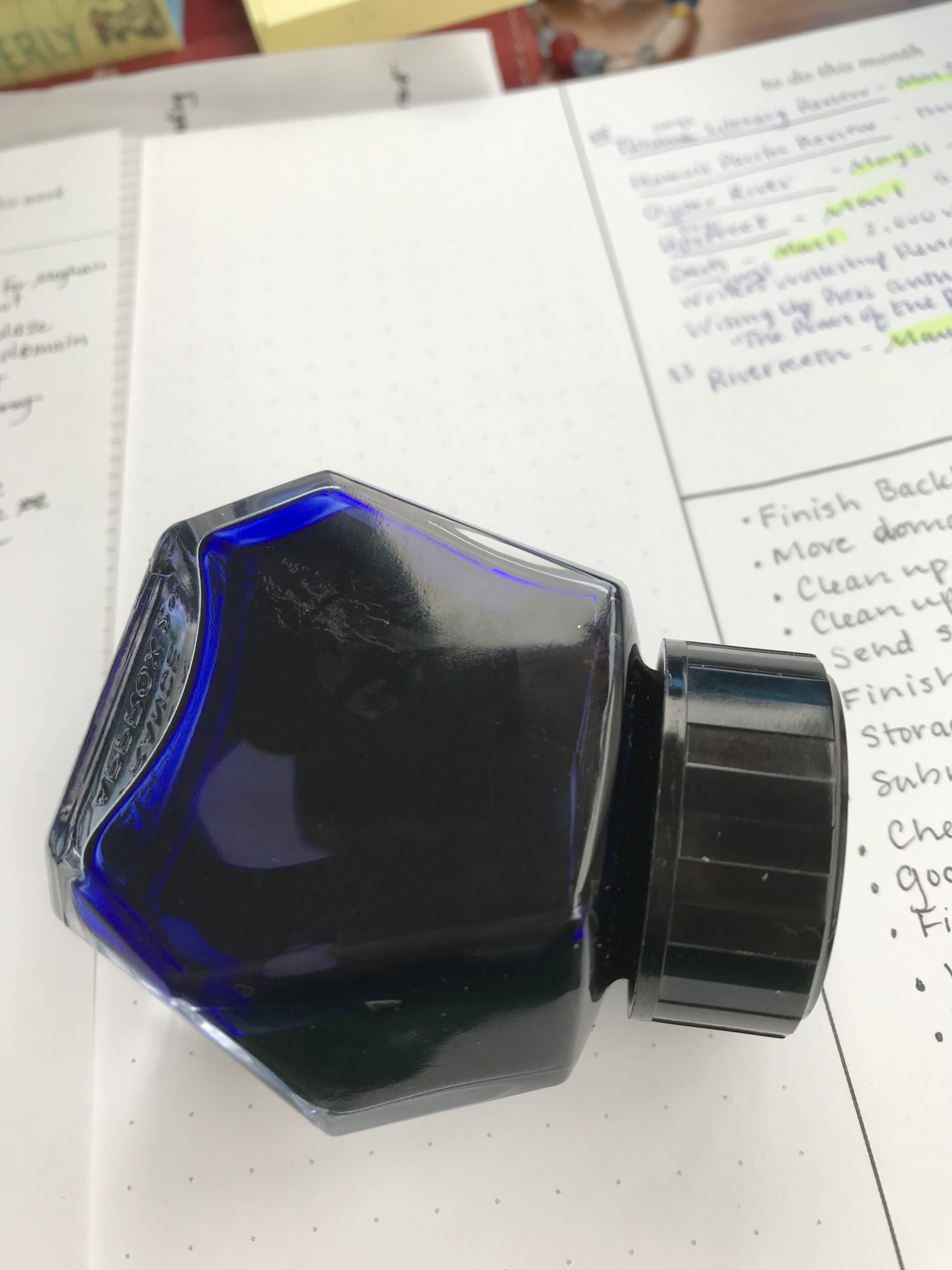
There’s another new development in Lady Magic Corner: a bottle of Waterman Encre Bleu Sérénité ink.

As a messy person, I’ve never taken to fountain pens in the past. The ink always ended up all over my hands and seemed too fussy when a person can just use a ball point or felt tip pen. Also, their tendency to scratch was a problem for me and sometimes they seemed too show-offy. If I don’t have on a top hat and spats when I go to an (imaginary) board meeting in a room paneled in solid walnut, then I have no right to such a fancy writing implement.

That single semester I was an art major in college was marred by a first assignment that involved three of my least favorite things: outdoors, a blistering sun, and a scratchy drawing utensil. As a class, we had to go to a farm and draw something there that inspired us in pen and ink. The only thing that inspired me was the promise of the end of the two hours and a trip back to campus, but I scratched out a massive scene of a rickety shed and some rusty farm implements. An aunt who would to support my art, had it framed and hung it over her sofa for years. When she died, the drawing returned to me, and even now I can’t look at it without feeling my nerves made electric and raw from the feeling of that pen on the paper.

So me having a bottle of blue ink on my desk is somewhere near anomaly, but when a friend’s artistic teenager suggested a fountain drawing pen, I bought the pen and the ink and then I fell in love. Not with the pen—though it is smooth and nicely weighted—but with this gorgeous blue ink and the glass bottle it came in.

Bottle of blue ink

See that bright, cobalt line on the outer edge of the bottle if it’s held up to the light? I can’t get enough of it. This particular color has been my favorite my entire life, so while it is unlikely I’ll start writing in my journal with a quill, just looking at the blue ink sloshing around inside the glass makes me feel all the feelings. It’s the exact opposite of that scratchy pen I had to use in Drawing 101 when I was 18 while I slapped at mosquitos in a hayfield. I can feel something akin to those same nerves crawling up the back of my neck, but it’s the good kind of hair-raising electricity.

None of these descriptions are saying what I mean. Let me try again. To see cobalt blue—whether it is my engagement ring when it catches the light or the ancient jar of Vicks VapoRub from a time when it was still in glass—is to leave my body and float above it, clutching my sides in ecstasy much like Snuffles from Quick Draw McGraw cartoons:

Snuffles knows what makes him happy.

Also in the color department, for my birthday in January, Z got me the Cariuma OCA sneakers that Helen Mirren has been seen in. When I put them on for a daily walk I get another little thrill. Until I saw them, I had no idea that I hoped to one day wear something that Dame Mirren has been spotted in (excluding her costumes from Excalibur in 1981), but here I am. Ecstatic about rubber-toed Kelly-green tennis shoes and shocked that droves of people aren’t stopping me on the street to find out where I got them. I know it’s a kind of fashion blasphemy, but they are prettier than Chuck Taylor’s and they plant some trees with every order.

Pair of bright green sneakers.
I’m ready for my close-up, Mr. DeMille

Don’t tell Z, but now I’ve got my eye on another pair in an exquisite shade of Periwinkle. Somewhere in his future is a wife who has a different color of sneakers for every day of the week that she puts on in the morning to walk a dog.

These are silly things. Maybe signs that I’m just a consumer or my belief system is problematic. Or in finding joy in plastic Scottie pens and new shoes and the color blue I’m kind of…shallow. But when you find things that delight you when there are so many arrows, bells, and exclamation points calling your attention to the ugly, to the battlefields, islands of plastic floating in the Pacific, and the sick or dying, I like to remind myself that while these things are true, so is beauty, so is delight, so is love.

These things—the bad, the good—are not anomalies.

abstract fountain in sunlight.

Lady of Shalott Considers Success Rate of Group Projects, Stays in Tower.

Standard

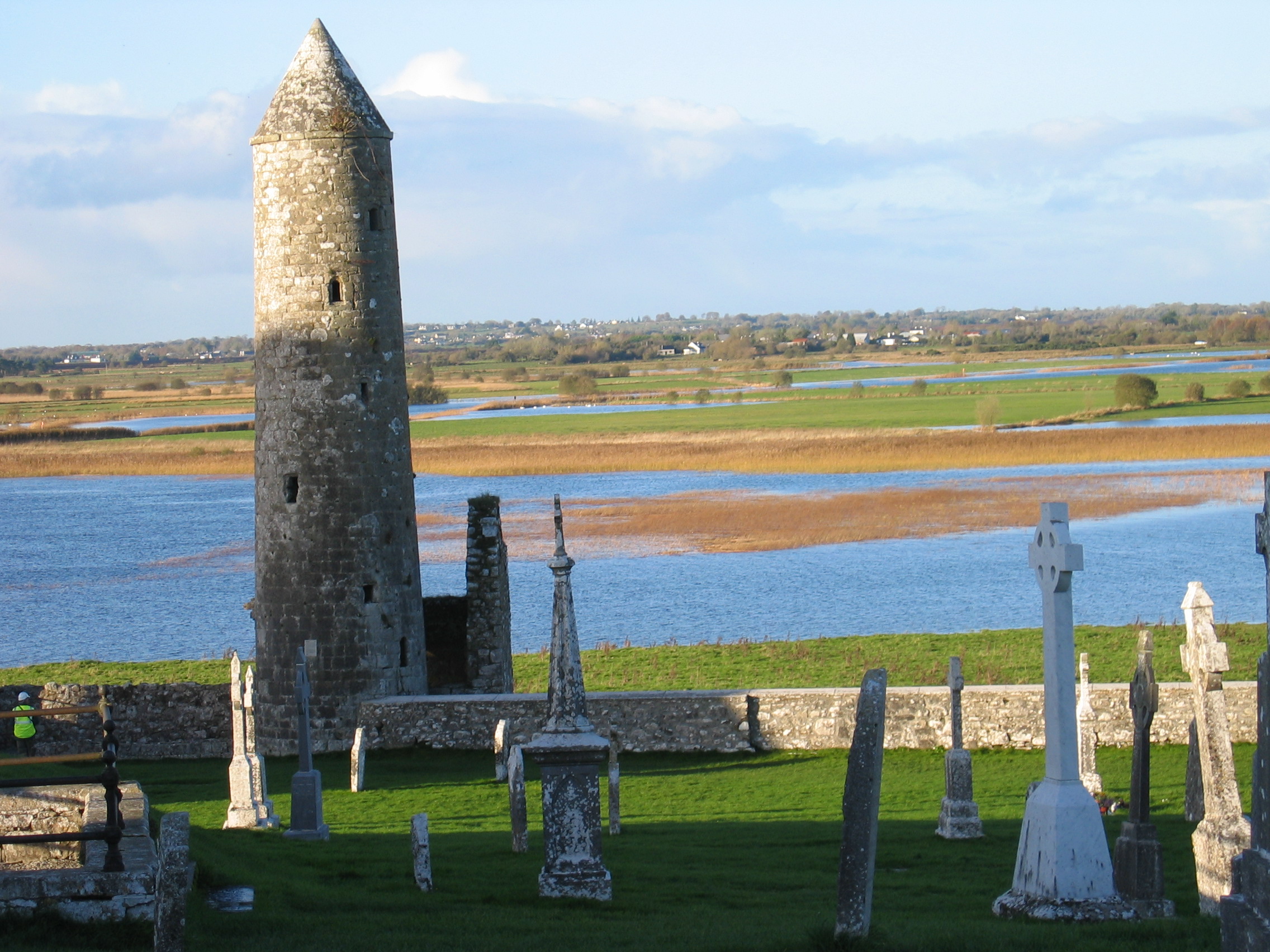
Old stone tower  in cemetery, Celtic crosses, River Shannon in distance.
Clonmacnoise, County Offaly, Ireland

After the nurse calls to tell me that the vaccine four months ago didn’t take, I do yoga.

Despite having the vaccine in April, I have no Covid-19 antibodies to protect myself, had none when I thought I did and went on a cross country trip with Z to see my family, had none on our daily walks sans masks out doors in Seattle when we got back, or when we had friends over…finally, or when we had houseguests again…for the first time in our new space.  Suddenly, I feel like a lone, limping kudu on the veldt surrounded by a pride of hungry lions.

At the moment, my doctor and the fine scientists on the case are trying to figure out what’s next for people like me who have wonky immune systems. I fall into a weird category that isn’t yet covered by directives from the FDA or the CDC. Because I had the J&J vaccine, it’s not time for a booster yet. I can’t officially cross-vaccinate though that has some promise of working. I could lie to some pharmacist somewhere and try one of the other jabs, but I’m a terrible, terrible liar and don’t think I should have to in order to protect myself. But there is nothing I can do at this moment, so I pull down the blinds and tie-up my hair and chew on the side of my mouth.

For what it’s worth, I can’t really do yoga either. I am 54. I am round. I’m standing on the rubber mat I ordered seventeen months ago when the pandemic started, which I have used exactly three times since then. Twenty years ago, I took 3/4s of a yoga class in a claustrophobic studio in Richmond, and then September 11th happened and though yoga would have probably been the right response to deal with the grief and the fear, I chose instead to sit at home, watch CNN Headline News on a loop, and stress eat. I wanted to be alone with my feelings, not stretching in a room with 20 strangers. A few years later I bought a DVD of Megan Garcia’s that taught yoga to the non-lithe, and I did it periodically on my own but only ever really excelled at Corpse pose, which was at the end of the routine when New Age music came on and you were meant to lie there, dead to the world, not thinking anything.  

But today, after the call, after I shake the dust from my purple mat, I, do the poses I memorized from the DVD all those years ago. I’m not good, but instead of critiquing myself, I think about how I’m safe in our apartment, how I can take care of my body in this way even if there’s nothing else to be done other than stay home for now. Again.

I start with sun salutations, which I do, but as I stretch upward, I think about how half of those states we drove through in July—me finally, joyously seeing the world again—were places where a lot of people don’t believe in wearing masks, barely believe in the virus, and absolutely won’t be getting the vaccine even if their names are entered in a lottery. If I’d known in June that I had no antibodies for the virus, we would have stayed in Seattle, I wouldn’t have gotten to see Mom, my family, a few friends, or the country between. Because I didn’t get sick and have no report that I made anyone else sick inadvertently, I’m glad I was ignorant. Ignorance really is bliss. It was a good month that reminded me of what normal might look like at some future time. Maybe this is what it is like for the people ignoring guidelines and arguing against mask mandates. Just press on with your regular life until you are either on a ventilator or your fabulous immune system sees you through. Maybe if I hadn’t answered the phone I could still be living like this, free-breathing and not wanting to stab people who cough on me or Z or anyone else I love.

When we got back from our trip, I was just starting to embrace the idea of the city again. The Delta Variant hadn’t yet kicked up, I thought I was fully vaccinated, and suddenly it seemed possible to walk in strange neighborhoods, to take a Lyft without worrying that I might end up on a ventilator, to hop in a car with Providence and Hudge and go to Camano Island for the day and picnic by the Sound. I was no longer envying people in suburbs with yards or in the country with acres or even people in the city with their own cars who could drive safely in their auto-bubble and feel like they are still part of the world. It was a relief to feel cautiously optimistic about rejoining society. 

But it’s a month later, Delta is everywhere, my defenses are apparently down, and I’m back on the 9th floor peering down on First Hill as I Cat & Cow my way toward isolated health.

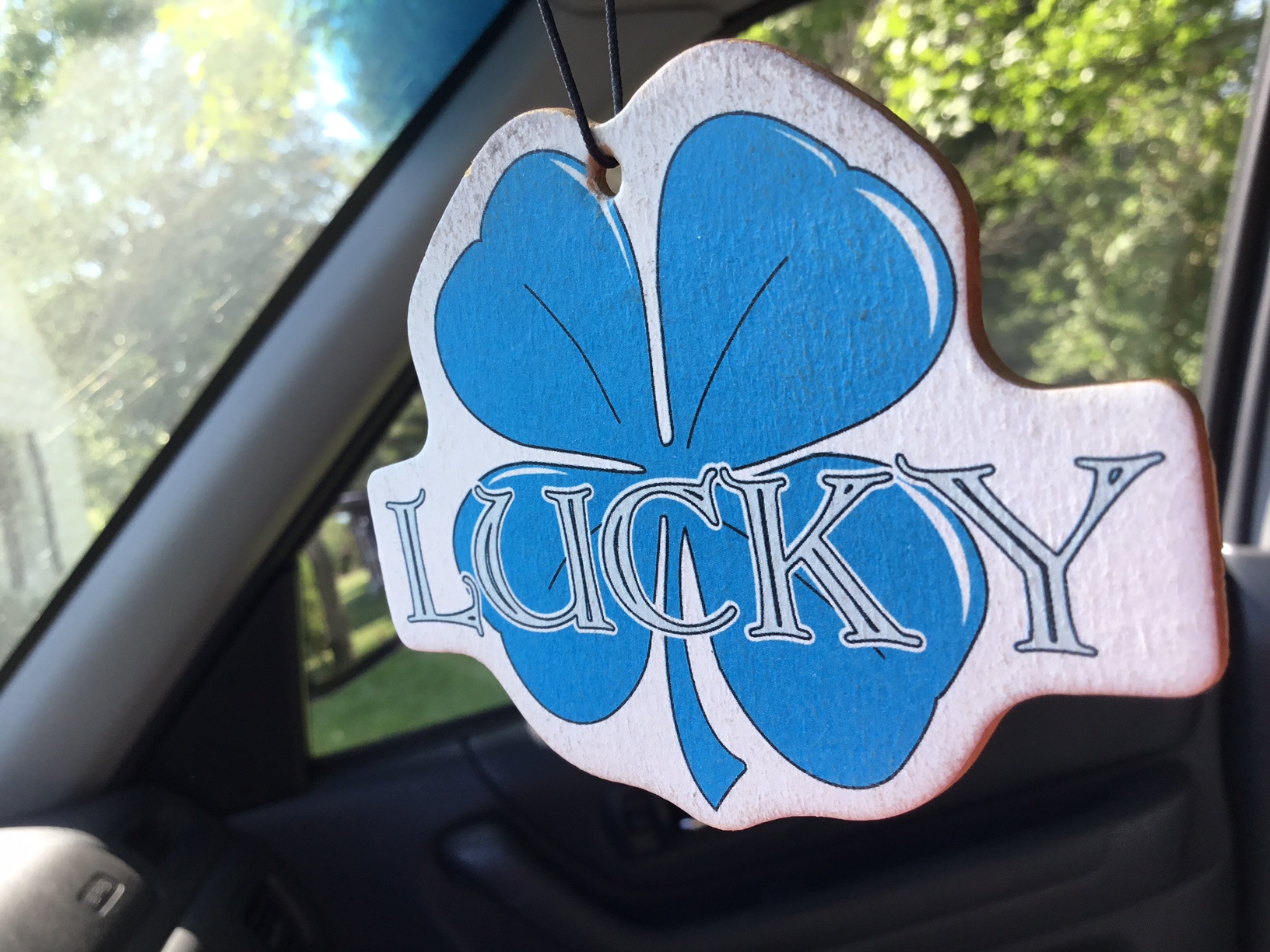
As a caveat, I feel like I should tattoo on my forehead, Lucky. I know how lucky I am that I don’t have to leave the house to work, that I have healthcare, that I happened to be in a study checking into the viability of the vaccine with people who have immune systems like mine which allowed me to find out that I needed to take extra precautions in the first place. I’m lucky I live in the city I do and in the country I do where vaccines are available. Twenty years ago—not long after that yoga class—I bought an air freshener for my car that said “LUCKY” in Celtic letters over a four-leaf clover. I never win the lottery, but I’ve felt lucky for a long time. I even feel lucky that I’m an introvert and so being “stuck” at home isn’t the worst punishment in the world.

Four-leaf clover design on cardboard with LUCKY printed over top, hanging from car rearview mirror.
Faded, but still true.

But after the phone call from the nurse, it is not until I am slumped into Child pose—legs pulled up under gut, hands stretched forward, palms and face pressed against the mat, my breath making me hotter than I already am—that I have a flash from elementary school. It’s something I haven’t thought about for decades. The lights snap off, and the usually pleasant Mrs. Murray barks, “Bury them!” and all of us know we have to make a fortress with our arms that covers our faces because she’s sickened by the sight of us.

When we are forced to bury our heads, there’s been a real transgression. It is different than the days when everyone is a little too chatty and she has us put our heads down for a few minutes so we can calm down. When we are commanded to bury our heads, it feels a lot like she hates us. Like she would be perfectly happy if we disappeared inside our own arms and were never seen again.

In 1973, I comforted myself with the knowledge that I was not the reason we were forced into this solitary confinement made of our own flesh though my natural instinct was initially to assume that it was my fault. I was not a goody-two-shoes particularly, nor was I pleased with myself that I behaved the way we were supposed to. It is in my nature to want things to be calm and easy, and the hijinks some of my classmates got up to never held much allure. If there were going to be negative consequences, why do a thing?

Let’s face it. I was kind of a boring kid. I wasn’t what you’d call dynamic or even all that energetic. I was interesting the way a turtle is interesting: you spend a lot of time waiting for it to make a move and then it pulls into itself and you forget that it’s a creature and not a stone.

Copper box with with copper turtle, beads and glass balls surrounding it.
A turtle trapped in a box–souvenir from my MFA in Maine.

I hated it when we had to bury our heads because it meant I couldn’t read or doodle or stare out the window at the single ancient tree that was outside the window. As it was, school bored me and to have these things that made it tolerable removed from me caused an almost physical pain. Even now, when I’m watching a show and some prisoner gets sent to solitary, I can remember my own exhalations ricocheting off the desk, finding no real space to escape in the tomb of my arms, and bouncing back onto my face convincing me that if I didn’t die of boredom I would likely suffocate. I could probably handle solitary as long as I went in with some books and a journal and a little radio. But all that nothing? Save me.

I was quiet on the outside, but oh, was I dramatic in my own head.

We had a very soft-spoken social worker who would periodically come to our class to do presentations. I was privileged enough to have lived my life without needing or knowing what a social worker was and because her appearance in our classroom was so rare and seemingly arbitrary, I couldn’t quite figure out what the point of her was. Everyone in the elementary school world had a specific purpose—librarian=books, nurse=temperature being taken, secretary=the gateway home when the temperature taken was too high, and so on. But I couldn’t figure out why Mrs. Cobine would very occasionally show up or what I was supposed to do with the information she shared since there would be no follow-up, no quiz, no adjacent reading or art project.

She had salt and pepper curls, beautiful blue eyes, and a soft voice. I recognized her as a benign, caring force in the universe, and she certainly wasn’t going to shut off the light and instruct us to disappear ourselves. But still, why had we been ushered into the library—surrounded by books I wanted to read—to have these soft conversations about feelings.

I was particularly dubious about the box she brought with her that held a dolphin puppet, a tape recorder, and some drawings to illustrate the story being told on the recording. Because she seemed so kind, I wanted to like those lessons, but they were not Scooby-Doo caliber. They were, instead, one of those activities that adults force upon you so you can learn a lesson. I didn’t blame her for these educational interludes—I could tell from the box she carted around that this was something that had been foisted onto her the same as it was being foisted onto us. I wanted what she was selling us to be true, but I was a child who doubted things.

On two of my remaining braincells, I’ve kept the song from one of these lessons. Instead of repeating in my head “inhale…exhale” as I contort myself on the yoga mat, I start to hum the song.  This one was about teamwork and involved a sort of goodwill pirate that Duso the Dolphin visited who was trying to get his ship loaded or unloaded or in dry dock or something, and the song was this:

“Come down here and help,”

said Blooper to his crew.

“You can do things in a group

you can’t do just with you!”

Back then, I remember looking at my classmates who were incapable of going a week without doing something bad that forced the whole class to sit in the dark with our heads folded into our arms on our desks. It seemed unlikely that the group of us could achieve anything together other than a decent kickball team at recess. Even as a first grader I could see that we all had our own agendas, our own weaknesses, our own proclivities that meant it was unlikely we would ever get whatever prize promised to be at the end of just “working together.” It sounded easier than it was.

Unless you are moving or throwing a pitch-in or you are Amish and there’s a barn raising on your calendar, I’ve never really believed that many hands make light work business. Many hands mostly make work subpar and everyone leaves thinking it would have been better if they’d been in charge except the person who is sleeping under a tree and hasn’t done anything at all. (He’s usually pretty happy with how things turn out, I guess, even if the result is a C-.) 

Whoever heard of a pirate called Blooper anyway?

Generation X is, perhaps, especially inclined to cynicism, and I am genetically predisposed to it. I also have these occasional Pollyanna moments. I like Fox Mulder, I want to believe,  and the two duke it out. When the pandemic first started, I was imagining us all banding together like people did during World War II for the greater good. Victory gardens and cheerful rationing and women giving up stockings for parachutes and learning how to rivet stuff.

And there for a while when the pandemic started, it seemed like everyone was making masks and banging pots and clapping for healthcare workers and being careful of each other while we waited for a vaccine, so I was hopeful. But, of course, it wasn’t everyone, it just seemed that way because I was stuck in an apartment on a liberal street in a liberal city where people value science and kind of value other people.

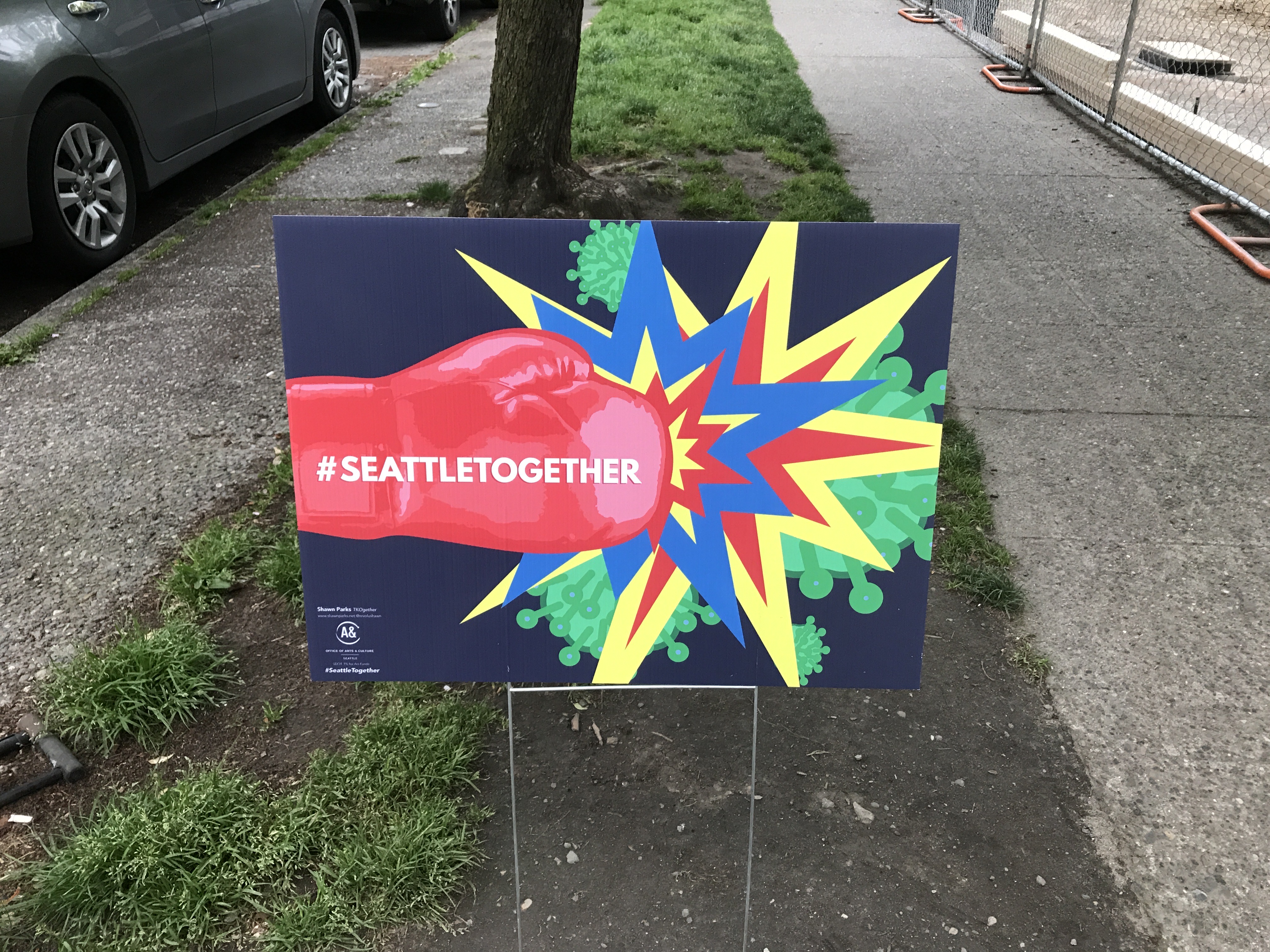
Sign on city street of red boxing glove punching Corona virus.
These signs were encouraging when this thing started.

During the yoga session, I work through other poses whose names I can now only guess at and instead of wondering if my form is even close to what it is supposed to be (it is not), I think about how this is the first time since I was diagnosed eleven years ago with that wonky immune system that I’ve genuinely felt the weight of my condition and how I am at the mercy of others.

I still hate group projects. I’ve got no faith in every one holding up their end of the deal.

Instead, I hold a Plank pose for five long breaths for the first time ever and remind myself that this will be temporary—both the pose that my arms are shaking through and this incarceration. I prefer doing yoga this way to that stuffy room in 2001. Good thing I am an introvert. Eventually, one hopes, there will be a vaccine cocktail that works or the virus will get bored and go wherever old viruses go to die, and I can come down from my tower with a better outcome than the Lady of Shalott. (I thought my youthful fascination with this Arthurian character was all about unrequited love, but I see now it was practice for 2020 and onward.)

Then finally, the long-awaited Corpse pose. I close my eyes and relax. The yoga is done. I can tick it off my list. I am in my own home, surrounded by books, paper and pens, a laptop, a view, and Z, and no one is shutting off the lights and shouting, “Bury them.”

At least not right now.

Teapot, full teacup, pastry on a flowered plate.
My last visit to the cafe at Elliot Bay Books in January 2020.

The Bears of First Hill

Standard
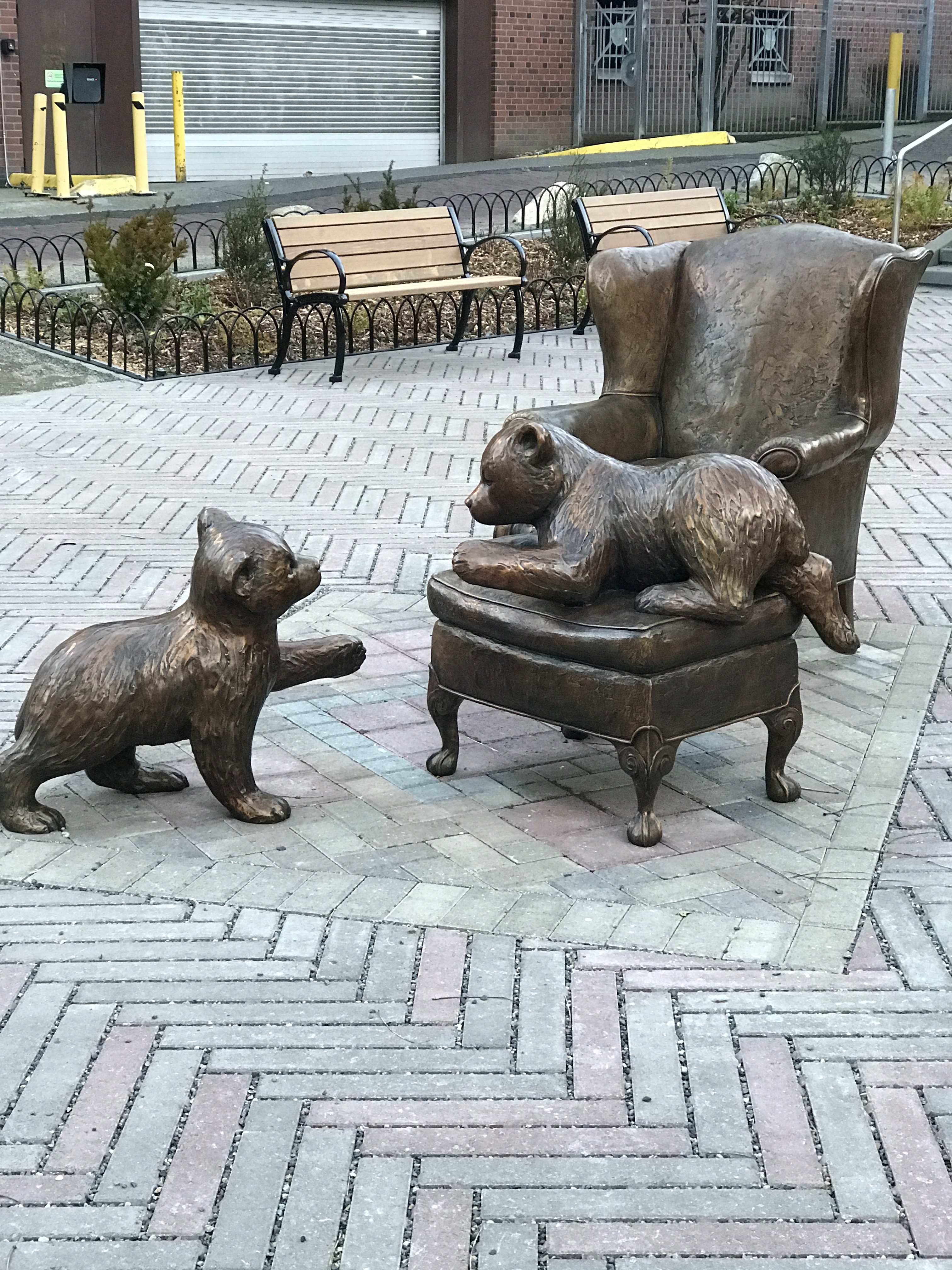
Statue of two bear cubs playing on wingback chair and ottoman in park setting.

Happy New Year!

Or is that a jinx? Am I meant to be saying something like whatever the new year equivalent of “break a leg” is? Also, can you even say Happy New Year when it’s the first of February? Shouldn’t the greetings be over by now?

So far, I haven’t been that impressed by 2021, have you? It’s felt like a worse version of 2020 with an added layer of insurrection. Normally, I don’t put much stock in years being “good” or “bad”—it’s all just the peaks and valleys of being alive—but so far, I am of the mind that the successful coup has been that 2020 is still in office and we just don’t realize it yet. Every morning Z and I look at our phone messages and then ask the other with dread what the news is from our home and from friends. Used to, I’d be whining because the Seahawks were dispatched from the playoffs so quickly or a neighborhood party was loud, but now any day that doesn’t require a sympathy card or new additions to a prayer list feels like a win.

It doesn’t help that in addition to the new beautiful views out of the study at Oh La La that I’m always crowing about, there is also a straight line to an elderly care facility. About half the time I look that direction—directly down the street from my own now bi-focal needing eyes —there are the lights of ambulances flashing out front. On my best days, I say a quick prayer wishing them well, wishing them a lack of fear, wishing them people in their lives who love and care for them. On worse days, however, I angle my chair so I can’t see it at all. It’s a little too close to comfort, the home for the aged. Fiftysomething seems younger now than it did when my grandparents were in their fifties or when my great grandmother was wearing those old-timey clothes, but the days are zipping by. Even if we survive the pandemic, we are, as Alanis Morissette said, temporary arrangements.

Urban tree-lined street with distant red ambulance light, power lines.
Not thrilled with how those power lines seem to connect me with distant sadness.

When I was in high school with my penchant for English and art, I had friends—all male, please note—who liked to remind me that careers with words and art weren’t that lucrative. These boys were good with science and numbers. My father, also good with numbers, felt my chosen major in college—English without the education degree (because I took one ed class and was bored)—might turn me into a pauper and so I should consider a business major despite the fact that I had been a disaster at selling Girl Scout cookies and only loved his cast-off briefcase because it held my art supplies. Though my professors insisted we could do a lot with an English degree, they never handed out lists or offered us much advice beyond “go to grad school” which was, after all, what their own experience had been. Still, I loved words on a page whether mine or someone else’s, and nothing else felt like a good fit.

There were plenty of times—especially during the “spinster librarian” phase—when the mystery of my life was why I hadn’t tried harder to get myself on one of those more lucrative career paths. Or, at the very least, a career path that was less nebulous. On the early morning drive to work, I’d stare at construction workers and think about how much more straightforward and useful their work was: the world needed places to live and roads that weren’t riddled with potholes and so their jobs were to solve those problems.

What exactly was I solving at the library? How to convince someone that if they didn’t pay their fines before checking out another book the entire library system would crumble? Even I didn’t believe that one.

Toddler with brownie hat crying on floor.
You might like to eat cookies, kiddo, but you’re never going to be good at selling them no matter what hat you wear.

One day you wake up, and it’s your birthday, and a few days later multiple friends near your age start talking about their retirement plans in six years or so, and if you are me, you think, but wait a minute, I still haven’t completely figured out what I want to be when I grow up—who wants to retire? And then you realize that while you were trying to figure out what to do with yourself, you were actually living your life.

Who knew?

If I had to have business cards printed right now, I still don’t even know what they should say. “Writer. Teacher. Ponderer” is closest to the truth, but I don’t have a contract from St. Martin’s or tenure, so “ponderer” seems to be the most accurate measure of how I’ve lived my life but the pay is not so good.

Usually on January 6th what I’m pondering is the miracle of my own birth with a very small side order of the arrival of the magi at the manger to visit the infant Jesus. (I do this primarily because it seems wrong to have a birthday on Epiphany and not acknowledge that before it became my birthday it had other, greater significance. That said, the quality of my pondering is often along the lines of wondering what Mary thought when these fancy men rolled up with their expensive jars and boxes of treats for a baby. Because I’m pretty sure what I’d have been thinking is Do you mind if I return this? We’re still living in a manger here and we need some onesies and a Diaper Genie.)

This year, however, I didn’t get to ponder Epiphany or the last five decades of my life because just as I was finishing a morning writing session, my cousin texted that the Capitol had been breached. So Z and I spent the rest of the day thinking about the fragility of democracy, the importance of critical thinking, and how in 1980 my youth group members and I were practically strip searched before we were allowed in the Capitol but somehow the masses were able to break in and run rampant.

I realize it’s not all about me, but I’ve spent my life knowing my birthday so close to Christmas was a pain for people, that it was a high holy day, a birthday I have to share with E.L. Doctorow, Rowan Atkinson, John DeLorean, and Vic Tayback. But now, oh joy, it is a date that will live in infamy. I can hardly wait for next year’s Facebook memes reminding me to “never forget.”

What is wrong with people? You love democracy so you break it’s windows and smear excrement in its hallways while carrying a flag with a man’s name on it as if he’s a king? This is not what I learned about Democracy and the Constitution from my School House Rock cartoons. (Hint: you don’t get to revolt because your person didn’t win. I learned it in grade school and was reminded of it again during both the 2000 and the 2016 elections when I had to lick my wounds without the solace of fur pants and Viking helmet.)

What have we become?

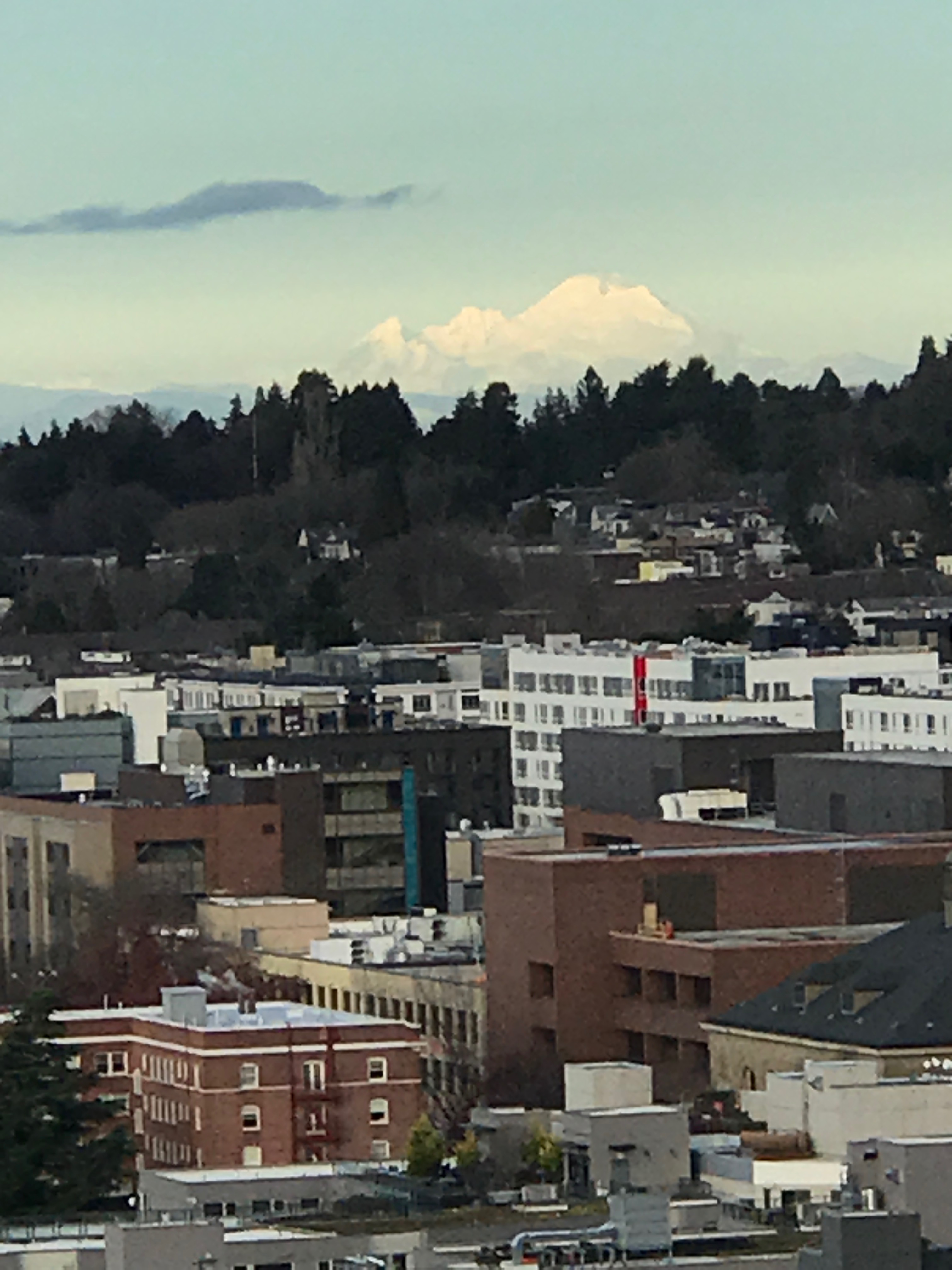
After several hours of watching the news and feeling gloomy about the future, Z and I finally went up on the roof. We were going to go on a walk, but Seattle being Seattle, there were some demonstrations we weren’t interested in getting caught up in when tensions were so high, so instead we let the wind on the rooftop whip us around a bit. We watched the sunset, looked at Mt. Baker which made a rare appearance in the distance, and had a false sense momentarily that all was right in the world. It was beautiful. Later, I was feted by Z and a Zoom version of my folks and opened presents and ate cake. I did, however, forget to put on my tiara.

Distant snow-covered mountain on horizon. City in foreground.
Welcome to my party, Mt. Baker.

From my new vantage at Oh La La I can see the chimney tops of the Stimson-Green Mansion. First Hill used to be flush with mansions but we’re now down to about four, and the Stimson-Green is something special. It’s Tudor Revival, looks like something from a storybook, and is even more delightful inside with each room decorated in a different style. I’ve written about it before. Though all I can see are the chimney and the roofline, I know what sits under it and had the good fortune to tour it, so when I see those chimneys, I’m able to imagine this area in the early 20th century when horses and wagons were making deliveries to the fancy houses, and the residents therein all knew each other and had, for whatever reason, decided they’d rather make their fortunes in the Pacific Northwest instead of Back East. They were not, I assume, English majors.

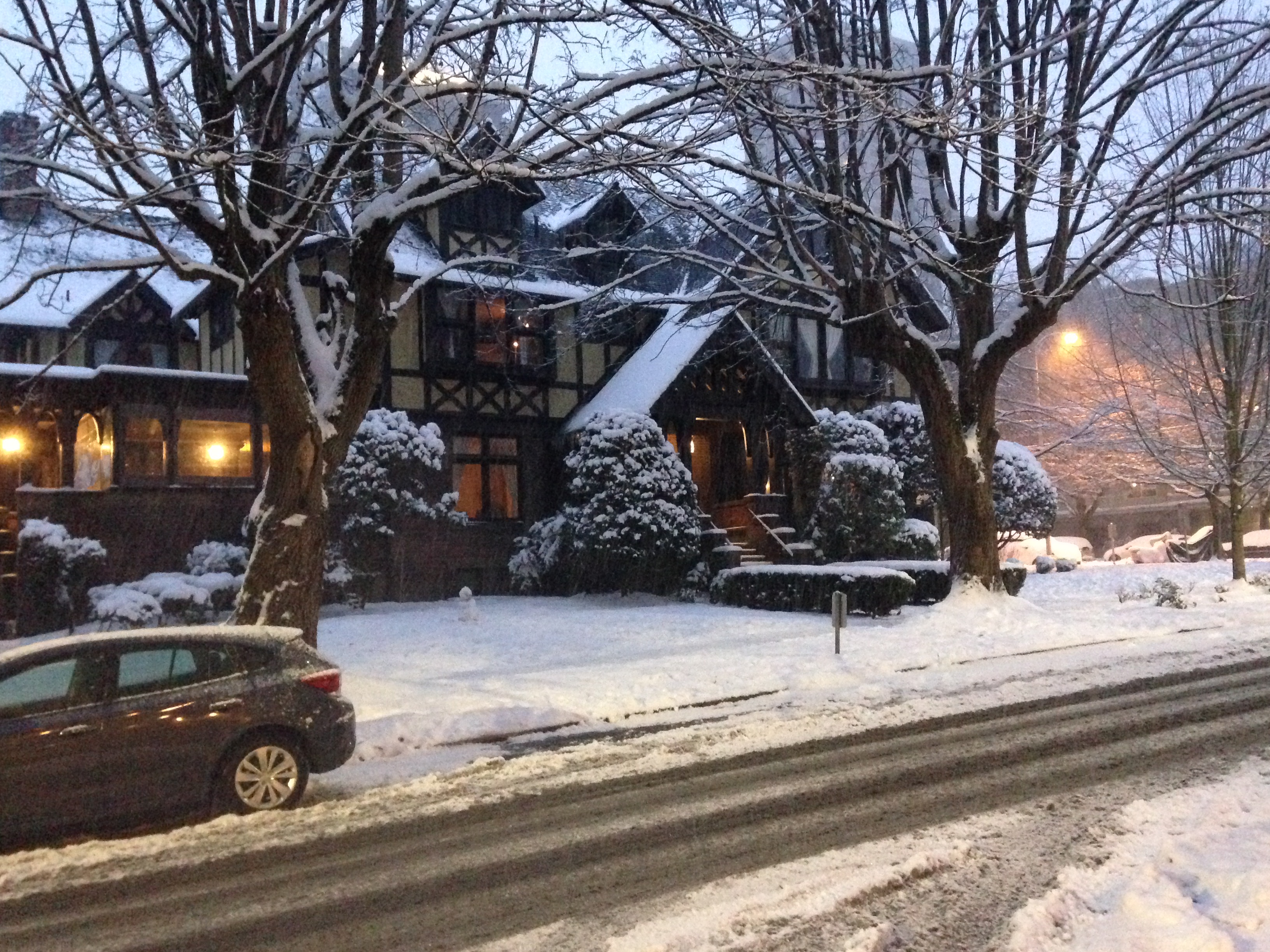
Tudor style mansion covered in snow.
Stimson-Green Mansion after a snow fall last year.

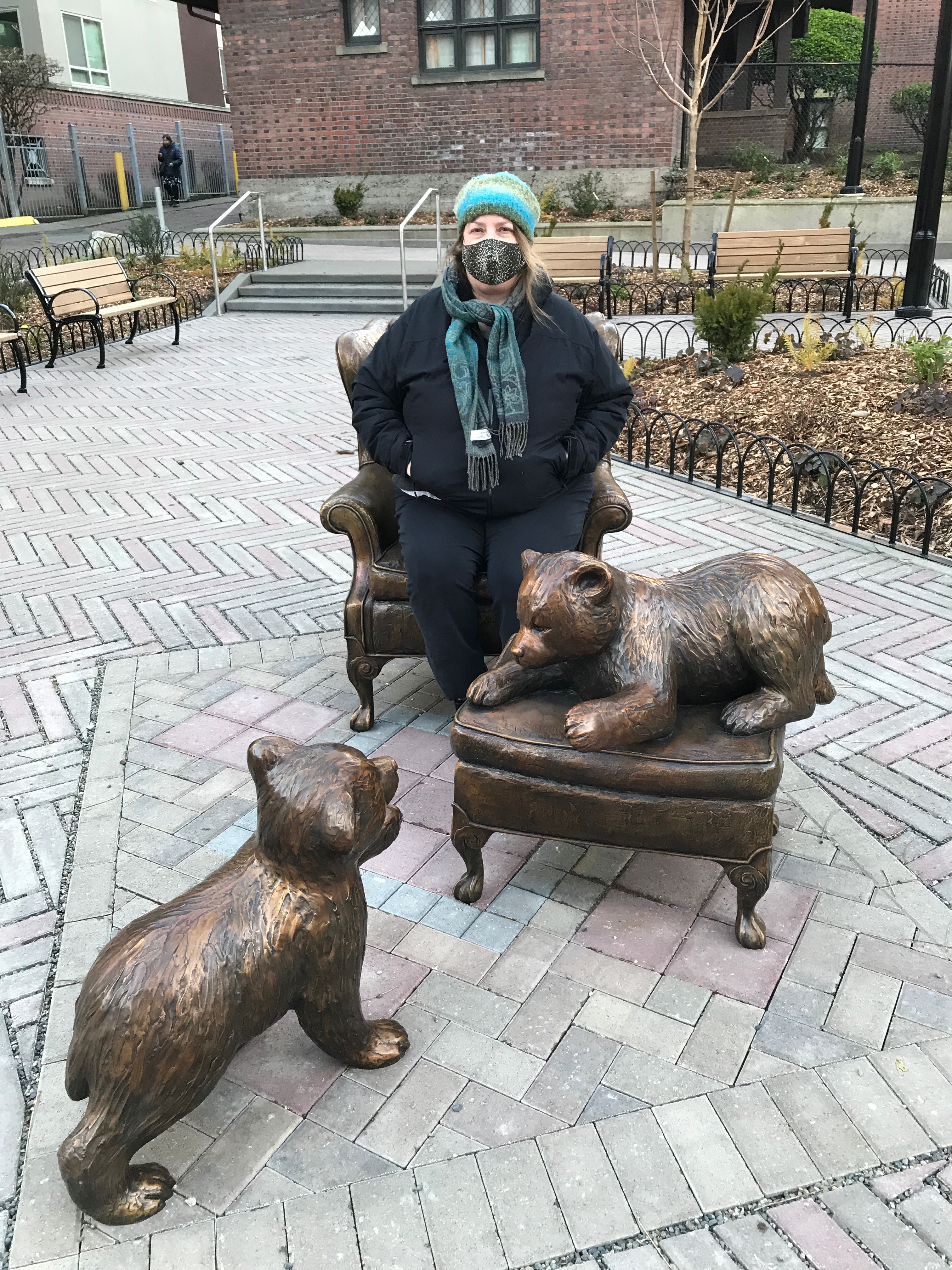
Next to the mansion is the small, just renovated First Hill Park, and there has been an addition to the old foot print of a bronze, three-piece sculpture of two bear cubs playing on a wingback chair and ottoman. The sculpture was created by Georgia Gerber who also created the famous Rachel the Pig at Pike Market that I’ve rarely gotten close to because it’s always covered with tourists. This new one is a whimsical sculpture that invites you to sit in the chair with the bear cubs frolicking nearby, and it might seem random, but it isn’t.

Women with mask sitting in bronze chair of statue with bronze bear cubs in small park.

The young daughter of the mansion was giving a pair of newborn black bear cubs by her father’s foreman when they were orphaned because their mother was killed in a logging accident. She named the cubs Johnny and Irish, and for the first ten months of their lives, she raised them, played with them, and, one assumes, loved them. (She preferred animals to people.) The upper verandah of the house was their playpen and she regularly walked them around the neighborhood without a leash.

Z has a fit when he sees a dog off leash on our daily walks. Can you imagine if we’d been bumping into little Dorothy with Johnny and Irish? Oh my goodness.

When I think of the bears, I try to focus on the early days of their lives when they were living in the mansion, tumbling over the dragon andirons by the big fireplace, roaming the neighborhood. Before they got so rambunctious with greeting people—not aggressive, apparently, just a little too enthusiastic in their attentions because they were no longer little bears. So they were taken to Woodland Park Zoo where they lived all their remaining days. I wonder about the drive to the zoo. Were they treated like beloved family pets who got to ride shotgun, taking in the city as they neared their new home? Did Dorothy go with them and was it a tearful goodbye? (How could it not have been?) Was their enclosure at the zoo spacious and humane or was it like the tiny wire cage the bear at the park where I grew up had to live? I spent my childhood wanting to see the animals at the park zoo and then feeling instantly sick and sad because they were in small cages and not living the lives they deserved to live. Dorothy would apparently visit them and she pointed them out to her own daughter. She might have been a practical person, but I’m guessing she longed to take them back to the house on Minor Avenue and let them romp on the furniture.

Less exciting neighborhood ponderables:

View out high window of street scene with leafless trees and one green, be-leafed tree in the middle of the street.
Show-off.

This tree. It’s on a mini traffic circle and seems not to realize it’s January. All the other trees around it are naked, but this one is still dressed for a ball. I can’t decide if it’s some kind of sick that means it forgot to drop it’s leaves or if it’s just showing off.

Why our fabulous trash chute is suddenly not working and we now have to carry our garbage down the elevator.

Why I have quit seeing Toast the corgi in the lobby. Has he moved?

Also, WHY ARE THERE NO SCOTTIES IN THIS BUILDING?

Finally, why is there a guy playing a baritone on the corner across the street all weekend long, every weekend. And why does he seem to prefer Simon and Garfunkle tunes? At first it was a fun reminder that we live in a city, but after a few weekends like this, I’m grateful I got AirPods for my birthday.

Everything is so depressing these days.

Except.

When I’m looking at the old people home in front of me, behind me is Swedish Hospital where two of our favorite little girls—Pippi and the Imp—were born. Before Christmas a client dropped off a gift when I handed over a manuscript I’d been editing and she pointed to the hospital with a fond smile and said, “That’s where my boys were born.”

The last few weeks, I’ve twice seen a bald eagle soaring past our building, where normally we only see crows and seagulls. Who knew an advantage of living on the 9th floor of Oh La La would be bald eagle sightings?

And finally, yes, the Capitol was breached but it wasn’t successful. Our elected officials went back to work and the building and grounds crew righted what was wronged. And when I think about the whole event, I’m struck by how it was words that instigated the riot and words—written all those years ago, imperfect but with the intention of becoming more perfect—that allowed us to get back to the business of living. Maybe words really do matter after all.

young girl in woman's lap with Dr. Seuss book being red to her.
Words were easier when they were just Dr. Seuss

In the Bleak Midwinter

Standard
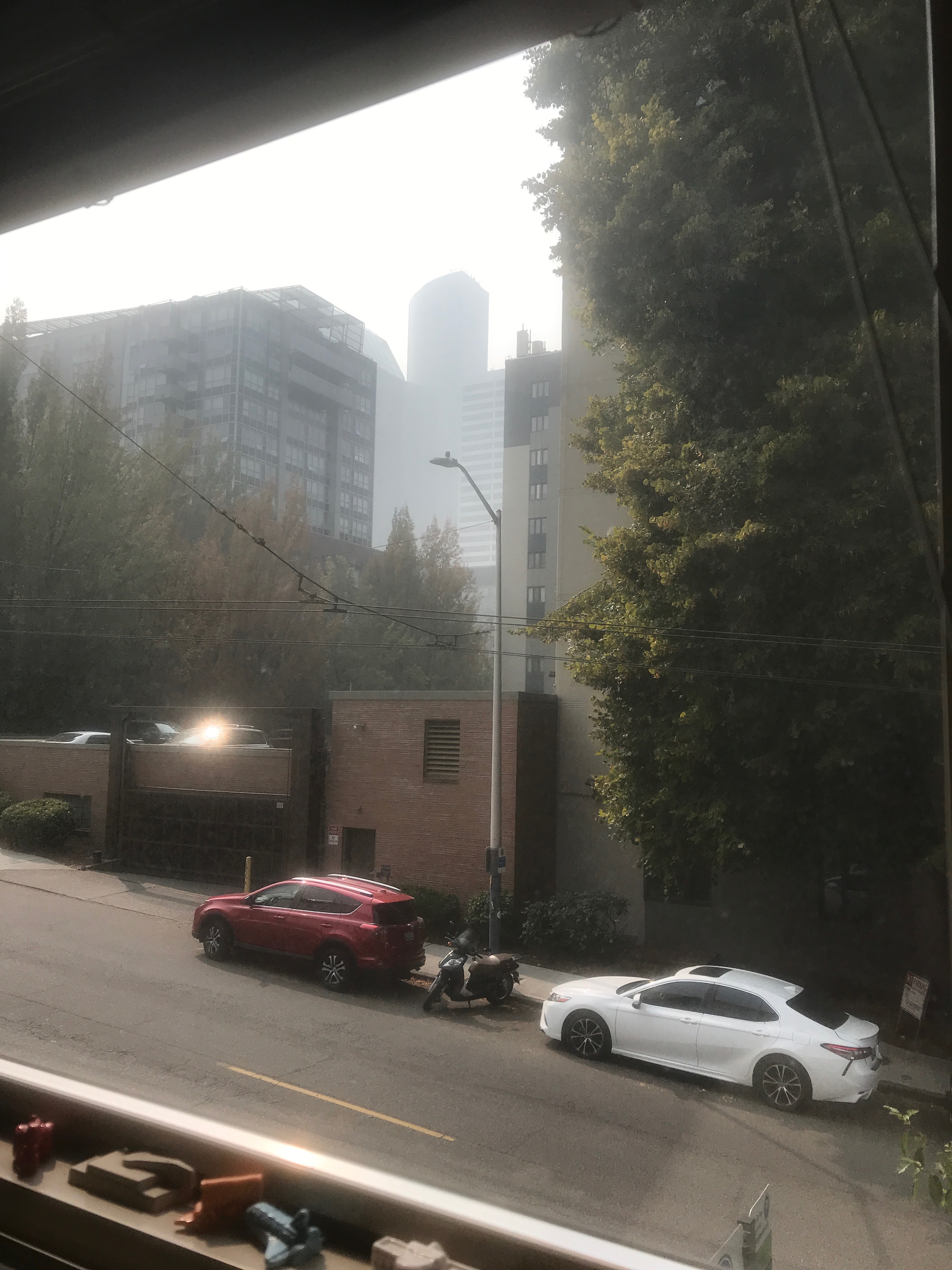
Seattle. December 23rd, 2020. (Please note the “12” in the building lights mid photo.)

So this is Christmas. And what have you done?

What I’ve done is make the study smell like a dead sheep.

In 2003, my brother and I went to Ireland to celebrate his 21st birthday and on our last day there, I discovered a sheepskin that I really wanted to buy because it reminded me of the bed Mac, my beloved Scottish terrier friend, slept on at his parents’ house. But the thought of buying an animal pelt repulsed me even though I’d been eating meat and wearing sensible leather shoes on the trip. Still, I couldn’t quit thinking about that sheepskin and how much my own dog would like it—once I got a dog. It seemed like the logical step to the dream I’d been building for myself—a full-time teaching job, a therapist, a new car in which I could see the world (or at least the drivable bits) with a backseat in which both a dog and car seat would fit should I acquire a child and/or a dog in the process. (I wasn’t picky at that point—dog, kid, both…whatever.)

It being our last night in Galway, Steve and I “took some drink” and the amount of drink it took for me to have zero qualms about buying that sheepskin was three pints of Guinness. You’d have to ask my brother, but I have a vague memory of him shushing me at one point, so it’s possible that I was louder than I needed to be when I went to the sheepskin selling shop and bought a fine large fluffy one in case one day I acquired a fine, large dog who might want to sleep on it. I’ve taken comfort over the years when I bury my feet in that pelt that I was not 100% in my right mind when I purchased it.

Fast forward nearly two decades. It’s been living on the floor of the guest bedroom since I moved my things in with Z eleven years ago. Periodically, it would get a bit matted, and I’d fluff it up with the vacuum or rake it with my fingers until it looked respectable again. Though Mac’s mother regularly washed his because he was sometimes a dirty little dog who would get it muddy or full of burrs, I had never washed mine. But every since we moved into Oh La La, it has looked decidedly dingy. The wool was sort of matted together in places and I was thinking even a dirty dog probably wouldn’t want to curl up on it, so why would I want it on my floor.

I asked Mac’s mom how she had cleaned his, and she sent me easy directions (“put it in the washer”) and so I put it in the washer.

What came out was a mess. Despite spinning it twice, it was still sopping wet. (Sheep are really absorbent.) I put it in the dryer for 20 minutes (the super smart dryer suggested it would need to go for at least 95 minutes, so it was in no danger of shrinking) and then I hung it up. It dripped dryish for two days. Z hit it with a hair dryer. It had developed dreadlocks. There was no fluff to it at all. It reminded me a lot of my first disappointing Irish sheep sighting. I was expecting little cotton fluffs on the hillside, but instead, the flocks of sheep were spray painted so farmers would know which ones were theirs, and they inevitably had bits of grass and mud and dung stuck to their coats.

Two days ago, I bought the fleece it’s own brush and started the arduous job of brushing the wool. It was hard work and reminded me of why we don’t yet have a dog (so much work) and it reminded me of carding wool in third grade for the Bicentennial when we were all in training to be modern-day pioneers. After several minutes at my task, it also reminded me that one of the things I learned from carding wool in 3rd grade is that I am allergic to wool. My hands got itchy and red, my eyes started watering, and I wished I’d never started the project.

Also, the bathroom where I was brushing no longer smelled like lovely fruity soaps. It smelled like wet sheep. I sprayed some Opium in the air. Now it smells like a fancy wet sheep.

 I wasn’t exactly sure what to do with myself this Christmas because I wasn’t home in Indiana (or in Zimbabwe with Z and his family) for the first time in my life. When it first became apparent that we’d have to stay in Seattle for the holidays, I thought of things we should do so I wouldn’t get too blue. I vacillated between doing lots of things (make cookies! get a live tree! make a paper chain for said tree! make popcorn balls! play Christmas music every night!) and doing nothing at all. Z was not on board with the latter, but I considered just hiding in the study—the one that now smells like a dead sheep—while he listened to carols and walked around with too much joy in his heart.

We had snow for 15 minutes.

In the end, we had that big move in November and we’ve spent all the days since then trying to get our living space in order. I started writing every day with a group of women from around the world on Zoom. Z and I have both been busy with work too, so there hasn’t been a lot of time to get worked up about Christmases past and where this one is or is not being spent. Instead, we sit at our computers. I race to the study every morning to see my new online writing friends in Australia and England and San Diego and Chicago and other parts of the planet, commiserate with them about being sensitive souls, and then get down to the writing. (Yesterday, one of our members took us out on her parents’ veranda so we could hear the early morning birds in Queensland.) Z writes emails and makes plans for his department. Later in the day, we have our non-work routines—our walks, our projects, our shows, and we check in with friends and family, we say prayers for those who aren’t doing well, and clap our hands when new babies are born and new puppies adopted (not us, we are still sans dog and the toddler down the hall who burns off energy by slapping our door at night as he races the hallways is as much kid as we are up for in our dotage). 

Yesterday we got the news that a close family friend of Z’s had died. She was 95, behaved like she was half that age, and she and her husband were the first Americans to welcome Z to the US when he arrived from Zimbabwe to attend college. Though she and her husband had only just met his parents by happenstance when they were in his hometown, she made sure that when he arrived in Minnesota he had the sheets and towels he would need there. Later, they invited him to their home in Washington State for Christmas. Later still, when he happened to get a job in Seattle, she invited him up to spend weekends and welcomed his new girlfriend  (that’s me) to Thanksgiving, and so my first introduction to Z’s family was his American family-by-proxy.  We were both sad to see her go, but we also feel so lucky that Z got the job here that allowed him to have more time with her over the years, that we were able to celebrate her 90th birthday with her, and that just days before we got this news, her Christmas letter arrived in the mail and was a hoot and demonstrated her spirit and way with words. 

Last week on a clear night, we rediscovered the roof deck here at Oh La La. We hadn’t been up there since the first day we toured the building.  We went up as the sun was setting, and we were shocked by how far we could see. We can see both mountain ranges, we can see Lake Union and Puget Sound, we can see Smith Tower and the Field Formerly Known as Century Link where my beloved Seahawks play. We can see Z’s school and just make out the park on the edge of which Hugo House stands. The lighted TV tower on Queen Anne that is shaped like a Christmas tree stands off in the distance, and various church steeples dot the horizon. We can see the traffic lights on I-5 in the distance, and the planes that are bringing in all of the germy people who just will not stay home like they are supposed to. The apartments and condos near us have lights up, and it is fun to see which ones stand out.A tugboat pulled into Elliot Bay and a ferry pulled out. It was so beautiful. (Except for the germy travelers.)

Today I dared to listen to the most melancholy of Christmas music—some of my favorites, including  “I’ll Be Home for Christmas” (Bing Crosby was from Washington and the flip side of that record when it was released was “Danny Boy”—a twofer for the pensive listener and proof enough that Bing had Irish grandparents) and “In the Bleak Midwinter”, and I thought about how I love Christmas and how it is so much like the rest of life. There are things to be truly grateful for, to be excited about, and to get weepy over. Life is hard. The world is hard.

But also, it’s impossibly glorious. And this is what I love about this season—that you can be miserable on the darkest night of the year yet celebrating because the days are going to start getting longer. That you can be enjoying your loved ones and missing your other loved ones. That you can be as thrilled with “Silver Bells” as you are songs that remind you the world isproblematic like “Happy Xmas  (War is Over)”. That you can keep a dreadlocked sheepskin that fills you with revulsion because your imaginary dog enjoys sleeping on it. That you can be sick of the city and then walk out on your newly acquired roof deck and see it for all of its imperfect beauty.

You just don’t get that in any other season.

May God bless us every one!

Zen and the Art of the Stalled Engine

Standard

There’s a car out front that has stalled and the driver keeps trying and trying to get it started but the engine won’t turn over. Or catch. Or, well, go. It’s been so long since I’ve driven a car anywhere (almost 9 months) that I can’t remember the proper terminology, but what I know for sure is that it seems like a metaphor for this blog, for the 18 previous blog attempts I’ve made since May, and, let’s be honest, for 2020 as a whole. It’s like the year didn’t get started and we just had to push it to the curb, sit, and wait for AAA.

And now it’s October and AAA has been taking its sweet time rescuing us.

Fortunately, it’s not quite rush hour yet or there would be cars behind this guy honking their horns and telling him to get stuffed, as if he intentionally chose to make them go around him. I feel like I should go down and offer to help him push his car, but he’s not wearing a mask and I’m still wearing my nightgown and UGG boots (a sexy, sexy look on the over-fifty set) even though it’s 4 p.m. So instead, I’ll do what I’ve been doing since March and just stare out the window and wait for something about this scenario to change.

It’s not a perfect metaphor, I guess, because this year has not exactly stalled. The hits just keep coming when you get right down to it. The fact that I haven’t really written since May isn’t from lack of trying. No sooner would I start a post on whatever the latest worry or “event” was, then something else would happen making what I’d written seem suddenly less timely or worthwhile. Were I quicker writer who didn’t need to let my work steep before sharing it, you might have been reading entries about what it was like to live in Seattle during the protests against police brutality and systemic racism that resulted—for a time—in the creation of the police-free CHOP Zone not all that far from our apartment. You might have read about the fires here and in Oregon and California that left the city with unhealthy air for almost two weeks while we were in the middle of a heat wave sans AC. You might have read about how the pier downtown where we have taken the most photos of the Sound over the last decade collapsed. You might have read about my stepdad’s surgery and the two weeks that followed wherein I tried not to call daily to see if he was demonstrating any COVID symptoms. You might have read about my sadness about the passing of RBG (and what the means for women and people who aren’t corporations) or a host of other people who have died since last time we met here. More recently, there’s been grief in the extended family, though I’m not yet ready to write about that, and so I guess that shouldn’t be counted in this list, other than it’s made the prospect of writing a blog post—about how disappointed I am that the Just Born candy company wont’ be making Halloween or Christmas Marshmallow Peeps because of the pandemic—seem extra trite.

Ditto the trite but bothersome news that the store we go to most often—Bartell Drugs, which is a local chain that treats its employees well, carries local products, and has been around for 130 years—has decided to sell itself to Rite Aid. The letter they sent out to their loyal customers said nothing would change, but, of course, everything will change. It might take a couple of years for it to get that unique Rite Aid smell—cheap laundry detergent, off-brand candy, and desperation—but it’s coming. As is the 21-story building that will block our view (and possibly the sound of the bells that please me daily) of the beautiful St. James Cathedral. As will the new bus route that’s going to add a lot of noisy, dirty traffic to our already noisy, dirty street.

These are mere trifles compared to the other stuff happening in the world—to people we know and don’t know—and our country and the global environment, and so what’s the point of complaining? But I don’t like change or discord and we are in a long, ugly season of both these days.

So, I was good there for a few paragraphs. It seemed like maybe the car was finally going to start and I could tootle on down the road, but here I am again, stalled. Z and Hudge are honking at me to get a move on, but I clearly need a jump. Or gas for the tank. Or a complete engine rebuild.

What I’d most like to do is to hire a chauffeur and shout “Home, James” from the backseat while I sip a Moscow Mule and wait for the car to drive over the Rockies, through the Great Plains, and over the Mississippi towards my own ones. One of my chief beefs this summer has been seeing people on social media enjoying their vacations, time with family, and mask-less interludes with friends. Some days, I’m even passive-aggressive about it and won’t like those pictures. Z and I would both like to be with our families, with each other’s families, sitting on a beach, crowded or otherwise, but we don’t think it’s smart given my wonky immune system, Mom’s compromised one, and Zimbabwe has had closed borders for quite awhile even if we were feeling brave enough to go see Zma.  I realize some people think we’re being excessively cautious. Aside from not wanting to get the virus, we’re also trying to be halfway decent citizens.

If it seems like I’m patting myself on the back for our virus virtue, I’m not. This is one time I’d very much like to not follow the rules. But neither of us are made that way, so here I am, watching a car in the middle of 9th Avenue try and try to get itself started.

 Another metaphor we had to work with this summer was Chicken Little worrying about the sky falling when the ceiling in our kitchen literally fell in. Neither of us were in the kitchen—and were, in fact, across the hall asleep and didn’t realize it had happened until the next day—but it was a mess. Like car jargon, I’m also bad about house construction terminology, but we could see the rough boards above and it pulled down enough plaster where the walls joined the ceiling that we got a glimpse of the wallpaper that had been up there possibly since 1923 when our building went up. Never have two people been so happy that they are renters instead of owners, I can tell you that. Our maintenance guy and an associate had it fixed, the light re-installed, and the paint on within a day, and all we had to do was clean up some forgotten chunks of rubble.

We assumed it would be a much bigger deal and there must be some dire cause—oxen living in the apartment above us having a dance party, perhaps—but our building guy shrugged and said, “It’s an old building. It happens.” Now I’m eyeing all of our ceilings with alarm, and I suddenly understand why most of the 1990s and early 2000s were spent with my mother staring at her own ceilings and making her    disapproving, I-don’t-like-the-look-of-that-crackface. I always assumed it was an irrational fear of hers, but it turns out sometimes the sky does fall.

Sorry for doubting you, Mom.

If I sound depressed or cranky, I’m not. I’ve got appropriate intermittent rage and sadness mixed in with a few scoops of joy and a lot of “I’m alright.”   In January I started anti-anxiety medicine in what has proven to be my second best ever piece of intuition (after knowing instantly that I would marry Z whether he agreed to it or not). When I casually mentioned to my GP that I’d been having some trouble riding crowded buses and a particularly dastardly elevator with no buttons inside (where was it going to take me? Who knew? Maybe it was one of those Willy Wonka deals that would burst through the ceiling), the doctor said clearly anxiety was having a negative effect on my life and here, try some pills. So I started them and then the pandemic struck and while I have no idea how I’d behave on a crowded bus because I no longer ride the bus, I have noticed that in the last 9 months I spend a lot of time hearing horrible news and feeling something akin to sadness or dismay, and then moving on with my day. Maybe this is how normal people have always been functioning and I didn’t realize it and took everything personally—someone else’s misfortune felt like mine, some story about something like murder hornets had me thinking, “Well, this is it then. This is how we’re all going to die.” And now it’s more like, “Huh. That’s too bad. Do we have any more M&Ms or is it time to put in another order with the grocery?”

Oh good. The car outside has gotten started and tootled off. I no longer have to berate myself for not being a more helpful citizen. Farewell, metaphor. Drive safely.

It’s a day-to-day existence, this life we’ve been living, isn’t it? Of course it always has been, but before we could distract ourselves with book sales and concert tickets and planned trips. This Covid Time is very “Here I am in this moment. Now it’s the next moment. And the next.” It feels Zen in some ways, though I wouldn’t say it’s the peaceful, easy feeling I always imagined accompanied a Zen mindset. But I am very much aware that I’m one Netflix binge and grocery order away from either an existential crisis or enlightenment. (My money is on the former.)

Some days Z and I are so busy with work and our internal thoughts that we barely have the energy to talk to each other in depth. And other days, that’s all we do. This morning, we were lying in bed, not all that interested in getting up in the grey, cold late morning, and so we talked and then found ourselves randomly singing multiple verses in not-quite-harmony of “This Old Man/Knick Knack Paddywhack”, a song I haven’t thought of since listening to the Fisher-Price record player belonging to my cousins Jimmy and Ben circa 1972. It was weirdly delightful.

Of course we’ve spent the rest of the day asking ourselves why we feel so behind with work, but I’d rather be a little harried in the afternoon than to have missed that musical moment with Z.

I thank the pandemic for those moments. For Zooming with friends and family. For really appreciating students and reading their work because it seems more important than ever that they are doing it and we are spending time together talking about the significance of their words (and truth). For all of the adorable pandemic puppies that people have been walking. For realizing how much you really like seeing the lower half of the faces of perfect strangers and how you’ll never take a casual smile with a passer-by for granted again. From my desk, I can see the top of Columbia Tower, which is the tallest building in Seattle. During the smog from the fires, I couldn’t see it. Now it’s back, and when I look at it, I take a deep breath and feel grateful for clear air and that building even though on most days I’m mentally shaking my fist at all the high-rises that block the sky.

During the worst of the smoke and when the building peeked through.

Several years ago, a counselor I was seeing told me that every morning he wakes up and knows his “next pain in the ass is already in the mail.” His point was, I think, you’re never going to achieve nirvana, Beth. There’s always going to be something on the horizon that is headache or sadness. At the time, I thought maybe he needed to see a counselor because it seemed kind of a pessimistic way to look at life. I was young(ish) then. I wanted to figure myself out so everything in my life would be perfect. But now I think I understand what he was saying. Back then, I was incapable of hearing the implied “but” that came with his statement. This sucks, but also, there are the _____________(moments of spontaneous song, the puppies, photos of a friend’s new grandchild, an extra long phone call home).

I’m trying to focus on the but alsos.

**ADDENDUM**

Last week, while I was trying to wrap-up this blog entry with my silent writing group of complete strangers that I met in a writing course I took with Lauren Sapala in August—a class I loved and a community I’m appreciating more and more each day—Z was across the hall talking on the phone with our building manager. When my writing session was over, I packed up my stuff in my basket and made the long commute across the hallway to our “real” apartment, where he told me he had both good and bad news.

The bad news? We have 30 days to get out of our twin apartments, where we’ve lived together for the last ten years (or, alternatively, where we’ve spent the first decade of our married life) because there’s some structural unsoundness. The good news involved some reimbursement for our troubles, which, at the time, didn’t strike me as being remarkable or worthwhile because I could only picture us homeless.

It seems only fair to withhold from you the story of my frustration that in the midst of this news, Z was fussing about where his slippers were and how cold his feet were because it casts him in a bad light. I was losing my mind, wanting more details, wanting him to tell me something that would calm my heart rate, and he was fussing and faffing looking for his half-dead slippers. Finally, he returned to the subject at hand. See how nice I was there, to protect him and not tell you about how it went on for what seemed like minutes and minutes and minutes?

Initially, it was really hard to imagine living anywhere else. We’ve been so happy here. Until I found it had some structural compromises, I’ve loved the crooked walls and windows that don’t quite shut, and quirky faucets. I’ve liked being in a building so old that it creaks and “talks” even if it’s meant I share washers and dryers with all the other building residents or I’ve been doing dishes by hand for the last decade, much to the chagrin of my once-attractive nails and hands. I’ve loved our weird set-up with our writing studio/guest apartment/extra-large-storage-space-across-the- hall.

It’s unconventional and meant we had a lot of guests, including me randomly inviting a writer I’d read and loved but never met to come stay with us for a few days while she was on a book tour. I’m relatively certain she wouldn’t have been inclined if we just had a spare room, but because she had autonomy, I got to meet her, have some drinks with her, and now we send each other emails and snail mail periodically because, well, I care about her now because she’s real to me. And I’ve loved wondering about the people who lived here in the 1920s when the building was new. Were they doctors or nurses at the neighboring hospitals? Flappers? Were they reading The Great Gatsby? Could any of them fathom the stock market crash? Prohibition? A second world war? That one day Seattle wouldn’t be a sleepy logging town? There’s history here, and like living in its dust and crumbled plaster.

So it was a long, sad weekend. I kept looking at everything I’d miss. We took tours at a few places, and then landed on an apartment so unlike any place I’ve ever imagined myself wanting to live that I still can’t believe we’re doing it. I’ll give you the low-down in the next post once we have the keys and have figured out how many of our worldly goods get to come with us.

Now that we know where we’re landing though—and we’ll be in the same neighborhood—I’m making lists of things I won’t miss here at our first home together: the constant diesel grit on everything from the buses that idle out front, the late-night parties that sometimes happen on the stoop by our bedroom window, the postage-stamp-sized closet, unlocking the garbage dumpster because America is so messed up we think our trash is a treasure. And admittedly, the alley is cleaner now that no one is dumpster diving, but it still feels wrong to me every time I click that lock.

These continue to be weird, weird times. I hope this finds you well, be-masked, and managing.

Finding True North

Standard

IMG_4932

Z surprised me this weekend with an overnight to the Suquamish Clearwater Resort & Casino, which is a ferry ride away from the city and which was a delightful break from noisy, dirty, summer Seattle. We go there periodically on day trips for a little flutter on the penny slots and try our own weird ways to convince the machines to relinquish the dosh, but our systems are largely based on faulty logic and even faultier intuition so we never leave much richer than when we arrived and often leave $40 poorer. But this trip over was even better because he’d booked a room for us in the resort with a water view and we arrived with just enough sunlight left that we were able to drink it in.


I forget every year how sometimes it feels like the city lives right in the apartment with us when the windows go up: the bus idling, the dustups, the barking, the leaf blower racket all curled right up on the couch with us.


Earlier in the week I had walked to work and in the course of my journey passed three separate men who were talking loudly and angrily to no one visible—one of whom was the most pitiful creature I’ve ever seen, howling like the hounds of hell were coming for him—and, after saying a little prayer of God-please-help-them-find-peace, I marveled at how even if you have your faculties in tact and aren’t under the influence it’s a kind of insanity to walk past such people as if it isn’t happening, as if you are traveling in a triple-paned pod that somehow keeps you removed from the curses and the cries (and what I think was a three block rant about Jeff Bezos and how he’s ruining the city).


So I was glad to find myself looking out over Agate Passage Sunday evening. We watched an eagle that may have been nesting in a pine tree in front of us (or may have been a series of eagles that we wrongly referred to as “The Eagle” and “him”) and some sailboats. It was peaceful. Because we were inside—it was warm and mosquitoes were outsidewhatever noises were out there, we were oblivious. I could feel the city lifting off of me.


We wanted to maximize our view, so we decided to stay in the room until the sun went down, which meant we missed dinner at the restaurants and had to eat at the 24-hour deli in the casino. And then we played our $20 each on the casino slots.


They did not pay out. They do about 10% of the time, and never in the big way we plan for them too. But still, we live in hope, which is half the fun—spending our imagined riches before we ever step onto the casino floor.

IMG_4916

This is from a different casino, but this post was looking text-heavy, so here’s a fancy light and some sticks!

The next morning, I woke up early and while Z was still sleeping I sat on the balcony. No matter what I do on a vacation, I feel I’m doing it wrong. If I’m on the beach, I’m sure I’m missing a view from a ridge. If I’m reading a book, I’m sure I’m missing a heron or a certain shimmer of light. On Monday morning, it was no different. I wanted to write Jane because it had been too many days and I twitch if I go too long without sending her a recap of my week or my latest thoughts on the Enneagram, whatever I’m reading or watching, and the general state of the world. (Jane is very generous in acting as my journal. I need an audience.)


After forcing myself to sit there for several minutes, I finally determined I could write her while ignoring the screen and looking at the view in a sort of multi-tasking-with-nature scheme. I did with some success, and it must have looked appealing to the woman on the balcony next to me, because not long after I opened my computer she sat down her coffee, padded into her room, and returned with her own computer.


I described the view to Jane, thinking that would keep me rooted in the spot even if technology was sitting on my lap. I told her about the houses you could barely see across the water on Bainbridge Island because the pine trees are so thick, the rocky beach below where a couple of dogs were loping, the way the sky and land around Puget Sound is always pastel in a way that makes my heart do a little flip. This isn’t a view I have daily, and yet I feel I’ve been looking at it enough on our periodic jaunts for the last 13 years that this is the thing I would miss most if we ever left the Pacific Northwest. I would miss the palette here the way I still miss the clean line of an Indiana horizon at sunset.


The problem with me getting enraptured with beauty is that beauty and angst reside very near each other in my brain. So while I was looking at the expanse of trees and water and sky in front of me, I was also thinking about all the ways we’re wrecking the planet. I was thinking about the beautiful, historic photos of the Suquamish people—a woman with a basket, a group shot of handsome football players from the early twentieth century, a child in a canoe—that were hanging around the hotel. I had feelings about what was done to them and what the world might look like if they’d been left to their own devices and all the garbage the casino was generating that day alone and about the people inside who were maybe not sticking to the $20 limit that Z and I have.

IMG_4141

I don’t know why my finger is in this photo or why it looks like a snapshot instead of huge portrait hanging above the desk, but this woman’s face is one of the most gorgeous and haunting things I’ve seen. I wonder if she would mind her image plastered around the resort.

It piles up on you, all the worries and ugliness, but the benefit of being somewhere lovely when you think about horrible things is that you can do some deep breaths, watch an eagle make a pass across the water, and push it out of your head for a time.

And I was able to do that until an older (than us) couple settled under one of the umbrella tables beneath the balcony. The be-hatted man bellowed across the lawn at another man, “Which way is north?” The man seemed not to hear him. The be-hatted man and his wife talked loudly between themselves about which way was most likely north as the wife pointed south and said she was sure that was the direction they hoped to locate. I considered yelling down to them but it was early and didn’t seem nice for the people still sleeping in the rooms around us, so I let them fumble with their map and ask a few more people, and then I began to suspect they didn’t really care about the direction they were facing so much as they enjoyed having something to talk about.


I started giving Jane a (riveting) blow-by-blow of what the couple was doing. How they ensnared another, equally loud, couple with their query about directions despite the fact they both had fancy phones that probably had compasses, despite the fact that they said to the couple they came regularly and stayed on Sundays and then offered tips of places where they could dine, despite the fact that they lived due north of the resort and surely knew which way home was having just driven south to get where they were.


The be-hatted man yelled at a young woman walking nearby, “Nice earrings!” though it was unclear to me how he could see them. She dipped her head and touched her earrings and hurried into the lobby.


I hated them. I hated them for their morning chipper. I hated them for their loud voices. I hated them for their need to connect to other humans. What was wrong with people that they had to be so loud all the time, I asked Jane. Why must they fill every silence with words? Did they have no unspoken thoughts?


And then I told her that I thought those homophobes who are always suggesting “the gays” should be sent to an island where they could be with each other and not bother “us normal people” had it all wrong. It was the extroverts who should be sent to the island. They could sit at umbrella tables and drink Mai Tais and make loud small talk with strangers all day long. They’d be happier. Introverts would be happier. Surely that would be a win-win!

IMG_4021

I feel certain the fire hydrants on Extrovert Island will look like this. Olé!

I’m sure Jane was thrilled to get my email. I’m always such a beacon of light and happiness.


Finally the couple left, Z woke up, we had some tea, and my mood re-brightened. We determined we didn’t want to leave and attempted to secure a room for another night, but the only one available was the $600 presidential suite and our bank account was not presidential. We decided to check out, eat breakfast, come back to the grounds we were overlooking and pretend we were still guests. We commandeered a table under a willow tree right by the water, and set up shop. Z did some work and called Zma. I worked on my too-long email to Jane and made a mental list of all the work I’d tackle when I got home when our mini vacation was officially over.


A family with too many ill-behaved kids showed up behind us, and I started type-grousing to Jane. I was particularly disparaging of their rat tail hair-dos and said “’rat tail’ pretty much tells you all you need to know about the parenting style of this family.” They were so loud. The father was bellowing playful orders at them as if they were in their own yard and no one else was around. I started to hate them more than the be-hatted directions guy.


Children. Hate.


I told Jane I thought maybe I’d hit an age when I was ready to start going to adults only resorts, but then I wondered would that mean we’d be surrounded by a bunch of single Millennials bent on hooking up? Loudly? Around us?


“I’m starting to think what I’m really hankering for is a retirement community,” I typed to Jane.


Then I looked back at Agate Passage, heard the eagle, and I’d forget to be annoyed by the Loud Others again. And then they left.


This is what I think is difficult in the city: there are fewer places of peace and beauty to distract yourselves with when the mongrel hoards are nipping at your heels. It is inspiring and exciting and fascinating, but when someone is screaming in your window you can’t do deep breaths, look at a spot of beauty, and forget that some stranger is encroaching on your peace of mind.


Z and I sat out there, inadvertently getting too much sun even though we were in the shade, for over three hours. It was so relaxing. At one point, the Rat Tail Boys returned but Loud Dad wasn’t with them, and they were talking quietly to each other about the bugs and rocks and bits of nature they were seeing like junior scientists. And I thought how lovey they were to be so interested in the world around them.


Those few hours on the green with the water lapping gently beside us were the best part of the trip and we weren’t even technically guests of the resort any longer. Maybe that was why it felt so sweet.


Maybe we finally figured out a way to game the system.

AgatePassageWillow2019

Not a bad office for the day.

The Bug-Eyed of Notre Dame

Standard

IMG_4735

Yesterday, a writer-client I’m working with came into my studio with news that Notre Dame was on fire. Her voice was mournful, and I’ll admit that I was doing calculations re: the proximity of my cousin G, who works at a neighboring campus in South Bend, when the writer said, “The spire is down” and then I knew she meant the French one, not the Fighting Irish one in northern Indiana that I’ve been to periodically since childhood.


She filled me in on the details and my heart sank. We turned to her work and I spent the next two hours delighting in her words and ideas, and was able—thank you Headspace app—to stay focused on the words at hand though my brain kept trying to slink back to the idea of Paris without Notre Dame, of history without that particular touchstone.


As soon as she left, I watched the footage and had a loud, honking weep. I felt all twisty with grief and briefly considered walking up the street to St. James Cathedral until I looked at the clock and realized mass would be in session and what I wanted was quiet and contemplation in a beautiful space, not words and ritual. So I cried some more, ate some peanut butter crackers, and got on with my life. Like you do.


Here’s the thing: I’ve never been to Notre Dame. I’ve never been to Paris. I’m not really Catholic. My only experience with The Hunchback of Notre Dame was watching the Disney version only because I was interested in how Demi Moore would play Esmerelda. If I’m watching a historical movie in which the English are fighting the French, I root for the English. (If the English are fighting the Irish, that’s a whole other thing.) Despite four years studying French, the only phrase I’ve committed to memory is les belles vaches du Normandie (that’s the beautiful cows of Normandy for those of you who are not bilingual like I am), and I can wish a guy I knew in 8th grade who has spent his adult life in Paris Happy Birthday en français if I double-check the spelling with Google Translate before hitting “post.”


So I’ve been thinking about why I shed more tears over timber and stone than I did over the last five mass shootings in the U.S. or the forest fires last summer, and I’ve isolated it to a few reasons why it seemed so terribly sad to me, a person who has self-ostracized from France because I fear being sneered at by Parisians who think Americans are gauche.


I am a self-reflective person, so let’s get that category of over-indulgent mourning out of the way.


Notre Dame has been on my bucket list since 1981 when I stumbled into Madame Rutkowski’s French I class in high school. I’ve always assumed at some point I would get to France. I imagined I would admire the cathedral and then make my way to Chartres, Reims, Rouen, Mt. Sainte Michel, and I would end in the Louvre and only then truly worship at the altar of art. I did not like Madame Rutkowski, and she did not like me much. But I realized later in my life that she was an incredible teacher even though most of us were mediocre students at best, and if she were still alive, I would write her a note and tell her that, thank her for making me interested in French history, architecture, art, Roman aqueducts, boules, Le Petit Prince, the sites of Paris and the fantastical way the city unrolled like a snail shell from the oldest arrondissement where I wanted to start my exploration. These are the reasons—not the language or her or even Audrey Hepburn—that I came back for French II and French III.


And so, let’s be honest, that weep was for myself. It seems clear now in the light of the next day that Notre Dame will rise from the ashes. Whether it is fixed up in my lifetime, and whether I happen to be in Paris when it’s open to the public is another story. But even if it is, I will be keenly aware that parts of it are now a facsimile and it won’t feel the same. It’s illogical, but I’ll know. When I was at Canterbury Cathedral looking at the steps that were worn away by penitent pilgrims who had crawled up them on their knees for centuries, I was moved. Those steps could be replaced with something new made to look old, sure—the same smooth, uneven dips in the stone could probably be duplicated with a machine of some sort—but I would know it was a fabrication.


Which brings me to the second reason for the tears of Notre Dame. I hate when history is lost to us. The picture that got me going in the first place was the one shot up in “The Forest” that featured all the wood that had been there for centuries. Even though I assume your average tourist couldn’t go up to that peaky bit of the attic and rest her cheek on the timbers, the idea that she could until yesterday and now she never will be able to wrecked me. Who touched those beams? Who made sure they were hewn to specifications so they fit where they were supposed to? Who got damaged backs and hands and feet moving those heavy timbers before there were mechanized pulleys and cranes? I would feel this same way if the fire had engulfed some centuries-old hovel that had housed peasants. It’s not about the grandeur—it’s the loss of that connection with people from all those yesterdays ago.


The news today is that one of the particular problems with a rebuild is that the forests that supplied the oak for that skeleton have all but disappeared because humans kind of suck and don’t let things grow when there’s a profit to be made off of old-growth forest—and sure, “The Forest” was maybe an early pillage of the forests, but I can forgive a little of that if it’s used for something beautiful and meaningful and lasting. I love a touchstone with the past, and while I’m happy to focus on how all is not lost—and how no one died—yesterday the loss seemed too much to absorb. Like an erasure of generations of people and events. Goodbye.


And finally, there is the thing that made me howl loudest when I re-watched that spire fall, wondering what would be left when the fire was quenched. What I’m beginning to realize at this late juncture in my life is my “thing”: I need for the world to be beautiful. I don’t like ugliness in general (Z can attest to this as my eye automatically goes to whatever is hideous or wrong with the city on our nightly walk), but more specifically when something beautiful dies because of natural disaster or human ignorance or arrogance, a combustible cloud of grief and rage builds inside me. I feel like Nancy Kerrigan crying WHY? after her knee was whacked, thus dashing her dreams.


We don’t really do beauty anymore, do we? Not the beauty that requires craftsmanship, forethought about future generations, purpose outside of making a buck. Instead, we do serviceable. Or interesting. Or ironic. Or provocative. We’re so busy looking forward, disdaining the past, that we don’t realize that our buildings and our sculptures and our uppercase Art has more to do with causing a stir now than it does to satisfy an inner need for beauty. So when something lovely, something painstakingly crafted via nature or human hand, disappears, it feels visceral.


I become obsessive and start harping on things like pole-barn churches being built on formerly beautiful pasture or the buildings in Seattle that have artful edifices and courtyards that are callously bowled over for un-interesting steel and glass to house the elite people who can afford a vista, with no concern about how it looks on the outside to the those of us forced to stare at it daily. The view out for the few is all that matters.


That massive, ridiculous staircase sculpture—an ode to consumerism and wealth— in New York City’s Hudson Yards is a perfect example of what I’m talking about.

Vessel at Hudson

Maybe its beautiful if you’re a bee. Or a cyborg.

I don’t hate it. It’s interesting. I suppose were I to climb it the views might be spectacular, though there are certainly more picturesque and striking views in other parts of Manhattan. I can see how tired parents might love exhausting their children on those 154 flights of stairs. But there is nothing there as groundbreaking as a flying buttress. It doesn’t please the eye so much as entertain it. If it imploded tomorrow or eight centuries from now, it wouldn’t be a huge loss to civilization. I’m never going to sit on one of those steps and get chills because it feels holy, the way I once did in the interior of Frank Lloyd Wright’s Martin House Complex in Buffalo (maybe the last period in the modern era when true craftsmanship was still celebrated) or get tears in my eyes when I see light streaming through the oculus in the Pantheon in Rome.


I know. I know. Beauty is in the eye of the beholder.

IMG_4697

People love Portland, Oregon—they have a sort of revered affection for it that I’ve never caught. Maybe it isn’t Portland’s fault, my lack of enthusiasm for it. I have had a series of unfortunate events there beginning with my first trip when Z and I were engaged. I loved him to bits, had no question about my future with him, but I’d begun having “The Terrifications” about leaving home. Other Portland failures on that trip included my early disappointment in how much like a warehouse the famous Powell’s Books looked, when what I really want in a bookstore is a few leather wingbacks, a fireplace, and a learned Person of Letters smoking a pipe and reading some dense tome while I browse nearby.


I was similarly disappointed in my inability to locate Voodoo Donuts.


Also, we happened upon a parade of naked bicycle riders, a sight almost more disturbing than Notre Dame burning yesterday. All that pale, jiggle-y flesh daring us to find fault with it as it bumped down the street.


Subsequent trips have been no more pleasant, have included repeat disappointments with Powell’s, inability to locate the donuts, and an overwhelming sense that everyone there isn’t as interested in showering as they are in other parts of the country AND the sure and certain knowledge that my having noticed this means that I’m too square and superficial to fully understand Portland and its celebrated weirdness. The last trip, last summer, ended unceremoniously when I had a full-on panic attack while I was driving home during rush hour. My brain was fizzing and pinging because there were too many people—in my lane, on the road, on the planet—and they were sucking up my oxygen and seemed hell-bent on making sure I never ever got home.


Also, if I’m being completely honest with you—a policy of mine—I have to admit I do not really like Portland’s poster boy, Fred Armisen. He makes me more uncomfortable than naked bicyclists and rush hour traffic in an unkown city combined. And no, I don’t know why.

IMG_4676

King Street Station, Seattle

A few weeks ago, Z and I took the train to Portland, which was a labor of love. I was itching to see my friends from my old MFA program, who were in town for AWP. It had been five years since I’d seen some of them, more years for others, so seeing Chickpea, Quill, Geeg, and the Beard was worth whatever pain and suffering Portland was prepared to dole out.

IMG_4670

A little ambiance at King Street Station, Seattle

Our trip started in Seattle’s King Street Station, which was built when things were still made to be beautiful at the turn of the last century, designed by a firm that would later go on to be associated with Grand Central Station in New York City. When Z moved here 12 years ago, it was being renovated after years of disrepair and “modernization” had wrecked it (plaster reliefs, tile mosaics, and marble replaced with sheetrock and dropped acoustical tile because when is that not a good idea?). But now, it’s grand and old timey again, and I’m sure people would argue that it’s inefficient, but I feel really endeared to the way that train travel—the tickets, the assigning of seats, the check-in and boarding process—is so analog. Everything is paper, a lot of it handwritten. All of it adds up to a sense of how things used to be and, frankly, it seemed less tedious than waiting in line to board a plane.

IMG_4710

I wanted to steal one of each of these.

What was disappointing, however, is that when we were actually on the train, we were looking forward to lunch in the dining car. We were both expecting linen table cloths and Hercule Poirot, but instead we got the equivalent of concession stand and some crowded stools, so we staggered back to our seats with our hotdogs and drowned our disappointment in the view of Puget Sound and a few glimpses of the Olympic Mountains on an otherwise grey day.


In Portland, we stayed at the Woodlark Hotel, a building that had been an old hotel, then had been slated to be demolished years ago, but someone with foresight (and money) rescued it, and opened it recently—nicely remodeled. The desk clerk happily informed us we’d been upgraded to a space with more light, so I swung the room door open with relish only to discover a king sized bed with a path around it (i.e. the same as our own bedroom at home), a “closet” that was brass pipes jutting out of the wall, and a desk and chair built for young Swedish children (unfortunate for Z since he had papers to grade while I was swanning around with my friends). It did have the promised window with a view onto the busy street below, and I decided to appreciate how bijoux it was and how much I preferred it to a modern, air-tight space with no sense of itself.

IMG_4703

Hotel closets have never been so stylish and accessible!

Also, the fine folk at the Woodlark were so proud of the wallpaper in our room that it was duplicated on the coasters, room key, and the home screen of the TV. For four days I felt like I was in a steampunk jungle.


Whenever I see this particular set of friends, I’m surprised by how it feels like we said goodbye a month ago and no time has passed. We quickly dive into conversations about writing and life and memories from a decade ago when I met them as a homesick first semester nonfiction writer. They were all considerably younger than I was and almost done with the program, but they invited me in and that made all the difference. They saved the experience for me—made it fun, instead of an ordeal, taught me the ropes of handling the sometimes grueling residencies, and bought me a birthday tiara to help me celebrate my 42nd birthday the year The Terrifications began in earnest.


I’d like to regale you here with amusing anecdotes from those three days, but the truth is, it wouldn’t be interesting or entertaining: inside jokes originally constructed after too much alcohol, conversations about writers we like/loathe, stories about bodily functions and housekeeping. We went to Powell’s Books and I liked it better as I wandered around with Quill and Chickpea, recommending books to each other—focusing primarily on display books because they were face out and required no bending over. We weaved around streets looking for a place where my unsophisticated palate could be sated with something that wouldn’t completely bore them. I tried to find my bearings on the streets that all seemed the same to me (I never could figure out which direction was north, where the center of town was, or come to a conclusion about why a city so much smaller than Seattle seemed to have twice the homeless population.) We went to the river, a serviceable working river, but no beauty. My favorite bit, the Portland sign in Old Town that’s the shape of Oregon with a deer leaping away, as if it too is frightened of Fred Armisen.

IMG_4695

A serviceable river. I do love those little bridge turrets!

Chickpea and Quill made it a goal to get me, finally, blessedly, to Voodoo Donuts, where we waited in a long line while looking at pictures of the donut treasures awaiting us—donuts covered in breakfast cereals, bacon, bubble gum, and shaped like joints and rude body parts. Getting a treat there is an event, though Chickpea was chastised by her server for ordering a single donut, “just so you can say you’ve been here” which was kind of off-putting. Surely half the people in that line were there so they could say they’d been to this temple of donut worship.

IMG_4691

My final review: Voodoo donuts are okay. I don’t really get the hype. I know it’s blasphemy for someone living in the Pacific Northwest to say this, but I’d rather have a Krispy Kreme.

IMG_4689

At least there’s one thing I can tick off my bucket list.


Our first night visiting our friends, Z and I rode the light rail back to the Woodlark. A security guard at the train station when we arrived told me it’s the best light rail system in the U.S. and maybe it is. (I can’t really judge—Seattle’s isn’t very complex or expansive.) But I didn’t love it. I’m used to riding public transportation, I’m used to the odd squabble, the random strings of curses at no one in particular, dogs of all varieties sometimes growling at each other. But on our ride home—at a respectable hour—a preppy looking dude with a black eye got on and began fake-punching and mouthing off to other people on the train. He wasn’t a racist, he said, but he was Special Ops and could throw the two guys at the back—who were Black—off the train if he wanted. There was a lot of back and forth between the three of them, and one of the guys said, “Dude, you’ve already got a black eye.” Later, they got off the train, shuffling past the instigator, and one guy mumbled, “I’m out of here. I can’t go to jail tonight.”


This left Z and me and a few other people further away for him to perform for. Whatever he’d been smoking or sniffing made silence an impossibility for him. He sidled up to us, asked Z if he was a doctor, and without really waiting for an answer said he was a doctor. A Special Ops doctor who worked for the CIA. We kept our eyes trained on the floor, hoping he’d catch a clue. But he kept up with his rambling chatter. Too close. Too unstable. He flexed a muscle and told me to feel it. I finally looked at him and said sarcastically, “No thanks.” He said to Z, “She’s got big eyes.” (Z insists he said, “She’s got big, beautiful eyes” but I’m pretty sure it was just “big eyes” said in the same sneering tone that Billy McGathey once used on me in 7th grade Home Ec not to look at him with my “bug eyes.” (I’m not sure why me looking at him was a problem—mostly I was just unimpressed with his seamstress skills and certain that my big eyes weren’t actually buggy.)


I don’t know if Z knew things with this guy were likely to get worse, or if he could sense that his wife was a middle-aged woman with occasional hormone instability and two Long Islands in her gullet. I wasn’t afraid of this swaggering, black-eyed twerp, and what’s more, I kind of wanted him to threaten us because I felt suddenly fierce with rage that he’d fake-punched a miserable looking guy in front of us, forced the squabbling guys behind us to listen to his bullshit about not being a racist when the first people he swaggered up to were people of color, and making the few remaining people on the train stare at the floor trying to make themselves small targets for his inebriated malice. I haven’t been to a gym in 7 years nor have a lifted anything heavier than a laundry basket in recent years, but I felt so angry at how ugly he was being that I was yearning to pop him on the nose.


I also suddenly wanted to talk about myself in the third person after punching him: Big Eyes has spoken.


I’ve never hit anyone in my life and I’m wildly uncoordinated, so it wouldn’t have ended well. The swaggering, black-eyed twerp and I have Z to thank for ushering me to the door at the next stop where he and I stood on the corner for ten minutes waiting for the next, less crazy train.


Because Z had a lot of work to do and because of the distaste I now felt for both the light rail system and Evening Portland in general, the last night there, I took an Lyft out to meet my friends. I chatted all the way to the ‘burbs with the driver, a transplant from Atlanta who had come out two years ago to help her college-student daughter adjust to her new west coast life. She was friendly and chatty and I was hepped up on caffeine. She said Portland wasn’t really working for her. It had been an adventure and she was glad to come out to help her daughter, but her daughter was making her own way now and she herself wasn’t really making any friends. When she moved in, she had introduced herself to her neighbors because she thought it would be nice if someone would maybe notice if a burglar was crawling in her window or she was dead on the doorstep, and she’d like to reciprocate that favor. Instead, they politely blinked at her and then shut their doors. She shrugged. Maybe she’d try Portland, Maine, next, she said. So I told her that I’d gone to grad school there, that that’s where I’d met these friends I was visiting, that I thought she might like it, but it would be very different from Atlanta too.


Chickpea and I sat around the rental unit for a couple of hours while the conference goers were off getting themselves registered. We talked about Maine and dogs while she cut up crudités and I gave myself a sort of Tarot reading with Quill’s new faerie cards. (It was unsuccessful, though the faeries indicated I perhaps had an unhealthy relationship to the outdoors. Which is true. I’m kind of allergic to it.) The others arrived, we stuffed ourselves with snacks and then left for supper and stuffed ourselves with food at the paleo, dairy-free, gluten-free restaurant where it seemed to be a requirement of the other customers and the staff to wear big, knit caps. Two of us were leaving the next morning, the other three were staying for the conference.


I hate this, the goodbyes. I waved farewell as they crossed the street, climbed into my Lyft where the music was soft and the driver was silent. He wove through the traffic while I wiped away a few tears. The Portland sign glimmered in the distance as we crossed the river. How can you miss people who you’ve really only ever been with for maybe forty days of your life all told?


It makes no sense. It also makes no sense that an ancient building I’ve never seen in a country where I’ve never been can move me to tears, whether standing intact or aflame.


It’s all illogical. But it’s my heart.


IMG_4712

Union Station, Portland

Five Shades of Grey

Standard

img_4215

Lies I regularly tell:


  • “I’m sorry!” [patting pockets] “I don’t have any cash with me!”

Translation: I do have cash, but not in my pockets, and I’m not digging in my purse to look for my wallet on Broadway. I hope the next person you ask has more money readily available than I do and is more generous.


  • “I’m fine.”

Translation: In answer to your query, “how are you?,” I may or may not be fine, but I’m really not in the mood to get into the intricacies of the inner workings of my brain and how I achieved “fineness” today after battling various anxieties or nuggets of melancholia. Let’s move on to more interesting subjects. How are you?


  • “Interesting!” [primarily written in marginal comment of freshman composition papers I have graded]

Translation: It isn’t. But it is the most interesting thing on the page and I really, really want to encourage you, so let’s start with this thing that could potentially be interesting and dig into it. (Note: if I’ve written “fascinating!” I mean it sincerely.)


  • “Money isn’t important.”

Translation: It is important —it keeps a roof over a head and creditors at bay—but I’ve been bad at getting it and worse at keeping it, and as a topic, money is a really boring one, so let’s move on to something more intriguing for all of us, shall we?


  • “It’s okay.” [in response to an apology]

Translation: Right now, I think it’s okay and I just want things to be normal between us, but there’s a good chance this is going to be coming up again in some journal writing over the next two to eight months. Probably I won’t bring it up to you again though, so you’re off the hook.


  • “I wrote.” [usually in response to Z asking, “What did you do today?”]

Translation: I did write today, but it was probably an email and two paragraphs of an idea I had that quickly went south and was absolutely NOT the writing you and I were both imagining I’d be doing when we said goodbye to each other this morning. And it definitely isn’t writing that is going to achieve fame or earn money. Sorry.


We all have a few of these we keep up our sleeves like aces, I suspect. But I still feel rotten when I put one on the table. As I’ve written about here before, I’m not someone who lies naturally. Largely because I was raised to believe it’s a Bad Thing to do, but also because I stink at it. Even when telemarketers call and ask for Z, I’m pretty sure they know he’s sitting on the sofa when I say he isn’t home from work. I’m not sure what it is that I do that gives me away—a shade of pink I turn, a shift in the eye, a tone of voice—but it happens and I’m found out. Not that it’s a skill I want to hone because I’d rather not be able to rely on it. This is the same reason I don’t own a gun.* I’m sure there are situations when having one would be useful and feel empowering, but I don’t want to have to make that choice.


Z is a particularly good b.s. detector. Last week I’d complained of a headache and Z suggested I put Aveda Blue Oil on my forehead. (FYI, Blue Oil is magic. It’s also been discontinued and replaced with a subpar mouthwash colored “Cooling Oil” that probably is almost identical in composition, but I’m put off by the new color and the metal roller ball that is really cold. I hate unnecessary change and almost never see the new thing as superior, so you should probably judge for yourselves.) I’m sure I had a reason why I didn’t use the Blue Oil—I was about to eat and didn’t want that pepperminty smell to interfere with the flavor of my lunch or I was about to read something and knew the vapors from it would render me temporarily blind because you can’t really open your eyes right after you’ve applied it. But an hour or so later he asked how my headache was and I told him I still had it, and when he said, “Did you use Blue Oil?” I said, “Yes.”

img_8003

One of these things is not like the other.

I don’t know why I did this.


That’s a lie. I do know. I didn’t want to hear that disapproval in Z’s voice. He doesn’t ever understand why I don’t do the thing that is in my best interest (drink the water, sleep at the decent hour, do the yoga, wear the hat on a cold day), and the truth is, I don’t understand either. But I don’t always act in my own best interest and his lip pursing when I “misbehave” is sometimes a reminder of what an abject failure I am at being my best self.


So I said, “Yes.” I thought I’d gotten away with it because at the time I was walking ahead of him in the hallway in our apartment building and he couldn’t see my face. But he knew. Z always knows. He said something like, “You did not” and I felt indignant that he’d doubt my (worthless) word, and I said, “I did too!” and then he said, “Let me smell your forehead.” He kind of chased me and attempted to sniff my head while I swatted at him. We laughed. The jig was up.


It usually ends this way, these little lies I tell to save face or to feel my own autonomy or to avoid confrontation. The other person knows what I’ve said is codswallop, but unlike Z, they are usually polite enough not to call me on it.

img_4528

In case you are thinking Z is a brute, please note these fabulous Post-it page flags were in my Christmas stocking this year. He’s a star.

Though I’m sure there were instances in my childhood when I first learned the lesson that I was no good at lying, the one that sticks in my mind is 8th grade gym class. Though I was no longer her student, “Hitlerman” still ran the girls’ locker room like basic training, and though my male gym teacher didn’t care what we wore, she was not happy that we were allowed to forego our hideous red and white one-piece gym suits and instead wear more generic “athletic apparel” so long as we hadn’t worn said to school that day. It wasn’t a bad rule in that it probably kept the school 50% less stinky because 13-year-olds weren’t wearing sweaty gym clothes into algebra. But one day, I decided to wear in gym the lavender polo shirt I’d put on for school that morning. I looked good in it and there was 0% chance it would get sweaty because I did as little as possible in gym class. “Hitlerman” spied that shirt while I was pulling sweatpants. She asked if the shirt was my “street clothes” and I said, chin jutted out, “No.” I went down to the gym to pretend to play volleyball for 45 minutes.


I don’t know why I lied. I don’t know why I didn’t just put on that stupid gym suit in the first place, but there was something about her questioning my autonomy that turned me into a liar. Also, I really liked that purple polo shirt and saw no reason to take it off when I’d just be standing on the sidelines of some sport I didn’t care about feigning interest while my more athletic classmates sweated for both of us.


I thought I’d gotten away with it. Back in the locker room, I changed into my jeans, re-laced my shoes, darted down the steps when the bell rang, and there she was, standing in the hall, looking at me sternly. “I thought you said that shirt wasn’t your street clothes?”


I have no idea how I replied. She wasn’t my teacher and had no authority over my grade, but I wasn’t a rude or confrontational kid. I fully expected to be court martialed and knew I deserved it even though it was a stupid rule. But other than the disapproval and disappointment plastered on her face, nothing happened to me. She’d never been impressed with my lack of athletic prowess, but the year before she hadn’t shamed me for my half-speed lope up the soccer field or the inelegant floor routine I’d created for myself during our gymnastics unit. She seemed to appreciate that I was a good student who wasn’t athletic. I wasn’t a troublemaker or a smart aleck, and that’s probably how I got good grades in her gym class because what I know for sure is I was not a natural on the balance beam and didn’t deserve an A.


But there we were, her knowing now that I wasn’t really that good of a person and me knowing she knew I wasn’t.


I didn’t like the way “liar” felt on my skin, and even now I find myself wanting to make excuses for why it was okay for a 13 year old to assert her authority over her own wardrobe and body.


The ease with which some people lie—without blinking or twitching or needing to write blog posts about it—disturbs me. If you lie regularly and with vigor, I wonder, do you cease to recognize the truth? Does truth hold any value? And when I look at my toolkit of lies that help me navigate life (or a walk on First Hill), I wonder if those are gateway lies that will one day lead to bigger ones that wreck family or professional relationships or threaten national security. Do those little lies matter? Would it be better if I said a terse “No” to someone asking for money? Would it be a more honest life, though friendless, if I told someone how I really feel about cancelled plans or a sharp retort? (How I feel can get kind of tedious.)


Z and I have been watching Season 1 of “The Affair” on Showtime this month. I’m not sure I like it, but I can’t seem to quit it. I am intrigued by the way the show is written. We get a story from the point of view of one of the two main characters and then we get it again, slightly altered, from the other. Initially, it seemed this device was being used so we’d get information the other character didn’t yet have, which is an interesting way to make a viewer or reader feel complicit in someone’s lie. (For example, we know why the female protagonist is so dark and moody long before her love interest. She’s got some secrets.) As the show progresses it becomes apparent that not only do the two points of view fill in holes, but they are actually significantly different. Noah sees himself as a good guy who can’t help who he loves, but sometimes when his paramour, Alison, tells her version of the story you can see that he’s not quite as good as he thinks he is. He’s selfish and single-minded at times, and he doesn’t seem to recognize that Alison has a life outside of him. For her part, Alison blames herself a lot but also sees herself as a basically benevolent force in the universe, but through Noah, we recognize that she is not above being manipulative. The show leaves it up to the viewer to figure out which version is closer to the truth.


We can also see the ways in which the characters lie to themselves. In one scene, Noah sees Alison after a long break and she is wearing a white dress and looks radiant. In Alison’s version, she’s wearing more practical clothes and looks a little haggard. Where’s the truth? Is Noah a man too deeply obsessed to see reality or is Alison too depressed to remember rightly that she did look a bit like a fairy princess-temptress? It’s a curious thing to have to consider truth to this degree when watching a show you only clicked on because you’d run through all the available episodes of “Shameless” and “Ray Donovan.”


I’ve solved nothing here. Come to no conclusions about the degree to which a lie is socially or personally acceptable. Maybe we all have to decide for ourselves and there’s no gold standard. All I’ve really produced for myself here is another headache.


This time I’ll use the Blue Oil. I swear.

img_4214

Art installation outside the Salt Lake City convention center that explored opposites and left the viewer to figure out what falls between the two.


*Attention would-be kidnappers and attackers: I say I don’t have a gun, but I could be lying.