Category Archives: Writing

Please, Can I Have My Gold Star?

Standard

I’ve got this big writing project that should be well under way now that I am over six months from the classroom and more than a few months into  my Year of Writing (YOW). Instead, I’ve been staring at a lot of blank screens and notebooks whose pages look too pristine to sully. I write a blog entry or a to-do list and it feels like an accomplishment some days. I do copious research on whether it is better to journal in long hand or if perhaps I should invest in a journaling ap like Day One, and I get so lost in the research that I fail to get a journal entry written in any format.

I’m convinced that 90% of being a writer is fighting the urge not to write, while simultaneously longing to get your fingers on a keyboard and thoughts out of your head. In fact, if building split rail fences were my passion, I’m kind of curious about all the ways I might try to keep myself from firing up the chain saw. Or, alternatively, firing up the chainsaw and cutting everything in sight but the logs that would make those split rail fences.

Worse yet, people ask how the writing is going and if I am able to resist my immediate inclination (to stab them with a sharp but non-lethal object…say a spork or particularly inflexible bread tie), then I say, “It’s going,” and I quickly redirect by asking them about themselves. Often, they become sidetracked at this point and I am left in peace. Then later, I feel guilty because they were nice enough to ask and sometimes I can’t even remember what their jobs entail.

Z is not so easy to redirect though. He’s got a razor-sharp memory and he can read me too well. Also, he is my champion, and a person should never, ever discourage her champion.

When we parted company at the airport two weeks ago, I told him that my goals for our time apart were fourfold:

1)   writing

2)   exercising

3)   cleaning out some of my stuff from my parents’ house because  no one should have to navigate around the specter of the spelling bee trophy I won in 1978

4)   and most importantly, really enjoying my people and my hometown while I’m in the same zip code.

So today Z and I talked on the phone briefly, and he asked how my daily goals were coming along. I had two choices: lie and tell him I was doing them all religiously and daily so he would heap  praise on my head, which would feel good briefly until I remembered it was undeserved, or I could tell the truth. You know my record on successfully lying, so truth seemed like the best option.

“The writing is so-so,” I said, but then added brightly, “I’ve nailed a couple of the other goals though!” He asked which ones, and I told him that I was definitely enjoying myself every day (managing to maintain calm, appreciate the sunsets, the snow, etc.)

“And the other one?” he asked.

“Reading,” I said.  “I’ve been reading every day, reading myself to sleep every night. It’s nice not to be so addicted to the computer.”

“I don’t remember ‘reading’ on your list,”  he said. “Was that a goal?

We wasted precious long-distance moments trying to figure out whether reading was on the list or not.  What was that fourth goal? Finally, Z says, “I thought you were cleaning out your stuff or something. Wasn’t that the plan?”

Oh. Yeah. Weeding. Not reading. Oops.

But I really do have that “enjoying myself at home” goal mastered now. Maybe it’s better to do one thing well than four things in a mediocre fashion.

Flashback Friday: Magically Delicious (or, At Home in Ireland)

Standard

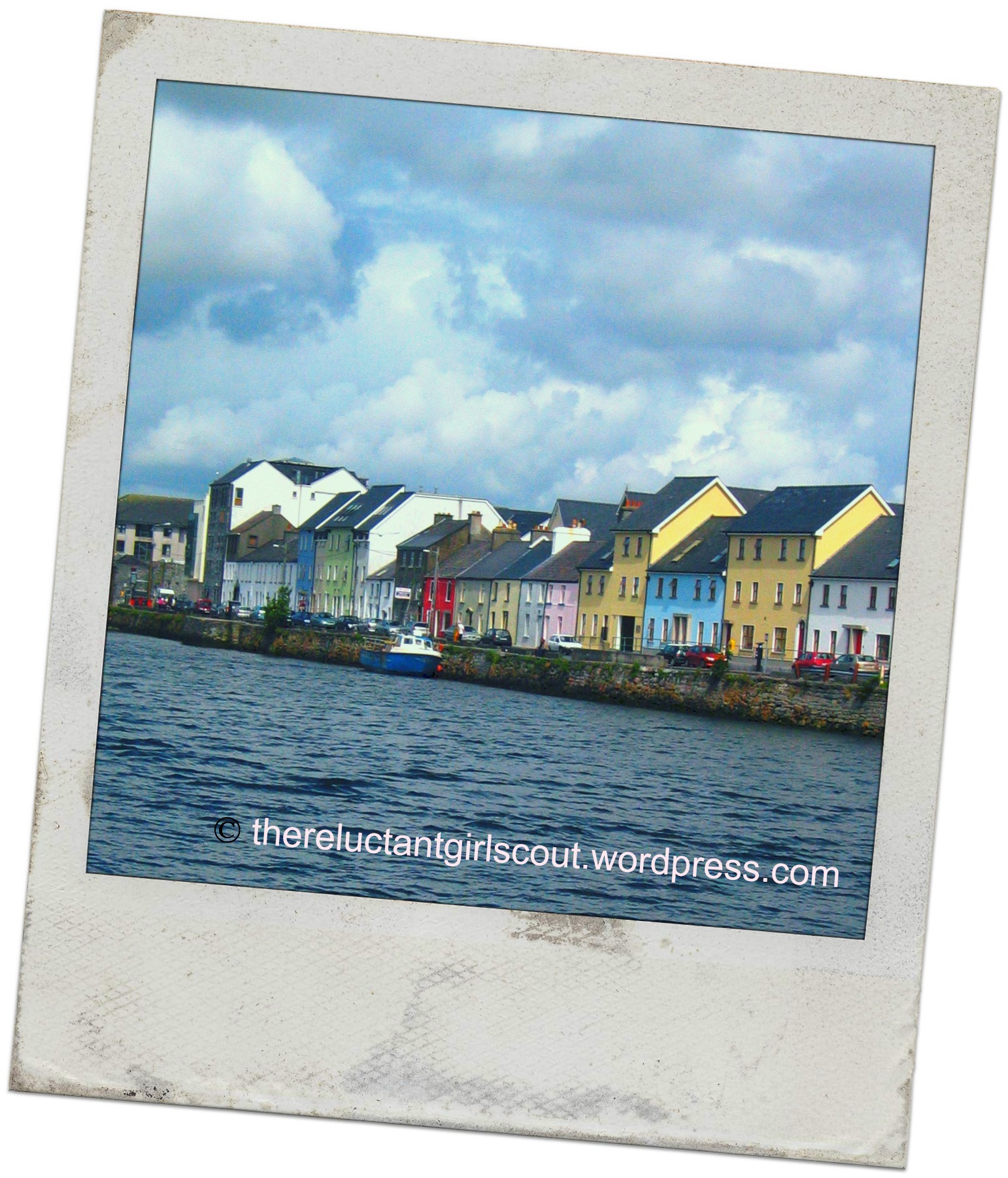
rgsgalwaycitycorrib

[This flashback follows on the heels of that earlier lament that I’d missed my chance to go to Ireland with my friend. At the eleventh hour, cheap airfare was found!]

Saturday, March 18, 2006

Ireland is still here. Sometimes when I leave, I wonder if it disappears in a mist. An Irish Brigadoon. Since I was here in November [for a week-long writing workshop hosted by the Aspen Writers’ Foundation at Kinnitty Castle, led by Hugo Hamilton and Colum McCann], not much has changed except the flip flops are in the stores even though it’s only 8 degrees Celsius out.

Uneventful flight. Uneventful departure from my poet friend Belle, as she headed off to Waterford, where I will meet her and her boyfriend later. Uneventful bus ride to Galway alone. I got here at 10:30, dumped my suitcase at the train station, and decided to pack as much into the day as I could before my cousin Mary and her husband collected me at 3:00. At home, I could spend a Saturday such as this doing nothing but painting my nails and looking at the window. That’s it. A day just disappears. So it is nice to know that if I really want to, I can move quickly and accomplish more than usual. Like this blog, for instance, which will end in approximately five minutes so I’ll have time to go to Charlie Byrnes, buy a postcard & a couple of books, and trot over to station to pick up my suitcase and catch my ride with my cousins.

So, I got here, I looked at the eyesore which is still an Eyre Square under construction, with fewer trees, but otherwise looking like it did before the city planners spent their millions refurbishing it.

Saturdays in Galway are market days–a sort of farmers’ market with cheese and veg and hand-woven bracelets from Guatemala (Genuine Irish). While there I found the baby shirt I had wanted for my U2-lovin’ Writing Program Director last fall when she had her baby. It says “U2: Rattle and Mum.” It felt good to be shopping like I belonged there, like every Saturday I popped down to squeeze produce and buy presents for co-workers.


Then I turned a corner and saw what looked like the poet Michael Gorman, who taught a summer course I was in four and half years ago at NUI Galway. He walked like him and wore a hat like him, so I yelled, “Mickey???” He snapped around, looked a bit frazzled, like perhaps he had enjoyed St. Patrick’s Day too much last night, and stared at me blankly. I didn’t expect him to remember me though I had had a quiet summer crush on him that was almost painful.  So I re-introduced myself, shook his hand, and he said, ‘Ah, yes! Beth!’ I’m not convinced he remembered, but it was nice to hear him say my name. The “h” doesn’t quite come out all the way. He said he was in a hurry to get the shopping done and something about a football match, but he wrote his number in my journal (“A Moleskine, I see!”) and told me to call him tomorrow for coffee. I won’t BE here for coffee and am sure he forgot as soon as he hurried off to fondle carrots, but boy if it didn’t make me feel good to bump into someone I knew here. Particularly him, still looking befuddled and artistic and cute.

In order to celebrate, I went to my favorite sweater shop and bought a new cardigan. The woman who owns it was back. In November when I’d visited, she had been out with a broken knee cap and her very charming son managed to sell my friend Isabella and me about 400 euros worth of woolens. So I asked after her knee, asked after her son, and then talked to her friend who now lives in Canada but is moving back. It was a perfect morning–making me feel, as I almost always do here, that I am HOME.

After I was warmed up by my sweater, I sat by the Corrib and watched it race towards Galway Bay. For lunch,  Fat Freddie’s for my favorite pizza. And then the Ninja Shopping commenced. Less bought than looked at, but two books, a notebook, some pens I like, and a birthday card for a kid’s birthday in June. Zipping in and out of shops on the aptly named Shop Street is invigorating in ways that shopping in the mall at home is not, though I don’t know why. My own romanticism, probably.

So, all in all, a very fine day indeed, and one on which I could reflect indefinitely about how the conundrum of feeling so home in a place so far from where I live. Instead though, I’m off to buy a few books at Charlie Byrnes Bookshop and then meet up with my cousins to find out how the Ireland-England rugby match went yesterday.

There is a hot whiskey in my near future.

Flashback Friday: Planning Ahead, Missing Out

Standard

[This is a blog entry from the Girl Scout vault from early 2006. In case it seems I have an inconstant heart where Z is concerned,  he was home in Zimbabwe, not being my boyfriend.]

On any given day my lesson plans look something like this:

  • Discuss “Shrek” & intertextuality.
  • Do that bird exercise.
  • Have them write about that one article.

Right there, in a nut shell, is why I decided higher education was the place for me. If I taught in a high school, the administration would expect detailed, week-at-a-glance type lesson plans that spelled out exactly what I planned to do as well as the objective of the exercise. They want these, one assumes, so if you get hit by a garbage truck on the way to school, your class can continue without interruption.

I’ve never really wanted to be thought of as “easily replaceable,” so my lesson plans tend to be more along the lines of Post-It Notes stuck to the back of a recycled “Hello Kitty” folder. If I’m road kill, I want my students to flounder for a few weeks in memory of me.

I’m not a bad teacher–in fact, I think and annual reviews argue that I’m actually a good teacher. I know what I’m going to do. I know what the objective of the lesson is. But if I had to write it out, weeks in advance, it would no longer seem interesting or viable to me, so I’d have to think up a whole new set of things to do so I wouldn’t get bored. It’s more efficient in the long run to do Post-It Note planning on the drive to work.

Which brings me to my current dilemma.

Last week, a co-worker, poet, and friend, [that for our purposes I will now refer to as Belle, as in “the belle of Worcester, Mass” asked if I wanted to go with her to Ireland for Spring Break. She’s going to see her boyfriend. It’s a love story with a thirty-year interruption that I am particularly fond of, and Ireland has been a sort of surrogate boyfriend of mine over the last several years. In fact, the relationship is currently monogamous. Since I was just there in November for a week’s writing workshop with Hugo Hamilton, going again seems a bit extravagant. Also, I’m not sure if Belle really invited me or if I whined so much about going that she felt compelled to agree that I could tag along. Also, I’m not sure it’s ever a good idea to spend that much time with someone you are fond of but don’t know ALL that well. Also, I was raised with my mother’s axiom of “fish and company smell after three days.” So I’ve been torn. Mostly, I’ve been leaning towards doing the right thing–saving for a house I’ll never buy–and skipping the trip.

But then today another co-worker who just went to Dublin brought me a copy of Hugo Hamilton’s new memoir, which won’t be available in the U.S. until September, and I read the first two pages and I started longing for Ireland. Aching. Why would I NOT go to Ireland with Belle when I’ll have free lodging, will get to explore the southern bits of the country, a place I haven’t yet been. I rushed back to my office and checked Cheaptickets.com for the fare she’d mentioned to me. It wasn’t there. It had gone up $130, which pretty much pushed it out the range of do-able.

What a non-planning dumbass I am.

She stopped by and we talked about the trip I wouldn’t be taking. The things I could have done. (It turns out there’s more to do in Waterford than just the crystal factory tour.) We stretched ourselves over my Irish road map and speculated about places I could have seen.

She distracted me from my One True Love though by asking what the deal was Friday with the visiting writer, my two-day crush.

What deal?

He was flirting with you, she said.

He was? I knew I was flirting with _him_, but he was flirting with me?

Seemed like it to me, she said. He was mostly talking to you all night. He kept saying that thing about having you come down and taking you up in the chopper. I think he was flirting.

Here was me thinking my co-workers were embarrassed for me last week, flirting so pathetically with the famous writer, the author of one of the best 25 books of 2005. Here was me not knowing he was maybe flirting back. Oh, how I wished I’d have shaved my legs. Maybe I would have been bolder. Maybe, at the very least, I would have gone to Comfort Inn and pelted his windows with tiny chunks of Hoosier limestone.

There really is not any Hoosier limestone here. I said that to be poetic. I apologize.

It’s hard to live your life with no foresight. It gives you the opportunity to be spontaneous (there’s no plan to stick to), but without a plan sometimes you forget what your goals are. Fares go up, you miss a trip. Legs aren’t shaved, you miss, well, out.

Hair Stylist Monogamy and Other Simple Truths

Standard
Sunset from my folks' backyard.

Sunset from my folks’ backyard.

This is how monogamous I am: I’ve had the same hair stylist since my first year out of college. When I met her, she was at the hippest salon in my little town, and whenever I was in there talking to her as the music thrummed and hair clippings fell on a groovy wooden floor that had been artfully painted, I felt like I was some place more exciting than my hometown. Friends would insist I should try “X” at some other salon because he or she was “the best”, but I’ve never really understood that mindset . . . that “new” is better or that having the most up-to-the-minute hairstyle mattered more than a connection I felt with the person behind the clippers. A few years later, my stylist left town for a while, so I had my chance to branch out and see what I’d been supposedly missing.  I now think of that as the Dark Ages. There were a host of people who were hard for me to talk to (my introverted problem, not theirs) and who seemed not to understand that I am basically a person who will forget to brush her hair on most days and therefore should not have a complicated or fussy hairdo.  One guy decided what I really needed was bangs, never mind I have only fourteen strands of hair that grow in that magical bang place, and it didn’t really matter to him that when I left the salon I kind of looked as if I was four and had cut my own bangs because he didn’t know me from Adam.


One day after what felt like five years of her absence but what was probably closer to two,  the “it” stylist of town (who randomly decided I needed to have hair like Sherry Stringfield’s on ER, mainly because there was an article about her in the People magazine he was reading right before my appointment), leaned over my shoulder and sang into my ear, “Guess who’s coming back to towwwwwwwwwwn!”


Oh, happy, happy day!


While I have embraced my new life in Seattle on several levels, there are other areas where I have not. I’ve been dragging my feet on finding a new dentist, I save chiropractor visits for trips to Indiana no matter how bad my back gets, I prefer using that Greek cobbler at home instead of finding a new one here, and since no one in Seattle really knows me (or notices if my roots are showing) I feel compelled to save hair cuts and coloring for when I’m back in Indiana. Fortunately, my trips are often enough that this usually works out. A couple of times when there have been long stretches between visits to the Midwest, I’ve gone to the Aveda school up the street to have some student practice his or her arts on my hair. The place fascinates me because it reminds me of Hogwarts, what with some students mixing potions and others doing intricate experiments on dummy heads. Plus, they are all whipping around in black and my imagination can easily turn black sweaters and tight pants into those excellent swooshy robes seen regularly on Harry, Hermione, and Ron. The Aveda school appeals to me because I never have the same stylist twice since there is constantly a new crop of students, and this makes me feel like I’m not cheating on my One True Stylist back in Richmond. I shall have no stylist before her.


One of the things that fascinates me about my relationship with her is that despite the fact we don’t interact with each other outside of the salon (give or take the odd text about Game of Thrones), we’ve watched each other’s lives unfold with joy and concern as warranted. I’ve seen her kids grow up via the latest snapshot stuck to her mirror and the stories she tells about them, we’ve had long conversations about marriage, pets, family gatherings, vacations, death and grief, our hometown, and various seasons of life. I called her the day after Z proposed because I knew it would please her. Yet, if we run into each other outside of the salon, it is a little awkward. I feel like I’m intruding on her private life. We share a few pleasantries and then exit each other’s company as quickly as we can. I don’t know how you classify that kind of relationship. Some people might say we aren’t really even friends and this is just a business arrangement, but it isn’t. The length of our acquaintance and the intensity of our talks puts her somewhere in the same orbit of some of my college friends, though I see her with more regularity.


The thought of finding a new stylist in Seattle makes me twitchy because I know I won’t find another one of her. You can’t duplicate people. Plus, I’m too old. People move around too much in this city.  It takes a lot of energy to get to know new people and I’m more tired now than I was when I was 22—how much genuine enthusiasm could I muster for a stranger’s engagement or first house or pregnancy? So I don’t look for her replacement. If I can’t make it back to Indiana to get my hair cut, I’ll probably just keep trying my luck at Hogwarts and hope that the stylist of the day isn’t from Slytherin.


That photo at the top may be confusing you at this point since it has very little to do with hair or hair care products. That’s because when I got started on this post, I meant for it to be about the superiority of the Midwestern sunset. My brain cells sometimes connect things like a Wild Mouse at an amusement park: just when I think the track is taking me one direction, there is a sharp turn and a drop.


In my earlier life, I noticed maybe ten sunsets. I wasn’t a total philistine—I’d see the sky oranging up in the west and I might think how lovely, but I wasn’t moved. The sun going down just meant it was about time for the evening line-up of sit-coms to start. And also, when you are young and from the middle bits of the country and you’ve never been too far afield, you’re basically required by law to assume that life somewhere near water or near a big city is inherently better than wherever your hick life is being lived.  You don’t even question this—it’s like it’s an inherent truth and doesn’t need empirical evidence.


Whether it was during her lengthy disappearance when I was forced into life with bangs or some other, shorter visit, my hair dresser underwent a life change when she went to Key West. I remember her telling me about it—how she’d realized how unimportant flashy clothes and jewelry were once she’d been in Key West because every night going to watch the sunset seemed like the most meaningful thing a person could do all day.  It was an event. The simplicity of it astounded her, and because it had meant so much to her, I began to realize how little attention I paid to the beauty of the natural world. And then, because I was twentysomething, my next immediate thought was not that I should enjoy that evening’s sunset but instead that I must move to a place where the sunsets are superior. I’d been living with my mother and step-father in a house in the country that is perfectly positioned between fields so I didn’t even have to leave my room to see a perfect sunrise or sunset, yet I was certain that ours were inferior simply because they were in Indiana.


What can I say? I was young. I had no idea.


When I moved to Seattle, my assumption was that the sunsets out here would be just the sort like those my hairdresser had told me about in Florida that changed her life. Give or take the Olympic Peninsula, we’re basically hanging out here on the coast and we’ve got Puget Sound for reflection purposes, so they were bound to be glorious, right? For months, whenever Z & I had a car or had made our way down the hill to Elliott Bay, we’d try to time it for the sunset, and we were regularly disappointed. Occasionally, it would be lovely, but the more frequent options were either a) gray so thick that there wasn’t much sunset action at all or b) a clear sky that meant it was literally just a round sphere that suddenly dipped below the horizon. Still miraculous, I guess, but it didn’t change our lives. We’d look at each other, shrug, and go get a milkshake.


It turns out all that dust and dirt kicked up by tractors and smog belched out by factories make the Indiana sunsets some kind of wonderful. It’s like a different movie is being projected onto a screen outside your house every night and tickets are 100% free. No two shows are the same and pretty much all of them are worth watching.  The one pictured above was an Oscar contender.


While I have little doubt that at some point I would have discovered the joy of this phenomena without aid of my stylist, I love that often when I see a particularly gorgeous sunset I think of her, think of her assertion that these are the things that should matter most to us because they’re more impressive than a new car, leather boots, or even an awesome hairstyle (bangs optional).


A Visit from Chickpea

Standard

The Great Wheel, Seattle

The thing about living on the edge of the country, far away from your people, is that when a friend comes to visit, it’s an event of note. In my case, when Chickpea phoned to say she had arrived and was out front, I ran out of the apartment, left our door standing wide open, opened the building’s door and raced down the steps to greet her. It wasn’t until the front door of the building slammed shut that I realized I’d left my keys inside.  Welcome to Seattle, Chickpea. Can I interest you in drive around town in your rental car until Z gets home from work?

Fortunately, the new maintenance guy broke his code and let us in when he saw us scratching at the glass, looking pitiful there surrounded by her luggage. He was gruff though. “I’m not supposed to do this.”

Chickpea and I met five years ago in the very first workshop of my MFA program. Because I’d read her workshop submission before meeting her—an essay on her tendency towards loudness—I was pretty sure I was going to loathe her. Excess sound annoys me. I have no idea why, when we can put people on space stations and every third person on a flight has on noise-cancelling headphones, we have yet to develop a silent leaf blower, for instance. I don’t need monkish silence, but I like quiet, and based on her essay, Chickpea and I were not going to be pals for auditory reasons alone.

I don’t know if any of you have recently re-lived junior high, but as a newbie in an MFA program, you’d be surprised how quickly you are transported back to the social anxiety and neuroses you thought you’d overcome when you were 13. For the first two days, I’d walk along the grounds on breaks, talking to Z, who was in Zimbabwe, so he could remind me of all the reasons the program was a good idea and all the reasons I should not bail prematurely. Fortunately, I’d packed multiple phone cards for this very purpose, though I knew how ridiculous it was that a grown woman would pace on the edge of Casco Bay, making repeated extremely long-distance calls to Africa for reassurance.  In retrospect, I’m glad for his gentle prodding for a variety of reasons including a lot more knowledge, a degree, and the opportunity to work with some great writers. But aside from that, I’m grateful not to have missed out on the unlikely friendships that developed there.

On the first day of my first workshop, I was anxious to see what Chickpea would look like. I had imagined her big and swaggery, entering a room with a shout and maybe banging a stick against a cowbell, so it was a bit of surprise that she looked normal and didn’t fill the room with extraneous noise. In fact, I can’t remember a single sentence that passed between us those first two days, but if someone in the workshop said something that smacked of the pretentious or that was too precious, she would look at me and make a face. Maybe just an eyebrow raised a millimeter. Before long, I was doing the same to her. Was it rude? Probably, though I had this sense that only we could see the faces we were making because they were so subtle. Was it juvenile? Oh, definitely, but it felt so good to suddenly not be alone in this literary endeavor. In those shared expressions I somehow felt I’d met a paisono, and this made me less inclined to bolt from the program. Within a few days, I was spending time with her and with her group of friends, with whom I felt similarly and strangely connected, despite the fact that they were over a decade younger than I was, and they were way more raucous.  It’s not that I’m incapable of making friends, but as an introvert and as a person who has always felt that old friends were just naturally superior friends, it was surprising how quickly these people mattered to me. The following year when I attended their senior readings and graduation, I openly wept. It was bewildering to me that people I had spent so little time with could matter to me so much.

When people visit us, I always mean to be an excellent tour guide. Seattle has a lot to offer, even when the sun isn’t out, but Chickpea and I were so busy talking about writing and relationships and things we hate and dogs we love, that the city seemed secondary. Sure, we went to the Market and to the Olympic Sculpture Garden, but we could have spent all that time in a booth at Denny’s if you want to know the truth. At least I could have. Sometimes out here I get a little lonesome for friends. Or rather, I don’t notice that I’m lonesome for friends until they are here and then I want to drink them up in huge gulps.

Summer before last, Z and I were away from the city for awhile, and when we got back, a giant Ferris wheel had been built on the edge of Elliott Bay. We didn’t know we’d been missing a Ferris wheel on our landscape, but then there it was, lit up like a blue and green Christmas tree when the Seahawks play a home game, and now it’s hard to remember what it was like before The Great Wheel was there. It makes the waterfront look a little less utilitarian and a lot more fun. Chickpea and I went up for our three spins around. Like all good Seattle tour guides, I spent much of the ride telling her all the things she couldn’t see because of the hazy sky: no Mt. Rainier, no Olympic range. Later, we would learn a pod of Orcas had been in the bay, so we could have been looking for those and enjoying what was in front of us instead of focusing on what wasn’t.

Chickpea lives on the east coast, so when I go home to Indiana, it’s not like she’s on the list of friends I’ll get to see.  When we say goodbye at the airport, it’s not like there is any schedule for when next we’ll be together, talking about the merits of Scottie dogs or why we loathe Joyce Maynard. Instead, we just have to be glad for the time we had together, make a plan for an exchange of our writing, and hope that not too much time will pass before we see each other again. Goodbye, Chickpea.

And then, a half hour later, the cell phone rings. Chickpea has missed her flight and if Z and I are inclined to fetch her, we get a few more bonus hours with her. We point our rental car in her direction and accelerate.

A Beautiful Day in the Neighborhood

Standard

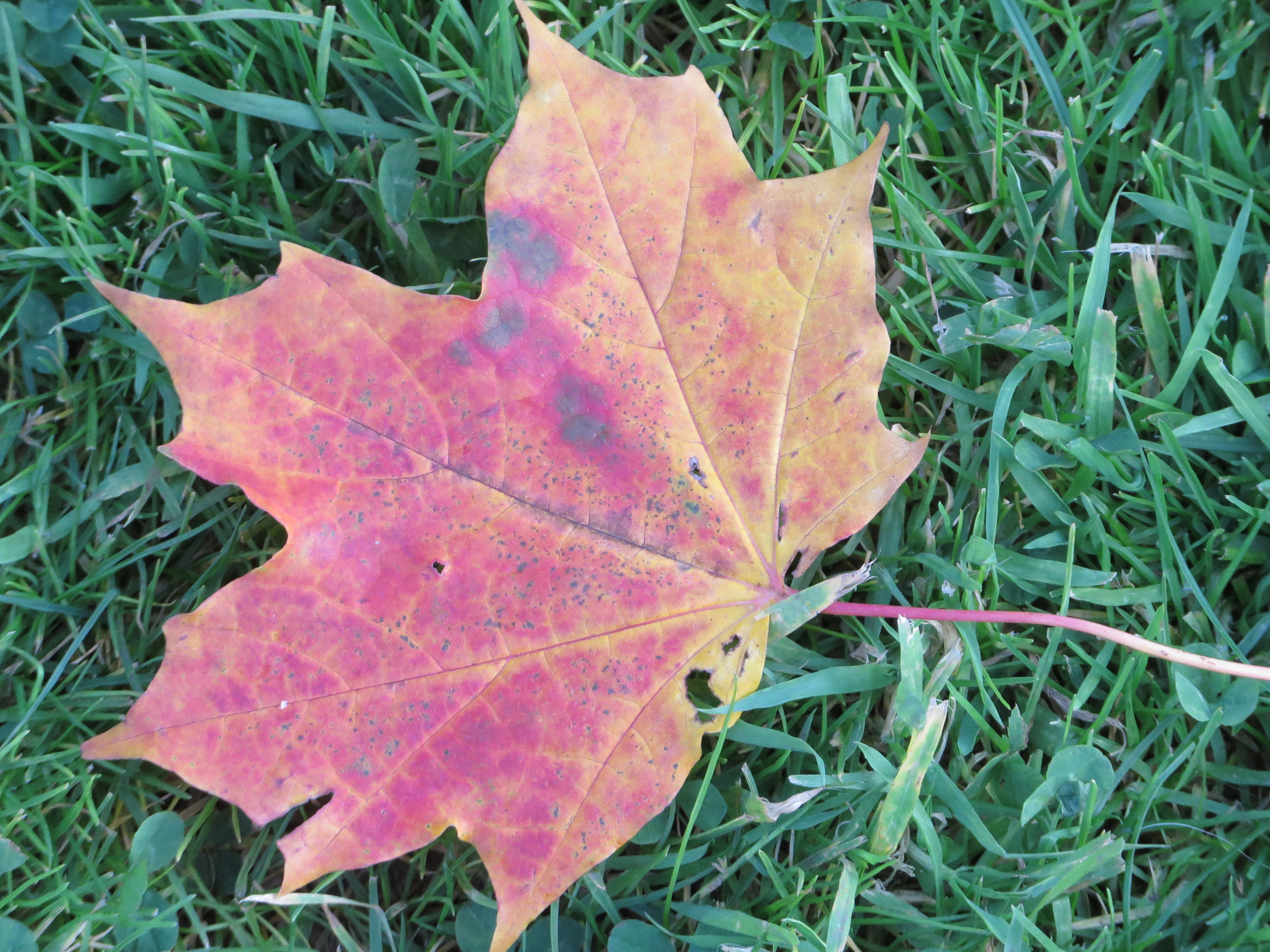
Leaf

One of the things I’ve learned to love in Seattle is a sunny day.  It’s not that they’re exactly rare here (Indiana has its fair share of grey), but when the sun is out like it was today, it’s a celebration and I don’t want to ignore it on the off chance that I won’t see it again until May.


Since I had an errand to run near Z’s campus, I decided to make an afternoon of it. I loaded my bag with a book of Lopate essays, my laptop, and my camera, and headed to a picnic table under a maple tree within sight of my beloved dog green.  Z came out of his office to give me a kiss before heading off to his class, which was also a bonus. I held my face up to the sky and I swear I could feel the Vitamin D going right into my pores. (This is not something you will ever see me doing when the temperature is above 65, by the way.)


Before I had a chance to pop open my laptop, an older guy ambled toward me. He was carrying a paper coffee cup and a reusable grocery bag, and because the sun was in my eyes, I had no idea how to categorize him: should I smile or gather my belongings and find another spot. Before I could suss him out,  he said, “Do you mind if I share this space. I’m a writer. I won’t talk to you.”


I could hardly say no to a writer who promised not to speak. Fortunately, it was a day when I was feeling great love for Seattle and all its people and not one of the days when I want to scream at passersby, In the name of all that is holy, can I not have two quiet square feet to myself for fifteen minutes? Because it was a good day, I sat beside this stranger and wrote. I tapped words into my computer and he scrawled out pages in a dark script on a steno pad. I wasn’t tempted to look surreptitiously at what he was writing, though I did glance at him out of the corner of my eye when I heard him reading what he’d written under his breath.


Some of my more extroverted writer friends have writing partners, people with whom they get together on a regular basis and sit for a couple of hours working on novels. I’ve never understood. In general, any sort of human distraction is deadly to me. I can’t imagine getting together with a friend and not spending the designated time talking about writing instead of doing the actual work. The only reason I can write with Z is because he has this willpower and focus that doesn’t allow for interruptions or distractions. (Such an annoying trait when you yourself want to goof off.)


It was a bit of a surprise when I looked up from my laptop and it was almost two hours later.  Because this complete stranger had been sitting beside me, it hadn’t occurred to me to waste time in all the ways I usually do. There was no internet surfing. No staring at the dogs. No watching passersby and guessing what their lives were like. I put my head down and I wrote. (Though it was impossible to ignore a squirrel with its mouth full of orange maple leaves that stopped a foot away from me and stared.)


The sun had started to go down and it was too cool to comfortably sit still and write anymore. Z would be coming along soon and there was a particularly bossy corgi on the green that I wanted to see up close. I packed up my stuff and the man said, “It’s been a pleasure writing with you. You’re an excellent writing partner.” I commented on his handwritten drafts and my need for the keys clicking under my fingers. He told me to have a good evening. The end. Perhaps I am capable of getting together with someone and writing so long as he or she is a total stranger. Before you know it, I’ll be writing in coffee houses just like a bad Seattle cliché.


So that’s it. One perfect fall day. If the rain comes this weekend and knocks all the leaves down, I won’t be able to complain.


Idle Worship

Standard
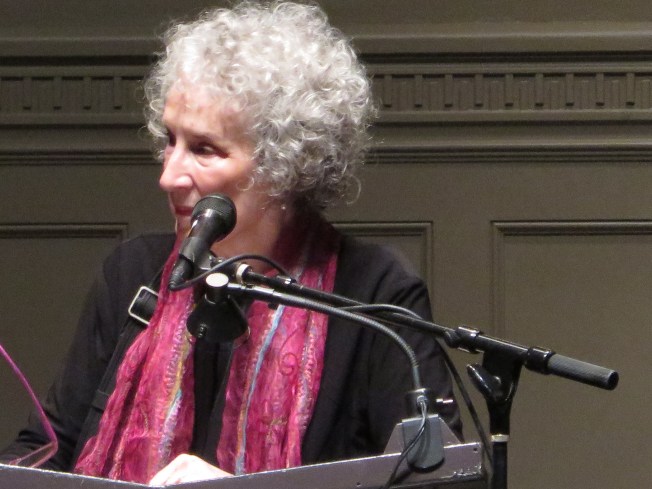
Margaret Atwood at Town Hall, Seattle

Margaret Atwood at Town Hall, Seattle


Sometimes I feel stuck and I have no idea how to unstick myself. My lack of traction at the moment is that for over a week I’ve been wanting to write a post about Margaret Atwood, a literary idol of mine, who spoke at Town Hall Friday before last. None of my words seemed worthy of hers. When I read her dystopian novel, The Handmaid’s Tale, in college, it changed my life irrevocably. I don’t say that easily about many books, and maybe at 20 I was ripe for change and new ideas anyhow, and her writing just happened to be what I latched onto. Shortly after I discovered her, I heard her speak, and then spent part of my twenties wishing I were more like her: cleverer, more driven, more prolific, more talented, and considered part of the literary canon.


Maybe it’s not surprising that I’ve spent ten days typing a line and deleting it, only to start again with a slightly less good line. I’m hoping I can sneak up on it sideways to see if I can get the job done.


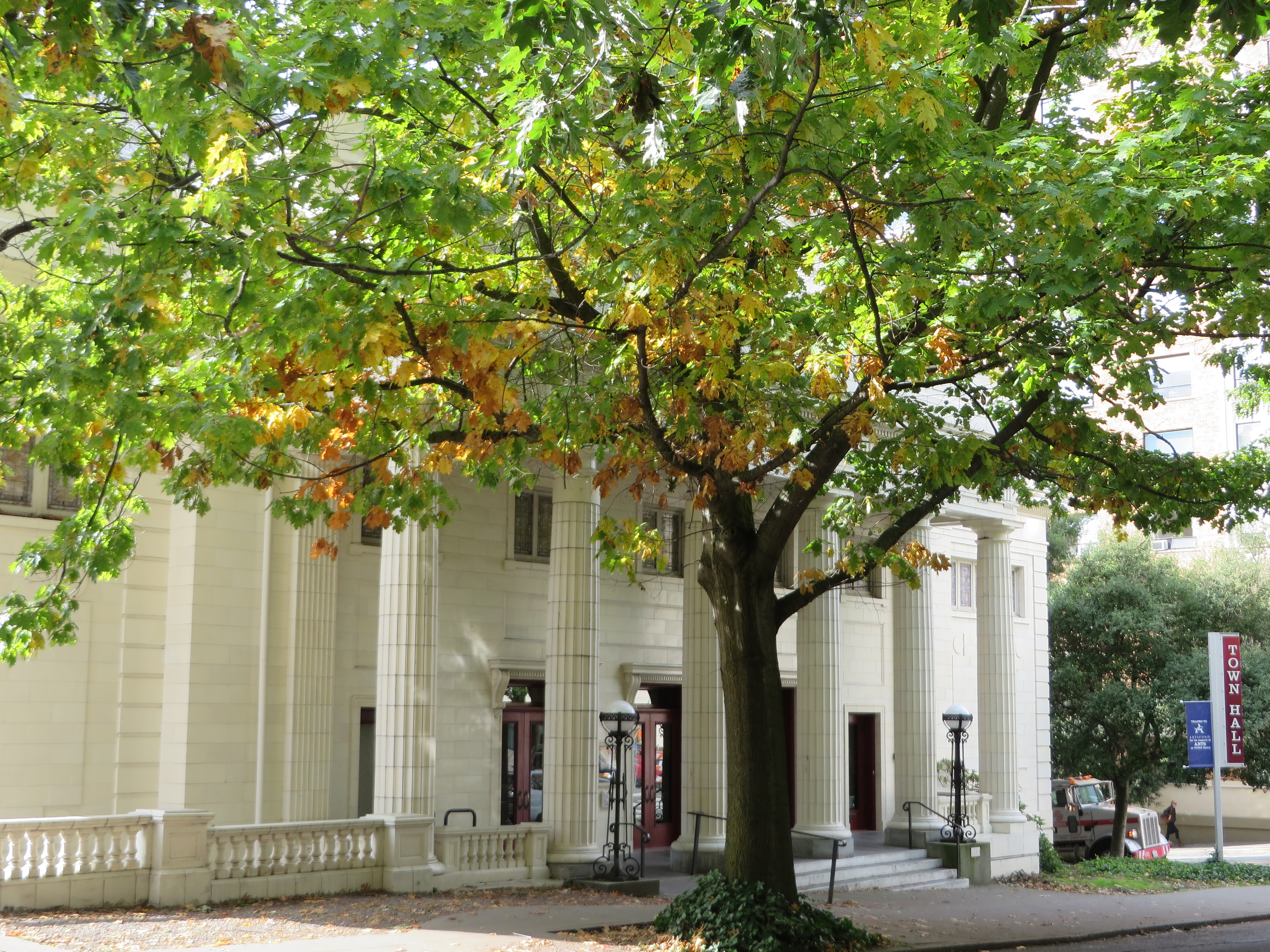
Town Hall has nothing to do with city governance in Seattle and everything to do with culture, and though I often curse on nights when we have a rental car and can’t find parking because there is a concert or speaker there, I have to admit that one perk of being in Seattle and living on First Hill is that Town Hall is a single short block from where I live.


The building itself is gorgeous. It’s a Romanesque revival-style (former) church built nearly a century ago in what was then Seattle’s first suburb but now feels more like downtown. In the late 90s it was turned into a cultural center for music, readings, cultural discourse, etc. Outside it is an expanse of white with huge columns. Inside it’s all arched auditorium, groovy old light fixtures, and open space. (My only beef with it is that it has old wooden church pews and while that was not a problem at an hour-long author event, the nearly three hour medieval music concert awhile ago felt like it lasted six. But the pews do look good!) Town Hall is one of those places I admire when I walk past but completely forget. I’m often discovering two days after the fact that some author or speaker was in the house. When I do managed to go inside, I’m inevitably annoyed with myself for having been away so long.
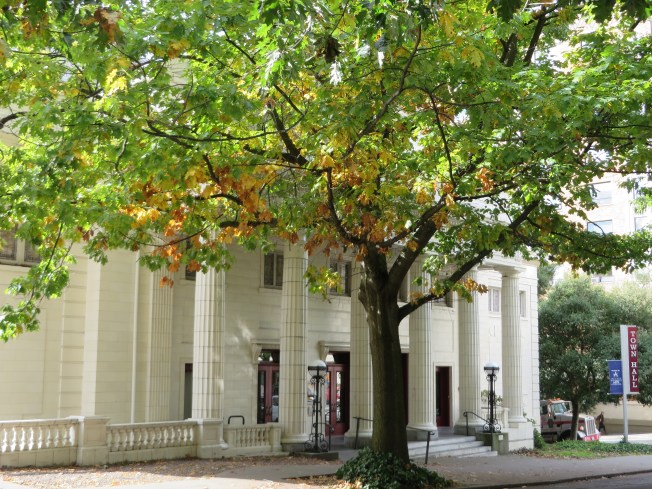
 

Town Hall, Seattle

Town Hall, Seattle

Perhaps it’s not surprising that I like being inside of this space. When I travel, I love to find an old church or cathedral and sit on a pew for a while and look up at the arches and think my thoughts while other tourists mill about and the more penitent pray. And though there’s no preaching in this structure, it still has that churchy feel.


I grew up with a firm belief in a Christian God, though because my father was Catholic and my mother was a Protestant who was prone to sometimes follow the suggestions of friends and neighbors about what Protestant church was best, my church attendance was a smorgasbord of liturgies. I had no idea which one was “right”, (though a few were convinced that all the others were wrong), but I found the ritual in each fascinating, I loved, particularly, sitting in the oldest churches in my hometown imagining the generations of people who had sat there before me.  One of my favorite periods was when we went to the century-old Presbyterian church with the gothic arches and Tiffany windows. I often left these various church services with a simultaneous sense of wonder and envy that the congregants in each church seemed to feel that they belonged there. On a rare occasion, I’d feel a little fresher.


If I’m honest, I was bored a lot when the ritual stopped and the preaching started. I’m not the best listener if the topic doesn’t interest me, and I’m a particularly bad listener if someone is trying to boss me up, which seemed to be a recurring theme in many of the churches I went to during my formative years. The ones I loved most were heavy on ceremony and the ones I liked least were those obsessed with the End Times.


The only time I ever felt the sort of belonging that I imagined others felt, was when in my thirties I was on a quest in Chicago to find the church where Madeleine L’Engle–my first contemporary literary idol–had gotten married. I was in a stalled relationship and was being pushed from all sides to make a decision about whether it needed to be totaled or have the engine rebuilt, and I suspected that if I was in the church where L’Engle had married the man that she would write about so lovingly in her Crosswicks trilogy, I could figure out my future. This really had nothing to do with God in that if L’Engle had gotten married in Lincoln Park, I probably would have headed there and sat on a park bench for an hour with a squirrel while I tried to come to some conclusions about where my life was headed.


Though I went into that church, St. Chrysostoms, hoping to walk around anonymously in the quiet, there happened to be an all-day service in progress for Good Friday, which entailed readings from the clergy and long periods of silence for reflection. I sat down to be polite and tuned the readings out, but at some point realized that while there were the expected passages from the Bible being covered, there were also gorgeous passages being read from both classic and contemporary literature.  And while the passages addressed the obvious issues of sin and redemption, it was a fresh way to tell an old story and it hooked me. My synapses started firing. Suddenly I was not just looking at the architecture and wondering exactly where Madeleine L’Engle and her husband had stood or who was present for their wedding or if they used traditional vows. In fact, I quit trying to channel her at all and instead just sat in the silence that followed each reading as the words from the novels and poems reverberated inside my head. A denomination that recognized and held up secular writing as examples of beauty and testament to the human struggle seemed infinitely more holy than some of the repetitive and occasionally mean-spirited words of a man in a robe or cheap suit or blue jeans and blazer, preaching whatever his particular brand of gospel was. Who knew this was possible?


So Friday before last, Hudge and I made our way into Town Hall to hear Margaret Atwood talk about her latest book from a series I never read. Somewhere between my twenties and my forties, I’d kind of lost my fascination with her books. I’d veered away from fiction and into nonfiction waters, and her regular recent fiction about possible outcomes for our overcrowded, environmentally stressed planet didn’t sound very inviting. Particularly because while I was living in a cornfield in Indiana it seemed a very far off future, but here in Seattle it seems like maybe we’ll have to start the moon colonies sometime next Tuesday. (There are seriously too many people here.)


Now? I can’t believe I considered not going (to the reading, not the moon colony). The woman who introduced Atwood mentioned how important The Handmaid’s Tale was to her, how it changed her life, and I looked around at this former sanctuary full of women and men of all ages and races nodding their heads, and I was transported back to the late 1980s when I first held the book in my hands and realized feminist wasn’t a dirty word, when I realized that a few of those churches I’d found myself in as a child had been selling fear instead of comfort and could have been rough drafts of the theocracy that wreaked havoc in the lives of the women in Atwood’s novel. Or when I realized that words could be powerful.


Margaret Atwood herself came out, clutching her purse to her side, as if, perhaps, one of us might leap up on stage and steal it.  She never did set it down, though she seemed to instantly warm to us. She had this look of amusement on her face, like it was fascinating that anyone would have bothered to come hear her. When I counted up how long it had been since I last saw her and realized it was twenty years, I was shocked to see how unchanged she seemed to be.


Everything out of her mouth was either hilarious or wise, or both. She reminded me of my favorite sorts of college professors—that is, I wanted to write down everything she said in my little notebook but I couldn’t write quickly enough. I can’t remember specific nuggets of brilliance or inspiration to report here, but I do know she managed to make her responses to tired questions sound fresh and thoughtful.


At one point, a young woman asked if a story she’d heard about Atwood’s time at Harvard when “girls” weren’t allowed to use one of the libraries was true. Atwood repeated the question in an overloud, comedic way, making her voice reverberate throughout the auditorium. She talked briefly about how, yes, it was true, and that the work she wanted to read there was modern poetry, but because she was unable to scan those shelves, she went instead to a different library not afraid of admitting women. There she found a bounty of Canadian literature, the implication being that it shaped her writing in significant ways. She had done what women had been doing for centuries: she found inspiration where she was able and discovered something she might have otherwise missed. The young woman commented on how calm Atwood seemed about this. “How are you not angry?” she asked.


Atwood spoke in the same, comedic, loud voice, “Because I am ooooold.”


There was something striking about seeing this young woman, full of righteous indignation, at roughly the age I was when I first read The Handmaid’s Tale, Atwood, full of the wisdom and experience of her seventy-three years, and me, pig in the middle.  When I saw her at 25, I wanted to BE her, but all of these years later, I am content to be myself, even if I’m not famous, haven’t won any literary awards, and don’t have a Wikipedia entry for myself. Though I admit she’s the kind of older woman I’d like to grow to be.


I’m still not satisfied with this post. My threads aren’t pulling together as tightly as I want them to.  Other than the architecture, I’m not sure why hearing Atwood at Town Hall in Seattle reminded me of the churches of my youth or my first realization that I was more comfortable in spiritual practices that ask questions instead of those that give rigid answers. All I know for sure is that when Hudge and I got caught up in the crowd as it exited the building, it was like the end of a good church service. I felt electrified and blessed.

 

First Day of School (and I Feel Fine)

Standard
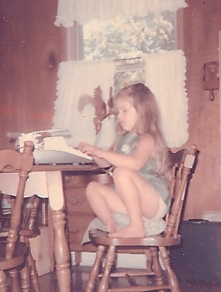
Beth writes.

Beth writes.

Because it’s nice out, I decide to go to Z’s campus midday, write in the library, and meet him after work. I have a couple of errands to run nearby, so I load up my bag with my computer, a pad of paper, five pens I won’t use, and the promise that if I don’t stop at Cupcake Royale, I’ll let myself buy something (another pen or notebook) in the campus bookstore before I get to work. I run my errands, wave at Z when I pass his office window, and make my way past the grassy expanse where a delightful array of neighborhood dogs races around, happy to be dogs outside with other dogs. This is perhaps—with the exception of Puget Sound or Lake Washington—the happiest spot in all of Seattle to me, and whenever I see well-loved and well-behaved dogs frolicking here, I pray that campus security will continue to turn a blind eye to the flagrant off-leash rule breaking because it’s good for my soul.

The campus is busier than it has been all summer, and as I zip into the bookstore and see the line, I remember why: it’s the first day of classes. Of course. I won’t be buying any unnecessary writing equipment today because the queue for textbooks snakes around the store. When I go outside, it finally registers that these are students making the campus more lively than it has been for months.

And then it hits me: this is the first fall in eighteen years that I haven’t had my own classes to teach.

Z’s campus has never been mine. My teaching was in Indiana in my hometown. Though in my youth, I’d probably had fantasies about teaching at some tree-covered east coast college, as an adult, I never really imagined teaching anywhere else. I loved working in a place where I knew and understood the community as well as I knew myself. I loved teaching the children of people I’d gone to high school with. I loved walking across campus or running to that bookstore or library and saying hello to ten different people I’d known for years. It was my home.

But I wasn’t counting on Z or how he is my real home even if his GPS coordinates and the coordinates of my hometown are two thousand, three hundred and seventeen miles apart.

After we got married, I taught courses online for the same school, returning multiple times a semester for work obligations, and lived with a foot in Indiana and a foot in Seattle. It was a weird existence. When people would ask me where I lived, I had a hard time answering. In retrospect, I realize I’ve always been the sort of person who pulls a Band-Aid off a millimeter at a time instead of in a single, painful rip, and this move to Seattle has been no different. That is, until May when I resigned and began this new stage of my life in earnest.

Hello. My name is Beth. I live in Seattle.


Z and I decided that if ever there were a year to discover if I liked the life of a full-time writer, this was the one. I’ve got multiple degrees assuring the world (and myself) that I am one, I’ve been writing since before I could string multiple words together, and this will be my first opportunity not to distract myself with the writing of students in lieu of doing and promoting my own.

So here we are.

My name is Beth. I live in Seattle. I am a writer. I don’t care where you put your commas.


Still, it is very strange to be walking across this campus, looking at these 19 year olds and knowing that there are no 19 year olds anywhere in the world that I am currently responsible for educating. I can’t quite name the feeling. It’s a mélange of excitement and contentment, with just a few drops of wistfulness. Two drops. Maybe three drops. I suspect one of those drops is really just wistfulness for feeling as if I belong somewhere.

I set up shop in the library at a table that looks out at Mt. Rainier, when it can be bothered to show itself. Today is one of those days. I write for three hours, looking up at it periodically and stretching. Though I want to wander around the stacks and find books to lose myself in, it feels like the mountain is looking at me sternly and telling me to sit where I am and do my work. So I do. That thing has lava in its darkest recesses. Who am I to argue?

At six, I meet Z outside of his classroom, and we walk to the dog lawn, where I wait for him while he runs to his office to drop off his books and papers. There is a tiny ribbon of envy I feel unfurl when a student greets him by name or I picture him in his office being greeted by colleagues or grousing with them about some overlord who is causing them grief. I’m a lone wolf now and unless I want to start randomly complaining about the publishing industry to strangers hammering out novels in coffeehouses across the city, I’ll have to save my work angst for emails to writer friends.

The sun is shining. The tails of twelve dogs are wagging wildly. Z walks towards me, and we head off toward our apartment, where I have notebooks to fill and not a single paper to grade.