Tag Archives: Nostalgia

There Goes the Neighborhood

Standard
Clockface with Bartell Drugs written on it.

Headline news in our part of First Hill is that the local Bartell Drugs at the corner of Madison and Boren is closing in a few days. Between this and our old apartment building having turned to dust, I’m feeling like a crotchety old crone, longing for yesteryear.

Last week when I was entering the Amazon Go that lives beneath Oh La La, I asked the school boy coming in behind me to wait until the gate had closed before he waved himself in with his Amazon phone code in order that his pizza and soda wouldn’t get charged to my account. I said it nicely, not like a Karen at all, but then I heard his friends laughing and saying, “Yeah, Noah. Don’t go in before the gate has closed.” I could tell from the tone and general hilarity in their voices that they were not making fun of this Noah kid but instead making fun of me.

Reader, this was like a stab to my heart. I’ve always liked seeing these Catholic school boys—young men—in their uniforms, with their short hair, politeness when in the company of adults, and look of the future on their faces. On lunch breaks and after school and after basketball practice, we see them at the local eateries, in the above-mentioned drug store, and in Amazon Go, the store that makes you feel like a shoplifter even though you aren’t because there’s no cashier and some kind of magic that alerts Jeff Bezos to what you put into your bag, charges it to your credit card, and then you walk out.

Outside shot of Amazon Go store.

So, I could have ignored them, but instead, it was terribly important to me that I prove to them that I was cool and not a cranky witch. I turned around and said, “So do you not have to wait for the gate to close?” I asked with my eyes big, imploring them to explain the technology to me, even though my goal was not to have it explained but to make sure they knew I was not a person who despises youth.

Noah, bless him, explained very earnestly that it’s not about the gate closing, but once you hear the beep of the next person waving their phone/QR code on the scanner that you know you’re in the clear and all Red Bulls and Skittles will be charged to the next person’s account and not your own.

“Thanks for explaining that to me,” I said before making a beeline to the bakery case, beating them to the iced maple bars before they could clean them out. I’m not sure I softened relations between Gen Z and Gen X—we are, I believe, comrades after all but that’s another blog post—but I like to think at the very least the Karen scoreboard next to my name is still set on zero.
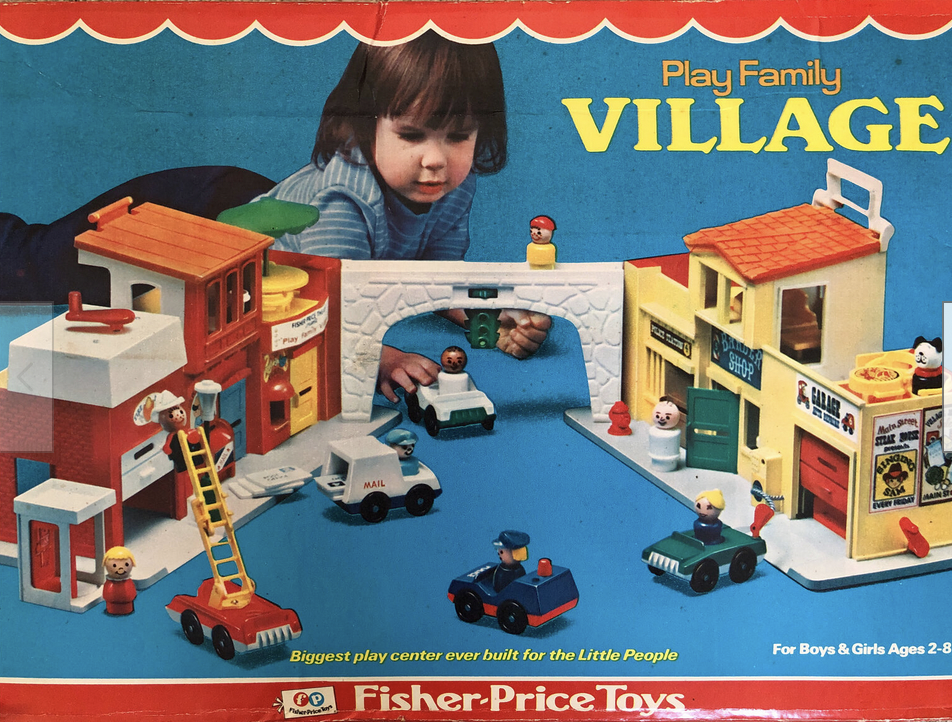
Box image from 1972 toy village of girl pushing car on Play Family street.

My sense of a neighborhood was created by two things: my Fisher-Price Village when I was six and Richard Scarry’s Busytown books, that featured very busy animals working hard at jobs, often in lederhosen. When I first started visiting Z in Seattle 17 years ago, I thought Seattle was where he lived, but after moving here myself and feeling less and less pull downtown unless I wanted something specific (a ferry ride, a trip to Target, the Seattle Art Museum, or a movie), we really lived on First Hill. As per those two sections of my Fisher-Price Village that unfolded and made a city block, the only things we don’t have up here are our own U.S. Post Office or a jail.

Other than the local hospitals, the great class equalizer up here has always been Bartell Drugs, which stands on the corner of Madison and Boren. You could be standing in line behind a person who had just been asking for money on the street three minutes ago and in front of members of the University Club next to Oh La La, all while nurses and doctors from the neighboring hospitals look for lunch options in the aisles.

Outside of Bartell Drugs. One door covered with plywood.
In happier days, there was no need for plywood on the front door.

Bartell was originally a local chain that reportedly treated its employees well, offered local brands, and manage to have everything in the store that Z and I needed: our prescriptions, sure, but also toilet paper, Scotch tape, Beecher’s cheese, shower curtains, plungers, socks, bananas, necessary seasonal items, and Oberto beef jerky. Over the last 17 years, I don’t even want to guess how much money we’ve spent there when we “just run in” for one thing. If our grocery disappeared, we could get by with Bartell for awhile before needing to find a different place to buy fresh fruit and chicken breasts.

For the record, my mother has been lamenting the loss of her beloved Hook’s Drugstores—an Indiana staple—since 1985. She was inconsolable when the news came that they were closing, and I didn’t understand at the time because I’d just graduated from high school and thought national chains were always better than local ones. More stuff. Cheaper stuff. More locations. (I did not take an economics class in school and thus knew nothing about end stage capitalism or the corporate machine.) Now I understand her sadness.

Over the years, we’ve gotten to know some of the clerks and pharmacists at Bartell. By “know” them, I don’t mean we’ve had them over for drinks, or are hip to anything about their lives outside of where they work, or even, often their names. When we walked by the building, we might see “Mort” outside on his breaks, stroking his greying beard, eating a snack he’d just purchased, and listening to music on his iPod. We’d wave and say hi, and he would smile with recognition. (“Mort” was a favorite of mine because one day I was in line at the photo counter where he checked customers out sometimes when he denied Governor Inslee a plastic bag in which to put a bouquet of dripping flowers because the city’s plastic bag ban had just gone into effect. His Honor looked disappointed —despite his approval of the ban—as he stood there in his suit, daisies dripping on the floor.) Another clerk—a young guy that had “manager potential” written all over him— had a fancy sports car that he parked out back, and we’d keep track of whether he was at work or away from work on our daily walks.

We often didn’t know their names and so called them (amongst ourselves) Gravelly Voice, Round Faces (two women who appeared to be related), Beardy Guy, and The Crab. If they wore a name tag, we learned their names, but we aren’t either of us extroverted enough to ask or introduce ourselves. Some days, when I first moved here, the clerks were the only people I saw regularly other than Z. The best day was when the man checking me out noticed my last name and and said that was his partner’s last name and so we talked about lesser Irish names and Irish American-ness.

The Pandemic was not kind to our Bartell but not necessarily because of the virus. At least not directly. The family who started the stores in 1890 sold the chain to Rite-Aid in 2020. There were other mitigating factors like the protests that took place in the city after George Floyd was killed, increasing tensions between the police and the local citizenry. The police force shrank and in addition to fewer cops being available, it felt as if law enforcement desire to help out on non-violent crimes evaporated. Suddenly, in a store where we’d never once witnessed shoplifting we were now seeing people walk in with backpacks, fill their shopping lists, and walk out. We saw people come in and clear an entire shelf and walk out. And in one instance, Z saw a man get a box of Hefty trash bags off the shelf, open it, pull out one bag, throw the box in the bag, and proceed to shove whatever was within reach into it. And walk out.
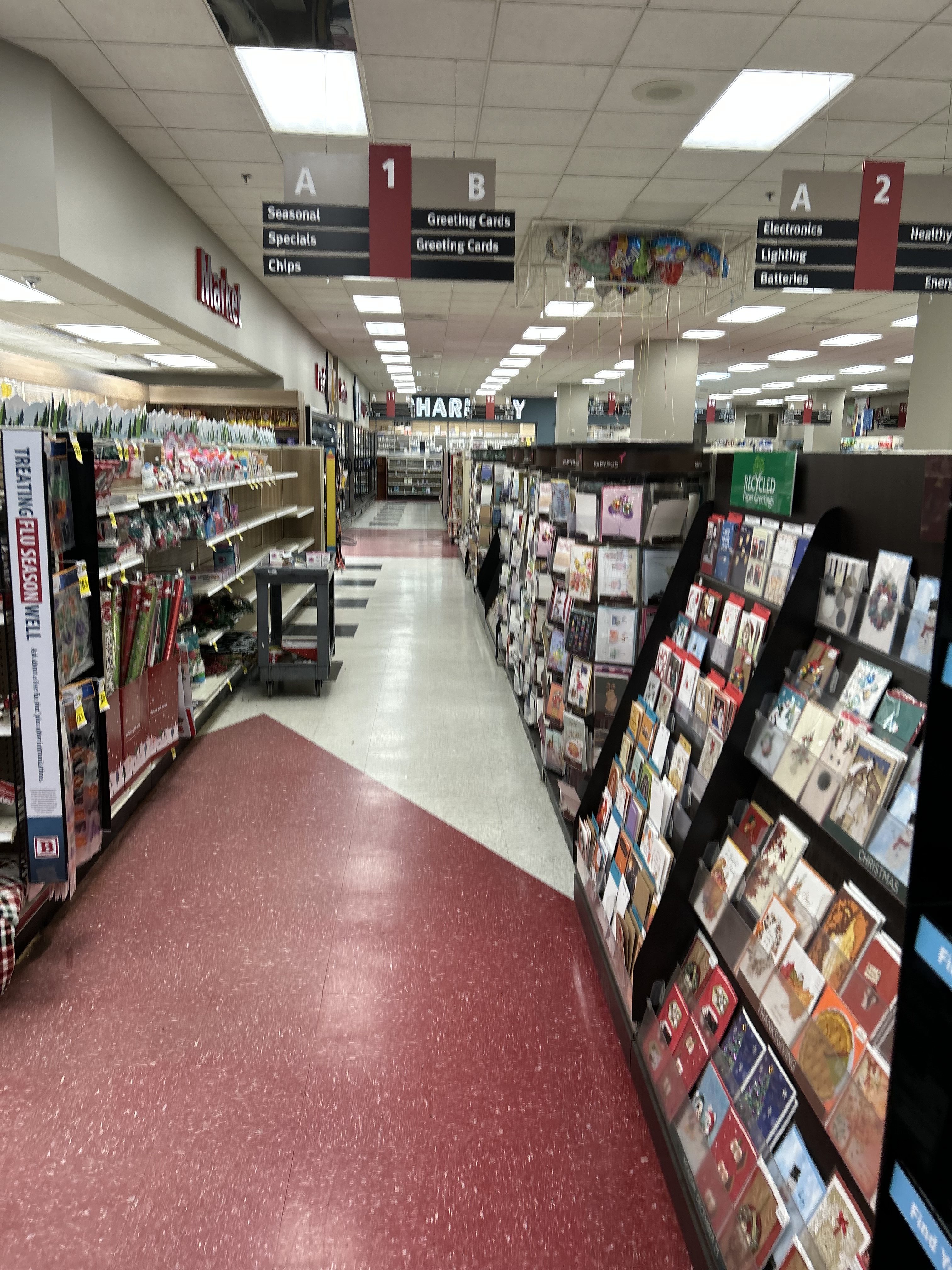
Interior of Bartell Drugs. Greeting cards and seasonal decor.
It almost looks normal from this angle.

The store hasn’t been the same for awhile. It got the smell of Rite-Aid on it once it sold. The products weren’t the same. Even the labels on our prescriptions were different, with a phone number that was impossible to read when you wanted a re-fill, almost as if they hoped you wouldn’t bother them. The brands changed so there was more and more Rite-Aid generic and suddenly we were witness to more altercations between clerks and angry customer-shoplifters. Eventually a series of security guards were hired with uneven success as many were primarily interested in their phones and not the folks walking in and walking out with the stores wares. Last week, Z happened to get locked in the store when a tiny, fiery female security guard wouldn’t let the man who had ice cream shoved under his coat leave. He shouted that he needed ice cream, and the security guard shouted back, “No one needs ice cream!” He gave up on the ice cream but not before getting melted ice cream on her uniform from a pint he’d—apparently—stolen from some other place. Maybe no one needs ice cream, but he clearly had a strong desire for it.

So it’s not always pleasant at Bartell, but it’s been ours. And handy. I was over there this week three times in an attempt to get a prescription filled, and it wasn’t a huge inconvenience because it’s right across the street. It turns out “close” and “nostalgia” are the things that keep us loyal customers.

Rite-Aid filed for bankruptcy earlier this year, and we breathed a sigh of relief when we discovered our store wasn’t on the chopping block. It made sense that it would stay in business. It’s the only big chain pharmacy in our radius where we’re surrounded by hospitals. Then five days ago we found out ours was closing in a little over a week. We were dumbfounded.

Interior of Bartell Drugs. Empty shelves and Pharmacist sign in background.

Today I went over to get toilet paper and it was a chock full of people, the line at the registers snaked deep into the shampoo aisle. The toilet paper was gone, but I did manage to score two big bottles of laundry detergent, two roles of Scotch tape, and two boxes of Dots. There were other things I should have been getting, but I couldn’t think straight. I was reminded of all the afternoons I’d wander over to Bartell to buy new nail polish when I’d had to quit my teaching job in Indiana, was in a funk, and new nail polish seemed like a salve. (It wasn’t.) I was remembering how Z and I pieced together early Christmas decor with day-after sales of leftover holiday doo-dads. How I’d stood in the greeting card aisle picking out greetings and postcards for people back home that I missed in those earliest days here.

Bartell is like the EPCOT of cashiers, with all ages and races checking people out, and it has been such a good reminder of what I love about living in a big city. All of humanity working together with the common goal of giving us our goods, receiving our money and getting us out the automatic door. I was hoping “Anne” would be there so I could say goodbye. She’s one of our favorites. Some days she greets us like she knows us and others she’s all business. She strikes us as someone who we would really like to know but we’re kind of terrified to engage too much lest it be one of the days when she just wants us to pack up our purchases and leave. We’ve felt weirdly bonded to her since election night seven years ago when Z sidled up to her register with a bottle of $5 champagne.
“We’re going to toast Hillary tonight!” he said, with a smile on his face. That morning he’d asked me if he should wear “suffragette white” to celebrate the day. We had no question about on whom the confetti and balloons would be falling later that night. The world was changing for women and we both felt excited about it.
“Anne” rang up the champagne and said, “I don’t know,” and shook her head. In the moment Z assumed she was just being cautious, but by the end of the evening, we were keenly aware that we hadn’t been paying attention to the right people during the election cycle. Ever since then, we’ve looked at her with reverence. She imagined what we could not, probably because she understood things about America that I’d never had to as a citizen and Z had never wanted to as a Zimbabwean making his home here. I wish we’d tried harder to extrovert around “Anne” and find out what she was thinking about things besides the weather and how busy or quiet the store was for the day. And now it looks like we won’t even get a chance to say goodbye.

Today while I stood in line to buy my six 50% off items, an older lady walked up to me and said, “I’ve lived in Seattle all of my life. Bartell is supposed to be here.” She shook her head and looked stupefied. A guy in front of me turned around and said, “Bartell is closing?” He looked as if I’d kicked him in the gut (though I’m still trying to piece together what excuse he had made for all the empty shelves).

Some people might think this is no big deal. In fact, there is another, bigger Bartell that isn’t closing only six blocks from our house. But it is above a busy grocery, in a busy shopping complex, and it doesn’t feel like a neighborhood store. I don’t want to walk there three times in the same day. Also, how long before Rite Aid decides to pull the plug on it too?

Interior of store shelves, half empty, inside Bartell Drugs.

We’ve decided we’ll go there to do some shopping, but as for our pharmaceutical needs, we’re trying a tiny, independent pharmacy four blocks away where there is a friendly staff, tables and chairs to sit in while you wait, snacks, greeting cards, and things you didn’t know you needed like tiny reading glasses that fold up on themselves and scarves with pockets on the ends. On Friday, we both went there to get vaccines. It wasn’t Bartell, but Z said it reminded him of the “chemists” in Zimbabwe, and so now I guess it’s our new local.

Maybe nobody needs a Bartell across the street, but we sure are going to miss it.
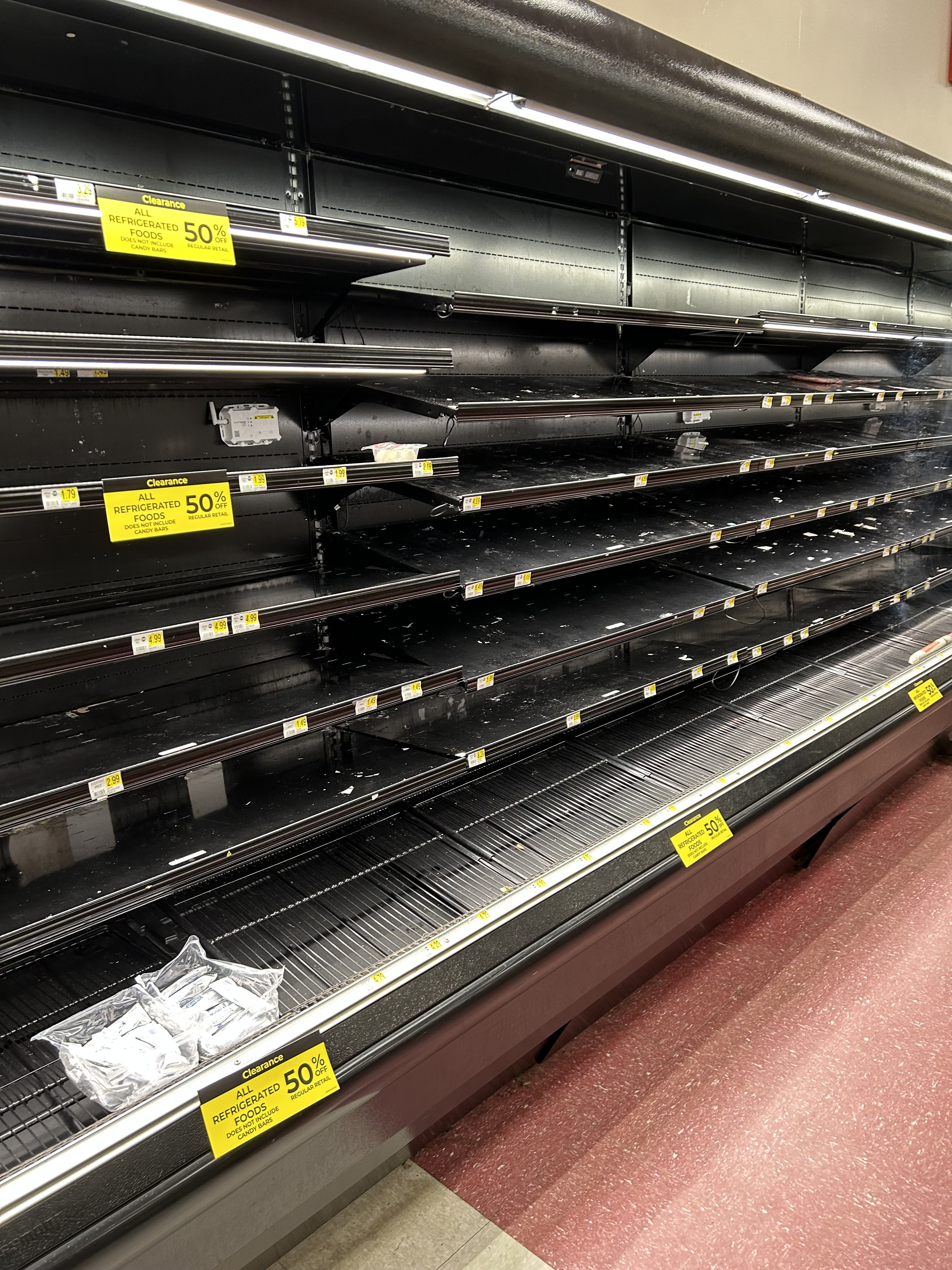
Empty refrigerated case with sale signs on it.

The Ill-Planned Grand Tour, Part VII: Galway, a Girl in a Cape, and a Dream

Standard

RGSHookerwHouses2015

When I was newly out of college and driving into town to work at the public library—a job I thought I’d love but didn’t—I’d often find myself giving tours to imaginary people riding in my Dodge Omni. I don’t know who the people were or why I thought they’d care about the historic train depot or the various beautiful but poorly attended Victorian churches in my little Midwestern town, but I’d sometimes arrive at work completely uncertain of how I got there because the intensity of my gig as an imaginary tour-guide had made time disappear.


It never occurred to me that this was odd behavior for a 23-year-old woman to indulge in. Certainly, it makes one wonder why I was in hot pursuit of a fiction degree if my imagination couldn’t cook up better fantasies than driving figments around my hometown and pointing out the Tiffany windows at Reid Presbyterian Church. When my college friends (real humans, not imaginary) would visit from out of town, I’d often figure out routes to drive them from one of our two historic neighborhoods to the other, explaining about Richmond’s Quaker heritage, telling them about how at some magical point in its history there were supposedly more millionaires per capita in Richmond than anywhere else in the U.S. I’d point to the old mansions that more recently had been turned into mortuaries and B&Bs as evidence. My friends always indulged me even if they were bored out of their minds.


This wasn’t Richmond-exclusive behavior. I did the same when showing people around my college and grad school campuses, around Chicago after I’d spent years there with some regularity, and eventually around Ireland. Not only did I offer tours to family and friends, but on two occasions I invited people I’d met in other parts of Ireland to come with me to Galway so I could show it off. As an introvert, this behavior was out of character for me: inviting people who were very nearly strangers to come with me on a sacrosanct trip to Galway? But it felt like a venial sin if not a mortal one not to introduce them to this city I love and then point them into Connemara.

RGSGalwayBoatHouse2015

I’ve dreamed of giving Z the Grand Tour of Galway since before we were even a couple, so the minute we get off the train I’m hurrying him towards the luggage storage at the station so we can maximize the few hours we have before checking into our B&B. He is heavy laden with suitcases, but even so, I am an oversized border collie nipping at his heels to hurry him along. It is frustrating that we need lunch before my formal tour can begin because there is so much to show him and so little time: in three days we’ll be heading into Connemara and the next leg of our adventure. Already, I’m regretting that I didn’t schedule an entire week here in the City of Tribes.

RGSGalwayHookerdrink2015

Free of our luggage, we go across from the station to a pub that looks like it’s been there for two centuries even though I know a decade ago it was a nightclub with sleek, modern decor. It’s deserted, except for the barman who is friendly and fills us in on the upcoming sporting events that have Dublin, Galway, and neighboring Mayo full of excitement for rugby, Gaelic football, and hurling.


Galway is not, perhaps, the most Irish of Irish towns. Historically speaking, it was more English than Irish with a helping of Spanish influence. The course of Irish history was never changed significantly because of anything that happened here, and other than Claddagh rings (those rings with the heart and hands and crown that Irish Americans love), not much is exported out of Galway to make it noteworthy. Yet the twisty old Shop Street, the rapidly flowing River Corrib, the churches, the area by the bay called the Claddagh? It all calls to me. If I don’t get there every few years, I start to twitch.

RGSCladdaghsign2015.jpg

My plans are thrown into a tailspin when we leave the bar and find ourselves standing in Eyre Square in the midst of a heavy downpour. Because I had all those years of imaginary tour-guiding in the 1990s, I know that the hallmark of a good guide is one who can adapt to circumstances. I hurry Z into the shopping center across from the open park square. He hates shopping centers and is no doubt disappointed with my choice, but I nudge him towards the back where the medieval wall that used to surround the city still stands, incorporated into the heart of the mall. On the one hand, it’s an historian’s nightmare to have something so noteworthy jutting out of a Pennys. On the other, were this wall in America, it would have been ripped down with little thought of preservation. We admire the quirk of it and then head towards the Vodaphone store to see if it’s possible to make our English cell phone magically Irish. It isn’t. The woman who delivers the sad news is so charming that we don’t really even mind forking out the money for another phone. She tells us that the store across the way might be able to help by cracking into our English phone (they can’t) and refers to them as “the likes of them over there” with a dismissive head nod. Though it’s not a phrase unique to Ireland, with her lilt, it sticks with me for the rest of the trip and I try to figure out ways to work it into my own conversation. Phone in hand, we venture back out where the rain has disappeared as quickly as it arrived.


RGSMallWall2005

Medieval wall-in-the-mall as decorated for Christmas, 2005.

Petra House is my favorite B&B ever, and that includes some posher places I’ve stayed in Ireland and America over the years. It really does feel like a home away from home.  Over a decade ago I randomly picked it out of a Rick Steves’ tour book when my mother and I were in Ireland, and now it is the gold standard to me of what an excellent B&B should be like: tasteful accommodations, a spotless room, a delicious breakfast, and friendly hosts who make you feel you’re being looked after. Mom and I both had crushes on the owners, Frank and Joan, a couple who embody the “thousand welcomes” that Ireland is famous for. At one point, Joan and my mother were talking so animatedly that they could have been mistaken for girlhood friends, and Frank endeared himself to me on my second visit two years later, when he saw me at the breakfast table and said, “Ah, last time you were here, you were with your mother and were leaving us for Inishbofin. You know, the new dock they were building burned down right after you were there.” This visit is no different, and when Z and I leave in three days time, Frank will walk us out to the car, hand us road maps, tell us to be careful on the narrower, rougher roads of Connemara, and generally make us feel like we’re forlornly saying goodbye to a family member. Other than all meals with my cousins at the end of our trip, we won’t have another meal as delicious as Joan’s either.


RGSHooker2015

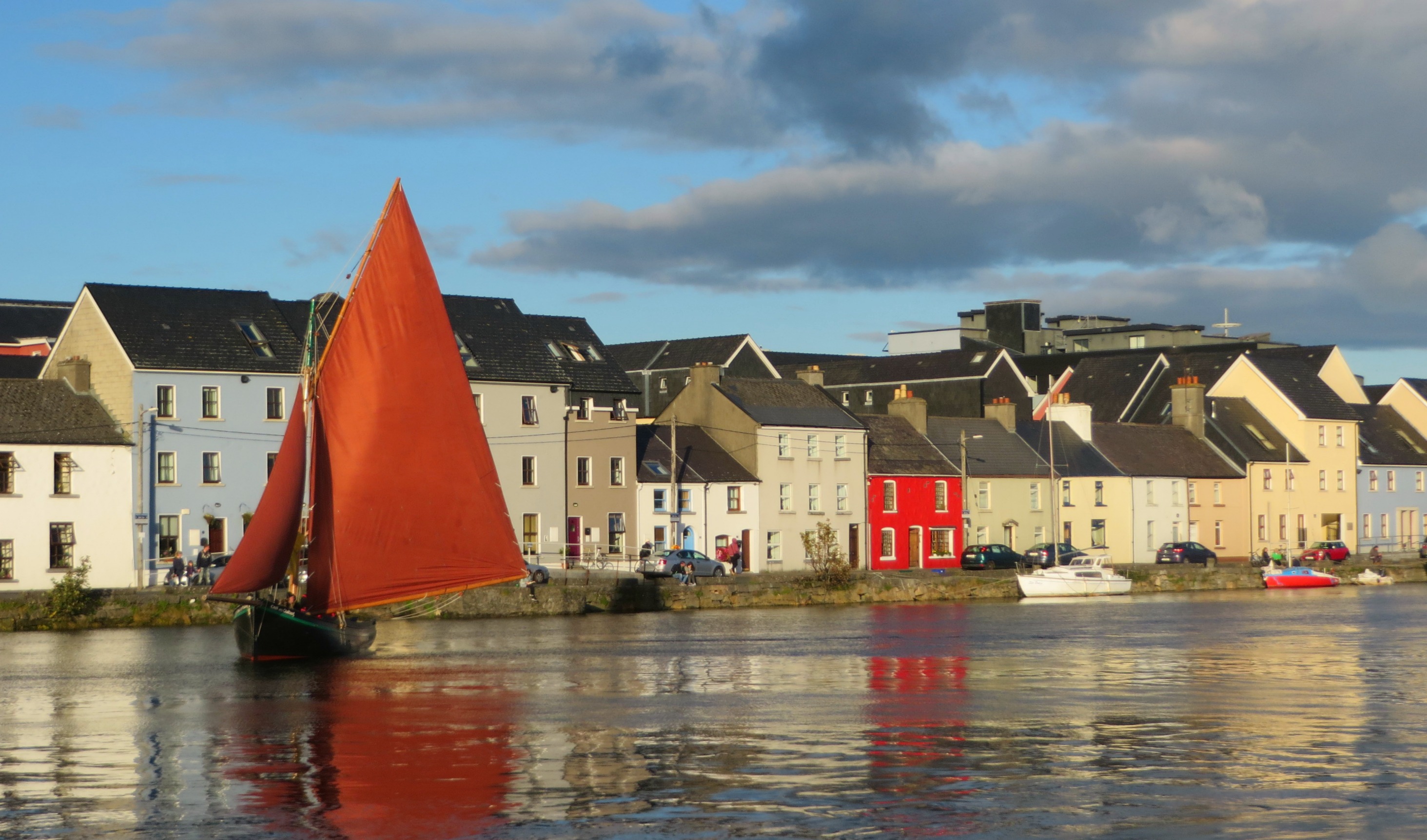
Galway Hooker venturing towards Galway Bay

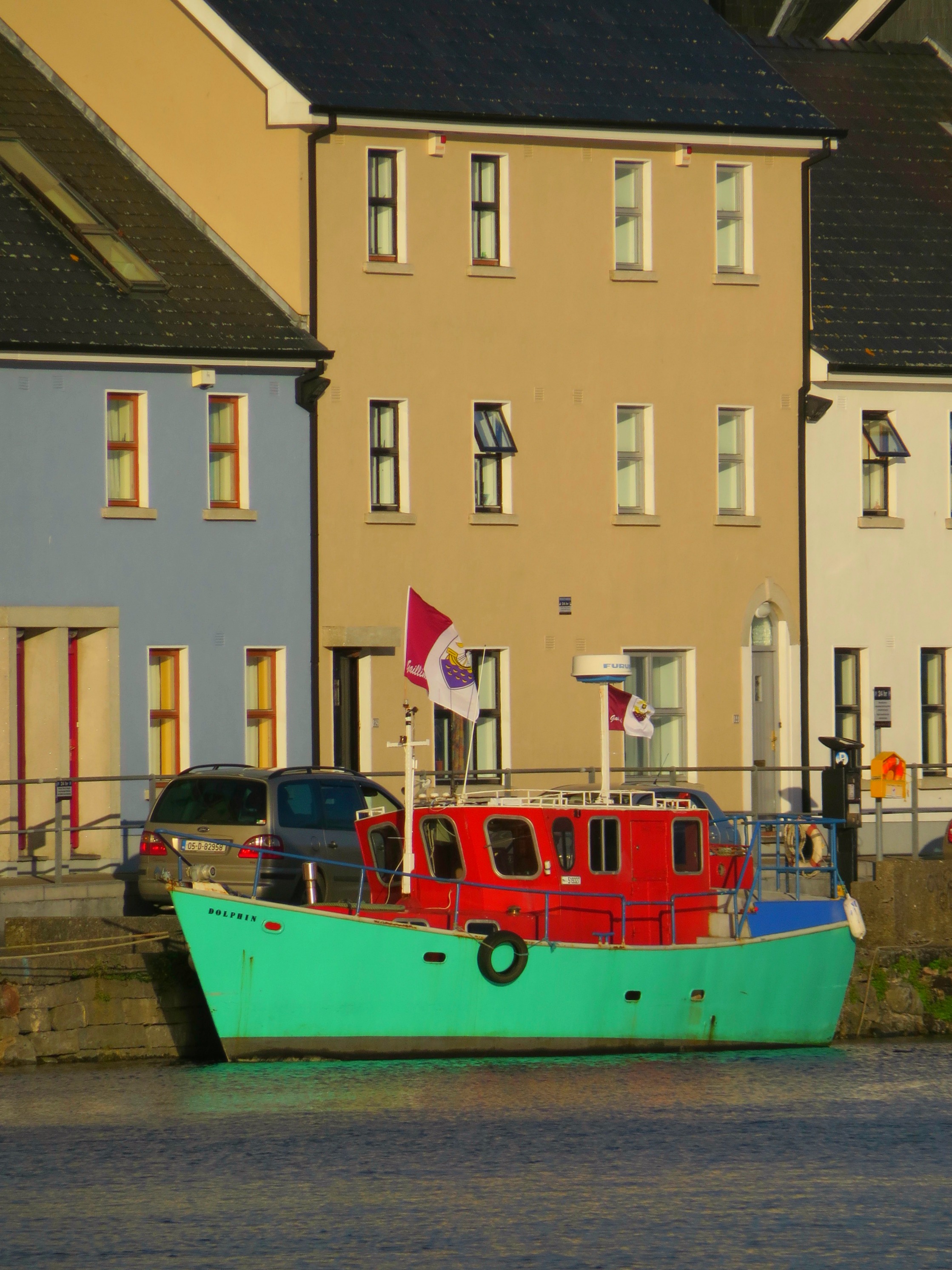
The three days we are in Galway, I walk the legs off of Z. I want him to see it all immediately. Admittedly, I tell some fibs so he readily agrees to walks that are three times as long as he is led to believe. I walk him along the River Corrib, the canal, to the cathedral, the Claddagh where we see postcard-perfect Galway Hookers (red-sailed boats that were used to haul turf to the Aran Islands but now seem to be used to sail tourists around in circles). There is an extra long walk along the Salthill Prom overlooking Galway Bay and the rocky moonscape of the Burren across the water in County Clare. I force Z to sing a chorus of Steve Earle’s “Galway Girl.” When we reach the end of the promenade, I insist that he “kick the wall” like a true Galwegian. Here, I am disappointed that where there was once just a wall and where you could imagine decades of citizens kicking it instinctively, now there is a donation box sloppily cemented into the wall for some charity wherein I’m meant to deposit euros for the privilege of the kick. In protest, I do not deposit coins ( also because I think we might need to take the bus back to the town center because we’re knackered from the walk) but I do spend the rest of the day feeling guilty and uncharitable.


RGSCorribview2015

View from our damp dock picnic perch

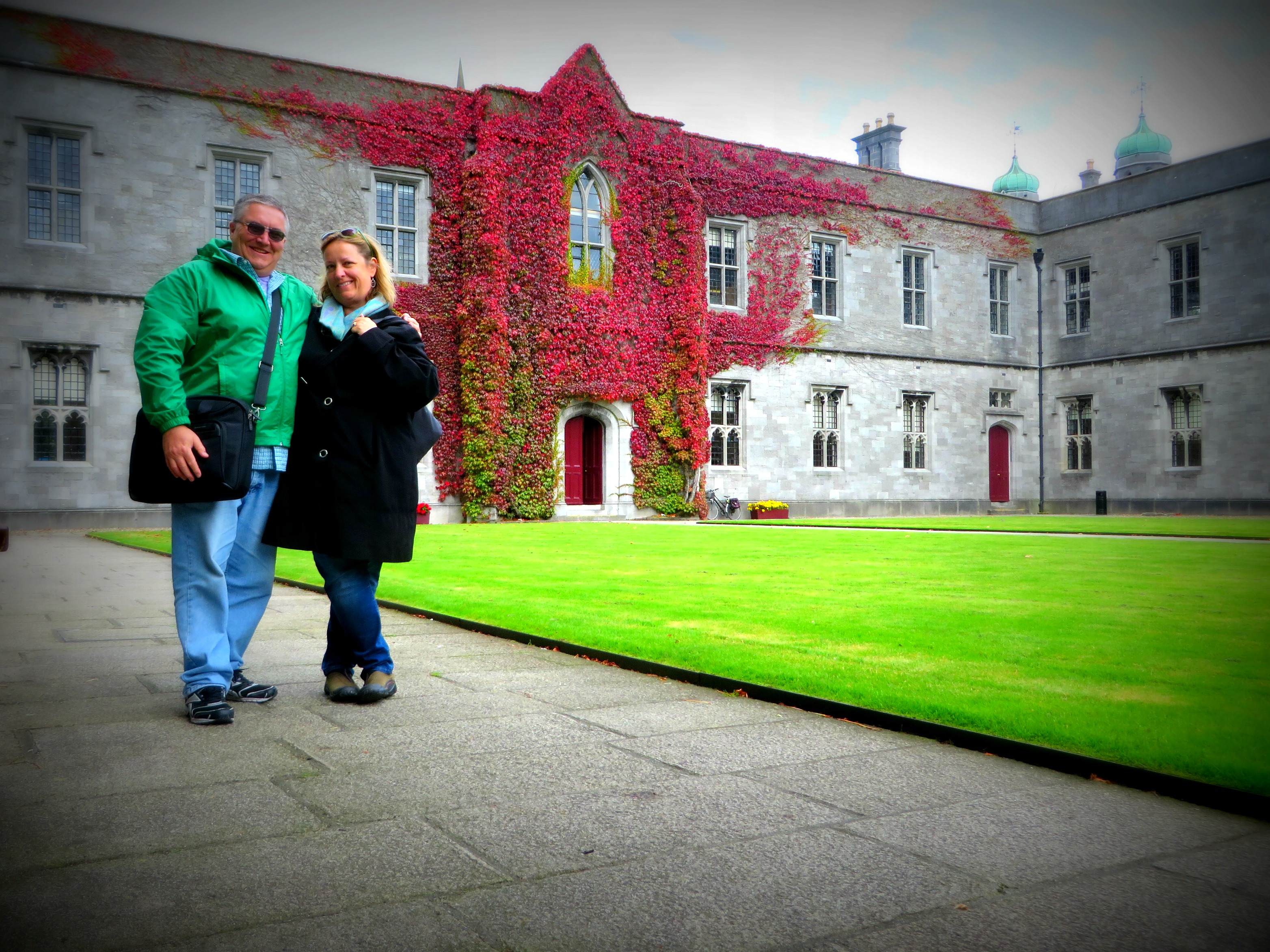
Perhaps my worst sin against Z is the day I lead him on a long walk past the university to the area where I lived for a summer so we can have a picnic by the river. The walk takes longer than planned, Z is hungry, and when we arrive, the picnic table that had been there over a decade ago has been removed in an attempt to make the youth of Galway behave themselves. The view across the river is still lovely—with the city behind us, we look out across fields, at some oldish stone ruin and larger house. A boat tour glides past us and we wave, happy to be less touristy than the people on the boat. I feel momentarily victorious that I’ve brought us to such a lovely spot, but then, as we lower our middle-aged bones to the dock so we can eat our sandwiches along the river, it starts pouring with rain. Z has a look of annoyed resignation on his face. He’s a trooper though and never says a word about the inconvenience of our lunch, or even the annoying walk to and from our destination during which I have lamented at every turn all the changes that have befallen the UCG campus since I was there last. The biggest sin, as far as I am concerned, is that the pub where the writer Dermot Healy once bought me a pint is no more (much like Dermot Healy himself). But I also lament the trees in the wooded area through which I’d walked to class every day like a modern, thirtysomething Red Riding Hood; they’ve been chopped down and an athletic center built there. It all feels like a travesty of justice. The place should have been laminated after I left. Buoyed from his lunch and a lessening of rain, Z happily sits with me in the inner courtyard of NUI Galway that is modeled on Christ Church at Oxford and lets me reminisce about the summer before I met him when I was here.


RGSUCGCourtyard2015

In the UCG courtyard, recounting past glories


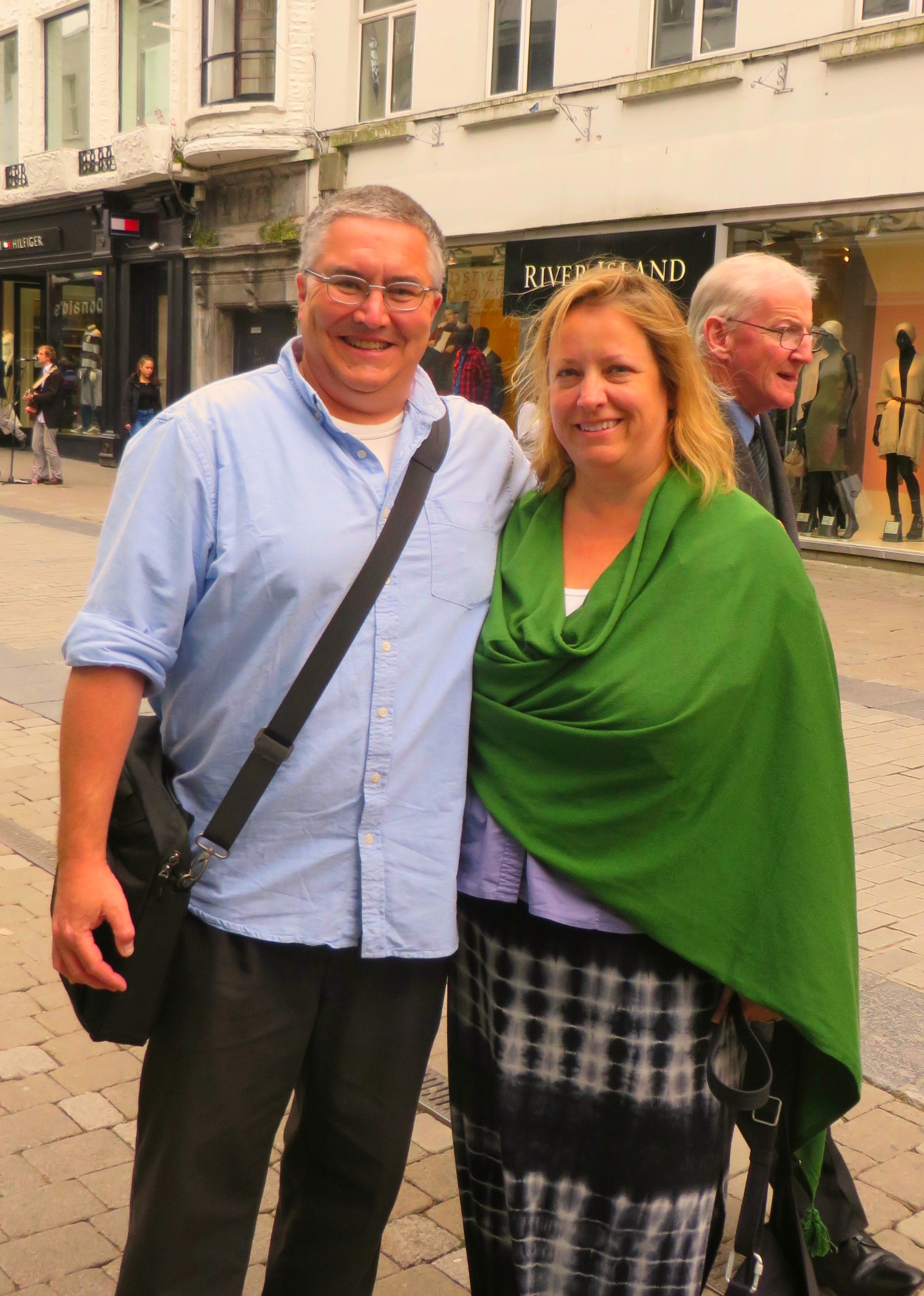
Z has some research to do on this leg of the trip as well, and the half hour he turns me loose to interview someone, I make a beeline to a shop I like. Within two minutes, the clerk has dropped this rich green cape thing (don’t even think about calling it a poncho) over my head and clearly it is meant for me. Another clerk comes up and says it matches my eyes and when I tell the likes of them that we’ll soon be spending a night in a castle, they both nod their heads and say, “Sure, you’ll be wanting this to wear while you sit by the fire with a glass of wine.” This trip has not been about the buying of mementos, but even so, I’m an easy mark. I hand over my money and the clerk hands me the bag. I’m only half way out the store before I’ve tugged it on—all of this within five minutes of having said goodbye to Z. To my credit, it’s lovely and I do not look as ridiculous in it as I did on the first trip when I bought a thick Aran sweater and insisted on wearing it daily even though it was summer and the sweater was heavy enough to be a winter coat. (Mom wears it as a coat now actually.) I have no doubt any Irish person passing me on the street must have thought then, “Americans are ridiculous.” On this day though, I can only imagine they are all admiring my new purchase and assuming I’m a native Galwegian. When we are reunited, Z grins at me and shakes his head when he sees me sashaying up shop street in it. Because he likes to name things, he dubs it “Capey” and it becomes a sort of family pet for the rest of the journey. Did you pack Capey? Don’t spill Ribena on Capey! Don’t leave Capey behind?


RGSGreencape2015

Z with spendthrift wife, elderly passerby, and the beloved Capey


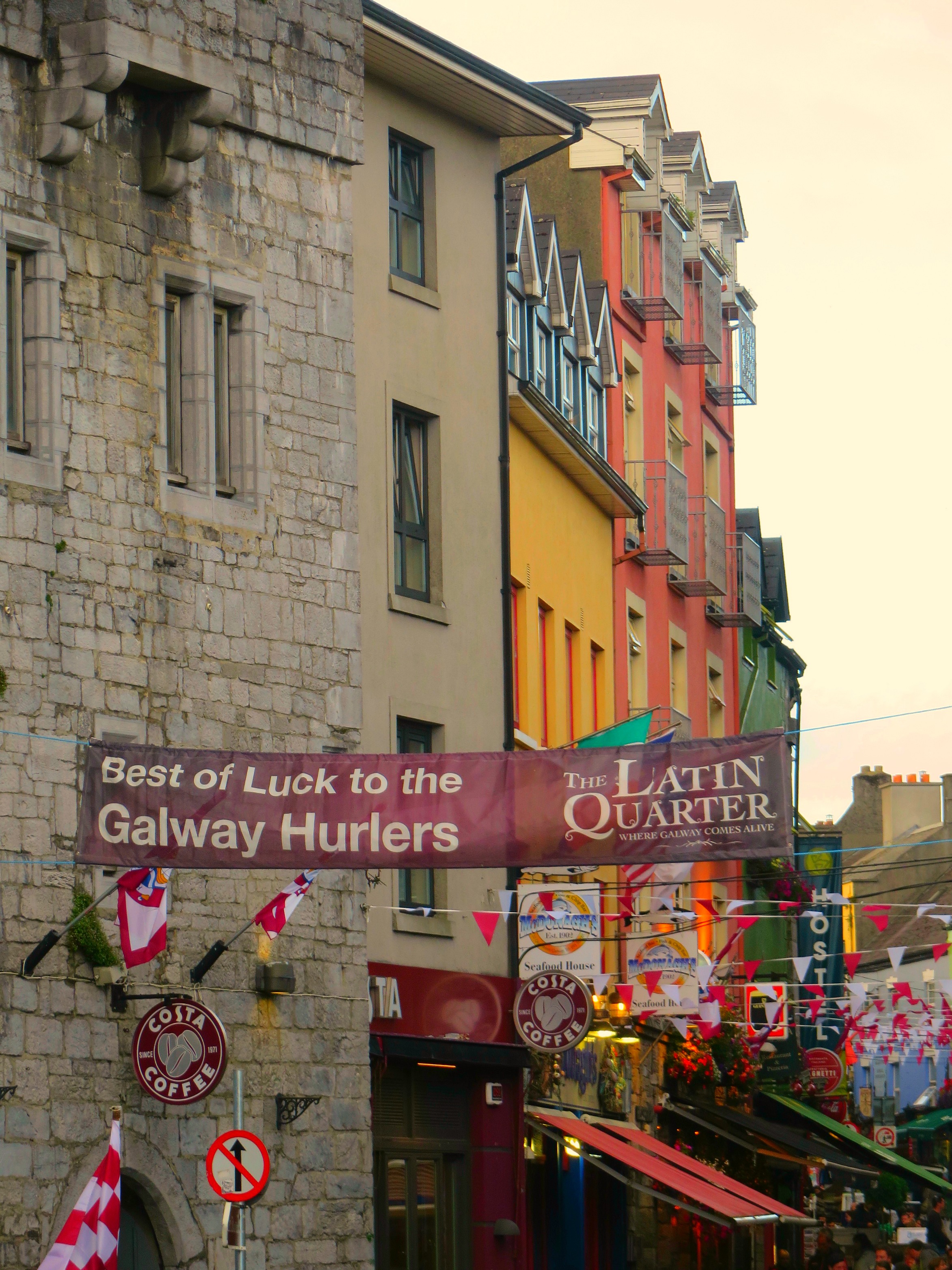
We do the things I always do when I am in Galway too. We poke our noses into the restaurants in the Latin Quarter trying to select the best one. We go into my favorite sweater shops and fondle sweaters we aren’t going to buy. We look in the windows of jewelry stores at Claddagh rings we’ve no use for since I seem to already own three and Z refuses to wear one. We go into St. Nicholas Collegiate Church, a 14th century church said to have been visited by Cromwell. We look at the Spanish Arch and I tell Z about how Columbus popped by Galway when he was off on his exploring adventures. I point out Lynch’s castle, now a bank, where the mayor of Galway hung his own son, who had killed another young man, and the mayor became a recluse afterward. Sometimes serving justice is a heart breaker.

RGSGalwayLatinQuater2015

Galway’s Latin Quarter, geared up for the big match

We go to Charlie Byrne’s Bookshop and buy books we’d have to work hard to find in America, including the latest Jack Taylor mystery by Ken Bruen that is set in Galway. Z and I are both big fans of this brutal series, and I know now that he’s seen the city, the books will be even more (horrifying) fun—I’ve spent these three days reminding him of plot points and where I think Jack Taylor lives, where various crimes unfolded, etc. As we’re checking out with our purchases, I spy a Charlie Byrne’s tote and Z gallantly tells the clerk I’d like one; the clerk even more gallantly says, “No charge.” In no time, I’ve filled it with books and postcards and pieces of detritus and added it to the increasing pile of luggage hogging our room at Petra House.


RGSCharlieByrnesInterior

Oh, Charlie Byrne’s–you never disappoint!

On our second night in the city, Z is presented to my cousin Mary and her husband John, who have driven into town to meet us at the hotel where their son Eoin is working for the summer. I see Eoin first, and am shocked that he has grown approximately 12 feet since last I saw him. On my first meeting, he was in “junior infants” (kindergarten) and finagling sweets out of his mother when we stopped to get petrol. It is a real joy to reconnect with all of them since I haven’t seen them for six years, and a greater joy that at the conclusion of the evening when Z and I are snuggled in at Petra House, he tells me how much he enjoyed Mary and John, and I shortly receive a text from Mary telling me that they approve heartily of Z and are happy to see me so happy and healthy. The next night, we have dinner with Mary’s niece Catherine—my “little” second-cousin-once-removed–who introduced me to nearly every cow on her grandfather’s farm when she was about six and now she is a grown-up college student who loves to read and has a wicked sense of humor. Another delightful evening with family, and I feel so happy that all those years ago I was uncharacteristically nervy enough to demand that my grandfather give me the address of his cousins in Ireland so I could claim kin and be the first member of our little American branch of the tree to meet them. What a lucky day for me.


This day is also a lucky one for Z and me because John and Mary take half of our ridiculous amount of luggage back to their house since we’ll be seeing them again, thus relieving us of the Samsonite albatrosses that have been weighing us down. There’s a ferry ride to an island in our near future and I don’t want to be seen as the ridiculous Americans with the steamer trunks for a two-night stay in the Inishbofin House Hotel.


RGSGalwayCathedralWindow

Galway Cathedral window

On our last morning in Galway, Z and I walk down the hill to pick up a rental car—a little red one that we dub the Galway Hooker—and head back to Petra House to settle our bill and collect our luggage. Because I have trouble with The Leaving, I want to insist to Frank and Joan that they tell their next guests they have to find other accommodations because we’re staying another eight nights and just forego the next leg of our adventure. They’ve made us feel so well taken care of, that I even feel a little nervous leaving. Who will be looking after us once we pull out of their driveway? Surely, we need looking after.


RGSGalwayCathedral2015

Galway Cathedral


Though I’m looking forward to the next leg of our trip—some of it familiar to me, some of it brand new territory—I am loathe to leave Galway. We’ve hit the highlights, but you can’t really settle into a place in three days. I’m lucky to have had those days, but I am greedy and want more. No matter how much time I get here, I always want more. A week. A month. A year. I’m not sure how long it would take me to tire of Galway, but I’d really like to push those outer limits.


After Frank has kicked the tires of the Galway Hooker and waved us off, we head west into Connemara. We’re out of Galway in a matter of minutes, and I distract myself from the sadness with self-congratulations that I was clever enough to have married a man who is used to driving on the “wrong” side of the road as I now have a built-in chauffeur. We wind around the bends and I feel giddy to be doing this with Z, pointing out favorite places of mine from past trips and oohing and aahing over sights I’ve never seen or have forgotten. Though I haven’t hung up my tour guide cap entirely, from this point on, there will be a lot less of me giving Z mini history lessons and a lot more of us discovering places together. Abbeyglen Castle, here we come.


RGSGalwaySwans2015

Galway’s iconic swans


St. Paul Snapshots

Standard

St. Paul Cathedral

St. Paul Cathedral

When I am in Seattle, the Midwest exists in my mind as a singular place where everyone has a shared sense of values, habits, conversational tics, and driving styles, and where the landscape is a sea of rolling hills and horizon dotted with cows and corn. There are specific things about Richmond, Indiana, that I miss, but often enough, what I miss is that less specific country called the Midwest.


So when Z and I visit Minnesota, where he spent the first twelve years of his American life going to college and grad school, I am often surprised by how foreign it feels to me because I am expecting it to be Indiana. Last week we flew into the Twin Cities in order to attend the wedding reception of one of Z’s college roommates, and though in the first couple of hours I was bouncing around at all the things that were magically familiar (the landscape! the manners! stores that sell plus-size underpants!), before long, I started noticing the differences. Only I couldn’t quite name them; I only knew that I was not yet fully home.


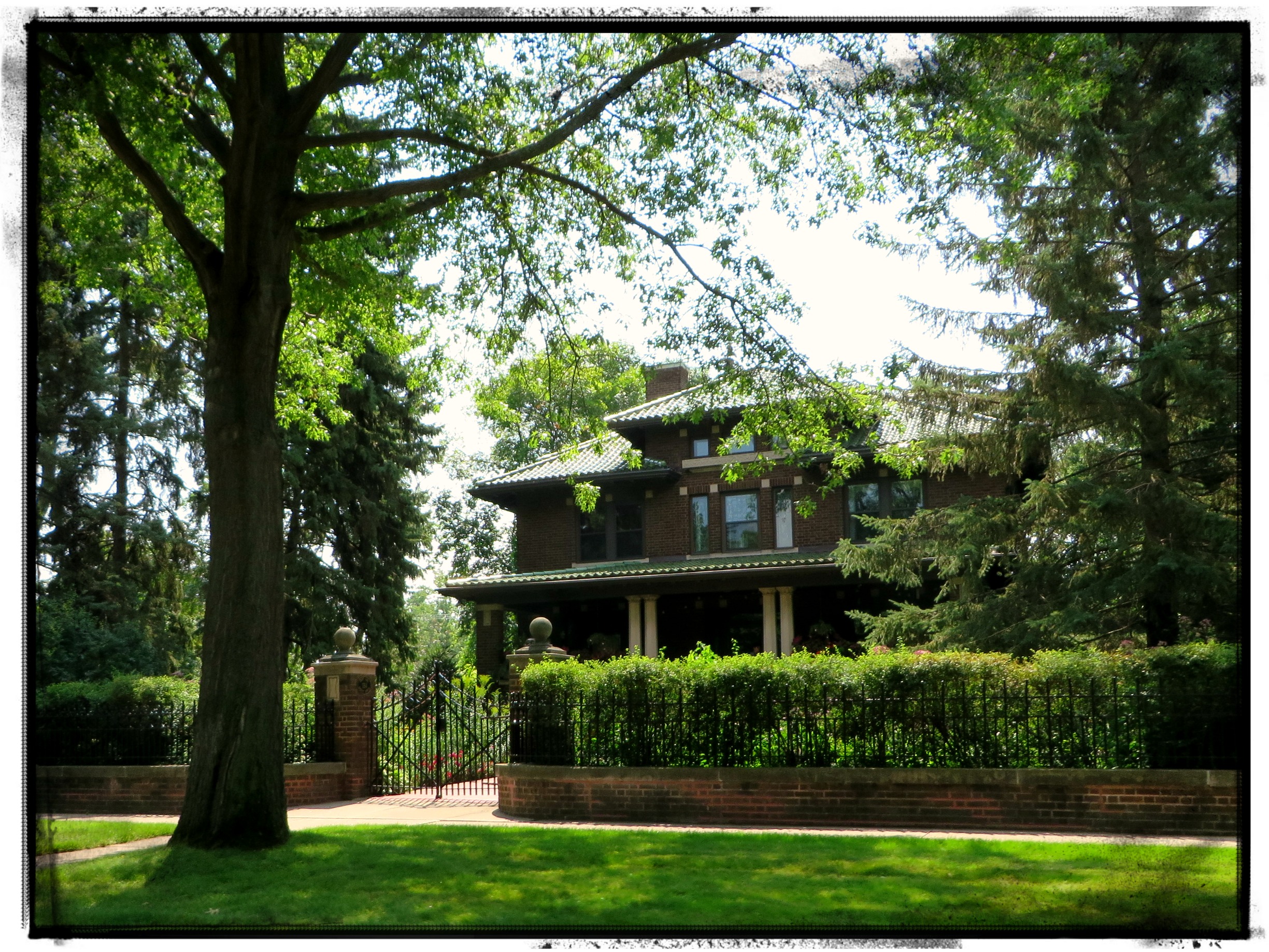
The houses there—things that appear to have been designed by students of Frank Lloyd Wright–line tree-filled boulevards on Summit Avenue and other similar routes and are different than the brick Federals and turreted Victorian and mid-century ranch houses that fill my hometown. The grocery chains are different. People seem more mannered but also a little more distant (in a polite way) than at home. A phrase like “You betcha!” takes me aback when I first hear it because I realize it isn’t just a quirk of the characters in Fargo. The accents are almost the exact opposite of the southern twang and drawn out syllables that let’s me know I’ve ventured into my particular county in East Central Indiana, where the inhabitants often have connections to Appalachia.


House on Summit Avenue

House on Summit Avenue

And frankly, every time I’m in the Twin Cities, I’m completely shocked to re-discover that the Mississippi River is not just a southern entity.


Another thing that surprises me is the realization that Z has rich memories from his time in St. Paul and though I’ve heard the stories multiple times and met many of the players, those memories—no matter how diligent I am in imagining them—will never be mine.


The best cure for this ailment of mine is usually to make new memories, so we got to it. We visited with old friends at favorite haunts (no trip to St. Paul is complete without breakfast at the St. Clair Broiler), walked around his old campus to see the changes there (campus bookstore moved off campus—do not approve even if it is next to Garrison Keillor’s bookstore!), drove an hour to the little town where the wedding reception was (we got lost and there was some verbal abuse directed at Siri) and enjoyed an evening of nuptial revelry before heading back to the cities.


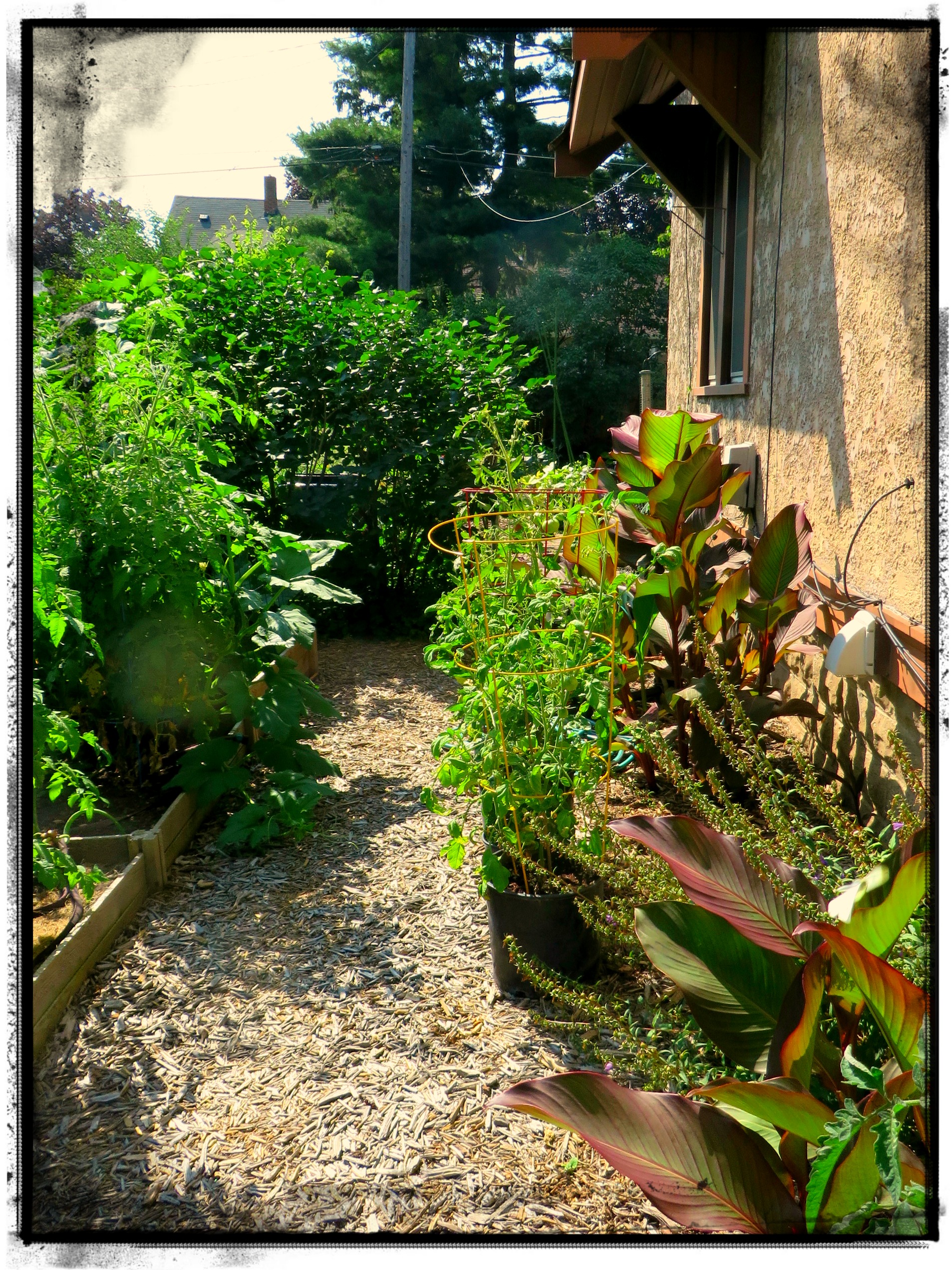
For this trip to St. Paul, Z’s old friend McGregor hosted us at her new, adorable house, which we found much cozier than the hotel we usually Priceline when we are in the cities. She has a lush garden because she was born with “green fingers” as Z-ma calls it, and were I not mosquito averse, we would have spent more time in it. It was charming and cozy and I say this as a person who generally does not notice things like gardens because I prefer being indoors.

Path into McGregor's Garden

Path into McGregor’s Garden

We played Scrabble and chatted and some of us (ahem) were coveting her hardwood floors and woodwork. She and Z caught up on the people they have in common and again, I felt those little jealous fingers tickling me under the chin. It’s ridiculous really. I have good friends. We have had good times. But somehow, his history seems 3-D in Surround Sound and mine is more like a Viewmaster reel. He lived in an apartment once with plumbing problems so severe that one had hold an umbrella while using the toilet. I never had an apartment with quirky facilities!


Z's former leaky apartment.

Z’s former leaky apartment.


One place we visit every time we go to St. Paul is this lovely shop called Irish on Grand. If you love Ireland and miss Ireland like I do, then going to a shop like this and talking to the proprietor makes you feel almost like you are there. I don’t need any more Irish sweaters, pottery, jewelry, or other Celtic doo-dads, but I feel better just knowing if I have a sudden urge, I can get them there. When we stop in for a visit, we always buy whatever Tayto Crisps (best potato chips ever: my favorite, Smoky Bacon) they have available and then get either a book or a new CD. Once, I loved a band I’d discovered there so much that I accidentally bought the same CD on the next visit. On this trip, I opted not to buy any music just to be safe.


Irish on Grand--excellent shop for Eire-ophiles!

Irish on Grand–excellent shop for Eire-ophiles!

As luck would have it, we happened to be in time for the Minnesota Irish Fair on Harriet Island. It’s reportedly the biggest free Irish festival in the U.S., and so we boarded a shuttle marked Galway and made the short trek to the festival, which was just getting under way.

Minnesota Irish Fair 2014

Minnesota Irish Fair 2014

We were a bit too early to see the revelry that looked bound to happen later in the weekend when Gaelic Storm and The Water Bhoys performed, but it was still a good time. I got to pet two hot-looking Irish Wolfhounds in the Celtic Canine tent. Between roasted corn and drinks, we also managed to see some Irish step-dancing, though admittedly, instead of focusing on the performances, I spent more time lamenting that the costumes had gotten so garish (sequins! neon knotwork!) and the wigs had grown more ridiculous in the decade and a half  since Riverdance hit America  and the Irish dancing resurgence began.

Nicki Minaj should wear this--not an adorable 10 year old celebrating her Celtic heritage.

Nicki Minaj should wear this–not an adorable 10 year old celebrating her Celtic heritage.

At one point, I had to keep redirecting myself to watch the footwork instead of the wig of the dancer in front of me who had yet to perform. Despite the visual assault, the dancing was remarkable.

Irish dancer "hair"--so springy! so lifelike!

Irish dancer “hair”–so springy! so lifelike!

Irish dancing always chokes me up, and I don’t know why. I’ll be clapping and having a good time, and then all the sudden there is a tightness in my throat and I start sniffing so the tears won’t spill over. It must be genetic.


Minnesota Irish Fair 2014

Minnesota Irish Fair 2014

On the last day in the Twin Cities, we sat in McGregor’s backyard amongst the flowers and vegetables watching Z go through a tub of his things that McGregor has been storing for a decade or so. She and I were keen for Z to whittle down the items he had in storage, but then when push came to shove, as he threw things away, we’d exclaim, “But you don’t want to get rid of those!” even if “those” was just a pair of old rugby socks. He just shook his head at us. As he chucked letters and menus from awards dinners into the trash, I rescued the best so he’d have a semi-accurate historical record of his past. He has two more tubs to go through on our next trip. Maybe by then, McGregor and I will be willing to let him let go of more memories.


And thus begins our summer sojourn back to the Heartland.


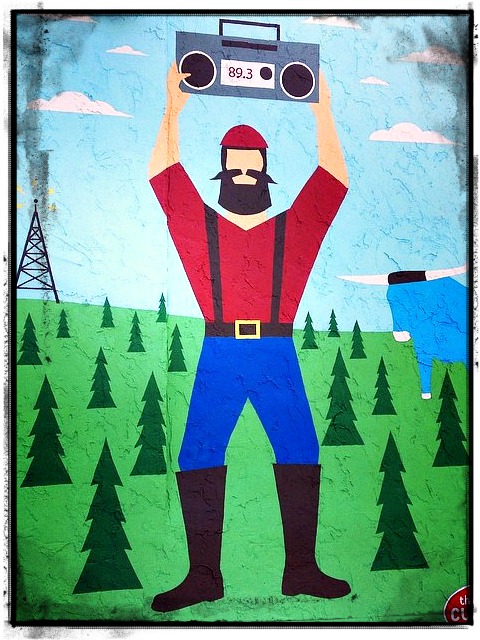
Paul Bunyan; Cusack style.

Paul Bunyan; Cusack style.


Ah, Those Summer Nights: Flashdance Edition

Standard

Flashdance.

Flashdance.


To help combat the recent heat wave, Z and I chose to stay in our shady, brick apartment building, wearing as few clothes as possible and watching the movies of our youth while eating popsicles. Like you do. The idea came about last week when we randomly started singing songs from Grease and then we discovered it was streaming on Netflix. From that, we quickly moved to the other music/dance movies that shaped our respective youths: Grease II, Footloose, Dirty Dancing, and, finally, last night, Flashdance.


All I have to do is hear those opening bars of “Grease,” and I’m transported back to a adolescent summer when I got my first issue of ‘Teen magazine and thought I’d die if I didn’t get a pair of denim Dr. Scholl’s sandals and one of those aluminum foil mats upon which a person was meant to rotisserate herself until she was deeply tan and thus desirable. I was certain that ownership of those two things would magically transform me into an adult. By the end of the summer, I had the sandals, but my mother, thankfully, could see (as could anyone else who knew me) that my pasty Irish-American skin should spend peak tanning hours under an umbrella. Re-watching the movie this past week brought back many memories, including a mental list I kept of all the sexual innuendos that I didn’t yet know the meaning of, sensed were significant, and of which I hoped to have a legitimate definition before I went to junior high. (This was before urbandictionary.com, back when if you weren’t brave enough to ask some older family member or friend, you had to wait to find out why everyone was making that “oh my goodness!” face when “Greased Lightnin’” played.) The experience of watching all four of these movies was like opening up some scrapbook I forgot I’d kept, chock full of reminders of the way life used to be and all the ways I hoped life would turn out.


It was fun to share with Z something that had been significant to both of us back in the day, living on our separate continents, when we were imagining very different futures for ourselves. (I can’t speak for Z’s, but the future I imagined involved me actually being the pastel-sweater-wearing good-girl version of Olivia Newton-John). I sometimes lament that Z and I didn’t know each other in our youth, and I admit there is part of me that wonders if we’d met when we were 10 or 16 or even 20 if I still would have thought, “That’s the one for me!” or if I would have been unable to see his utter rightness simply because he was not a John Cusack, holding a boom box over his head and wearing me down with his love.


Dirty Dancing held up as well—better, really—than Grease. There are only two cringe-worthy lines in that film: the oft-used Nobody puts Baby in a corner, and the equally bad (and even more poorly delivered), Go back to your playpen, Baby. This is, however, perhaps the first time I’ve ever wondered why the writers thought it was a good idea to name the heroine Baby in the first place. Metaphorically, it’s just too obvious to be good, and literally, it’s just too…well, seriously, do you know anybody named Baby? On all other fronts, the movie still works, and no matter how many times I watch it, damned if I don’t cry when Baby is in the gazebo with her father telling him she’s sorry she disappointed him, but he’s disappointed her too.


For marital happiness, the least said about Grease II the better.


Footloose surprised me. A million years ago when I saw it for the first time, all of my girlfriends were going nuts for Kevin Bacon and his spikey hair and skinny tie, but I was too busy obsessing about the ridiculous premise to notice how nice he looked in his Sedgefield jeans. A college campus might outlaw dancing (I went to one of those), but a whole town? And why did it seem so Southern and some of the actors went in and out of southern accents, when those were clearly the Rocky Mountains in the distance? And were they seriously expecting us to believe that Kevin Bacon’s use of quotes from the Bible was anything but self-serving? It didn’t take a theology scholar to recognize a fallacy of false equivalence. I’d been to prom; that dancing had nothing to do with worship.


On this viewing, however, even with the extreme no-dancing-no-rock-music town ordinance still in place, the setting and the people felt real and familiar. That little church there in ArkanIowalarado felt a lot like the ones I grew up in, trying to figure out who I was while it seemed plenty of people who didn’t really know me were happy to tell me who I should be. In the scenes where the fire-and-brimstone John Lithgow is preaching, you can feel the misery of a humid Sunday service, when you wish the minister would maybe get to his point more quickly so you could escape to a place with a breeze. On this viewing, Kevin Bacon’s biblical argument didn’t seem quite as weak. John Lithgow seems more sympathetic regarding his reasons for wanting to ban music and dance (and he gains big points for compassionately stopping a book burning). Also, nobody was perfect looking like they would be in a movie now. Their teeth weren’t impossibly white and impossibly straight. They spoke like real people. They looked a little uncomfortable, and not at all like a bunch of teens who would be posting photos of themselves all over the interwebs. (Not that there’s anything wrong with that.) It surprised me how much Footloose felt like a real portrayal of what it was like to be a teenager in the 1980s, give or take a little gymnastical dance routine in the local feed mill.


And finally, there is Flashdance.


Oh, Flashdance, you break my heart. Weren’t you once good? Didn’t you have better dialogue? Didn’t you make more sense? Weren’t you plausible?


I saw Flashdance with my high school boyfriend, his little brother, and a friend of mine. I was enraptured the 95 minutes it was on the screen and felt like I was the only person in the movie theater. Alex, the heroine, a Pittsburgh “flashdancer” with the dream of being a ballerina is no Sandy from Grease. She is 18 and supports herself welding by day and dancing by night (though she isn’t a stripper—let’s be clear about that!). She lives in a warehouse with her pitbull and she seems not to care what anyone thinks of her. She is feisty. The night she sees her older boyfriend with another woman, she doesn’t go home and eat ice cream and weep passively and sing Hopelessly Devoted to You. No. She gets on her bike, peddles to his house in a tony neighborhood, and throws a rock through his window. But the real story is that with a little prodding by an ancient European fairy godmother figure and her string-pulling older boyfriend, she screws up her courage and tries out for the Pittsburgh ballet, which is her secret dream.


Watching Flashdance then, I knew the message of the movie—to be brave and go after your dreams—was one of the truest things I’d ever seen. When it was over, I was breathless (and anxious to get home to start ripping up sweatshirts and incorporating legwarmers more fully into my wardrobe, so I too could look like Alex while I painted and wrote). I said something to the boyfriend with awe in my voice about how good the movie was, and he said, “Eh. It was okay.” His movie tastes ran more along the lines of Conan the Barbarian and Caddyshack. I felt deflated. How could he not know this was possibly one of the best movies of all time? Were his broody silences not artistically driven after all? Were we ill matched?


It was very disappointing.


Yet here I was, thirty years later, sitting with the far more compatible and fabulous Z on our sofa and feeling very briefly annoyed with him for insinuating that Flashdance wasn’t a good movie. I think of him as a more enlightened creature, and so his lack of reverence for the film kind of hurt my heart. I felt wounded that he wasn’t even giving the movie a chance.


But then I started listening to the dialogue and making a list of all the implausibilities, starting with the existence of a club where women danced–with their clothes on–for men who were clearly not patrons of the arts. And yeah, maybe an 18-year-old woman could become a welder, but would anyone have hired her in the Rust Belt when jobs were scarce? I don’t think so. And also, remind me why none of us knew in 1983 that a body double was used to do all the dancing? The only thing I was in awe of this time during the dance scenes was that the body double’s curly wig did not come flying off.


Maybe Flashdance wasn’t a good a movie after all.


More disturbing to me than the possibility that the movie was not great (nor even good) was the realization that the message of the movie—one that I believed in fervently— was mixed. It purported to be about believing in yourself and your dreams, yet two of the three people who do just that (Richie leaves his fry cook job to move to LA to be a comedian and Jeanie enters an ice skating competition) fail miserably (Richie comes back to Pittsburgh after being booed out of LA and Jeanie falls during the competition and subsequently ends up working in a real strip bar until Alex drags her out). Plus, Alex already is a dancer—trying out for the ballet isn’t that far outside of her wheelhouse. So what exactly was the message of Flashdance? Go after your dreams only if you are the protagonist? Go after your dreams if you have a rich older boyfriend who has connections? There are magical powers in a ripped up sweatshirt, which will subsequently make your ludicrous dreams attainable? By the time it was over, I hadn’t a clue.


The moral of my story? There isn’t one. I’m just glad some of those teen fantasies of mine didn’t come true, otherwise I might have missed this perfect weekend of heat wave survival with Z. If the mercury rises again, I suspect there is a John Hughes marathon in our future.


P.S. This is not Jennifer Beals

P.S. This is not Jennifer Beals


Flashback Friday: Little Brownstone on the Prairie

Standard

rgsroom

[Oh, the irony of this post from eight years ago, particularly when bumped against the one from earlier this week.]

 15 July 2006

Last night I was feeling “troubled” about my silly life as I went to sleep, which is a fairly frequent occurrence. Usually the troubledness has to do with my age, my living situation, my marriage/partner/dating and motherhood status. Other things get factored in based on the latest magazine article I’ve read or Dateline exclusive I’ve watched. Last night, after messing with a picture shelf my mother and I were hanging above my desk and trying to figure out which of my 20 works of art I was going to hang on the little hunk of wall that is left in my room, I was feeling particularly freaky. I have friends who are bitter because their houses aren’t brand new and don’t have granite countertops or swimming pools or room for a home office, but all of them have managed to get more than four walls to hang things on.


This isn’t about some people being luckier or having more than me. I know if I wanted to make it a priority I could maybe get myself eight walls, so I’m not talking about jealousy here. If I wanted to give up the frequent flying and the handmade furniture and the Sundance catalog jewelry, I could buy a little house and hopefully have enough money left over to pay a boy (preferably a shirtless one) to come and do things for me like hang picture shelves. I could.

Anyhow, I woke up this morning, looked at all my stuffed-full bookshelves and realized, I’m living in a brownstone circa 1945. I always imagined living a writer’s life in a big city where I couldn’t afford anything but a bedsit so all of my worldly possessions would be in the one room, and for reasons that are unclear, I always imagined doing this in the post war era. And now I realize that’s what I’ve got. Only without the city, without radiators (thank you, Jesus), without loud neighbors, and without a book contract. I AM Helene Hanff. I am whatever the bookish sister’s name was in My Sister Eileen. I just can’t go walk my dog in Central Park (partly because I don’t have my own dog), and I still have not developed a taste for coffee and cigarettes, both of which figure prominently into my 1945 brownstone fantasy.

Also, in this fantasy, I have a throaty laugh and I know how to dance.

I really am amazed by people who figure out how to settle into a place. At almost 40, I’m still trying on locations for size. For instance, I now know I do not want to live in Aspen, even if I do become a billionaire. In fact, you can scratch ‘anywhere in Colorado’ and ‘the Rockies’ right off the list of possibilities. It’s gorgeous there. The quality of life is good. I understand the fervor of John Denver’s Rocky Mountain High, but it is not my place in this world. There is too much sun and too many people happy to be outdoors, risking their lives on guardrail-less roads, in treacherous rapids, and while battling wildfires.

While I was at Aspen Summer Words, my friend Heather drove me up Independence Pass so I could see the Continental Divide. On the way up I told her how beautiful the landscape was and she said, “I know. When I see these mountains my heart just opens right up.” My heart wasn’t opening–not for those mountains–but I liked the emotion with which she spoke. It’s how I feel about the West of Ireland, Chicago, East Tennessee, London. There are places you belong and places you don’t belong and I live in fear that I’ll accidentally end up in a place where I don’t belong, where my heart not only won’t open up but instead will seize because of the ugliness or inhospitably of the people or landscape. For instance, the two hours I was waiting for my return flight from Phoenix, I kept thinking, “This is a dead place. People aren’t supposed to live here.” Yet people do. And some people love it. My grandparents loved it. But they sure didn’t pass those genes down to me. (Nor the genes that would make camping seem like a good idea, for that matter. Nor the ones that would make me good with money or able to cook.)

When I figure out how to get myself to 1940s Manhattan, I’ll let you know.

On Grail Quests and My Hometown

Standard

Mittrione's Italian Market

Mittrione’s Italian Market


What I’m noticing on this trip back to Indiana is the astonishing number of buzzards. They scope out their dinner options, catch currents and circle over cornfields, often in clusters of three. It’s eerie. When I was a kid, I might occasionally see a lone vulture feasting on some road kill, but now the sheer number of these things is otherworldly, as if they are trying to tell us something. Abandon all hope ye who enter here.


As I drive through this town of my youth, I think about the recent spate of shootings and burglaries and drug busts, the derelict properties, the businesses that have closed. My outlook on this trip is grim, though I have no real reason for it other than summer is coming and heat always makes me think the world is about to end. May has not always been the kindest month to me, but I haven’t been obsessing about the diagnoses, the deaths, the goodbyes, or last summer’s broken toe, so that’s no answer either.


The buzzards circle and I see one more thing that doesn’t look the way it did in 1978, and my eye twitches.


These particular creatures are reminding me a little too much of the second half of Excalibur when King Arthur is wasting away, his kingdom crumbling around him, because he’s just found out that Lancelot and Guinevere have betrayed him, and the external landscape matches his mood: grapes wither on the vine, pastures turn brown, and the corpses of knights who have failed at the grail quest line the roads of mythic England. This is my least favorite part of the movie (and that is saying a lot considering the rape, incest, sorcery, grisly battle scenes, and truly horrible Irish accents with the exception of Liam Neeson’s). More than once, I have hit the fast forward button to skip these depressing scenes in order to get to the part where Perceval discovers that the grail is not a thing after all, but is, instead, an idea: the king and the land are one. He rides through the countryside, a sort of Medieval Paul Revere, shouting his discovery, Arthur gets the message, perks up, and, and voilà, the crops start growing and everything greens up. (If you like your stories to end on a happy note, I recommend that you quit watching as soon as the land begins to blossom.)


I don’t like looking at my hometown with this lens.


I’ve been living in Seattle for four years come August, and because I’m gone for four or five months at a time, when I come back, I notice subtle differences and I have strong, internal reactions to these changes. It can be anything from a closed business, bulldozed 19th century mansion, or a stoplight that is now set permanently on blink. I have this irrational sense that Richmond should have written and asked my permission before proceeding with the alterations.


I also bristle at changes that my people make themselves. I will never get used to Leibovitz’s kitchen remodel. It’s lovely, but I miss the now-dated, fruity wallpaper border that I watched her hang one night before her daughters were born—daughters who refuse to remain in footy pajamas and are, instead, teenagers now, one of whom will insist on driving.


Two days ago Mom and I were at the post office mailing a package and she addressed a box with the city on a single line and the state on another, and I found myself spluttering, an action that heretofore I’d only seen in comic strips and had no idea I was capable of. This is the woman who taught me how to address things properly, and now, suddenly, she’s putting Indiana on it’s own line, like she’s unilaterally decided it is its a country. I demanded that she tell me why she’d done this, and she gave me a brief history of the different ways packages have been officially addressed in the course of her lifetime, but no real explanation as to why she’s made this change. She said something like, “This is how I’ve always done it,” and I was shaking my head because I know it is not how she’s “always” done it. I pursed my lips in disapproval. I didn’t mean to, but I could feel them pursing and once they start pursing, I can’t stop them. Mom has always been a rule follower and now suddenly she’s going against USPS addressing guidelines to put her own flourish on packages? All the way out to the car I had to give myself a talking to about how I need to be more malleable, that I can’t expect things to stay exactly as they were when I left in 2010. Businesses close. Traffic patterns change. Mom is a free agent and can address a package as creatively as she wants and as long as that zip code is on there, chances are the package will get delivered.


Clearly the problem is not with Richmond or my people, but instead, a problem with my perspective. Sure, the crime and the economy, but there are good things happening here too. If nothing else (and there is plenty “else”), Richmond should win major awards for the awesome historical murals that dot the downtown and illustrate its glorious past and contributions to American culture. It’s much more colorful than it was in my youth. The roads are uncongested. People spend a lot more time and energy on lawn care here than they do in the Pacific Northwest, so there is plenty of lovely. People are friendly. Nobody questions my food choices here and insists I must eat quinoa instead of mashed potatoes. Nobody forces me to hear all the reasons I should do a little hiking on the side of a live volcano in Indiana. (In fact, “lack of live volcanoes” should be put on the tourist brochures as a selling point for this place.) Richmond has changed, yes, but it is just like other towns–and people–around the country trying to find its place in world.


If Arthur had adapted more graciously instead of moping when the loyalty of those closest to him shifted, Camelot would have stayed paradise. If I’d adapt to the notion that nothing is static, I wouldn’t have to write frantic blog posts about how my own sense of history is disappearing before my eyes or how my people have gone right on living their lives in my absence.


When Jane’s husband graduated from our alma mater our junior year, he said mournfully, “I want them to laminate this place after I’m gone.” At the time, I thought he was joking, but now, I think maybe that’s all any of us want, including King Arthur: lamination of all the places and people we love, exactly when we loved them most.


For me, I’d choose the period of time before the buzzards were circling Wayne County so frequently.